
Siberian Ginseng: How This Root Differs From Panax Ginseng
Contents
1 - Introduction
Siberian ginseng — botanical name Eleutherococcus senticosus — is a root used in herbal tradition. Despite the common name, it isn't part of the same plant family as Panax (Korean / American) Ginseng. The two plants contain different compounds.
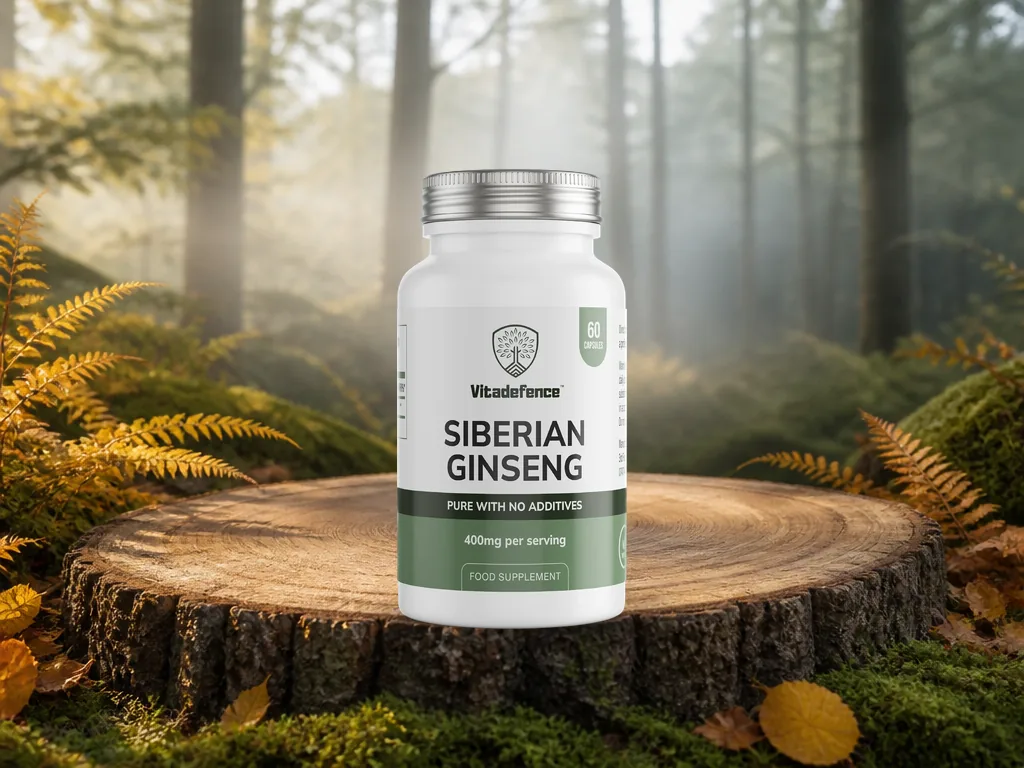
 Siberian Ginseng400 mg Vegan Capsules · 60 Count£11.99View in the shop →
2 - What is Siberian Ginseng?
Eleutherococcus senticosus is a thorny shrub native to Russia, northern China, Korea, and Japan. The root and stem bark contain a group of compounds called eleutherosides — these are what give the plant its adaptogenic profile, distinct from the ginsenosides found in Panax.
3 - How does it differ from Panax Ginseng?
- Active compounds: Eleutherosides (Siberian) vs ginsenosides (Panax). Different chemistry, different effects.
- Tradition: Siberian ginseng is traditionally described as gentler than Panax.
- Tradition: Siberian Ginseng was popularised in 1960s Russia as a daily tonic for cosmonauts and athletes. Panax has 2,000+ years of use in Traditional Chinese Medicine.
If you find Panax Ginseng too "buzzy" in the afternoon, Siberian is often the alternative people reach for. Some people take both.
4 - What does an adaptogen actually do?
"Adaptogen" is a term coined by Soviet pharmacologist Nikolai Lazarev in 1947, refined by Israel Brekhman. The criteria: a substance that is non-toxic, normalises function in the face of stress, and has a non-specific effect on the body. The UK Nutrition and Health Claims Register is conservative on adaptogen-specific language; most authorised claims relate to individual nutrients (vitamin B6, magnesium, iron) rather than herbal compounds.
5 - How to take Siberian Ginseng
The traditional Russian protocol is cycling: 6 weeks on, 2 weeks off.
At Vitadefence, our Siberian Ginseng capsules contain 400 mg of dried root powder per capsule — a moderate, daily-friendly dose. Take as directed on the label.
6 - Who should be cautious?
Pregnancy, breastfeeding, and uncontrolled high blood pressure are the main flags in the herbal literature. If you take medication — especially blood thinners, blood pressure drugs, or immunosuppressants — speak to your doctor before starting any adaptogen.
7 - Bottom line
Siberian Ginseng is one of the gentlest entry points into the adaptogen category. Vitamin B12 contributes to the reduction of tiredness and fatigue. Browse our 400 mg vegan capsules →
This article is for educational purposes only and is not medical advice. Food supplements should not replace a varied diet and healthy lifestyle. Consult your doctor before starting a new supplement.
8 - Questions buyers ask before they decide
What exactly is Siberian Ginseng?
Siberian Ginseng, or Eleutherococcus senticosus, is a thorny shrub whose root and stem bark contain eleutherosides. These compounds give it adaptogenic properties, distinct from the ginsenosides in Panax ginseng. It is not a true ginseng but is well-studied for its role in supporting the body's response to stress.
Who should not take Siberian Ginseng?
Siberian Ginseng is not recommended during pregnancy or breastfeeding. Individuals with uncontrolled high blood pressure should exercise caution. If you take medications such as blood thinners, blood pressure drugs, or immunosuppressants, consult your doctor before use, as interactions are possible.
How do you take Siberian Ginseng capsules?
The typical dose is 1-2 capsules daily, taken with breakfast or lunch. Avoid evening use as it may be subtly stimulating. A common protocol involves cycling: 6 weeks on, then 2 weeks off. Always follow the product label and consult a healthcare professional for personalised advice.
Are there any side effects with Siberian Ginseng?
Siberian Ginseng is generally well-tolerated, but some individuals may experience mild side effects such as insomnia, headache, or digestive upset, especially at higher doses. It is not a medicine; effects vary individually. If you experience any adverse reactions, discontinue use and consult a doctor.
Is Siberian Ginseng vegan and gluten-free?
Yes, Siberian Ginseng is a plant-based herb, making it suitable for vegans. Many supplements, including those from Vitadefence, are formulated to be gluten-free. Always check the product label for specific allergen information and to confirm it meets your dietary requirements.
How is Siberian Ginseng different from Panax?
Siberian Ginseng contains eleutherosides, while Panax ginseng has ginsenosides. Siberian is considered a gentler adaptogen, with a slower-build effect, making it suitable for those who find Panax too stimulating. Both can be used together for layered support, but their active profiles differ.
What does EFSA say about Siberian Ginseng?
The EFSA has not authorised specific health claims for Siberian Ginseng as a herbal substance. Most authorised claims on the UK Nutrition and Health Claims Register relate to individual nutrients like vitamins and minerals. Siberian Ginseng is traditionally used as an adaptogen, but such terms are not formally recognised in UK health claim regulations.
How long until I notice effects from Siberian Ginseng?
As a food supplement, not a medicine, effects vary individually. Some people may notice subtle changes in stress resilience within a few weeks, while others may require longer consistent use. It is not intended to produce immediate results and should be part of a balanced diet and healthy lifestyle.