Moringa Oleifera: Why This 'Tree of Life' Is Among the Most Nutrient-Dense Plants on Earth
The Moringa tree has been called the 'Tree of Life' for a reason. Its leaves contain vitamins A, C, calcium, iron, potassium, and complete protein — gram for gram, one of the densest plant foods we know.
By Vitadefence Team
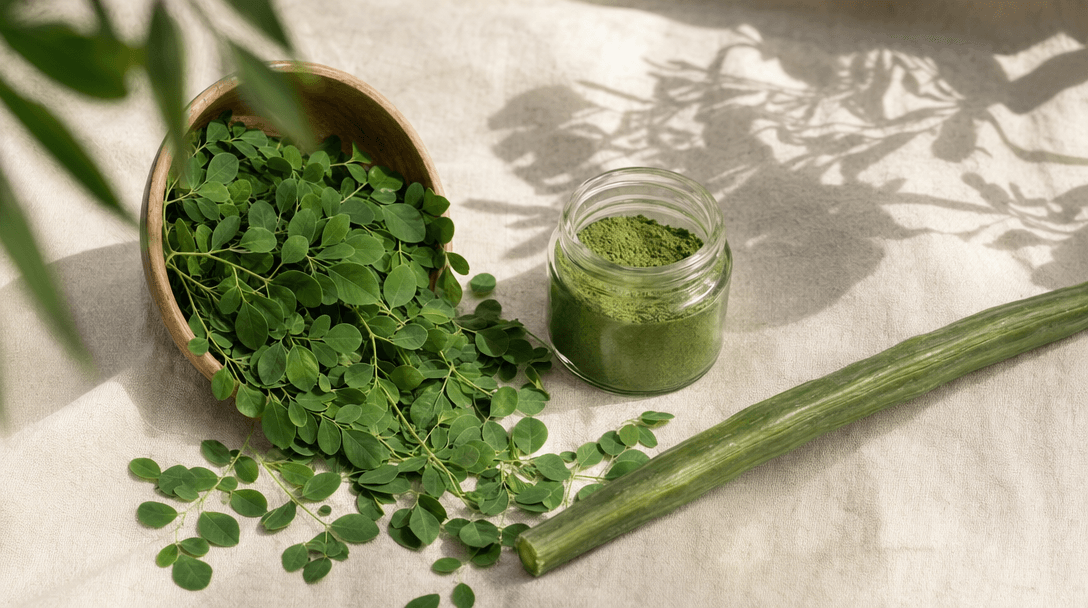
Moringa oleifera — sometimes called the drumstick tree, ben oil tree, or Tree of Life — is native to the foothills of the Himalayas and now grown throughout Africa, Asia, and South America. Its leaves are edible, fast-growing, and one of the most nutritionally dense plant foods documented.
What's actually in a Moringa leaf?
Per 100 g of dried leaf powder you'll typically find:
- Vitamin A: 6,780 µg (≈ 4× a carrot)
- Vitamin C: 220 mg (≈ 7× an orange)
- Calcium: 2,000 mg (≈ 4× a glass of milk)
- Iron: 28 mg (≈ 25× spinach)
- Potassium: 1,300 mg (≈ 3× a banana)
- Protein: ~25 g — and it's a complete protein with all 9 essential amino acids
Source: USDA / Fuglie's The Miracle Tree. Numbers vary by harvest and processing but the order of magnitude holds.
Where the science is solid (and where it isn't)
Moringa is one of the more researched "superfood" plants, but most clinical work has been animal models or small human studies. The most replicated findings: high antioxidant content, favourable lipid profile changes in some trials, and traditional use as a galactagogue (breastfeeding support) in West Africa and South Asia. We avoid making strong health claims because the EU Register of authorised claims is conservative — but the nutritional density is well documented.
How to take Moringa daily
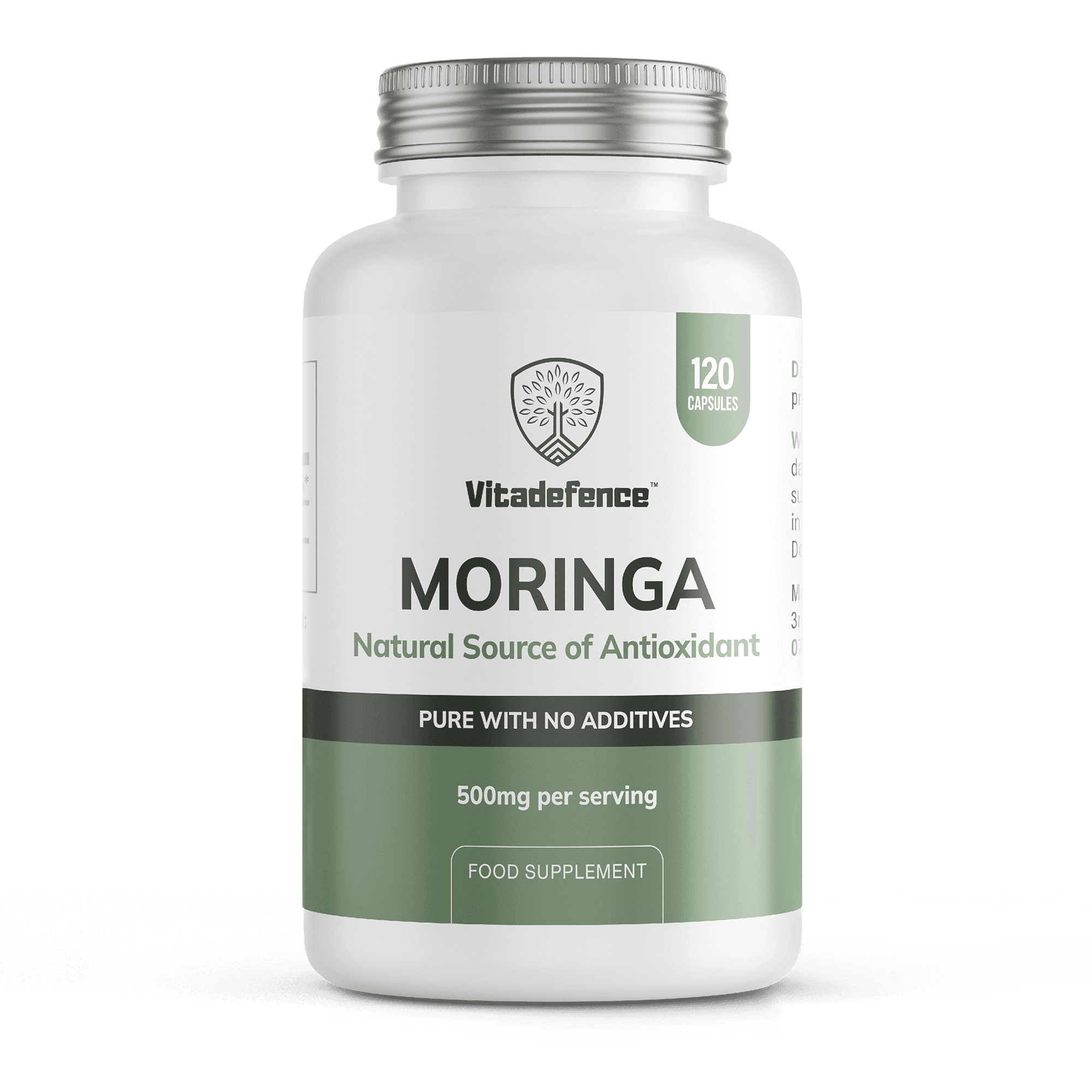
Our Moringa Oleifera capsules contain 500 mg of leaf powder per vegan HPMC capsule. The traditional dose range is 1–3 g per day; 1 capsule with breakfast is a gentle starting point. Take with food for the fat-soluble vitamins (A, K) to absorb properly.
Who pairs well with Moringa?
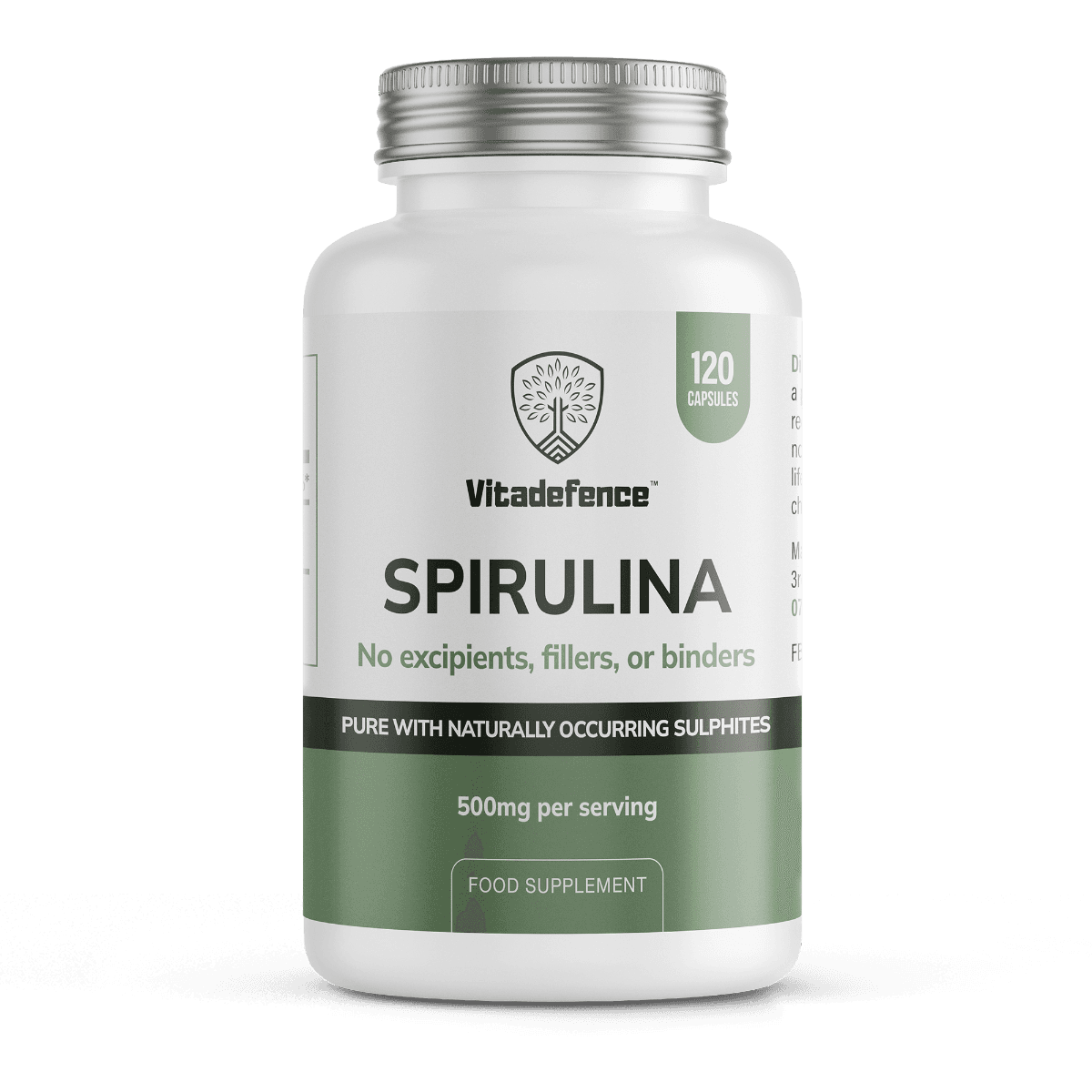
Moringa + Spirulina is the classic green-protein stack — Moringa brings the vitamins and minerals, Spirulina adds B12 (rare in plants) and phycocyanin (a strong antioxidant). Together they form the "Green Pair" we suggest as a starter for plant-based eaters.
Bottom line
If you want one supplement that gives you a broad nutritional safety net — vitamin A, C, calcium, iron, complete protein — Moringa is hard to beat for the price. Browse our 500 mg vegan capsules (120 count) →
Educational only. Not medical advice. Pregnant or breastfeeding women should consult a doctor before supplementing Moringa root or seeds (the leaves are well tolerated). High Vitamin K content — speak to your GP if you take warfarin.
Frequently asked questions
Questions buyers ask before they decide
▸What exactly is Moringa oleifera?
Moringa oleifera is a fast-growing tree native to the Himalayan foothills, now cultivated in tropical regions. Its leaves are dried and powdered to make a nutrient-dense supplement. Each 100 g of leaf powder contains high levels of vitamin A, vitamin C, calcium, iron, potassium, and complete protein with all nine essential amino acids, according to USDA data. It is often referred to as the 'Tree of Life' due to its nutritional richness.
▸Who is Moringa suitable for?
Moringa is suitable for adults seeking a broad nutritional supplement, particularly those with increased needs for vitamins A, C, calcium, or iron, such as plant-based eaters. It is not recommended for children without professional guidance. Pregnant or breastfeeding women should consult a doctor before use. Individuals on blood thinners like warfarin should speak to their GP due to its high vitamin K content.
▸How do you take Moringa capsules?
Our Moringa Oleifera capsules contain 500 mg of leaf powder per vegan HPMC capsule. The traditional dose range is 1-3 g per day. A gentle starting point is 1 capsule with breakfast. Take with food to help absorb the fat-soluble vitamins A and K. You may gradually increase to 2-3 capsules daily if tolerated, but do not exceed the recommended intake without professional advice.
▸Are there any side effects or interactions?
Moringa leaf is generally well-tolerated. Mild digestive effects may occur in some people. Due to its vitamin K content, it may interfere with blood-thinning medication such as warfarin. Always consult your doctor if you take prescription medication or have a medical condition.
▸Is Moringa vegan, allergen-free, gluten-free?
Our Moringa capsules use vegan HPMC plant-cellulose shells (no gelatine). The leaf powder is gluten-free and free from common allergens. Manufacturing is carried out in a facility that handles other allergens; check the product label for full allergen statement.
▸How is Moringa different from spirulina or chlorella?
Moringa is a tree leaf, while spirulina and chlorella are aquatic algae. Moringa is rich in vitamin A and complete protein. Spirulina is denser in protein per gram and contains phycocyanin. Chlorella has a strong cell wall and is often used for binding capacity. Each has a different nutrient profile, and they can complement each other in a varied diet.
▸What EFSA-approved claims apply?
Moringa as a whole has no specific EFSA-authorised health claim, but the nutrients it contains (vitamin A, vitamin C, calcium, iron, potassium) have approved nutrient claims. For example, vitamin C contributes to the normal function of the immune system, and iron contributes to the reduction of tiredness and fatigue, when present in significant amounts per dose.
▸How long until I notice anything?
Effects vary individually. Some people report subtle changes in energy and digestion within 2-4 weeks of consistent use; others take longer. Moringa is a food supplement, not a medicine, and works best alongside a varied and balanced diet and a healthy lifestyle.
Related products