
B Vitamins: The Energy Complex Your Body Can't Store

Contents
1 - Introduction
The B vitamin family comprises eight essential nutrients that work together to keep your body running smoothly. Unlike fat-soluble vitamins, B vitamins are water-soluble — meaning your body cannot store them and needs a fresh supply every day.
2 - Meet the B Vitamins
- B1 (Thiamine): Converts carbohydrates into energy. Essential for nerve function.
- B2 (Riboflavin): contributes to normal energy-yielding metabolism and to the maintenance of normal skin and normal vision.
- B3 (Niacin): contributes to normal energy-yielding metabolism and to the reduction of tiredness and fatigue.
- B5 (Pantothenic Acid): Essential for synthesising coenzyme A, critical for energy metabolism.
- B6: contributes to normal psychological function and the normal function of the immune system.
- B7 (Biotin): Supports healthy hair, skin, and nails. Essential for fat and carbohydrate metabolism.
- Folate has a role in the process of cell division. The NHS advises 400 micrograms of folic acid a day before pregnancy and for the first 12 weeks.
- B12 (Cobalamin): Needed for nerve function, red blood cell formation, and DNA synthesis. Only found naturally in animal products.
3 - Factors such as alcohol and some medicines can affect B12; ask your pharmacist.
4 - If you think you are low in a B vitamin, ask your GP.
Because B vitamins work together, a deficiency in one often accompanies deficiency in others.
5 - Supplementation Tips
B complex supplements provide all eight B vitamins in balanced ratios. Take as directed on the label.
6 - How to Choose a Quality B Vitamin Supplement
B vitamin supplements range from basic to premium, and the differences matter:
- B complex vs. individual B vitamins: A B complex provides all 8 B vitamins in balanced ratios, which is ideal for general health.
- Dose: the label states the % NRV of each B vitamin; do not exceed it.
7 - Who Should Consider B Vitamin Supplementation?
B vitamin supplementation may be particularly beneficial for:
- Vegetarians and vegans, because B12 is found mainly in animal foods
- Women planning pregnancy (see the NHS folic acid advice), and requirements increase for most B vitamins
- Heavy drinkers — alcohol interferes with absorption of B1, B6, B12, and folate
- If you take medication, ask your pharmacist.
8 - Daily Tips for Maximising B Vitamin Benefits
Take B vitamins in the morning or early afternoon — they support energy production and can interfere with sleep if taken late in the day. Take with food for better absorption and to avoid the mild nausea that some people experience on an empty stomach. Complement your supplement with B-rich foods: whole grains, eggs, leafy greens, legumes, nuts, and nutritional yeast. Be consistent — since your body cannot store B vitamins (except B12), daily intake is essential to maintain optimal levels.
Recommended for You
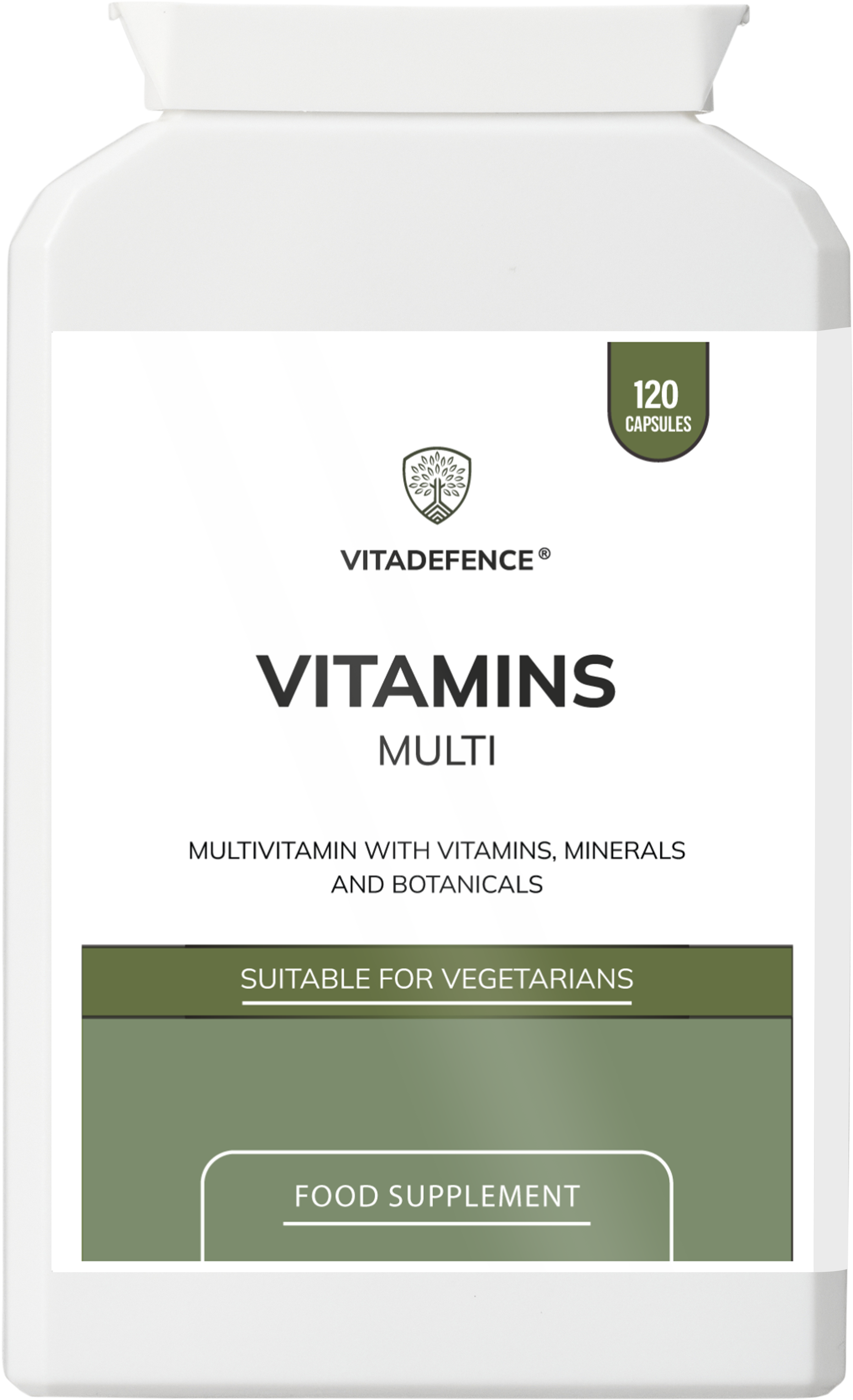
Vitamins Multi
£15.49
Shop NowThis article is for informational purposes only and does not constitute medical advice. Vitadefence supplements are food supplements, not medicines. Consult a healthcare professional if you are pregnant, breastfeeding, on medication, or have a medical condition.