Eye Health Supplements: Bilberry, Lutein, and What the Science Says
Eye Health Supplements: Bilberry, Lutein, and What the Science Says. Evidence-led plain-English guide from Vitadefence UK.
By Vitadefence Team

With screen time at an all-time high and the UK population ageing, eye health has become a pressing concern for many. While a balanced diet provides the foundation, specific nutrients like bilberry extract and lutein have garnered significant attention for their role in visual function. But what does the evidence actually say, and how can you choose a supplement that delivers effective, science-backed support? We examine the research behind these key ingredients and what it means for your vision.
Why Eye Health Matters More Than Ever
The human eye is a remarkably complex organ, and its delicate tissues are constantly exposed to oxidative stress from light, pollution, and metabolic processes. The macula, a small area at the centre of the retina responsible for sharp, central vision, is particularly vulnerable. Over time, cumulative damage can contribute to age-related macular degeneration (AMD), cataracts, and digital eye strain — conditions affecting millions in the UK.
Public Health England data indicates that around 2 million people in the UK live with sight loss, with AMD being the leading cause of blindness in those over 65. While genetics and lifestyle play significant roles, nutritional status is a modifiable factor that can influence long-term visual health. This is where targeted supplementation enters the conversation.
Bilberry: A Traditional Berry with Modern Research
Bilberry (Vaccinium myrtillus) is a close relative of the blueberry, native to Northern Europe. It has a long history of traditional use for eye health, particularly among RAF pilots during World War II who reported improved night vision after consuming bilberry jam. While that specific wartime anecdote has been debated, modern science has identified the active compounds — anthocyanins — that give bilberry its deep blue-purple colour.
What the Science Says
Anthocyanins are potent antioxidants that can cross the blood-retinal barrier and accumulate in eye tissues. A 2021 systematic review in Nutrients (PubMed ID: 34578885) found that bilberry supplementation was associated with improvements in objective measures of visual fatigue and dark adaptation in healthy adults. The typical effective dose ranged from 120 mg to 480 mg of bilberry extract standardised to 25% anthocyanins.
It is important to note that while bilberry shows promise for reducing eye strain and supporting night vision, claims regarding the prevention or treatment of eye diseases such as AMD or cataracts are not supported by sufficient human evidence at this time. The UK Medicines and Healthcare products Regulatory Agency (MHRA) registers bilberry as a traditional herbal medicinal product for the relief of minor eye strain and temporary visual fatigue, based on traditional use only.
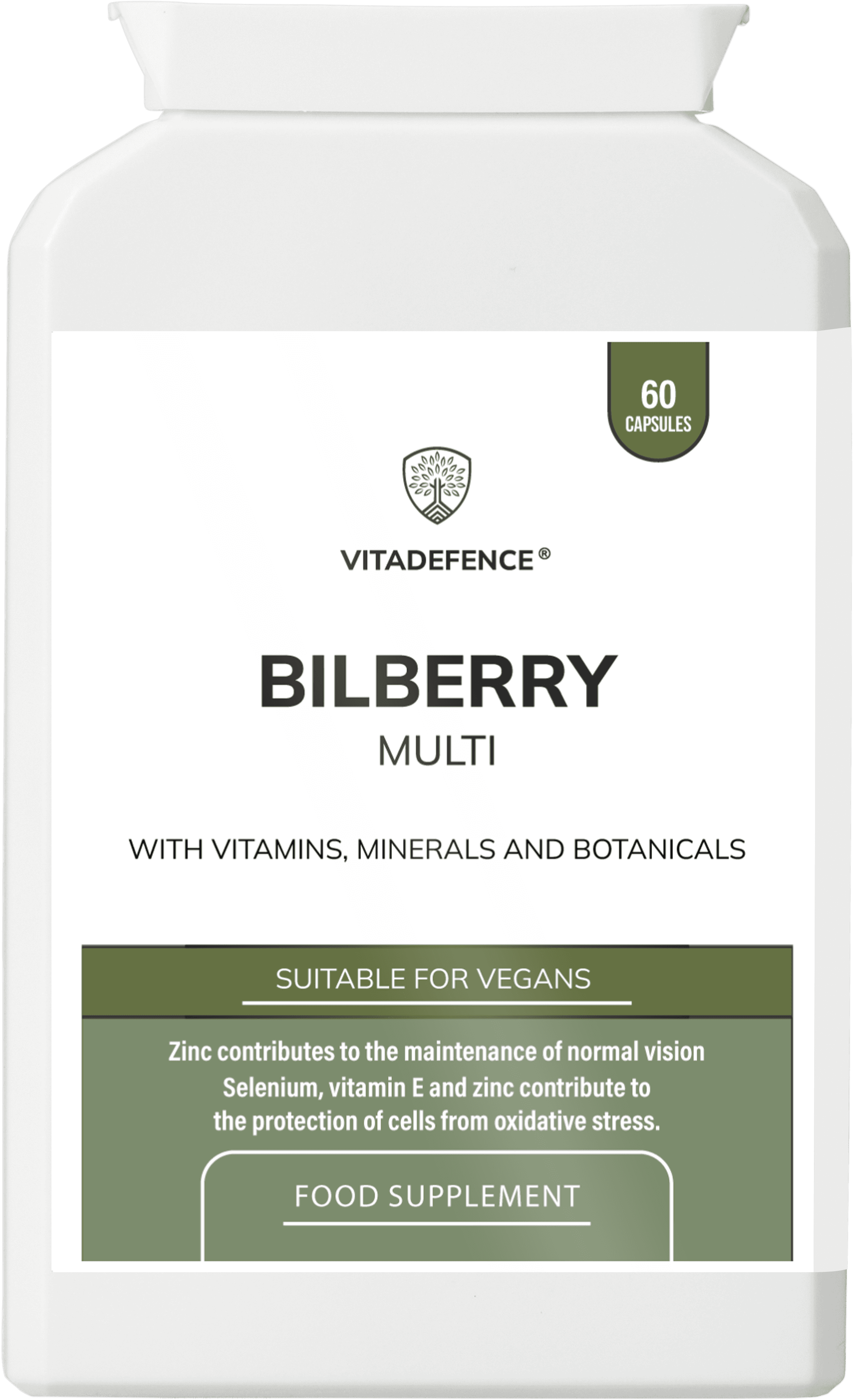
For those interested in a high-quality bilberry supplement, our Bilberry Multi combines bilberry extract with complementary nutrients like lutein and zinc for a comprehensive approach.
Lutein and Zeaxanthin: The Macular Pigments
Lutein and its isomer zeaxanthin are carotenoids that accumulate in the macula, where they form the macular pigment. This pigment acts as a natural blue light filter and antioxidant, protecting the photoreceptor cells from oxidative damage. Unlike many nutrients, the human body cannot synthesise lutein; it must be obtained from the diet or supplements.
Authorised Health Claims
Under EU Regulation 1924/2006, the European Food Safety Authority (EFSA) has authorised the following health claim: "Lutein contributes to the maintenance of normal vision." This is a positive claim that can be used for products providing at least 10 mg of lutein per daily serving. It is important to understand that this claim refers to maintenance of normal vision, not the treatment of existing eye disease.
Clinical research, including the landmark Age-Related Eye Disease Study 2 (AREDS2), demonstrated that a daily supplement containing 10 mg lutein and 2 mg zeaxanthin reduced the risk of progression to advanced AMD in individuals with intermediate disease. However, this was in the context of a specific formulation and for a defined population. For healthy individuals, the primary benefit is supporting the natural defence mechanisms of the eye against everyday light exposure.
We discuss the broader role of antioxidants in our blog on antioxidants, which covers how these nutrients work synergistically.
Practical Guidance for Choosing an Eye Health Supplement
When evaluating any eye health supplement, consider three key factors: dosage, form, and quality. For bilberry, look for a standardised extract (typically 25% anthocyanins) in a dose that aligns with clinical research (120-480 mg). For lutein, 10 mg per day is the minimum associated with the authorised health claim, though some formulations provide up to 20 mg.
The form of lutein is also relevant. Free lutein (non-esterified) is generally considered more bioavailable than lutein esters, though both can be effective. Many quality supplements now use FloraGLO® lutein, a well-studied form with strong bioavailability data.
At Vitadefence, we use only high-quality, traceable ingredients. Our Bilberry Multi provides 200 mg bilberry extract (25% anthocyanins) plus 10 mg lutein and 5 mg zeaxanthin, all in a single daily capsule. You can read independent customer experiences on our reviews page.
Who Might Benefit from Eye Health Supplements?
While a healthy diet rich in leafy greens, colourful fruits, and omega-3 fatty acids is the foundation, supplementation can be particularly helpful for specific groups:
- Regular screen users: Those who spend 6+ hours daily on computers or smartphones may experience digital eye strain, and bilberry has shown benefit in reducing visual fatigue in this group.
- Older adults (50+): The natural decline in macular pigment density with age makes lutein and zeaxanthin supplementation more relevant for this demographic.
- Individuals with a family history of AMD: While not a guarantee, optimising macular pigment levels may be a sensible preventive measure.
- People with low dietary intake of carotenoids: Those who avoid green vegetables or follow a restrictive diet may not get sufficient lutein from food alone.
Who Should Be Cautious?
As with any supplement, certain individuals should exercise caution. Bilberry may interact with anticoagulant (blood-thinning) medications, including warfarin and aspirin, due to its potential antiplatelet effects. Anyone taking prescription medication should consult their GP before starting a new supplement.
Pregnant and breastfeeding women should seek professional advice before using bilberry supplements, as safety data in these populations is limited. Additionally, those with known allergies to plants in the Ericaceae family (which includes cranberries and blueberries) should avoid bilberry.
It is also important to note that supplements are not a substitute for regular eye examinations. The NHS recommends an eye test every two years for most adults, and more frequently for those with existing eye conditions or risk factors. For more on when to seek professional advice, see our guide on eye check-ups.
Frequently Asked Questions
Can bilberry improve night vision?
Some small studies suggest bilberry may improve dark adaptation and reduce the time needed to adjust to low light. However, the evidence is mixed, and the effect is likely modest. The authorised traditional use claim is for relief of temporary visual fatigue, not for curing night blindness — a condition that requires medical investigation.
How long does it take for lutein to work?
Lutein accumulates in the macula slowly. Clinical trials typically measure changes in macular pigment optical density (MPOD) after 6 to 12 months of consistent supplementation. Some users report subjective improvements in visual comfort and contrast sensitivity within a few weeks, but the protective benefits are long-term.
Can I get enough lutein from food alone?
Green leafy vegetables like kale and spinach are excellent sources, providing 5-10 mg per serving. However, many people do not consume these foods daily. The average UK intake is estimated at 1-3 mg per day, well below the 10 mg associated with the authorised health claim. A supplement can help bridge this gap.
Are there any side effects from bilberry or lutein?
Both are generally well-tolerated. High doses of bilberry (above 500 mg) may cause mild digestive upset in some individuals. Lutein can cause a harmless yellowing of the skin (carotenodermia) at very high intakes, which resolves when the dose is reduced. No serious adverse effects have been reported at recommended doses.
Can eye supplements prevent the need for glasses?
No. Refractive errors (short-sightedness, long-sightedness, astigmatism) are related to the shape of the eye and cannot be corrected by nutrition. Supplements support the health of the eye tissues but do not change the optical properties of the lens or cornea.
What is the best way to take these supplements?
Lutein and bilberry are fat-soluble compounds, so taking them with a meal that contains some healthy fat (e.g., avocado, nuts, olive oil) can enhance absorption. Consistency is key — taking them daily as part of a routine yields the best results. Our bundle offers make it easy to combine eye health with other supplements for a comprehensive approach.
How Vitadefence Does It
At Vitadefence, we believe in transparency and quality. Our Bilberry Multi and all our supplements are manufactured in our GMP-certified facility in the United Kingdom. We use only HPMC (hydroxypropyl methylcellulose) capsules — a plant-based alternative to gelatin — making them suitable for vegetarians and vegans.
We never use proprietary blends or hidden fillers. Every ingredient is listed clearly on the label, with the exact amount per serving. Our bilberry extract is standardised to 25% anthocyanins, and our lutein is sourced from marigold flowers, a natural and sustainable source. We also include zinc, which contributes to the maintenance of normal vision (authorised health claim under EU Regulation 1924/2006).
As a UK-based company, we offer free Royal Mail Tracked 48 delivery on all orders. You can check our shipping policy for full details. We are registered with the Information Commissioner's Office (ICO ZC106169) and comply fully with UK data protection regulations.
Bottom Line
Eye health supplements containing bilberry and lutein offer a science-backed way to support visual function and protect the eyes from everyday oxidative stress. While they are not a magic solution, the evidence supports their use for maintaining normal vision, particularly for those with high screen exposure or age-related concerns. Choose a product with transparent labelling, standardised extracts, and a dose aligned with clinical research.
If you are looking for a comprehensive, UK-made supplement that combines bilberry, lutein, zeaxanthin, and zinc in a convenient daily capsule, explore our Bilberry Multi today. Your eyes work hard for you every day — give them the support they deserve.
Educational Disclaimer: This article is for informational purposes only and does not constitute medical advice. The health claims mentioned are authorised under EU Regulation 1924/2006 and refer to the maintenance of normal vision, not the treatment or prevention of any disease. Always consult a qualified healthcare professional before starting any new supplement, especially if you are pregnant, breastfeeding, or taking medication. Products mentioned are food supplements and should not be used as a substitute for a varied, balanced diet and healthy lifestyle.
Related products
More from the journal
Spirulina: The Original Superfood — Protein, B12, and Phycocyanin Antioxidant Power
9 min · Ingredients
Siberian Ginseng Benefits: Why This Adaptogen Is Different From Panax Ginseng
7 min · Ingredients