Cranberry, D-Mannose and Urinary Tract Support: A Practical Guide
Cranberry, D-Mannose and Urinary Tract Support: A Practical Guide. Evidence-led plain-English guide from Vitadefence UK.
By Vitadefence Team
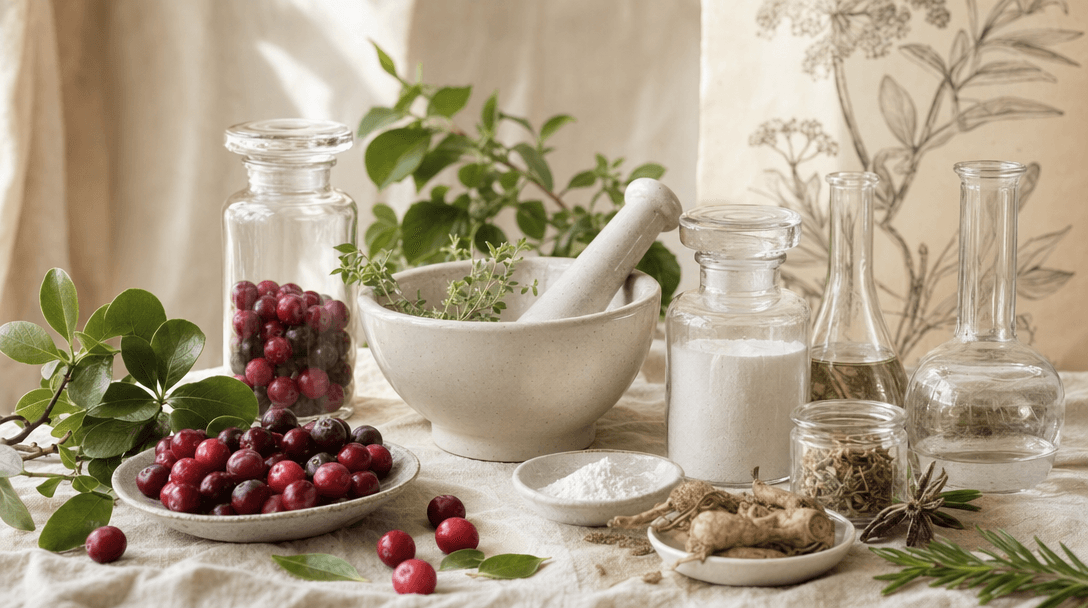
When it comes to supporting urinary tract health, two ingredients consistently rise to the top of the evidence list: cranberry and D-mannose. But which one is right for you, and how do they actually work? This practical guide breaks down the science behind both, explains how they complement each other, and helps you decide what to look for in a supplement — without the marketing fluff.
Understanding urinary tract health: more than just an annoyance
Urinary tract discomfort is one of the most common reasons people seek out supplements — and for good reason. The urinary tract, which includes the kidneys, ureters, bladder and urethra, is a finely tuned system designed to flush waste from the body. But when bacteria — most often Escherichia coli (E. coli) — manage to cling to the lining of the urinary tract, they can cause irritation, urgency and discomfort.
According to the UK’s National Institute for Health and Care Excellence (NICE), urinary tract infections (UTIs) account for approximately 1–3% of all GP consultations annually. While antibiotics are the standard medical treatment, many people are looking for everyday nutritional strategies to help maintain a healthy urinary environment and reduce the frequency of episodes. That’s where cranberry and D-mannose come in.
For a broader look at how supplements can fit into your daily routine, you might find our guide to building a wellbeing supplement routine helpful.
The science: how cranberry and D-mannose work
Both cranberry and D-mannose are thought to support urinary tract health through a similar mechanism: they help prevent bacteria from sticking to the walls of the urinary tract. But the way they do this is subtly different.
Cranberry: the anti-adhesion pioneer
Cranberries (Vaccinium macrocarpon) are rich in compounds called proanthocyanidins (PACs), specifically A-type proanthocyanidins. These PACs have been shown in laboratory and clinical studies to interfere with the ability of P-fimbriated E. coli to adhere to uroepithelial cells — the cells lining the urinary tract. Without adhesion, bacteria are simply flushed out during urination.
A 2023 meta-analysis published in the Cochrane Database of Systematic Reviews (the gold standard for evidence-based medicine) examined 50 studies involving over 8,000 participants. The authors concluded that cranberry products reduced the risk of recurrent UTIs in women by approximately 26% compared to placebo or no treatment. However, the evidence was less clear for other groups, such as older adults in care homes or people with catheter use.
The key takeaway? Cranberry is most effective for healthy women with a history of recurrent UTIs, and the dose matters. Most positive studies used at least 36 mg of PACs per day — equivalent to around 500–1000 mg of a concentrated cranberry extract.
For a closer look at what goes into a well-formulated supplement, see our customer reviews page for honest feedback on our range.
D-mannose: a simple sugar with a targeted role
D-mannose is a naturally occurring sugar, structurally similar to glucose, found in small amounts in fruits like cranberries, apples and peaches. Unlike glucose, however, D-mannose is not metabolised for energy in the same way. Instead, it is absorbed in the upper gastrointestinal tract and then excreted largely unchanged in the urine.
Once in the urinary tract, D-mannose binds to the FimH adhesin on the surface of E. coli bacteria. This effectively “coats” the bacteria, preventing them from attaching to the mannose receptors on the bladder wall. Without attachment, the bacteria are washed away when you urinate.
A 2022 systematic review and meta-analysis in the Journal of Clinical Medicine found that D-mannose was significantly more effective than placebo at reducing the risk of recurrent UTIs, and was comparable to low-dose antibiotic prophylaxis — but without the risk of antibiotic resistance. Doses in clinical studies typically range from 1 to 3 grams per day, often taken at the first sign of discomfort or as a daily maintenance dose.
If you’re interested in building a complete supplement stack, our bundle options make it easy to combine urinary support with other essentials.
Practical guidance: choosing between cranberry and D-mannose
So, which one should you choose? The answer depends on your specific situation and goals.
When cranberry may be the better choice
- For general, long-term maintenance: If you have a history of recurrent UTIs and want a daily supplement to help maintain a healthy urinary environment, cranberry is well-studied for this purpose.
- If you prefer a more traditional botanical approach: Cranberry has a long history of traditional use and is widely available in supplement form.
- When you want additional antioxidant support: Cranberries are also rich in vitamin C and other antioxidants, which support overall health.
When D-mannose may be the better choice
- For acute, targeted support: Some people find D-mannose helpful at the very first sign of urinary discomfort, taken several times a day for a short period.
- If you have recurrent UTIs linked specifically to E. coli: D-mannose’s mechanism is very specific to E. coli, which accounts for about 80–90% of uncomplicated UTIs.
- If you are looking for an alternative to daily antibiotics: The evidence suggests D-mannose may be a viable option for prophylaxis in women with recurrent UTIs.
Can you take them together?
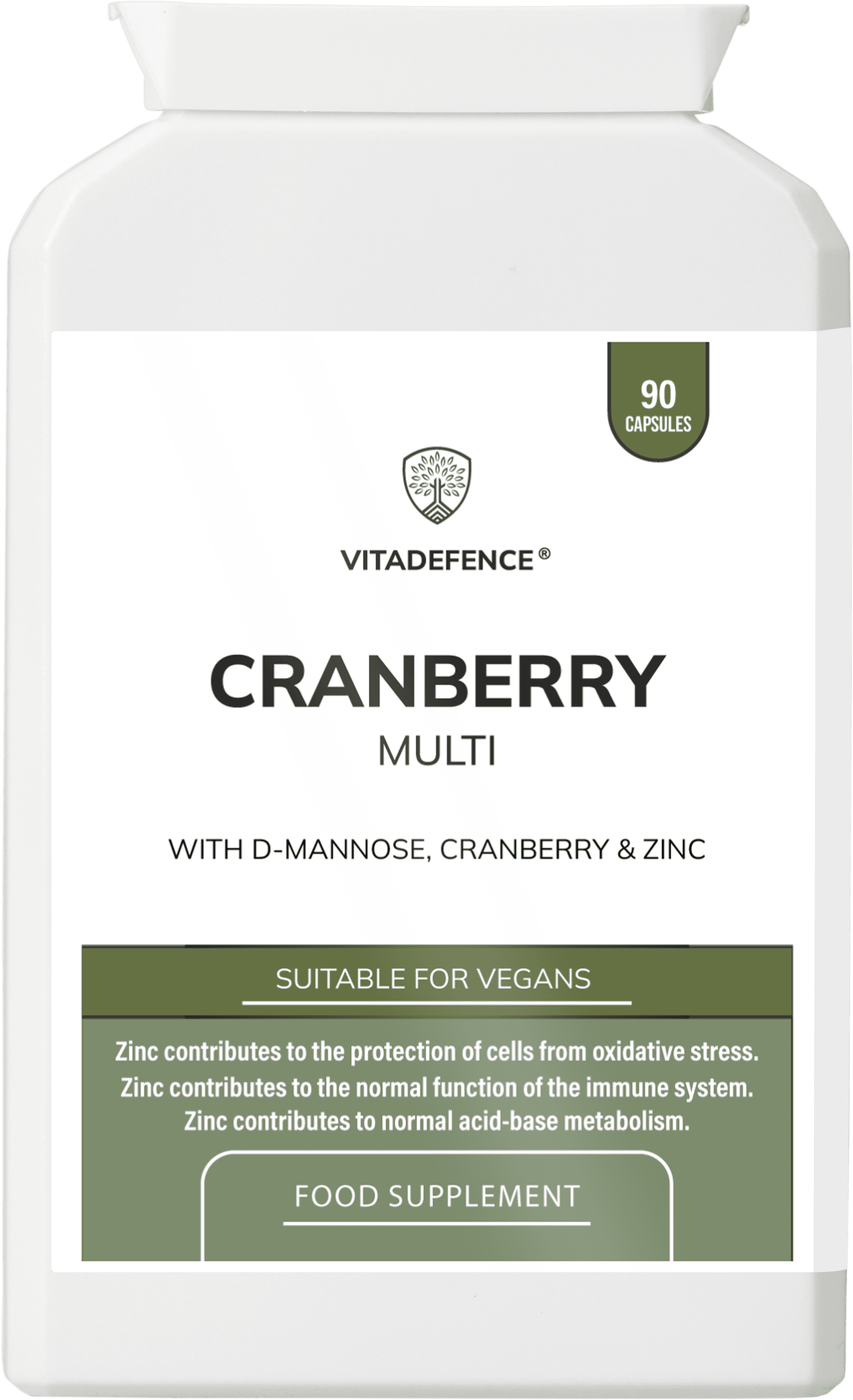
Yes — and many people do. Because cranberry and D-mannose work through slightly different but complementary mechanisms, taking them together may offer broader support. Some supplements, including our Cranberry Multi, combine both ingredients in a single formula for convenience.
We also recommend reading our guide to supplement timing for practical advice on when to take your supplements for maximum benefit.
Who is this for?
Urinary tract support supplements are most commonly used by:
- Women with a history of recurrent UTIs — the group with the strongest evidence base for both cranberry and D-mannose.
- People who are prone to urinary discomfort after sexual activity — sometimes called “honeymoon cystitis”.
- Those looking for a non-antibiotic approach to maintaining urinary health, especially given growing concerns about antibiotic resistance.
- Older adults who may be more susceptible to UTIs due to age-related changes in the urinary tract.
- Individuals who travel frequently or have limited access to clean water and bathroom facilities.
Who should be cautious?
While cranberry and D-mannose are generally well-tolerated, there are some important considerations:
- People with diabetes: D-mannose is a sugar, albeit one that does not significantly affect blood glucose levels in most people. However, if you have diabetes, it is always wise to monitor your levels and consult your GP before starting any new supplement.
- Those on blood-thinning medication (e.g., warfarin): Cranberry may theoretically enhance the effects of warfarin, although the evidence is mixed. If you are on anticoagulants, speak to your doctor before taking cranberry supplements.
- Individuals with a history of kidney stones: Cranberries are relatively high in oxalates, which can contribute to the formation of calcium oxalate stones in susceptible individuals. D-mannose does not carry this risk.
- Pregnant or breastfeeding women: While both ingredients are generally considered safe in food amounts, concentrated supplements should only be used under medical supervision during pregnancy or breastfeeding.
- Anyone with a current, confirmed UTI: Supplements are not a substitute for medical treatment. If you have symptoms of a UTI — such as burning on urination, frequent urge to urinate, cloudy or bloody urine, or lower back pain — please see your GP. Antibiotics may be necessary.
Frequently asked questions
How much cranberry should I take for urinary tract support?
Most clinical studies use doses providing at least 36 mg of proanthocyanidins (PACs) per day. This is typically found in 500–1000 mg of a standardised cranberry extract. Always check the label for PAC content, as not all cranberry supplements are standardised.
How much D-mannose should I take?
For daily maintenance, 1 gram (1000 mg) once or twice daily is common. For acute support at the first sign of discomfort, some protocols suggest 1 gram every 2–3 hours for 1–2 days, then reducing to maintenance. Always follow the dosage instructions on your supplement and consult a healthcare professional.
Can I take cranberry and D-mannose together?
Yes, they work well together. Many products combine both ingredients for convenience. Our Cranberry Multi is an example of a formula that includes both, along with other supportive nutrients.
Are there any side effects?
Both are generally well-tolerated. Some people may experience mild digestive upset, especially with higher doses of D-mannose. Cranberry is also well-tolerated, though very high doses may cause stomach discomfort or diarrhoea. If you experience any adverse effects, reduce the dose or discontinue use.
How quickly do they work?
Cranberry is best used as a daily maintenance supplement — benefits are typically seen over weeks to months of consistent use. D-mannose may work more quickly for some people, sometimes providing relief within a few hours of taking it at the first sign of discomfort.
Do I need to drink more water when taking these supplements?
Yes — staying well-hydrated is essential for urinary tract health. Drinking plenty of water helps flush the urinary tract and supports the mechanism of both cranberry and D-mannose. Aim for at least 1.5–2 litres of water per day.
How Vitadefence does it
At Vitadefence, we believe that supplement quality matters — and transparency is non-negotiable. Our Cranberry Multi is formulated with a focus on evidence-based ingredients and clean manufacturing:
- HPMC capsules: We use vegetable-based hydroxypropyl methylcellulose capsules, which are suitable for vegetarians and vegans, free from gelatin, and made from sustainably sourced plant fibres.
- No proprietary blends: Every ingredient is listed with its exact dose on the label. You know exactly what you’re getting — no hidden fillers or “blend” loopholes.
- GMP-certified UK manufacturing: Our supplements are made in our GMP-certified facility in the United Kingdom (3rd Floor, 86-90 Paul Street, London EC2A 4NE), ensuring rigorous quality control at every step of production.
- Free Royal Mail Tracked 48 delivery: We offer free shipping on all orders within the UK, with Royal Mail Tracked 48 service so you can track your parcel from dispatch to your door. See our shipping policy for full details.
- Registered with the ICO: We are registered with the Information Commissioner’s Office (ICO ZC106169), meaning your data is handled securely and in compliance with UK data protection laws.
Bottom line
Cranberry and D-mannose are both well-researched, evidence-based ingredients for supporting urinary tract health — but they work in slightly different ways. Cranberry is ideal for long-term maintenance with the added benefit of antioxidants, while D-mannose offers a more targeted approach, particularly for E. coli-related concerns. For many people, combining the two provides comprehensive support.
If you’re looking for a high-quality, transparently formulated supplement that brings both ingredients together, our Cranberry Multi is a great place to start. Made in the UK with clinically relevant doses, in vegan-friendly HPMC capsules, and backed by our commitment to quality — it’s urinary support you can trust.
Ready to take the next step? Shop Cranberry Multi now and see the difference that clean, evidence-based supplementation makes.
Disclaimer: This article is for educational purposes only and does not constitute medical advice. Supplements should not be used as a substitute for a varied diet and healthy lifestyle. If you are experiencing symptoms of a urinary tract infection, please consult your GP. Always read the label and follow the recommended dosage. EU Regulation 1924/2006 requires that health claims for vitamins and minerals are authorised; botanical ingredients are classified under traditional use. Individual results may vary. If you are pregnant, breastfeeding, or taking medication, consult a healthcare professional before starting any new supplement.
Related products
More from the journal
Spirulina: The Original Superfood — Protein, B12, and Phycocyanin Antioxidant Power
9 min · Ingredients
Siberian Ginseng Benefits: Why This Adaptogen Is Different From Panax Ginseng
7 min · Ingredients