Ingredients3 min read29 April 2026

Moringa: The 'Miracle Tree' With 90+ Nutrients

Moringa leaves contain 90+ nutrients — more vitamin C than oranges, more calcium than milk, and more iron than spinach. Discover why this superfood is called the 'miracle tree.'

By Vitadefence Team

Moringa: The 'Miracle Tree' With 90+ Nutrients

Moringa oleifera, often called the 'miracle tree' or 'tree of life,' is native to India and has been used in traditional medicine for centuries. Modern science is now confirming what traditional practitioners have long known — this plant is a nutritional powerhouse.

Extraordinary Nutritional Density

Moringa leaves contain over 90 verified nutrients, including:

  • 7 times more vitamin C than oranges
  • 4 times more calcium than milk
  • 4 times more vitamin A than carrots
  • 3 times more potassium than bananas
  • 2 times more protein than yoghurt
  • 25 times more iron than spinach

It also contains all 9 essential amino acids, making it one of the few plant-based complete protein sources.

Antioxidant Powerhouse

Moringa contains a remarkable array of antioxidants including quercetin, chlorogenic acid, and beta-carotene. Quercetin may help lower blood pressure, while chlorogenic acid has been shown to moderate blood sugar levels after meals. The antioxidant activity of moringa leaf extract has been found to be comparable to or greater than many well-known antioxidant-rich foods.

Blood Sugar Support

Several human studies have shown that moringa can help reduce blood sugar levels. A study published in the Journal of Food Science and Technology found that adding moringa leaf powder to meals reduced post-meal blood sugar spikes. The compounds isothiocyanates in moringa appear to play a key role in this effect.

Anti-Inflammatory Properties

Chronic inflammation contributes to conditions including heart disease, cancer, and Alzheimer's. Moringa contains isothiocyanates — the same family of compounds found in broccoli — that have potent anti-inflammatory effects. Studies show that moringa extract can reduce inflammatory markers in the body.

How to Supplement

Moringa is commonly available as a powder or in capsule form. Capsules are convenient and avoid the somewhat earthy taste of the powder. A typical dose is 500-1000 mg per day. As with any supplement, start with a lower dose and increase gradually. Moringa is generally very well tolerated.

How to Choose a Quality Moringa Supplement

Moringa quality varies significantly depending on how it is grown, harvested, and processed:

  • Leaf vs. seed vs. root: Most supplements use moringa leaf, which has the highest concentration of nutrients. Some products include seed or bark extract, but the leaf is the most studied and safest part for daily supplementation.
  • Drying method matters: The way moringa leaves are dried affects nutrient retention. Low-temperature shade drying preserves the most vitamins and antioxidants. High-heat industrial drying can destroy up to 50% of the vitamin C content.
  • Organic certification: Moringa trees are naturally resistant to pests, so they rarely need pesticides. However, organic certification ensures no chemical fertilisers were used and provides quality traceability.
  • Pure leaf powder vs. extract: Pure moringa leaf powder provides the full spectrum of nutrients. Standardised extracts may concentrate specific compounds but miss the synergistic benefits of the whole leaf.
  • Colour: High-quality moringa powder should be a vibrant green. Brown or yellowish powder indicates excessive heat exposure or age, both of which reduce potency.

Who Should Consider Moringa?

Moringa supplementation may be particularly beneficial for:

  • Anyone looking for a natural, whole-food nutrient boost without taking multiple supplements
  • Vegetarians and vegans seeking a complete amino acid profile from a plant source
  • People concerned about blood sugar balance, particularly those with prediabetes
  • Those living in low-sunlight regions who may lack adequate vitamin A and other fat-soluble nutrients
  • Older adults wanting comprehensive antioxidant support for healthy ageing
  • Anyone with mild iron deficiency who prefers a food-based approach alongside supplementation

Daily Tips for Getting the Most from Moringa

Start with 500 mg per day and increase to 1–2 grams over a week. Moringa has a mild laxative effect at higher doses, so gradual introduction is wise. Take with food to maximise absorption of its fat-soluble nutrients (vitamins A, D, E, K). If using powder, add it to smoothies, soups, or sprinkle on salads — avoid adding to boiling liquids as heat destroys some nutrients. Moringa pairs particularly well with vitamin C sources (citrus, berries), which enhance the absorption of its high iron content. Store moringa in an airtight container away from light to preserve the phytochemicals. Consistent daily use for 4+ weeks is recommended before evaluating results.

Recommended for You

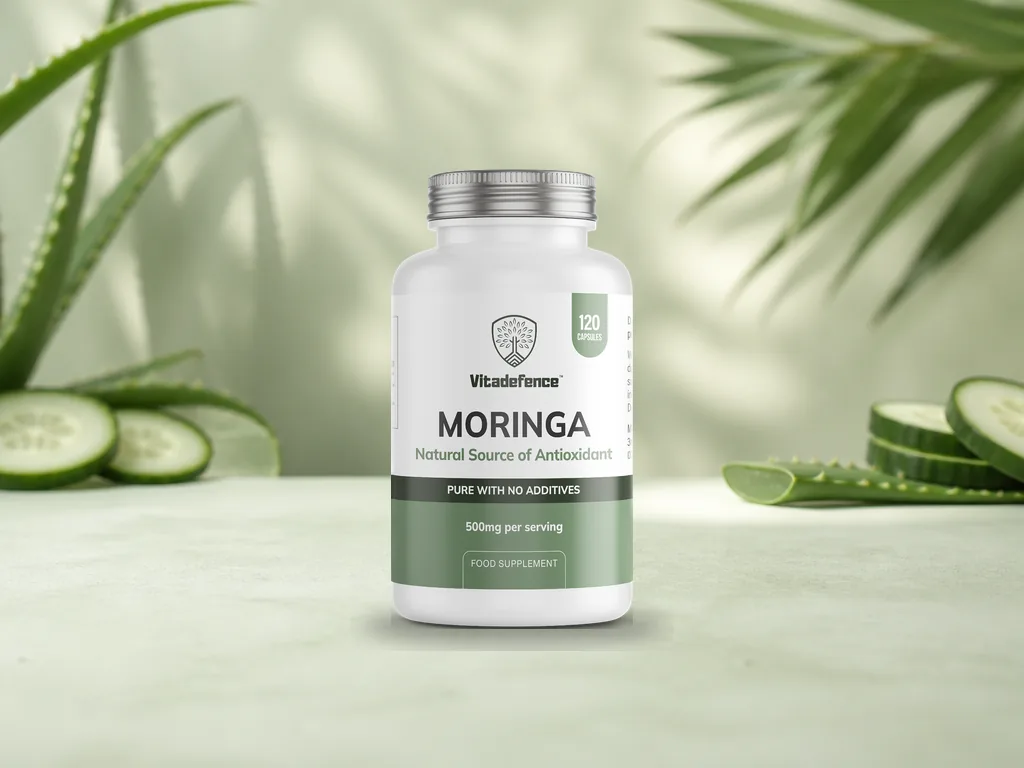
Moringa Oleifera — 120 Count

Moringa Oleifera — 120 Count

£12.99

Shop Now

This article is for informational purposes only and does not constitute medical advice. Vitadefence supplements are food supplements, not medicines. Consult a healthcare professional if you are pregnant, breastfeeding, on medication, or have a medical condition.

Share

Related products

More from the journal