Spirulina vs Chlorella: Which Green Superfood Is Right for You?
Spirulina vs Chlorella: Which Green Superfood Is Right for You?. Evidence-led plain-English guide from Vitadefence UK.
By Vitadefence Team
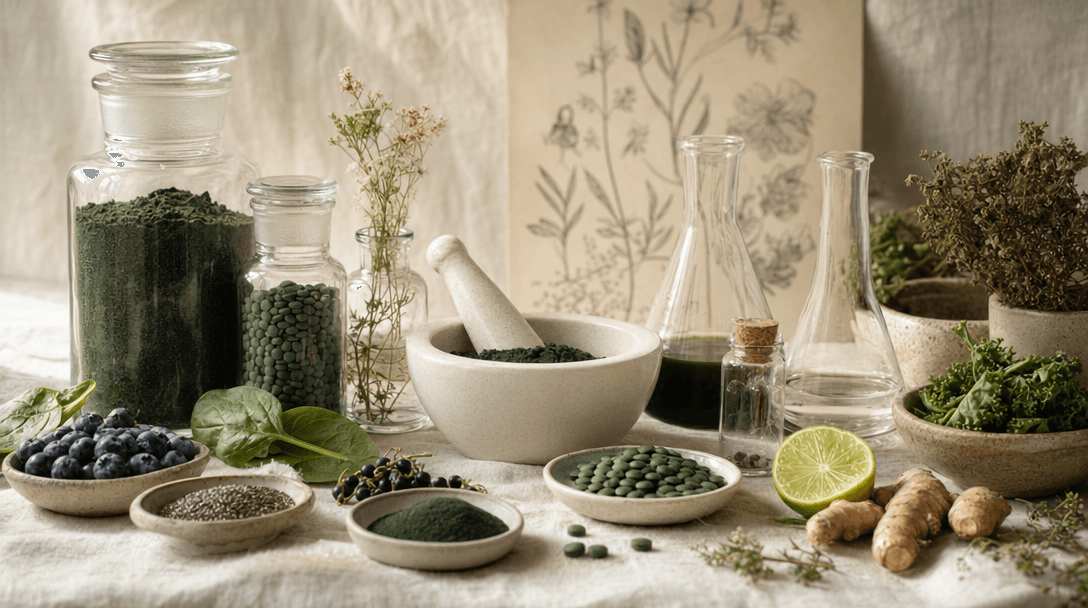
If you’ve wandered down the supplement aisle recently, you’ve likely seen two green powders staring back at you: spirulina and chlorella. Both are nutrient-dense freshwater algae, both are often called “superfoods,” and both promise a concentrated dose of vitamins, minerals, and protein. But they are not the same. Understanding the differences between spirulina and chlorella—from their nutrient profiles to how they work in the body—can help you choose the one that best supports your goals. This comparison breaks down the science, the practical differences, and who should think twice before adding either to their routine.
What are spirulina and chlorella?
Spirulina is a blue-green cyanobacterium (often called a microalgae) that grows naturally in alkaline lakes. It has been consumed for centuries by cultures in Central America and Africa, valued for its protein content and digestibility. Chlorella, on the other hand, is a green freshwater alga with a tough cell wall that requires processing to make its nutrients bioavailable. Both are available as powders and capsules, and both are rich in chlorophyll, the pigment that gives plants their green colour. But their nutrient compositions differ enough that one may suit your needs better than the other.
Nutrient profile: spirulina
Spirulina is roughly 60–70% protein by dry weight, making it one of the most concentrated plant-based protein sources available. It also contains a complete amino acid profile, which is unusual for a plant food. In terms of micronutrients, spirulina is notably high in iron (about 2 mg per 3 g serving), copper, B vitamins (particularly B1, B2, and B3), and manganese. According to the EU Register of Health Claims, a typical 3 g serving of spirulina can contribute to normal energy-yielding metabolism due to its B vitamin content. It also contains the blue pigment phycocyanin, which has antioxidant properties in laboratory models, though human evidence remains preliminary.
Nutrient profile: chlorella
Chlorella is also protein-rich, but at a slightly lower percentage (around 50–60% protein). Its standout features include a higher chlorophyll content than spirulina (roughly 2–3% by weight versus spirulina’s 1%) and a notable amount of vitamin B12 analogues. This is important because, while some studies suggest chlorella contains measurable B12, the form is not always the same as the active B12 in animal foods. The scientific literature indicates that chlorella may provide a small amount of bioavailable B12 for some individuals, but it cannot be relied upon as a sole B12 source. Chlorella also contains iron, magnesium, zinc, and omega-3 fatty acids (alpha-linolenic acid).
The science: what does the evidence say about spirulina vs chlorella?
When comparing spirulina and chlorella, it’s helpful to look at the areas where each has been studied most. Keep in mind that many of the studies are small, use different doses, and often combine the algae with other interventions. The health claims that can be made in the EU are limited to the authorised vitamins and minerals content—no disease or treatment claims are permitted.
Spirulina research highlights
A 2018 systematic review and meta-analysis published in PubMed examined spirulina’s effect on blood lipids. The pooled analysis of 20 randomised controlled trials found that spirulina supplementation (typically 1–8 g per day) was associated with small reductions in total cholesterol and LDL cholesterol, and increases in HDL cholesterol. The effect was modest but statistically significant. Another area of interest is spirulina’s iron content: a 3 g serving provides roughly 11% of the Reference Intake for iron in the UK, which may be relevant for individuals with low iron stores. However, spirulina is not a treatment for anaemia and should not replace medical advice.
Chlorella research highlights
Chlorella has been studied primarily for its potential effects on blood pressure and blood sugar. A 2016 meta-analysis in PubMed of 12 randomised trials found that chlorella supplementation (1.2–5 g per day) was associated with a small reduction in systolic and diastolic blood pressure. The same analysis noted that chlorella appeared to lower fasting blood glucose in some studies, but the evidence was not strong enough to draw firm conclusions. The chlorophyll content of chlorella has also been linked to potential detoxification pathways in animal studies, but human evidence is lacking, and no health claims for “detox” are permitted under EU regulation.
Key differences in how they work
One practical difference is digestion. Chlorella’s tough cell wall means it must be broken down during manufacturing—usually through a process called cell wall cracking—to release its nutrients. If you buy whole chlorella without this processing, much of it will pass through you undigested. Spirulina, by contrast, has a softer cell wall and is more readily digested. This makes spirulina a better choice if you have a sensitive stomach or are new to green algae supplements.
Practical guidance: which one should you choose?
The choice between spirulina and chlorella depends on your specific goals. Below is a breakdown to help you decide.
Choose spirulina if you want:
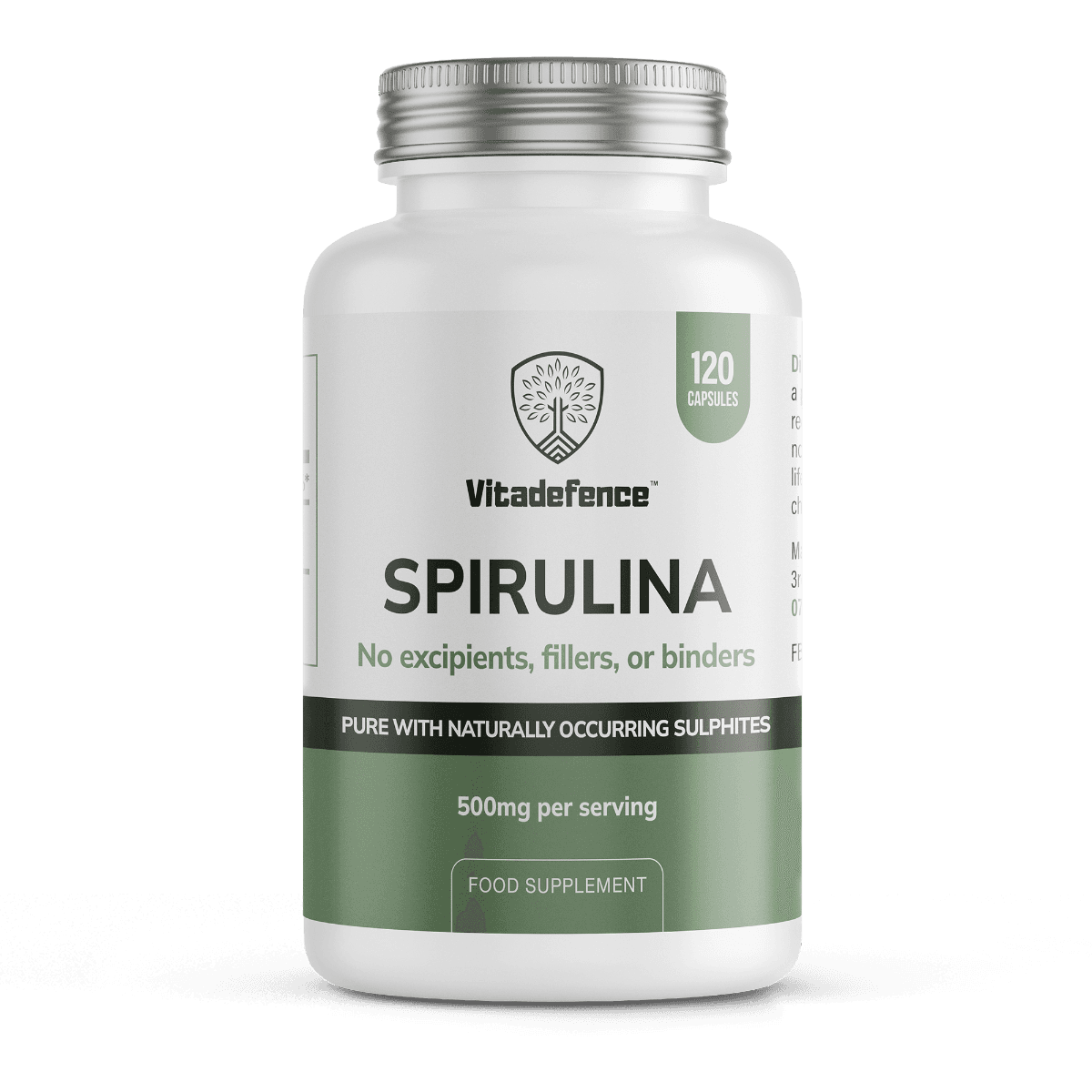
- Higher protein content – Spirulina’s 60–70% protein makes it a useful addition for vegans and vegetarians aiming to increase protein intake. You can find our Vitadefence Spirulina in HPMC capsules, each providing a concentrated dose of this nutrient-dense alga.
- More iron per gram – For those with low iron stores (and after checking with a healthcare professional), spirulina offers a plant-based iron source.
- Better digestibility – If you have a sensitive digestive system, spirulina is generally easier to tolerate than chlorella.
- A source of B vitamins – The B vitamin content in spirulina is well-documented and contributes to normal energy metabolism, as authorised by the EU health claims register.
Choose chlorella if you want:
- Higher chlorophyll content – Chlorophyll is the pigment responsible for the green colour and is often associated with antioxidant properties. Chlorella contains roughly twice as much chlorophyll as spirulina.
- Potential support for healthy blood pressure – The limited clinical evidence points to chlorella having a small effect on blood pressure, though it should not replace prescribed medication.
- A different micronutrient profile – Chlorella provides zinc, magnesium, and some omega-3 fatty acids that may complement a varied diet.
If you’re looking for a green supplement that offers a broader range of phytonutrients, you might also consider Vitadefence Moringa Oleifera, a plant-based green superfood with a different nutrient profile that includes calcium, vitamin C, and potassium.
Who should be cautious with spirulina or chlorella?
While both algae are generally well-tolerated, certain groups should exercise caution or avoid them altogether.
Spirulina precautions
- Phenylketonuria (PKU) – Spirulina contains phenylalanine, an amino acid that people with PKU cannot metabolise. If you have PKU, spirulina is not suitable.
- Autoimmune conditions – Spirulina may stimulate the immune system in laboratory models, so people with autoimmune diseases (e.g., rheumatoid arthritis, lupus) should consult a healthcare professional before use.
- Heavy metal contamination – Like all algae, spirulina can absorb heavy metals from its growing environment. Always choose a brand that tests for contaminants. Vitadefence products are manufactured in a GMP-certified facility with rigorous quality controls.
- Pregnancy and breastfeeding – There is insufficient safety data for high-dose spirulina during pregnancy or breastfeeding. Stick to food-level amounts if you are pregnant or nursing.
Chlorella precautions
- Iodine sensitivity – Chlorella contains iodine, and in some cases, the concentration can be high depending on the growing conditions. If you have thyroid conditions or iodine sensitivity, check with your doctor.
- Digestive discomfort – Because of its tough cell wall, chlorella can cause bloating, gas, or diarrhoea in some people, especially at high doses. Start with a low dose and increase gradually.
- Blood-thinning medications – Chlorella contains vitamin K, which can interfere with anticoagulant medications like warfarin. If you take blood thinners, discuss chlorella with your healthcare provider.
- Pregnancy and breastfeeding – As with spirulina, safety data for chlorella during pregnancy is limited. Stick to dietary amounts only.
Frequently asked questions
Can I take spirulina and chlorella together?
Yes, they can be taken together. Some people combine them to get a broader range of nutrients. Just be mindful of the total iodine and vitamin K intake if you have specific health conditions. Start with small amounts and monitor how you feel.
Which one has more protein?
Spirulina has a higher protein content by weight (60–70%) compared to chlorella (50–60%). Both provide a complete amino acid profile, making them useful for plant-based diets.
Is spirulina or chlorella better for energy?
Spirulina’s B vitamin content (particularly B1, B2, and B3) contributes to normal energy-yielding metabolism, as authorised by EU health claims. Chlorella also contains some B vitamins, but spirulina is generally considered a richer source of the energy-related B vitamins.
Do these algae contain vitamin B12?
Spirulina contains B12 analogues that are not biologically active in humans. Chlorella contains some active B12 in certain studies, but the amounts are small and variable. Neither should be relied upon as a primary B12 source for vegans. A dedicated B12 supplement is recommended for those following a plant-based diet.
Are spirulina and chlorella safe for children?
In food-level amounts, both are generally safe for children. However, supplements are not regulated for paediatric use in the same way as medications. It is best to consult a paediatrician before giving algae supplements to children, especially in concentrated forms.
How should I store spirulina or chlorella supplements?
Store them in a cool, dry place away from direct sunlight. Heat and moisture can degrade the nutrients. Our Vitadefence capsules come in amber glass jars to protect against light and are sealed for freshness.
How Vitadefence does it
At Vitadefence, we believe in transparency and quality. Our spirulina and chlorella supplements are made in the UK in a GMP-certified facility, which means every batch is tested for purity, potency, and contaminants. We use HPMC (hydroxypropyl methylcellulose) capsules, which are plant-based and suitable for vegans. There are no proprietary blends—what you see on the label is exactly what you get. We also offer free Royal Mail Tracked 48 delivery on all orders within the UK, so you can order with confidence. If you’re looking for a green supplement that fits your lifestyle, explore our Spirulina or Moringa Oleifera products. For more information on our quality standards, check out our customer reviews and our shipping policy.
Bottom line
Spirulina and chlorella are both nutrient-rich green algae, but they are not interchangeable. Spirulina offers more protein and iron per gram, along with a better digestibility profile. Chlorella provides higher chlorophyll content and a different micronutrient mix, with some preliminary evidence for blood pressure support. The right choice depends on your individual health goals, dietary preferences, and any underlying medical conditions. Neither is a magic bullet, and both should be part of a balanced diet, not a replacement for it. If you’re ready to add a high-quality green supplement to your routine, start with Vitadefence Spirulina or explore our supplement bundles to save on your favourites. As always, consult a healthcare professional before starting any new supplement, especially if you are pregnant, nursing, or on medication.
This article is for educational purposes only and does not constitute medical advice. The information provided is based on the EU Register of Health Claims and peer-reviewed scientific literature. Always consult a qualified healthcare professional before making changes to your diet or supplement regimen. Vitadefence UK is a supplement company and does not diagnose, treat, cure, or prevent any disease.
Related products
More from the journal
Spirulina: The Original Superfood — Protein, B12, and Phycocyanin Antioxidant Power
9 min · Ingredients
Siberian Ginseng Benefits: Why This Adaptogen Is Different From Panax Ginseng
7 min · Ingredients