Showcase
L-Glutamine Powder
The same amino acid as the capsule, in a 100g pot you measure by the spoon. The post-training scoop, the smoothie addition, the morning-coffee stir-in. Flexibility for people who already have a kitchen ritual.
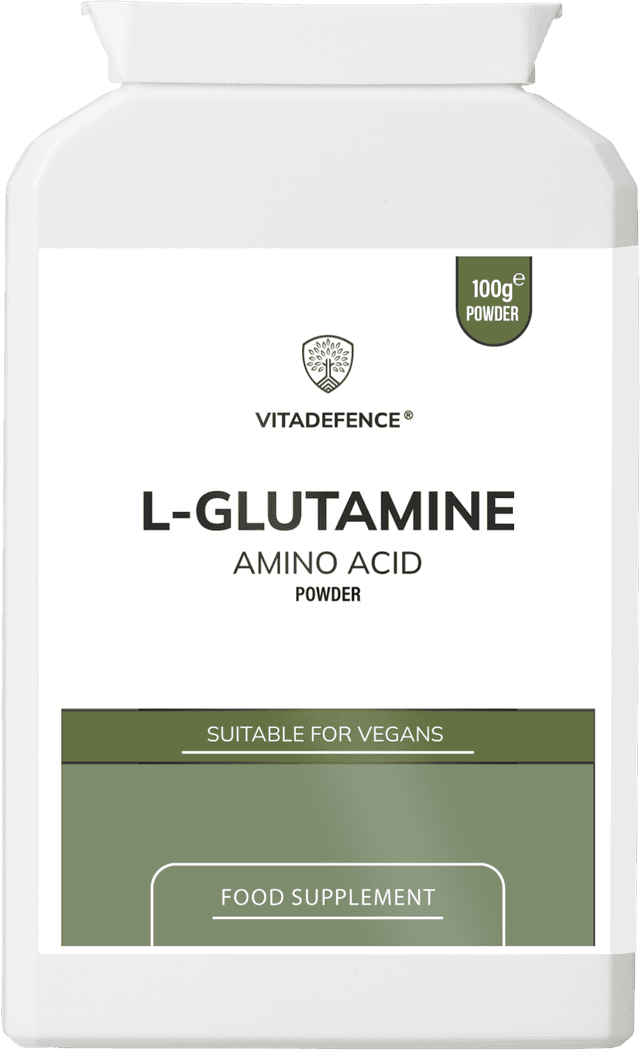
The same amino acid, flexible by the spoon — the post-training shake version.
When the kitchen is already part of the routine
There is a kind of supplement-taker who lives in the kitchen. The protein scoop is already on the counter. The shaker bottle is already in the bag. The blender comes out for breakfast. For this person, a capsule is a step backwards — it adds a ritual to a day that has already been engineered around mixing and pouring.
This little pot is for that kitchen. One hundred grams of pure crystalline L-glutamine, fine white powder, no flavour, no sweetener, no fillers. A teaspoon is roughly five grams. A heaped tablespoon is roughly fifteen grams. The pot scales to whatever your day looks like — a small dose in coffee, a meaningful dose in a post-training shake, a clinical-style dose if a coach or a clinician has set you a number.
Same molecule as the capsule version of this product. Same crystalline amino acid. The choice of form is purely about how the dose enters your day. If your day already has a shaker bottle in it, the powder is the more honest fit.
The pot, in your hand
A clean cream tub, the green band of our label running around it, one hundred grams of fine white crystalline powder inside. It looks like caster sugar but a little finer, a little more uniform. It dissolves in water within a few seconds of stirring, leaving the liquid clear or only very slightly hazy.
The taste is faintly sweet, almost neutral, with a barely perceptible savoury note at higher doses. It mixes invisibly into protein shakes, smoothies, oat milk, almond milk, or even plain water. It does not pair well with very acidic drinks — orange juice or lemon water — because glutamine is mildly heat-and-acid-sensitive, but in the cold neutral liquids most shakes are made of, it sits perfectly.
What L-glutamine actually is
Glutamine is one of the twenty proteinogenic amino acids — the building blocks of every protein your body makes. It is what biochemists call a "conditionally essential" amino acid. The body normally makes its own glutamine from glutamate, in the muscle and the liver, in quantities sufficient for normal life. But under significant stress — heavy training, surgical recovery, prolonged illness, severe injury — demand can rise faster than synthesis, and the body can pull glutamine out of muscle tissue to meet demand elsewhere.
Glutamine is the most abundant free amino acid in human plasma. It is the most abundant amino acid in skeletal muscle. The cells of the small intestine — the enterocytes that line the inside of your gut — use glutamine as their primary fuel source, ahead of glucose. The cells of the immune system, particularly lymphocytes and macrophages, also rely on glutamine for energy at a high rate.
This is the basis on which sports nutrition, surgical recovery clinics, and gastroenterology have all paid attention to glutamine for the better part of fifty years. The body's demand for glutamine rises under stress; supplementation puts a measured amount of the amino acid into the diet without having to source it from twenty grams of cottage cheese or a kilo of beef.
A short history
Glutamine was first isolated from beetroot juice in 1883 by the German chemist Ernst Schulze. Commercial-scale production today is by clean fermentation, typically using a strain of Corynebacterium glutamicum, the same family of bacteria used to produce monosodium glutamate. The output is the fine white crystalline powder that fills this pot.
Within sports nutrition, glutamine had its first real moment in the 1990s, when bodybuilding magazines treated it as the must-have post-workout supplement. The hype settled. What remains, after several decades of more careful research, is a sensible, modest position: glutamine is not a magic muscle-building supplement on its own, but it is one of the cleanest, simplest amino acids you can put into a body that is being trained hard, healing from a tough week, or running on a stressed gut.
Why the powder, and not the capsule
Three reasons people choose the powder over the capsule.
Dose flexibility. A capsule is locked at 500mg. A teaspoon is 5g. A tablespoon is 15g. If your protocol is anything above two grams a day, the powder is dramatically less work — one or two scoops versus four to ten capsules. People on the higher-dose end of the spectrum, particularly endurance athletes, strength athletes between heavy blocks, or anyone on a clinician's larger protocol, almost always default to the powder.
The shake is already happening. If your morning is already built around a protein shake or a smoothie, adding a scoop of glutamine to it costs no time and no extra step. The capsule, by contrast, is an additional swallow on top of an already-busy ritual.
Cost per gram. A 100g pot of pure powder is meaningfully cheaper per gram of glutamine than the equivalent dose in capsules. The capsule pays a small premium for the convenience of the form factor; the powder is the cheaper, more direct route to the molecule.
The post-training scoop
For most people who train, the natural rhythm with glutamine powder is the post-workout shake. Five to ten grams — one to two teaspoons — stirred into the protein shake or the recovery smoothie, taken within an hour of finishing the session. This is when the gut is unusually receptive, blood flow to the muscle is high, and the body's repair processes are most actively recruiting amino acids.
Some people add a second smaller dose in the morning — five grams in coffee or hot oat milk (after the coffee has cooled to drinking temperature, since glutamine is heat-sensitive in solution). Some take it before bed in plain water. The simplest pattern for general well-trained-adult support is one teaspoon a day, post-training. For more intentional protocols — endurance training blocks, recovery from injury, periods of high physical demand — five to ten grams a day, split across two doses.
Don't exceed thirty grams in twenty-four hours. Drink it cold, drink it within ten minutes of stirring it in (glutamine slowly degrades in water once dissolved), and don't pair it with very acidic liquids.
How to use it
A teaspoon — about 5g — into a glass, shaker, smoothie, or plant-milk drink of choice. Stir or shake for ten seconds. Drink within a few minutes. With water or with food, depending on what your stomach prefers. Most people find a 5g scoop is invisible in a 300ml shake; a 10-15g scoop is detectable as a slight savoury note.
The pot of 100g lasts roughly twenty days at one teaspoon a day, ten days at two teaspoons, or as little as a week if you are running a higher-dose protocol.
Honest caveats
This is a food supplement — it complements a varied diet, it doesn't replace one. Glutamine is one of the most-studied amino acids in sports and clinical literature, but the research base on its benefit in healthy, well-fed adults is modest. People with chronic kidney disease, chronic liver disease, or any condition involving impaired ammonia metabolism should not take supplemental glutamine without medical supervision, as glutamine metabolism produces ammonia which the impaired kidney or liver may not clear well. Pregnant or breastfeeding women, or anyone on medication, should speak to their GP before taking.
Don't exceed thirty grams in a single day. Don't dissolve it in boiling water — pour it into the cooled drink. Keep the pot cool, dry, sealed, out of reach of children. The product is suitable for vegetarians, vegans, kosher and halal.
If after eight weeks of consistent use you feel no difference in the things glutamine tends to support — recovery between training sessions, the steadiness of the gut on a stressful schedule, the quickness with which the body resets after a heavy week — stop. A scoop you don't notice the absence of is a scoop you don't need. We would rather have your trust for the next thing than your guilt over the wrong thing.
— Vitadefence
— Vitadefence