Vegan Supplements for Skin, Hair and Nails: The Real Building Blocks
Vegan Supplements for Skin, Hair and Nails: The Real Building Blocks. Evidence-led plain-English guide from Vitadefence UK.
By Vitadefence Team
We often hear that what we put on our skin matters. But what about what we put inside our bodies? For vegans, the question of whether a plant-based diet provides all the building blocks for healthy skin, hair, and nails is a valid one. This article examines the evidence behind key nutrients—from the role of vitamin C in collagen synthesis to the practical considerations of supplementing with MSM and marine collagen alternatives—so you can make informed decisions without the hype.
Why skin, hair and nails need targeted nutrition
Your skin, hair, and nails are among the most metabolically active tissues in your body. They rely on a constant supply of specific nutrients to maintain structure, strength, and function. While a well-planned vegan diet can provide many of these nutrients, certain ones are either harder to obtain from plant sources alone or require higher intakes for optimal tissue health.
The European Food Safety Authority (EFSA) has authorised several health claims that directly relate to skin, hair, and nail health. For example, vitamin C contributes to normal collagen formation for the normal function of skin, and zinc contributes to the maintenance of normal skin, hair, and nails (EU Register of Health Claims). These are not marketing claims—they are evidence-based statements supported by decades of nutritional science.
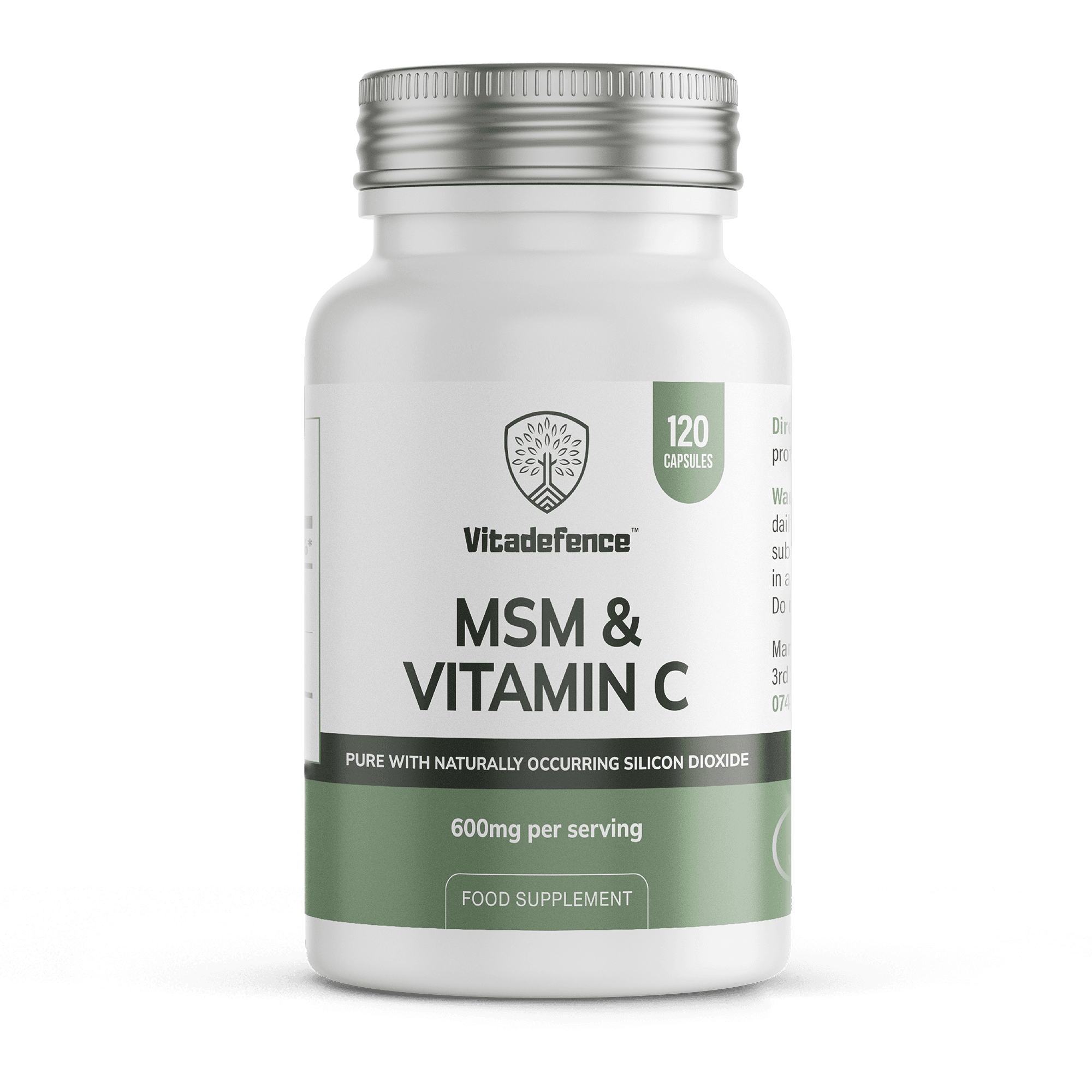
But the picture is more nuanced than simply taking a multivitamin. The bioavailability of nutrients, the form they are delivered in, and the presence of co-factors all influence whether your body can actually use them. That is where targeted supplements, such as those from Vitadefence's MSM with Vitamin C, can fill genuine gaps.
The science: what the evidence actually says
Vitamin C and collagen synthesis
Collagen is the most abundant protein in your body, providing structure to skin, hair, nails, bones, and connective tissue. While the body can produce collagen from amino acids (proline and glycine), the process requires vitamin C as a co-factor. Without adequate vitamin C, collagen synthesis slows down, and tissues become weaker and more prone to damage.
Research published in Nutrients (2018) confirms that vitamin C is essential for the hydroxylation of proline and lysine residues during collagen formation (PubMed ID: 29346372). The EFSA has authorised the claim: Vitamin C contributes to normal collagen formation for the normal function of skin. The recommended daily intake for adults is 80 mg, but some studies suggest that intakes of 100–200 mg daily may be optimal for skin health, especially when combined with other nutrients.
For vegans, vitamin C is readily available from fruits and vegetables, but the challenge is ensuring consistent intake. A supplement like Vitadefence MSM with Vitamin C provides 100 mg of vitamin C per capsule alongside MSM, a compound that also supports connective tissue.
MSM (methylsulfonylmethane) for skin and hair
MSM is a naturally occurring sulphur compound found in plants, animals, and humans. It is a key source of dietary sulphur, which is needed for the production of keratin—the protein that makes up hair and nails—and for the formation of collagen cross-links that give skin its firmness.
Clinical trials on MSM for skin health have shown promising results. A 2015 randomised, double-blind, placebo-controlled trial published in the International Journal of Cosmetic Science found that oral MSM (3 g/day for 16 weeks) significantly reduced facial wrinkles and improved skin firmness and tone compared to placebo (PubMed ID: 25688500). Another study in Nutrients (2020) reported that MSM supplementation improved hair thickness and shine in women with thinning hair (PubMed ID: 32759672).
The typical dose used in research is 1–3 g per day. Vitadefence's MSM with Vitamin C provides 1000 mg of OptiMSM® per capsule, a high-purity form that has been extensively studied. This is a sensible starting point, and you can adjust based on individual tolerance and response.
Zinc for hair and nail integrity
Zinc is a trace mineral that plays a central role in cell division, protein synthesis, and wound healing. For hair, zinc is critical for hair follicle function and the structural integrity of the hair shaft. For nails, zinc deficiency can lead to white spots, brittleness, and slow growth.
The EFSA has authorised the claim: Zinc contributes to the maintenance of normal skin, hair, and nails. The recommended daily intake for adults is 8–11 mg, but vegans may need to pay extra attention because plant sources of zinc (such as legumes, nuts, and seeds) contain phytates that reduce absorption. A targeted zinc supplement, such as those found in Vitadefence's product range, can help bridge this gap.
Marine collagen alternatives for vegans
Traditional collagen supplements are derived from animal sources (bovine, porcine, or marine). For vegans, this is not an option. However, the body does not need pre-formed collagen—it needs the building blocks: amino acids, vitamin C, and other co-factors.
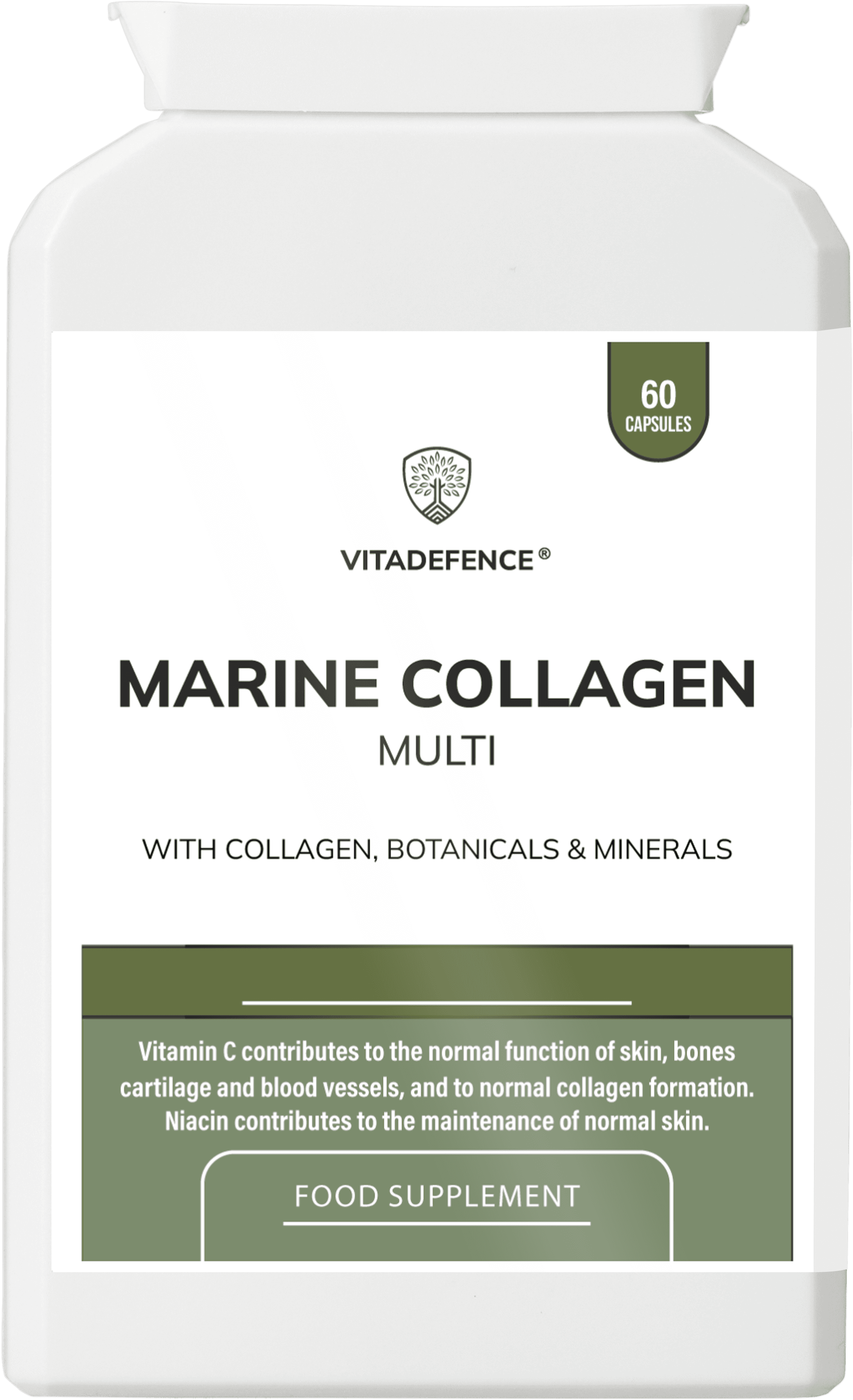
Vegan collagen boosters typically provide amino acids like glycine, proline, and lysine alongside vitamin C and other nutrients that support the body's own collagen production. Vitadefence's Marine Collagen Multi is a plant-based alternative that combines these amino acids with vitamin C, zinc, and copper—all of which have authorised health claims for skin, hair, and nails. This approach is evidence-based and avoids the ethical and environmental concerns associated with animal-derived collagen.
Practical guidance: how to choose and use supplements
Dosage and timing
- Vitamin C: 100–200 mg daily, ideally with food to enhance absorption. Higher doses (above 500 mg) are not necessary and may cause digestive upset.
- MSM: Start with 1000 mg daily and increase gradually to 2000–3000 mg if tolerated. MSM is water-soluble, so take with plenty of water throughout the day.
- Zinc: 8–11 mg daily is sufficient for most adults. Avoid taking zinc with high-calcium meals or supplements, as calcium can interfere with absorption.
- Amino acids: Follow the label instructions for any vegan collagen booster. Consistency matters more than timing.
Stacking with other supplements
These nutrients work synergistically. For example, vitamin C enhances MSM absorption, and zinc supports the enzymatic reactions that use amino acids for collagen synthesis. A combined supplement like Vitadefence MSM with Vitamin C simplifies this. You can also pair it with a broad-spectrum multivitamin from Vitadefence bundles to cover any other gaps.
What to look for in a supplement
Not all supplements are created equal. Look for:
- Third-party testing for purity and potency
- No proprietary blends—you should know exactly how much of each ingredient you are getting
- Suitable for vegans—HPMC capsules are a good indicator
- GMP-certified manufacturing to ensure quality control
You can read more about how Vitadefence meets these standards in our customer reviews.
Who is this for?
These supplements are particularly useful for:
- Vegans and vegetarians who may have lower intakes of certain nutrients like zinc and sulphur
- People with dietary restrictions that limit variety
- Those noticing changes in skin, hair, or nails—such as dryness, brittleness, or slower growth
- Active individuals whose connective tissues undergo greater stress
- Anyone over 30, when natural collagen production begins to decline
Who should be cautious?
While these supplements are generally safe, some people should consult a healthcare professional first:
- Pregnant or breastfeeding women—vitamin C and zinc are safe at recommended levels, but MSM has not been extensively studied in pregnancy
- People with kidney stones—high doses of vitamin C can increase oxalate levels
- Those on medications—zinc can interact with antibiotics (e.g., tetracyclines) and diuretics
- Individuals with autoimmune conditions—MSM may stimulate the immune system in some cases
If you are unsure, start with a lower dose and monitor your response. You can also read more about safety considerations in our supplement safety guide.
Frequently asked questions
Can supplements really improve hair growth?
There is evidence that correcting deficiencies—particularly of zinc, iron, and vitamin D—can improve hair growth in people who are deficient. However, supplements will not regrow hair that has been lost due to genetics or hormonal factors. The EFSA has authorised claims for zinc and vitamin C in maintaining normal hair, but not for promoting growth. If you are concerned about hair loss, it is best to see a healthcare professional first.
How long does it take to see results for skin, hair, and nails?
Nails grow about 3 mm per month, and hair grows about 1 cm per month. Skin cell turnover takes around 28 days. For supplements to affect these tissues, you typically need to take them consistently for 3–6 months before noticing visible changes. Patience and consistency are key.
Are vegan collagen boosters as effective as animal-derived collagen?
Animal-derived collagen provides pre-formed collagen peptides, while vegan boosters provide the building blocks for your body to make its own collagen. Both approaches have evidence supporting them, but they work differently. For vegans, a well-formulated booster with amino acids, vitamin C, and zinc is a practical and ethical alternative. The key is to choose a product with adequate doses and bioavailable forms.
Can I get enough of these nutrients from food alone?
It depends on your diet. A whole-food vegan diet rich in fruits, vegetables, legumes, nuts, and seeds can provide adequate vitamin C and zinc for most people. However, sulphur from MSM is primarily found in animal foods, and the amount of zinc absorbed from plant sources is lower due to phytates. If your diet is varied and well-planned, you may not need supplements. But if you have specific concerns about skin, hair, or nail health, targeted supplementation can help.
What is the best time of day to take these supplements?
Vitamin C and MSM are best taken with food to reduce the risk of stomach upset. Zinc is better absorbed on an empty stomach, but if it causes nausea, take it with a meal. Many people prefer to take their supplements in the morning to establish a routine. Consistency matters more than timing.
Are there any side effects?
At recommended doses, side effects are rare. High doses of vitamin C (above 500 mg) can cause diarrhoea and stomach cramps. MSM may cause mild digestive upset when starting, but this usually resolves. Zinc can cause nausea if taken on an empty stomach. Always follow the label instructions and do not exceed the recommended dose.
How Vitadefence does it
At Vitadefence, we believe in transparency and quality. Our supplements are made in the UK in a GMP-certified facility, meaning every batch is tested for purity, potency, and contaminants. We use HPMC (hydroxypropyl methylcellulose) capsules—a plant-based alternative to gelatine—so our products are suitable for vegans and vegetarians.
We never use proprietary blends. Every ingredient and its dose is clearly listed on the label, so you know exactly what you are taking. Our MSM with Vitamin C contains 1000 mg of OptiMSM® and 100 mg of vitamin C per capsule—no hidden fillers or unnecessary additives.
We also offer free delivery on all orders via Royal Mail Tracked 48, so your supplements arrive quickly and securely. For more details, see our shipping information.
Bottom line
Healthy skin, hair, and nails are not about quick fixes or miracle ingredients. They are the result of consistent, evidence-based nutrition that supports your body's natural processes. For vegans, targeted supplements like vitamin C, MSM, zinc, and vegan collagen boosters can help fill genuine gaps that diet alone may not cover.
If you are looking for a simple, science-backed starting point, consider Vitadefence MSM with Vitamin C for daily support of collagen synthesis and connective tissue health. For a more comprehensive approach, explore our Marine Collagen Multi—a plant-based formula designed to provide the building blocks your body needs.
Remember: supplements are just one piece of the puzzle. A balanced diet, adequate sleep, stress management, and sun protection are equally important. Start with one change, stay consistent, and give your body the time it needs to respond.
This article is for educational purposes only and does not constitute medical advice. Always consult a healthcare professional before starting any new supplement regimen, especially if you are pregnant, breastfeeding, or have a pre-existing medical condition. The health claims referenced are authorised under EU Regulation 1924/2006 and may vary outside the UK. Individual results may vary.
Related products
More from the journal
Spirulina: The Original Superfood — Protein, B12, and Phycocyanin Antioxidant Power
9 min · Ingredients
Siberian Ginseng Benefits: Why This Adaptogen Is Different From Panax Ginseng
7 min · Ingredients