Supplements for Women Over 40: What the Research Actually Supports
Supplements for Women Over 40: What the Research Actually Supports. Evidence-led plain-English guide from Vitadefence UK.
By Vitadefence Team
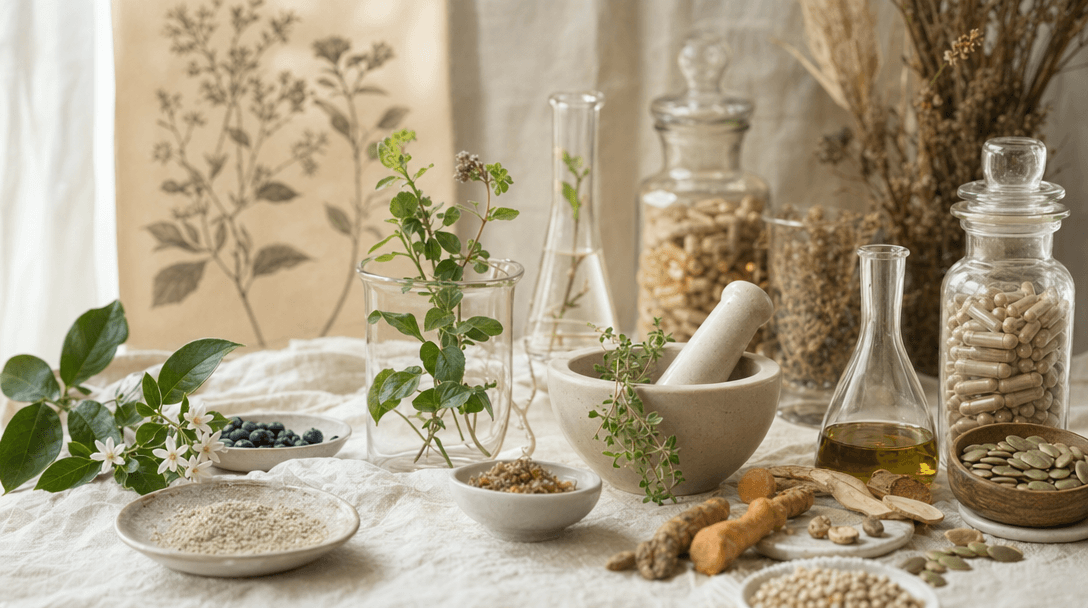
As women navigate their 40s, the conversation around supplements often shifts from general wellness to targeted support for hormonal transitions, bone density, and energy metabolism. While the market is flooded with “menopause relief” blends, the evidence base for many ingredients is surprisingly thin. This article separates the research-backed strategies from the marketing hype, focusing on what the science actually supports for women over 40 — and how to choose supplements that deliver measurable, transparent benefits.
Why nutritional needs change after 40
The midlife transition is not a disease state, but it does bring physiological shifts that alter nutrient requirements. The decline in oestrogen production — beginning in the perimenopausal years, typically around age 45–47 — affects calcium absorption, vitamin D metabolism, and the body’s ability to regulate inflammation and oxidative stress. Simultaneously, muscle mass naturally decreases by 3–8% per decade after 30, a process called sarcopenia that accelerates after menopause. This combination means that women over 40 may need higher intakes of certain nutrients to maintain bone density, muscle function, and energy levels, while caloric needs may remain stable or decrease slightly.
A 2021 review in Nutrients (PubMed ID: 34836264) highlighted that women in this age bracket are particularly at risk for suboptimal intakes of magnesium, vitamin D, calcium, and B vitamins — not because of poor diet alone, but because age-related changes in absorption and metabolism increase requirements. The UK National Diet and Nutrition Survey (NDNS) consistently shows that women aged 40–64 have average magnesium intakes below the Lower Reference Nutrient Intake (LRNI), which is concerning given magnesium’s role in over 300 enzymatic reactions, including muscle relaxation and sleep regulation.
Rather than reaching for a broad “multivitamin for women over 40” that may contain 30+ ingredients at sub-clinical doses, the evidence supports a more targeted approach: prioritising nutrients where deficiency is common, bioavailability is high, and the dose matches what clinical studies have used to show benefit.
What the research actually supports
Magnesium: the overlooked mineral for sleep, stress, and muscle health
Magnesium is one of the most researched minerals for women over 40, particularly in relation to sleep quality and stress reduction. A 2022 systematic review in Biological Trace Element Research (PubMed ID: 35064542) found that magnesium supplementation significantly improved subjective sleep quality, sleep onset latency, and sleep efficiency in older adults, including postmenopausal women. The mechanism is well-established: magnesium binds to GABA receptors in the brain, promoting a calming effect that can counteract the hyperarousal often seen during perimenopause.
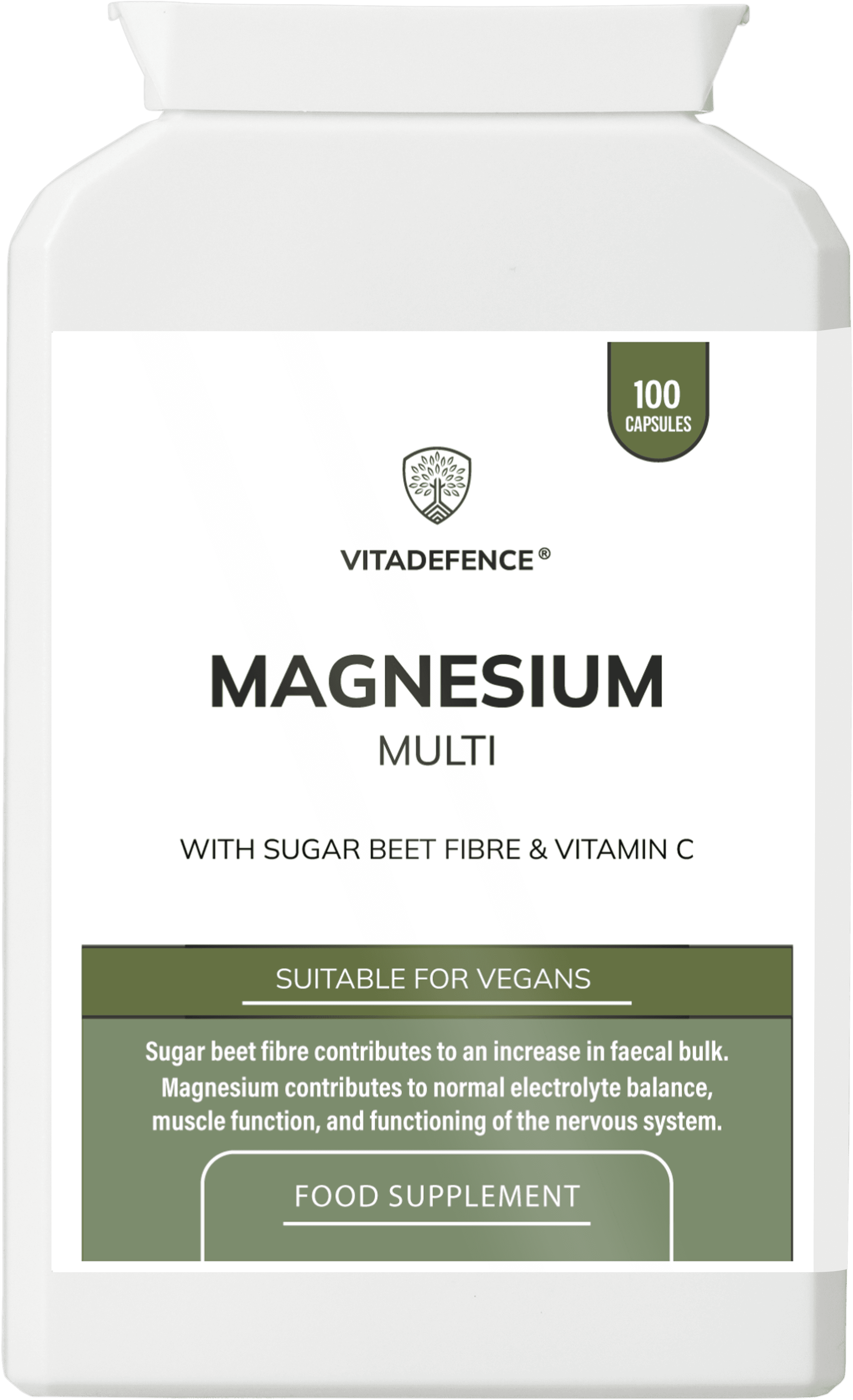
For practical guidance, the clinical literature typically uses doses between 200–400 mg of elemental magnesium per day. However, absorption varies by form. Magnesium glycinate (bound to the amino acid glycine) is generally the best-tolerated form for sleep and stress, as it’s less likely to cause digestive upset than magnesium oxide or citrate. The Vitadefence Magnesium Multi provides 375 mg of elemental magnesium from a bisglycinate chelate, which is within the evidence-based range and formulated for optimal absorption.
It’s worth noting that magnesium also plays a role in bone health — a 2020 meta-analysis in Osteoporosis International (PubMed ID: 32556445) found that higher magnesium intake was associated with greater bone mineral density in women aged 45–70. This is especially relevant because bone loss accelerates in the first five years after menopause, when oestrogen’s protective effect on bone remodelling diminishes.
Red clover isoflavones: traditional use with emerging evidence
Red clover (Trifolium pratense) is one of the most widely used botanicals for menopausal symptom relief, particularly hot flushes and night sweats. The active compounds are isoflavones — specifically genistein, daidzein, and biochanin A — which are phytoestrogens that can weakly bind to oestrogen receptors. The European Medicines Agency (EMA) has approved red clover for the traditional use of relieving menopausal symptoms, based on longstanding use rather than robust clinical trial data.
However, a 2023 Cochrane review (PubMed ID: 37051746) that analysed 17 randomised controlled trials found that red clover isoflavones may reduce hot flush frequency by about 30–40% compared to placebo, though the quality of evidence was rated as moderate. The review noted that the effect appears to be dose-dependent, with studies using 40–80 mg of total isoflavones per day showing the most consistent results. Importantly, red clover is not a hormone replacement therapy — it does not contain oestrogen, and its effects are much weaker than pharmaceutical options.
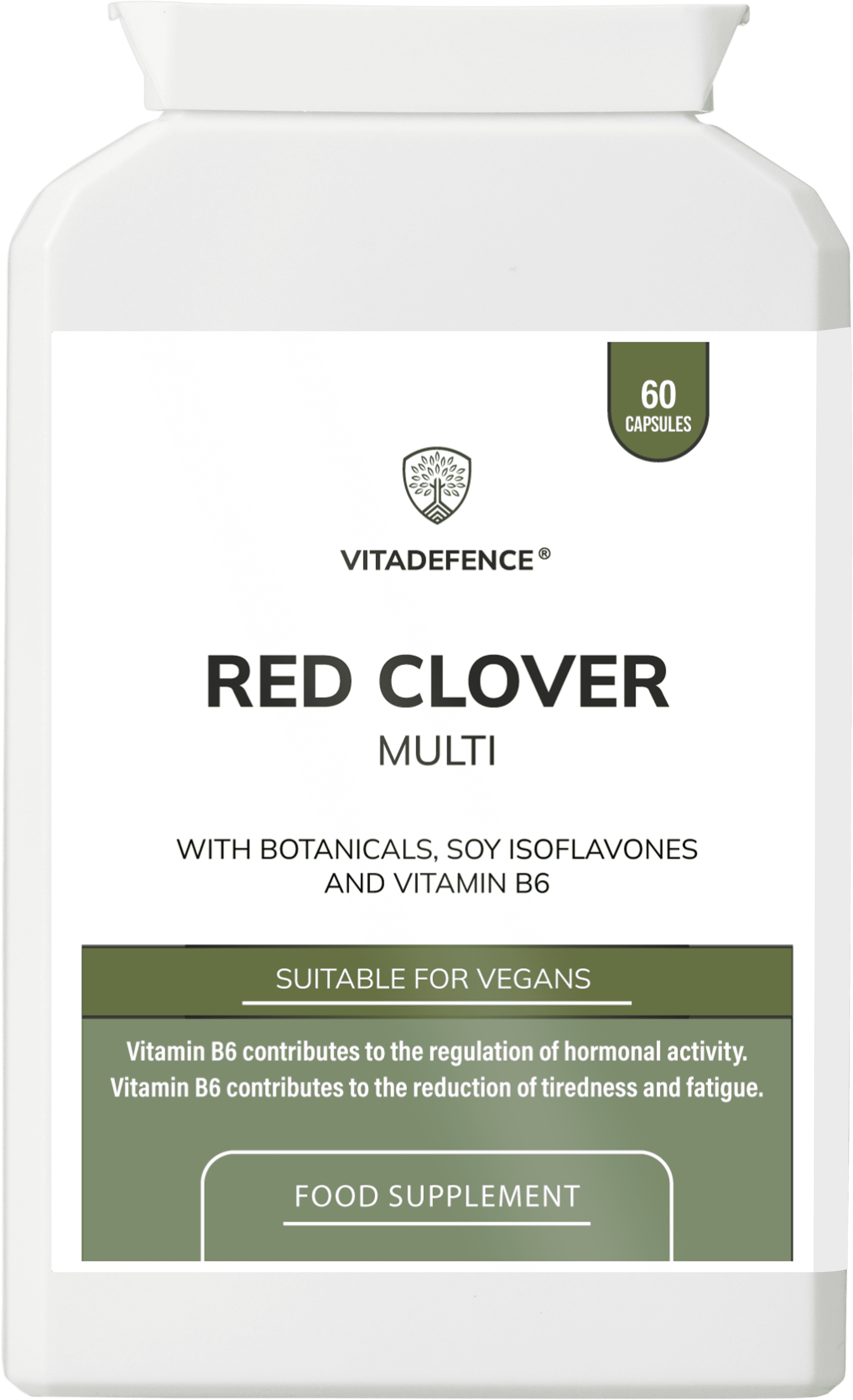
The Vitadefence Red Clover Multi delivers 50 mg of standardised red clover isoflavones per serving, which aligns with the dose range used in clinical research. It is categorised under traditional herbal registration (THR) in the UK, meaning it can only make claims based on traditional use for menopausal symptom relief, not for treating or preventing any disease.
Vitamin D and calcium: the bone health foundation
Vitamin D deficiency is common in the UK, particularly during autumn and winter months, and women over 40 are at higher risk because skin synthesis of vitamin D declines with age. A 2022 study in The Lancet Diabetes & Endocrinology (PubMed ID: 35218763) confirmed that maintaining serum 25-hydroxyvitamin D levels above 50 nmol/L is associated with reduced risk of osteoporotic fracture in postmenopausal women. The UK Scientific Advisory Committee on Nutrition (SACN) recommends 10 mcg (400 IU) per day for all adults, but many experts suggest 25–50 mcg (1000–2000 IU) for women over 50, especially those with limited sun exposure.
Calcium requirements also increase after menopause. The UK Reference Nutrient Intake (RNI) for women over 50 is 1200 mg per day, up from 700 mg for younger adults. While food sources — dairy, fortified plant milks, leafy greens — should come first, many women struggle to meet this target. A 2021 position paper from the British Dietetic Association noted that calcium supplements may be appropriate for women with low dietary intake, but doses should not exceed 500 mg at a time to optimise absorption and minimise cardiovascular risk concerns raised by some observational studies.
For women who prefer a combined approach, the red clover formula also includes calcium and vitamin D3, providing a convenient single-serving option that covers these bone-supporting nutrients alongside the botanical isoflavones.
B vitamins: energy metabolism and cognitive function
B vitamins — particularly B6, B12, and folate — are essential for energy-yielding metabolism and homocysteine regulation. Elevated homocysteine is an independent risk factor for cardiovascular disease and cognitive decline, and levels tend to rise after menopause as oestrogen’s influence on homocysteine metabolism wanes. A 2020 randomised controlled trial in Alzheimer's & Dementia (PubMed ID: 32157836) found that supplementation with B6 (25 mg), B12 (500 mcg), and folic acid (800 mcg) slowed cognitive decline in older adults with elevated homocysteine over a two-year period.
The EU Register of Health Claims authorises the statement: “Vitamin B6 contributes to normal energy-yielding metabolism” and “Vitamin B12 contributes to normal homocysteine metabolism.” These are factual, evidence-based claims that don’t overpromise. For women over 40, a B-complex that provides these vitamins at clinical doses — not just the RNI — may be beneficial, particularly if dietary intake is inconsistent or if there are absorption concerns related to age-related stomach acid reduction.
Practical guidance: how to build a supplement routine
Rather than layering multiple single-ingredient supplements, a streamlined approach that covers the most evidence-supported nutrients is both more practical and more likely to be sustained. Here’s a framework based on current research:
- Start with a foundation: A targeted multi or botanical formula that addresses the most common gaps — magnesium, vitamin D, B vitamins, and isoflavones for symptom support. The Red Clover Multi from Vitadefence combines red clover isoflavones with calcium, vitamin D3, and B vitamins, making it a single-product solution for women who want symptom relief alongside bone and energy support.
- Add magnesium separately if needed: For women whose primary concerns are sleep quality, muscle tension, or stress, a dedicated magnesium supplement at 300–400 mg elemental magnesium per day can be added. The Magnesium Multi provides this in a glycinate form that’s gentle on the stomach and well-absorbed.
- Consider vitamin D as a standalone: If you’re not getting enough from sun exposure or fortified foods, a vitamin D3 supplement at 25–50 mcg (1000–2000 IU) daily is supported by UK guidelines and bone health research.
- Don’t forget diet and lifestyle: Supplements are not a substitute for a nutrient-dense diet, regular weight-bearing exercise, adequate protein intake, and stress management. The best research consistently shows that supplements work best in the context of an overall healthy lifestyle — they fill gaps, not replace foundations.
For women who are unsure where to start, customer reviews on our site often provide helpful real-world perspectives on how different products have worked for women in this age group. It’s also worth reading our companion blog post on nutrient timing during perimenopause, which covers when to take specific supplements for maximum absorption.
Who this approach is for
This evidence-based supplement strategy is most appropriate for women aged 40–65 who are experiencing or approaching the perimenopausal or menopausal transition and want to address specific concerns such as:
- Sleep disturbances or night sweats
- Low energy or fatigue
- Muscle tension or cramps
- Bone health maintenance
- Stress or mood fluctuations
It’s also suitable for women who have been told by a healthcare professional that they have low vitamin D, magnesium, or B vitamin levels based on blood tests, and want a targeted supplement that delivers clinically meaningful doses rather than token amounts.
Who should be cautious
Not every woman over 40 needs supplements, and some should exercise caution. The following groups should consult a healthcare professional before starting any new supplement regimen:
- Women with a history of oestrogen-sensitive cancers (e.g., breast, ovarian, endometrial): While red clover isoflavones are not oestrogen, their phytoestrogen activity means that women with these conditions should seek medical advice before using any botanical product that interacts with oestrogen receptors.
- Women taking blood-thinning medications (e.g., warfarin): High doses of vitamin K or certain botanicals can interfere with anticoagulant therapy. Magnesium supplements are generally safe, but doses above 400 mg daily may interact with some medications.
- Women with kidney disease: Magnesium and calcium supplements can accumulate in the body when kidney function is impaired, so medical supervision is essential.
- Women who are pregnant or breastfeeding: The safety of red clover isoflavones during pregnancy and lactation has not been established, so these products should be avoided unless specifically recommended by a doctor.
For those who are unsure, our free shipping policy and 30-day satisfaction guarantee make it risk-free to try a product and see how it works for you — but we always encourage an informed approach.
Frequently asked questions
Are supplements for women over 40 really necessary, or can I get everything from food?
In an ideal world, a well-planned diet would cover all nutrient needs. However, the UK NDNS data shows that many women over 40 fall short on magnesium, vitamin D, and calcium — partly because modern farming practices have reduced mineral content in soil, and partly because absorption efficiency declines with age. Supplements are a practical way to fill these gaps, but they should complement a nutrient-dense diet, not replace it. The research supports targeted supplementation for specific deficiencies, not blanket “multivitamins for all.”
How long does it take for red clover to work for hot flushes?
Clinical trials typically measure outcomes after 8–12 weeks of consistent use. Some women report noticing a reduction in hot flush frequency within 2–4 weeks, but the full effect may take up to three months. The dose matters: studies using 40–80 mg of total isoflavones per day showed the most consistent results. Our Red Clover Multi provides 50 mg per serving, which falls within this evidence-based range.
Can magnesium help with sleep during perimenopause?
Yes — the evidence is quite strong. A 2022 systematic review found that magnesium supplementation improved sleep quality, sleep onset latency, and sleep efficiency in older adults, including postmenopausal women. The mechanism involves magnesium’s ability to activate the parasympathetic nervous system and bind to GABA receptors. For best results, take magnesium glycinate 30–60 minutes before bed. The Magnesium Multi uses this form and provides 375 mg elemental magnesium per serving.
Is it safe to take red clover and magnesium together?
There are no known interactions between red clover isoflavones and magnesium supplements. Many women take both together — red clover for symptom relief during the day, and magnesium for sleep support in the evening. As with any supplement regimen, it’s wise to start one product at a time to see how your body responds, and to check with a healthcare professional if you have any underlying health conditions or take prescription medications.
What about soy isoflavones — are they better than red clover?
Soy isoflavones have more clinical trial data than red clover, particularly for reducing hot flush frequency. However, red clover contains a different profile of isoflavones (including biochanin A and formononetin) that may be better absorbed and have a longer half-life in the body. The 2023 Cochrane review found that both soy and red clover isoflavones showed similar effect sizes for hot flush reduction, but the quality of evidence was moderate for both. The choice often comes down to personal preference, dietary restrictions, and whether you want the additional nutrients (calcium, vitamin D, B vitamins) that the red clover multi provides.
Do I need a prescription for these supplements?
No — all Vitadefence products are available over the counter and do not require a prescription. However, the Red Clover Multi is registered as a traditional herbal medicine (THR) with the UK Medicines and Healthcare products Regulatory Agency (MHRA), which means it has been assessed for safety and quality, but can only make claims based on traditional use. Magnesium supplements are classified as food supplements and are regulated by the Food Standards Agency. We always recommend discussing any new supplement with your GP or a registered dietitian, especially if you have a medical condition or take prescription medications.
How Vitadefence does it
At Vitadefence, we believe that supplements should be transparent, effective, and made to pharmaceutical-grade standards — not hidden behind proprietary blends or marketing fluff. Every product we make is manufactured in the UK at a GMP-certified facility, meaning each batch is tested for purity, potency, and contaminant levels. We use HPMC (hydroxypropyl methylcellulose) capsules, which are plant-based, vegan-friendly, and free from common allergens like gelatin, gluten, and soy. Our formulas are fully disclosed on the label — no proprietary blends, no mystery ingredients — so you know exactly what you’re taking and how much. Delivery is free via Royal Mail Tracked 48, and we offer a 30-day satisfaction guarantee because we’re confident in the quality of what we make. Whether you choose the Red Clover Multi for menopausal symptom support or the Magnesium Multi for sleep and stress, you’re getting a product built on evidence, not hype.
Bottom line
Women over 40 face real nutritional challenges — declining oestrogen, reduced absorption, and increased demands on bone and muscle health. The research supports targeted supplementation with magnesium, vitamin D, B vitamins, and, for those experiencing menopausal symptoms, red clover isoflavones. These aren’t miracle cures; they’re evidence-based tools that work best when paired with a balanced diet, regular exercise, and good sleep hygiene. If you’re ready to build a supplement routine that’s backed by science and made to the highest UK standards, start with the Red Clover Multi or the Magnesium Multi — and see the difference that transparent, targeted nutrition can make.
This article is for educational purposes only and does not constitute medical advice. The information provided is based on published research and authorised health claims under EU Regulation 1924/2006. Supplements should not be used as a substitute for a varied, balanced diet and a healthy lifestyle. Always consult a qualified healthcare professional before starting any new supplement, particularly if you are pregnant, breastfeeding, have a medical condition, or take prescription medications. Individual results may vary. The European Commission’s EU Register of Nutrition and Health Claims was consulted for authorised claims referenced in this article.
Related products
More from the journal
Spirulina: The Original Superfood — Protein, B12, and Phycocyanin Antioxidant Power
9 min · Ingredients
Siberian Ginseng Benefits: Why This Adaptogen Is Different From Panax Ginseng
7 min · Ingredients