Creatine: Not Just for Bodybuilders — Benefits for Everyone
Creatine isn't just for bodybuilders. Research shows benefits for brain health, bone density, blood sugar, and healthy ageing. One of the safest and most studied supplements available.
By Vitadefence Team

When most people hear 'creatine,' they picture muscular bodybuilders at the gym. But creatine is one of the most well-researched supplements in existence, with benefits extending far beyond muscle building — from brain health to healthy ageing.
What Is Creatine?
Creatine is a naturally occurring compound made from amino acids. Your body produces about 1-2 grams per day, primarily in the liver and kidneys. It's also obtained from foods like red meat and fish. About 95% of your body's creatine is stored in skeletal muscle as phosphocreatine, where it plays a crucial role in rapid energy production.
Beyond Muscle: Surprising Benefits
Brain health: Your brain accounts for about 20% of your body's energy expenditure. Creatine supplementation has been shown to improve memory, reasoning, and mental fatigue resistance — particularly during sleep deprivation or cognitive stress. Research is also exploring its potential role in neuroprotective conditions.
Bone health: Studies suggest creatine combined with resistance exercise may enhance bone mineral density, particularly important for postmenopausal women at risk of osteoporosis.
Blood sugar regulation: Some research indicates creatine may improve glucose tolerance, particularly when combined with exercise.
Healthy ageing: Age-related muscle loss (sarcopenia) is a major health concern. Creatine supplementation combined with resistance training has been shown to be more effective at preserving muscle mass and strength in older adults than exercise alone.
Safety Profile
Creatine monohydrate has been studied extensively for over 30 years. The International Society of Sports Nutrition considers it one of the safest and most effective supplements available. Common myths about kidney damage have been thoroughly debunked in healthy individuals.
How to Take It
The most evidence-backed form is creatine monohydrate. A simple approach is 3-5 grams per day — no loading phase required. It can be mixed into water, juice, or a protein shake. Consistency is more important than timing — take it daily for best results.
How to Choose a Quality Creatine Supplement
Creatine is one of the most studied supplements in history, but product quality still varies:
- Creatine monohydrate: This is the gold standard. It is the most researched form with the strongest evidence base. Fancy alternatives (creatine HCl, buffered creatine, creatine ethyl ester) cost more but have not been shown to be superior in any clinical study.
- Creapure®: This is a patented, German-manufactured creatine monohydrate regarded as the purest available (99.99%). If a product uses Creapure, it will typically state this on the label.
- Micronised form: Micronised creatine dissolves better in water and may cause less stomach discomfort. Most quality products now use micronised creatine monohydrate.
- Unflavoured: Pure creatine monohydrate is virtually tasteless. Flavoured products often contain unnecessary sweeteners, colours, and fillers. Unflavoured powder mixed into a drink is the simplest and most cost-effective option.
- Third-party testing: For athletes concerned about banned substances, look for Informed Sport or BSCG certification.
Who Should Consider Creatine?
Creatine supplementation may be particularly beneficial for:
- Anyone who exercises regularly — creatine improves high-intensity exercise performance across virtually all activity types
- Older adults — creatine combined with resistance training has been shown to improve muscle mass, strength, and functional performance in adults over 50
- Vegetarians and vegans — dietary creatine comes almost exclusively from meat and fish, so plant-based eaters typically have lower baseline levels and may see greater benefits from supplementation
- Those interested in cognitive support — emerging research suggests creatine may enhance working memory and reduce mental fatigue, particularly during sleep deprivation or stressful cognitive tasks
- Athletes in power and sprint sports (football, rugby, sprinting, weightlifting)
Daily Tips for Getting the Most from Creatine
Take 3–5 grams of creatine monohydrate daily — no loading phase is necessary (though loading with 20 g/day for 5 days saturates muscles faster). Consistency is key: take it every day, including rest days, to maintain saturated muscle creatine levels. Mix with warm water for better dissolution, or add to a post-workout shake. Taking creatine with carbohydrates and protein may slightly enhance uptake due to insulin-mediated transport. Stay well-hydrated, as creatine draws water into muscle cells. Ignore myths about creatine causing kidney damage — decades of research in healthy individuals show no adverse effects on kidney function at recommended doses.
Recommended for You

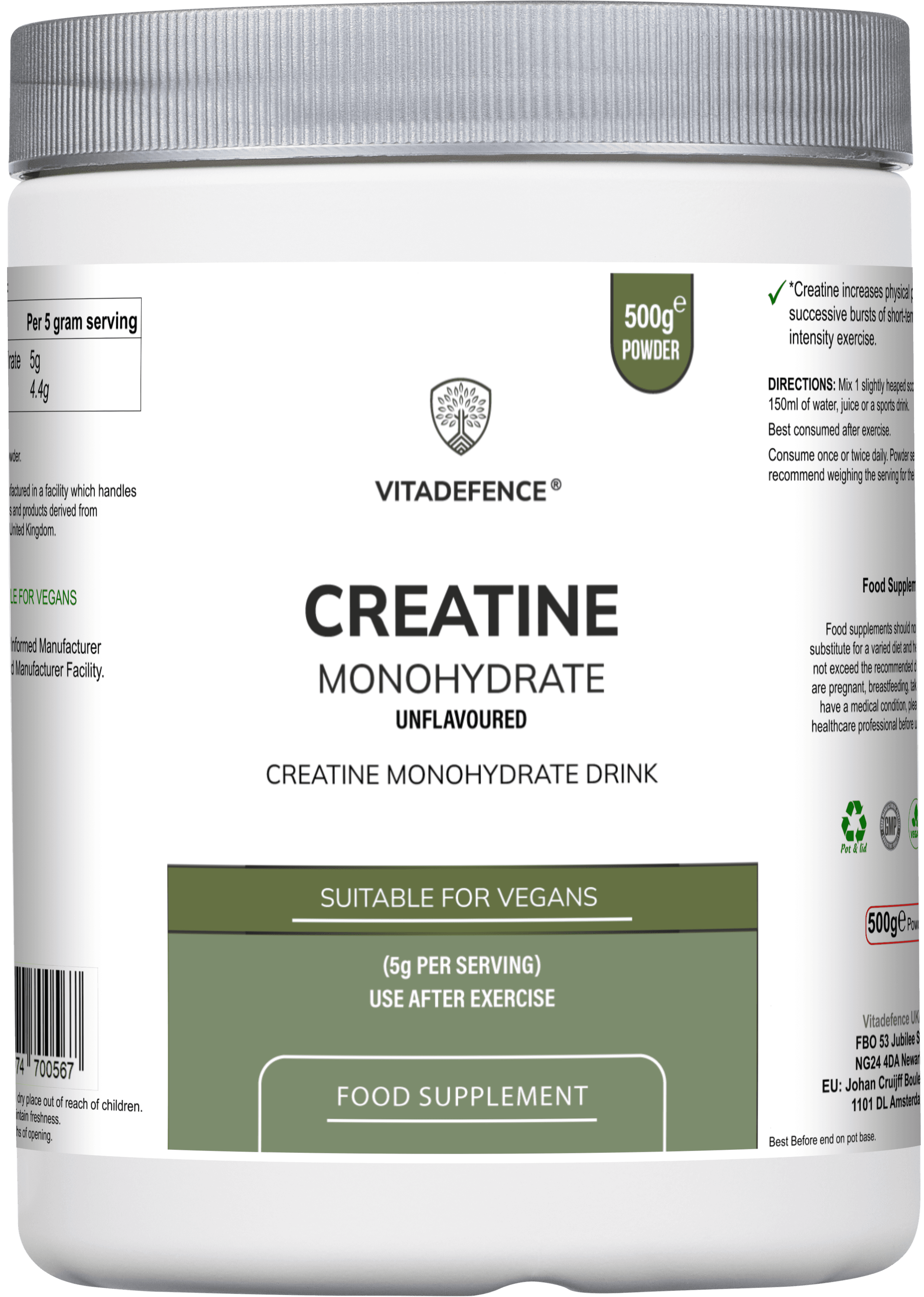
Creatine Monohydrate — 500g
£17.50
Shop NowThis article is for informational purposes only and does not constitute medical advice. Vitadefence supplements are food supplements, not medicines. Consult a healthcare professional if you are pregnant, breastfeeding, on medication, or have a medical condition.
Related products
More from the journal
Spirulina: The Original Superfood — Protein, B12, and Phycocyanin Antioxidant Power
9 min · Ingredients
Siberian Ginseng Benefits: Why This Adaptogen Is Different From Panax Ginseng
7 min · Ingredients