
Krill Oil Antarctic: EPA, DHA and Astaxanthin — What's In It
Contents
1 - Introduction
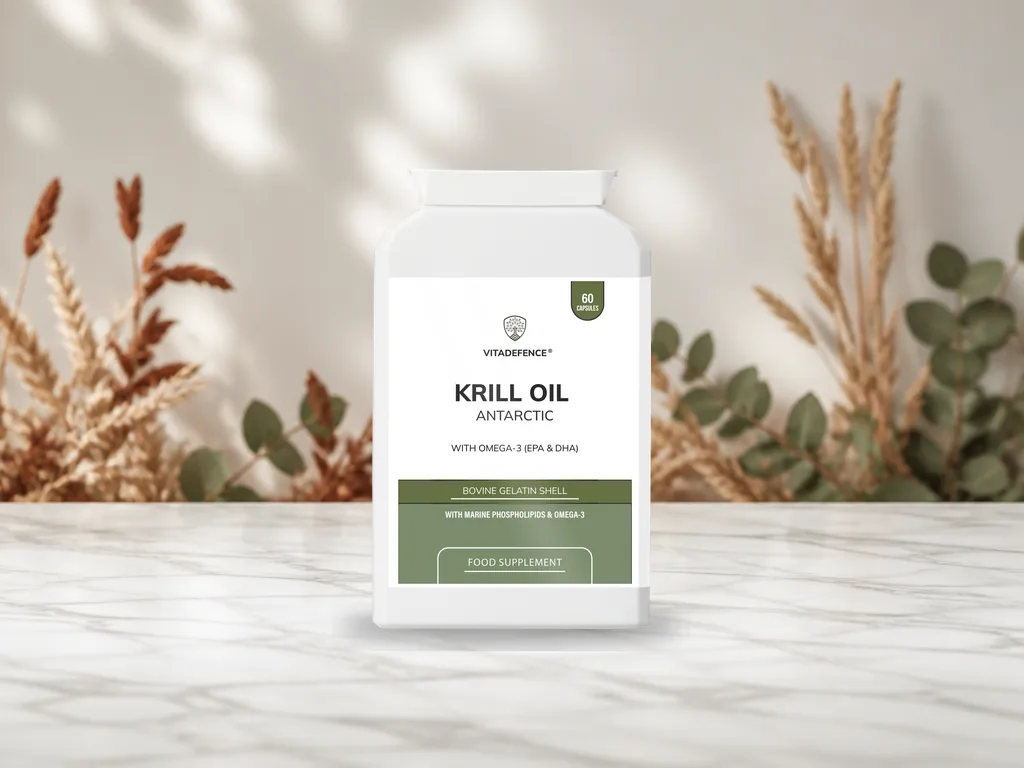
If you’re looking for a marine omega‑3 that goes beyond standard fish oil, Krill Oil Antarctic delivers a concentrated dose of EPA and DHA in a phospholipid form, plus the natural antioxidant astaxanthin. Each softgel provides 500 mg of Antarctic krill oil, with 200 mg of total marine phospholipids and a guaranteed 100 µg of astaxanthin — a combination designed for efficient absorption and stability. Below, we break down the science, the ingredients, and how this supplement fits into a balanced approach to essential fat intake.
 Krill Oil Antarctic500 mg with EPA, DHA & Astaxanthin · 60 Softgels£16.99View in the shop →
2 - What is Antarctic Krill Oil?
Krill oil is extracted from Euphausia superba, a small crustacean found in the pristine waters of Antarctica. Unlike fish oil, where the omega‑3s EPA and DHA are bound to triglycerides, krill oil delivers a significant portion of its fatty acids as phospholipids — specifically phosphatidylcholine. This structural difference may influence how the body absorbs and utilises the omega‑3s.
Krill oil also naturally contains astaxanthin, a carotenoid pigment that gives krill their reddish colour. Astaxanthin is a red carotenoid pigment that occurs naturally in krill oil.
3 - Vitadefence Krill Oil Antarctic ingredients
Each pot contains 60 softgels. The typical serving is 1–2 capsules per day (see dosage below).
- Antarctic Krill Oil — 500 mg per capsule
- Total Marine Phospholipids — 200 mg
- EPA (Eicosapentaenoic Acid) — 60 mg
- DHA (Docosahexaenoic Acid) — 40 mg
- Astaxanthin — 100 µg (0.1 mg)
Other ingredients: Krill Oil (Euphausia superba) Extract (CRUSTACEAN), Capsule Shell (Bovine Gelatin, glycerol, sorbitol, water).
The krill oil is sourced from the Southern Ocean; it does not originate from the UK.
4 - How the formula was designed
The rationale behind Krill Oil Antarctic is straightforward: provide a marine omega‑3 source that maximises absorption while minimising the risk of rancidity.
By standardising the phospholipid content to 200 mg per capsule (40% of the oil), the formula ensures a consistent delivery of the active lipid fraction.
This product is not designed to replace a high‑dose fish oil — it’s a more targeted option for those who prefer a smaller capsule, a phospholipid‑based omega‑3, or the added antioxidant protection from astaxanthin.
5 - The science — what’s well‑supported
Phospholipid‑bound EPA and DHA
Several studies suggest that omega‑3s in phospholipid form may be absorbed more efficiently than those in triglyceride form. A 2015 randomised trial found that krill oil produced higher plasma levels of EPA and DHA compared with fish oil at an equivalent dose (Schuchardt et al., Lipids in Health and Disease, 2015, PubMed ID: 25884846). However, the clinical significance of this difference is still debated, and the food safety regulator (EFSA) has not yet authorised a health claim specifically for phospholipid‑bound omega‑3s.
What is well‑established is the general health claim for EPA and DHA: “EPA and DHA contribute to the normal function of the heart” (the UK Nutrition and Health Claims Register). This claim is authorised for intakes of at least 250 mg per day of EPA plus DHA. At the recommended serving of two capsules, Krill Oil Antarctic provides 200 mg of combined EPA and DHA — below the 250 mg threshold for the heart claim, but still a meaningful contribution as part of a varied diet.
Other authorised claims for DHA alone include: “DHA contributes to the maintenance of normal brain function” (ID 1581) and “DHA contributes to the maintenance of normal vision” (ID 1583), both requiring 250 mg of DHA per day. A two‑capsule serving provides 80 mg of DHA, so these claims do not apply to this product at the recommended intake.
Bottom line: Krill Oil Antarctic is a good‑quality source of phospholipid‑bound omega‑3s, but its EPA/DHA content is lower than many fish oils. It is best viewed as a maintenance‑level supplement rather than a therapeutic dose.
Astaxanthin
Astaxanthin is a carotenoid with well‑documented antioxidant properties in vitro. EFSA has not authorised a health claim for astaxanthin in relation to antioxidant activity, so we cannot claim it “protects cells from oxidative stress” in a regulated context. However, its presence in the oil helps preserve the fatty acids and may offer additional dietary antioxidant intake.
The 100 µg per capsule is a modest amount — typical supplemental doses used in clinical trials range from 2–12 mg per day. At this level, astaxanthin’s primary role is likely to be stabilising the oil rather than providing a significant antioxidant effect on its own.
6 - How to take it
As per the label: Take 1 to 2 capsules per day or as advised by a health professional.
One capsule provides 200 mg marine phospholipids and 100 mg EPA+DHA; two capsules provide 400 mg and 200 mg. The capsules are softgels and can be taken with food to aid absorption.
Krill oil capsules are smaller than many fish oil softgels, which some people find easier to swallow.
7 - Storage
Store in a cool, dry place, out of reach of children. Do not use if the seal is damaged. Best before date printed on the base.
Because krill oil contains natural astaxanthin, it is more resistant to oxidation than standard fish oil, but it should still be kept away from heat and direct sunlight.
8 - Allergen and dietary information
- Allergens: Contains CRUSTACEAN (krill). Not suitable for persons with an allergy to fish or shellfish.
- Not suitable for vegetarians or vegans — the softgel shell is made from bovine gelatin.
- Halal approved — the gelatin and other ingredients meet Halal standards.
- Free from: Gluten, dairy, soy, and artificial preservatives (the astaxanthin acts as a natural preservative).
9 - Who should be cautious
The label states: “People with coagulopathy or taking blood thinning medication should consult their doctor before use. Not intended for use by pregnant or lactating mothers.”
Omega‑3s, particularly at higher doses, can have a mild blood‑thinning effect. If you are on anticoagulants (e.g., warfarin, apixaban) or have a bleeding disorder, speak with your healthcare provider before starting any omega‑3 supplement. The same caution applies if you are scheduled for surgery.
Pregnant and breastfeeding women should avoid this product due to the lack of safety data for krill oil at these life stages — standard prenatal omega‑3 supplements with fish oil are better studied.
10 - What pairs well with Krill Oil Antarctic
Omega 3-6-9 Multi: fish oil, flaxseed oil and sunflower seed oil. While Krill Oil Antarctic is a pure marine source, the Omega 3‑6‑9 Multi offers a more complete profile for those who want to cover all three families of essential fatty acids.
For a deeper look at how these oils compare, read our Omega 3‑6‑9 Multi guide.
11 - Frequently asked questions
Is krill oil better than fish oil?
“Better” depends on your priorities. Krill oil’s phospholipid‑bound omega‑3s may be absorbed slightly more efficiently, and the added astaxanthin makes it more stable. However, most fish oils provide higher doses of EPA and DHA per capsule. If you want a high‑dose omega‑3, fish oil is usually more cost‑effective. If you prefer a smaller capsule with a natural antioxidant, krill oil is a good choice.
How much EPA and DHA do I actually get per capsule?
Each capsule provides 60 mg EPA and 40 mg DHA (100 mg combined). At two capsules per day, you get 200 mg combined EPA and DHA — below the 250 mg threshold for the authorised heart health claim, but still a meaningful contribution when combined with dietary sources.
Can I take this with other omega‑3 supplements?
Yes, but be mindful of total intake. The food safety regulator suggests that up to 5 g per day of combined EPA and DHA is safe for most adults. If you are also taking a high‑dose fish oil, adjust your doses accordingly.
Why is there a warning about blood thinning?
Omega‑3s can reduce platelet aggregation, which may enhance the effect of anticoagulant medications. If you are on blood thinners, consult your doctor before use.
Is this product sustainable?
Antarctic krill fishing is regulated by the Commission for the Conservation of Antarctic Marine Living Resources (CCAMLR), which sets catch limits to prevent overfishing. We source from suppliers who comply with these regulations, but we do not hold a specific sustainability certification for this batch. For more details, contact our customer service team.
Why is it not suitable for vegetarians?
The softgel capsule is made from bovine gelatin (derived from cow hides). This is a common capsule material for oil‑based supplements. We do not currently sell a vegan omega-3.
12 - Why Vitadefence
Vitadefence is a UK‑based brand committed to transparency and quality. Made in the UK to GMP quality standards. We clearly state the levels of phospholipids, EPA, DHA, and astaxanthin so you know exactly what you’re getting. No hidden fillers, no exaggerated claims — just evidence‑led formulations.
We also offer a fast shipping service across the UK and Europe, and you can read verified customer reviews on our reviews page.
13 - Bottom line
Krill Oil Antarctic is a well‑formulated marine omega‑3 supplement that leverages the potential advantages of phospholipid‑bound fatty acids and natural astaxanthin. It is not a high‑dose omega‑3 — at two capsules per day, you get 200 mg of combined EPA and DHA — but it offers a clean, stable source of essential fats in a small softgel. If you’re looking for a maintenance‑level omega‑3 with good absorption characteristics, this is a solid option. For a higher EPA+DHA intake, compare labels.
This article is for educational purposes only and does not constitute medical advice. The health claims mentioned are authorised by the UK Nutrition and Health Claims Register (UK NHC Register) and apply only to the specific nutrients and amounts stated. Krill Oil Antarctic is a food supplement and should not be used as a substitute for a varied, balanced diet. If you have a medical condition or are taking medication, consult a healthcare professional before use.