
Magnesium Citrate vs Glycinate vs Oxide: Which Form Wins?
Magnesium Citrate vs Glycinate vs Oxide: Which Form Wins?. Evidence-led plain-English guide from Vitadefence UK.
By Vitadefence Team

With so many forms of magnesium on the supplement shelf, choosing between magnesium citrate, glycinate, and oxide can feel overwhelming. Each form has a distinct chemical structure that affects how well your body absorbs it, how it acts in the gut, and which specific benefits it may support. This guide compares the evidence behind each form so you can make an informed choice based on your individual needs.
Why magnesium form matters
Magnesium is an essential mineral involved in over 300 enzymatic reactions, including muscle contraction, nerve transmission, and energy production. However, not all magnesium supplements are created equal. The form — which refers to the compound the magnesium is bound to — determines its solubility, absorption rate, and potential side effects.
According to a 2020 review in Nutrients (PMID: 32466141), magnesium oxide has the highest elemental magnesium content per gram but the lowest solubility and bioavailability. In contrast, magnesium citrate and magnesium glycinate offer better absorption but deliver less elemental magnesium per dose. This means that choosing the right form is not just about the number on the label — it is about what your body can actually use.
For a deeper look at how magnesium fits into a broader supplement routine, see our guide on magnesium multi-nutrient formulations.
The science behind each form
Magnesium citrate: the bioavailability benchmark
Magnesium citrate is formed by combining magnesium carbonate with citric acid. It is one of the most studied forms and is widely considered the standard for bioavailability in clinical trials. A 2003 study in Magnesium Research (PMID: 12892378) found that magnesium citrate had significantly higher absorption than magnesium oxide when measured by urinary excretion levels.
Because of its solubility, magnesium citrate is often used in clinical settings to correct mild hypomagnesemia. However, it also has a mild laxative effect due to the way it draws water into the bowel. This can be beneficial for people who experience constipation but may be problematic for others.
Magnesium glycinate: the gentle option
Magnesium glycinate is a chelated form where magnesium is bound to the amino acid glycine. This structure is thought to enhance absorption through amino acid transport pathways in the small intestine. Glycine itself has calming effects on the brain and may help with sleep quality and stress regulation.
A 2019 study in Journal of Research in Medical Sciences (PMID: 31741684) reported that magnesium glycinate supplementation improved sleep quality and reduced insomnia severity in older adults. The form is generally well-tolerated and less likely to cause digestive upset compared to citrate or oxide.
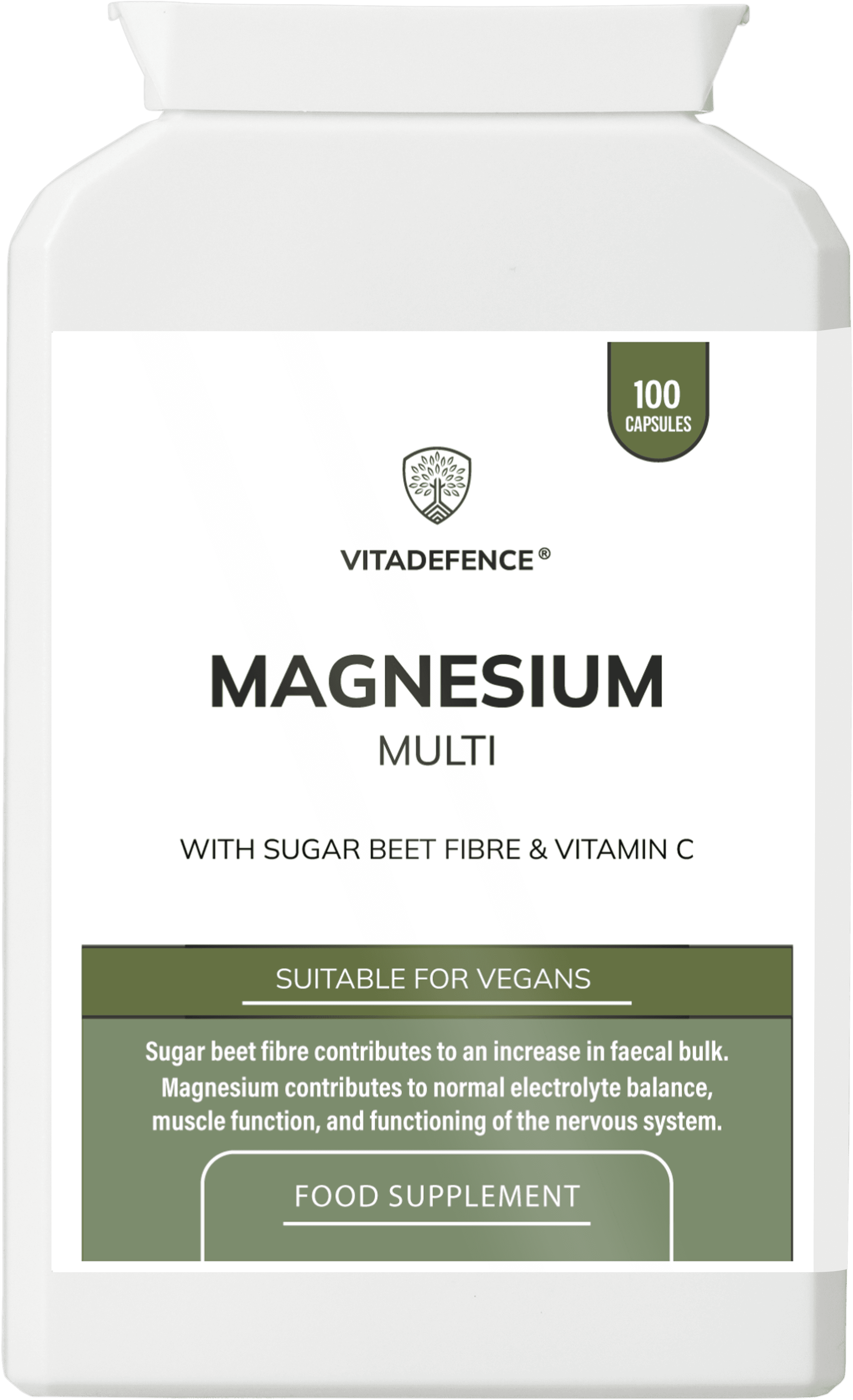
For those interested in supporting restful sleep, our Magnesium Multi uses a combination of citrate and glycinate forms to offer both bioavailability and gentleness.
Magnesium oxide: high dose, lower absorption
Magnesium oxide contains the highest amount of elemental magnesium per dose — typically around 60% by weight. However, its absorption rate is low, estimated at only 4–15% in some studies. Because it is poorly soluble in water, much of it passes through the gut unabsorbed, which can cause a strong laxative effect at higher doses.
Despite its low bioavailability, magnesium oxide is still used in clinical practice for specific purposes, such as correcting severe deficiency under medical supervision or as a short-term laxative. For routine supplementation, most experts recommend forms with better absorption profiles.
We discuss the pros and cons of different forms in more detail in our companion blog post.
Practical guidance: which form for which goal?
Choosing the right form depends on your primary reason for taking magnesium. Below is a quick reference based on available evidence:
- General health and maintenance: Magnesium citrate offers a good balance of absorption and cost. A typical dose is 200–400 mg of elemental magnesium per day.
- Sleep and stress support: Magnesium glycinate is preferred due to glycine's calming properties and lower risk of digestive side effects.
- Constipation relief: Magnesium oxide or high-dose citrate can be used short-term, but start with a low dose to assess tolerance.
- Athletic recovery: Magnesium citrate is well-studied for supporting muscle function and energy metabolism. Vitamin B6 also contributes to normal energy-yielding metabolism, so look for combined formulas.
If you are new to magnesium supplementation, start with a lower dose and increase gradually. See our delivery page for information on how we ship our supplements.
Who it is for
Magnesium supplementation can benefit a wide range of people, especially those with low dietary intake or increased requirements. Groups that may particularly benefit include:
- Adults over 50: Magnesium absorption tends to decline with age, and older adults often have lower intake from food sources.
- People with digestive conditions: Conditions such as Crohn's disease, ulcerative colitis, or coeliac disease can impair magnesium absorption.
- Regular exercisers: Magnesium is lost through sweat, and adequate levels support normal muscle function and energy metabolism.
- Those with poor sleep quality: Magnesium glycinate has been studied for its potential to improve sleep onset and quality.
For a broader view of how our supplements support different lifestyles, read our customer reviews.
Who should be cautious
While magnesium is generally safe for most people, certain groups should exercise caution:
- People with kidney disease: Impaired kidney function can lead to magnesium accumulation, which may be dangerous. Consult your doctor before supplementing.
- Those taking certain medications: Magnesium can interact with antibiotics, bisphosphonates, and some blood pressure medications. Take supplements at least two hours apart from these drugs.
- Anyone with a history of magnesium toxicity: This is rare but can occur with very high doses, especially in people with kidney impairment.
- Pregnant or breastfeeding women: Speak to your healthcare provider before starting any new supplement.
If you are unsure which form is right for you, our Magnesium Multi offers a balanced blend that includes both citrate and glycinate forms.
Frequently asked questions
Is magnesium citrate or glycinate better for sleep?
Magnesium glycinate is generally preferred for sleep support because the glycine molecule has calming effects on the central nervous system. However, magnesium citrate can also be helpful if you do not experience digestive issues. Both forms have been studied for sleep, but glycinate tends to be better tolerated at higher doses.
Which form of magnesium is easiest on the stomach?
Magnesium glycinate is the most gentle on the digestive system. Magnesium citrate can cause loose stools in some people, especially at higher doses, while magnesium oxide has the strongest laxative effect and is least likely to be well-tolerated long-term.
Can I take magnesium with other supplements?
Yes, but timing matters. Magnesium can interfere with the absorption of calcium, iron, and zinc if taken at the same time. It is best to take magnesium at a different time of day from these minerals. Our Magnesium Multi is formulated to be taken on its own or with food.
How much magnesium should I take daily?
The UK Reference Nutrient Intake (RNI) for magnesium is 300 mg per day for men and 270 mg per day for women. However, many experts recommend 200–400 mg of elemental magnesium from supplements, depending on individual needs and dietary intake. The European Food Safety Authority (EFSA) has approved the claim that magnesium contributes to normal energy-yielding metabolism.
What is the difference between elemental magnesium and total magnesium?
Elemental magnesium refers to the actual weight of magnesium in the supplement, not the weight of the entire compound (which includes the bound molecule). For example, magnesium oxide is about 60% elemental magnesium by weight, while magnesium citrate is about 16%. Always check the label for elemental magnesium content.
Can I get enough magnesium from food alone?
Many people fall short of the RNI through diet alone. Good food sources include dark leafy greens, nuts, seeds, whole grains, and legumes. However, soil depletion and food processing can reduce magnesium content. A supplement can help fill the gap, especially for those with higher requirements or restricted diets.
How Vitadefence does it
At Vitadefence, we take a straightforward, evidence-based approach to supplementation. Our Magnesium Multi uses a dual-form blend of magnesium citrate and magnesium glycinate to offer both high bioavailability and gentle digestion. Each capsule provides 150 mg of elemental magnesium in a vegetarian HPMC capsule — no gelatin, no unnecessary fillers.
We never use proprietary blends, meaning you see exactly what is in each capsule. Our manufacturing is GMP-certified in the UK, and every batch is tested for purity and potency. We also offer free Royal Mail Tracked 48 delivery on all orders, with no minimum spend. For more details, see our shipping information.
Bottom line
When it comes to magnesium, form really does matter. Magnesium citrate offers reliable absorption and is well-suited for general health and athletic recovery. Magnesium glycinate is the gentler option, ideal for sleep and stress support. Magnesium oxide, while high in elemental magnesium, is poorly absorbed and best reserved for short-term laxative use under medical guidance.
For most people, a combination of citrate and glycinate provides the best of both worlds — good absorption with minimal digestive upset. That is exactly what you get with our Magnesium Multi, made in the UK with transparent labelling and free delivery.
This article is for educational purposes only and does not replace professional medical advice. Always consult a qualified healthcare practitioner before starting a new supplement, especially if you have a medical condition or take medication. The health claims mentioned are authorised under EU Regulation 1924/2006. Magnesium contributes to normal energy-yielding metabolism, normal muscle function, and normal functioning of the nervous system.
Related products
More from the journal

Spirulina: The Original Superfood — Protein, B12, and Phycocyanin Antioxidant Power
9 min · Ingredients
Siberian Ginseng Benefits: Why This Adaptogen Is Different From Panax Ginseng
7 min · Ingredients