Vitamin K2 MK-7 vs MK-4: Which Is Better for Bone & Heart Health?
Vitamin K2 comes in two main forms: MK-4 and MK-7. Learn how they differ in absorption, duration, and benefits for bones and cardiovascular health.
By Vitadefence Team
Vitamin K2 is often called the 'bone and heart vitamin' because of its critical roles in calcium regulation. But not all K2 is the same. The two main forms—menaquinone-4 (MK-4) and menaquinone-7 (MK-7)—have distinct properties that affect how they work in the body. Understanding these differences can help you make an informed choice for your health.
What Is Vitamin K2?
Vitamin K is a fat-soluble vitamin essential for blood clotting and bone metabolism. It exists in two natural forms: K1 (phylloquinone) found in green leafy vegetables, and K2 (menaquinone) produced by bacteria and found in fermented foods like natto. K2 is further divided into subtypes based on the length of their side chain, with MK-4 and MK-7 being the most studied.
MK-4 vs MK-7: Key Differences
Chemical Structure and Sources
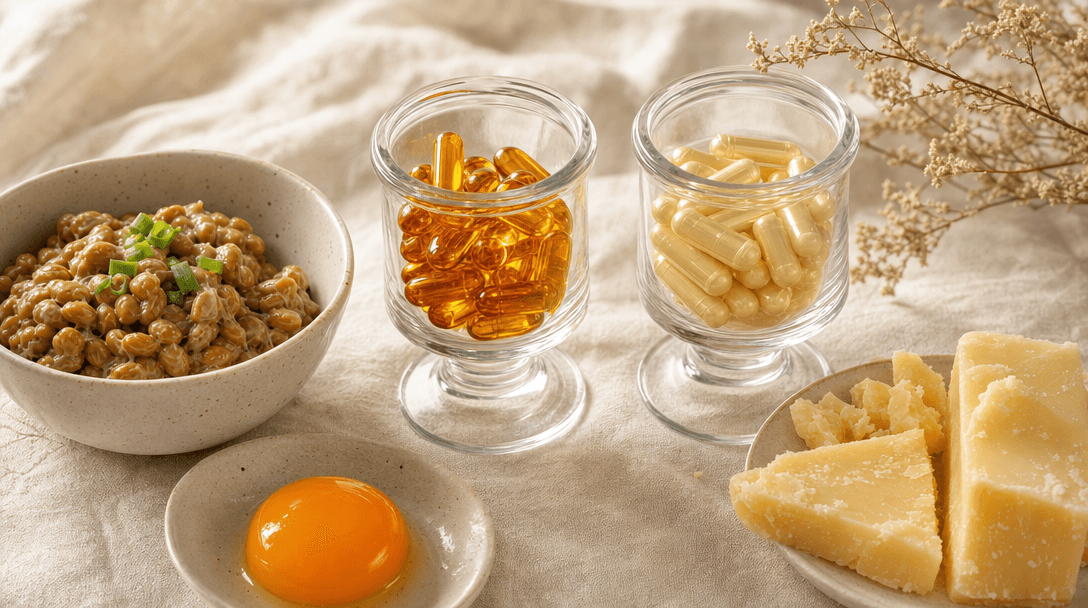
MK-4 has a short side chain (4 isoprene units) and is found in animal products like liver, egg yolks, and butter. It can also be converted from vitamin K1 in the body, though this conversion is limited. MK-7 has a longer side chain (7 isoprene units) and is primarily found in natto (fermented soybeans) and some cheeses. The longer chain gives MK-7 a longer half-life in the bloodstream.
Absorption and Bioavailability
MK-7 is absorbed more efficiently and remains active in the body for much longer than MK-4. A study published in Osteoporosis International found that MK-7 has a half-life of about 3 days, while MK-4's half-life is only about 1-2 hours (PubMed). This means MK-7 can maintain steady levels with a single daily dose, whereas MK-4 requires multiple doses throughout the day.
Dosage and Frequency
Because of its short half-life, MK-4 is typically taken in higher doses (e.g., 45 mg per day divided into three doses) in clinical studies. MK-7 is effective at much lower doses (e.g., 45–100 mcg per day) due to its superior bioavailability. A common supplement dose is 100 mcg of MK-7 once daily.
Bone Health Benefits
Both forms activate osteocalcin, a protein that binds calcium to the bone matrix. However, research suggests MK-7 may be more effective at maintaining bone mineral density. A 2013 study in Osteoporosis International showed that MK-7 supplementation significantly improved bone strength in postmenopausal women (PubMed). MK-4 has also shown benefits, but requires higher doses.
Heart Health Benefits
Vitamin K2 activates matrix Gla-protein (MGP), which inhibits calcium deposition in arteries. A landmark study from the Rotterdam cohort found that high dietary intake of MK-7 (but not MK-4) was associated with reduced aortic calcification and lower cardiovascular mortality (PubMed). This may be due to MK-7's longer circulation time, allowing more sustained activation of MGP.
Safety and Side Effects
Both forms are generally well-tolerated. However, vitamin K can interfere with anticoagulant medications like warfarin. If you take blood thinners, consult your doctor before supplementing with any form of vitamin K. MK-7 has been reported to cause mild gastrointestinal issues in some individuals at high doses.
Which Form Should You Choose?
For general bone and heart health, MK-7 appears to be the more practical choice due to its longer half-life, lower required dose, and stronger evidence for cardiovascular benefits. MK-4 may still be useful in specific clinical contexts, such as under medical supervision for osteoporosis, but its short half-life makes it less convenient.
Bottom line
Vitamin K2 MK-7 and MK-4 both support bone and heart health by activating key proteins that regulate calcium. MK-7 is generally preferred because it stays active in the body longer, requires a smaller dose, and has stronger research backing for cardiovascular protection. When choosing a supplement, look for a reputable brand that provides MK-7 in a fat-soluble form (e.g., with oil) for best absorption. As always, speak with a healthcare professional before starting any new supplement, especially if you take medication.
More from the journal
Spirulina: The Original Superfood — Protein, B12, and Phycocyanin Antioxidant Power
9 min · Ingredients
Siberian Ginseng Benefits: Why This Adaptogen Is Different From Panax Ginseng
7 min · Ingredients