Showcase
Botanical Multi — the desert succulent and the kitchen-spice rack
On the rocky shores of the Arabian peninsula, a thick-leaved succulent stores cool water in fleshy spikes that the desert nomads have used for three thousand years. We built a capsule around aloe vera, and around fourteen other plants, minerals, and live cultures that have earned their place in the long story of looking after a working gut.
Key facts
- When the gut starts to feel like a moody upstairs neighbour
- The bottle, in your hand
- The story of aloe vera
- Caprylic acid — the medium-chain fatty acid of the coconut
- Rosemary — the cliff-top shrub of the Mediterranean
When the gut starts to feel like a moody upstairs neighbour
Maybe you noticed it about a year ago. The bloating that comes and goes for no reason you can put your finger on. The afternoon when one harmless lunch sits like a brick. The day when you eat exactly what you ate yesterday and the gut behaves completely differently. You're not unwell. The blood tests are fine. You're just a modern person living with a modern gut, eating modern food, and noticing — quietly — that the digestive easygoingness of your twenties has gone somewhere.
Most ancestral kitchens did not have to think about this. They cooked with raw garlic in olive oil. They reached for oregano on the shelf, thyme from the windowsill, fresh ginger from the market, a clove of fresh garlic at every meal. They drank fennel tea after a heavy dinner and bitter chicory coffee in the morning. The herbs and spices that the modern kitchen treats as flavouring were, for our great-grandmothers, the whole quiet medical cabinet — woven into the daily food, doing slow background work, no marketing budget required.
This little bottle is one quiet attempt to put a small daily dose of that lost herbal kitchen back into a modern week. Fifteen plants, minerals, and live cultures. One capsule. The aloe vera and the oregano and the rosemary and the live cultures, all in one small jar.
The bottle, in your hand
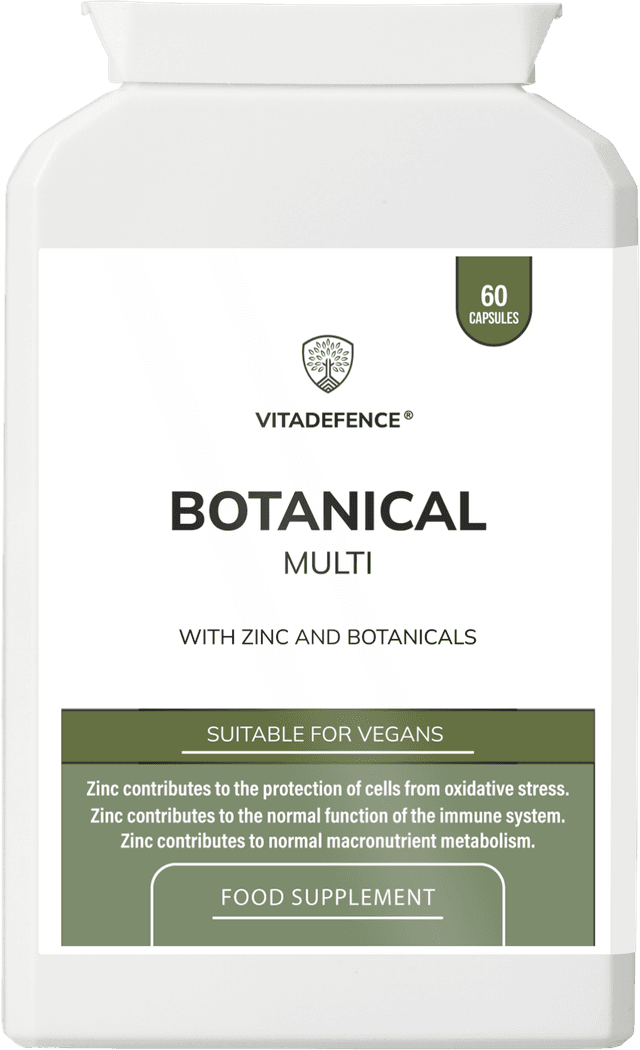
A clean cream pot, the green band of our label running around it like a Mediterranean garden wall. Sixty vegan capsules inside. The dose is gentle — one capsule, one to three times a day, preferably with food. Most people take one with the heaviest meal of the day and find that's plenty.
That's how plants in this category tend to work. Not with fireworks. With patience.
The story of aloe vera
Aloe vera — Aloe barbadensis miller — is the desert succulent every windowsill knows. Long fleshy leaves rise from a central rosette, edged with small teeth, each leaf swollen with a clear gelatinous inner pulp that holds the plant's water reserves through a hot dry summer. Aloe is wild to the Arabian peninsula and to north-eastern Africa, and was one of the first plants the trade routes carried — it appears in Egyptian medical papyri from 1500 BC, in Dioscorides' De Materia Medica in the first century AD, and in every Mediterranean herbalist's manual since.
The plant has two parts. The latex — the bitter yellow sap immediately under the skin of the leaf — is a potent traditional purgative and is not what we use. The inner gel — the clear water-rich pulp — is what we extract. Modern processing concentrates the dried gel into a fine powder, which is what goes into a capsule. We use 3,000mg of aloe vera leaf equivalent per capsule. It is the largest single botanical in this formula, and the plant the formula is built around.
Caprylic acid — the medium-chain fatty acid of the coconut
Caprylic acid is a medium-chain fatty acid — eight carbon atoms long — found naturally in coconut oil, palm kernel oil, and the milk of every breastfeeding mammal. Our great-grandmothers reached for warm coconut milk in the cook pot. Modern formulators isolate the eight-carbon fraction and present it as caprylic acid for the supplement industry. We use 215mg per capsule, in the form of magnesium caprylate — meaning the same dose also delivers a small contribution of dietary magnesium. Caprylic acid itself doesn't carry an EU-authorised health claim; we include it for its long traditional and culinary heritage.
Rosemary — the cliff-top shrub of the Mediterranean
Rosmarinus officinalis — the dew of the sea — grows wild on the limestone cliffs of Provence and the Greek islands. Crushed between the fingers, the resinous needles release a sharp pine-camphor smell that has perfumed Mediterranean cooking for at least three thousand years. Rosemary is one of the densest sources of carnosic acid — a polyphenol with a long folk reputation as a culinary preservative — and was traditionally tucked under joints of meat for that exact purpose long before refrigeration. We use 80mg of rosemary leaf extract per capsule.
Grapefruit seed — the white pith and the seed cluster
Grapefruit seed extract is made from the seeds and white inner membranes of the grapefruit (Citrus paradisi) — the bitter parts most people throw away when peeling the fruit. The extract is rich in citrus bioflavonoids, including naringin, the compound that gives grapefruit its characteristic bitter back-note. We use 50mg per capsule, alongside the rosemary as part of the bitter-and-aromatic backbone of the formula.
Garlic and clove — the kitchen pair every grandmother kept on the shelf
Garlic (Allium sativum) at 25mg, clove bud (Syzygium aromaticum) at 10mg. Both have been culinary and household-herbal staples in every Mediterranean and Indian kitchen for thousands of years. Garlic was the workman's herb of the Egyptian pyramid builders. Clove was the spice that built fortunes from the Moluccas to Amsterdam in the seventeenth century. Both carry sulphurous and aromatic compounds with long traditional reputations. Both earn their place here.
Oregano and thyme — the wild Greek hillside
Oregano (Origanum vulgare) at 5mg, thyme (Thymus vulgaris) at 10mg. Two members of the Lamiaceae family — the great mint family of culinary herbs — that grow together on dry Mediterranean hillsides and have flavoured the cooking of southern Europe for as long as there has been cooking. Both leaves are concentrated in thymol and carvacrol, two phenolic compounds with a long folk history. We use them at small doses — flavouring quantities, in herbal terms — because the formula is not a stand-alone oregano product, and these two earn a quiet seat at the table alongside their cousins.
Cinnamon — the bark from the Sri Lankan tree
True cinnamon — Cinnamomum zeylanicum, also called Ceylon cinnamon — is the inner bark of a small Sri Lankan tree, peeled in long delicate quills the colour of milky tea. It has been the spice of Christmas cakes and Indian curries and Moroccan tagines for at least two thousand years. We use 15mg per capsule. (The cheaper, harsher Cinnamomum cassia is a different species; we use the true Ceylon variety.)
Quercetin — the yellow flavonoid of onion skins and apple peel
Quercetin is the most studied member of the flavonoid family — the yellow pigment compound found in onion skins, the peels of apples, the cores of citrus fruits, and the dark teas of east Asia. Modern extraction concentrates quercetin from the bud of the Japanese pagoda tree (Sophora japonica) into a fine yellow powder. We use 15mg per capsule, in dihydrate form — the crystalline form most stable for a capsule. It belongs to the same broad polyphenol family as the citrus bioflavonoids and the rosemary carnosic acid that share the bottle with it.
Beetroot — the deep red root from the kitchen garden
Beetroot is here at 15mg in dietary trace, mostly as a quiet acknowledgement of the European kitchen-garden tradition. Beta vulgaris has been cultivated in Europe since Roman times, first for its leaves and then for its deeply pigmented root. We use a small concentrate — not as a headline ingredient, but as a colour and pigment companion to the rest of the formula.
Glucosamine — the connective tissue compound of plant origin
Glucosamine is an amino sugar — a building block of glycosaminoglycans, the long molecules that give cartilage and connective tissue their structure. The body makes its own. We add 8mg of glucosamine hydrochloride per capsule from a vegetable source (most market glucosamine is from shellfish; ours is plant-derived, suitable for vegans). At 8mg the dose is supportive rather than headline — for full glucosamine programmes we make a separate, dedicated bottle.
The two live cultures — the bacteria that already live inside you
Lactobacillus acidophilus (10mg, providing 100 million CFU per capsule) and Bifidobacterium bifidum (10mg, providing 100 million CFU). Two strains of bacteria native to the healthy human gut and the most extensively studied of the live-culture family. Note: under current EU rules, the word probiotic is not allowed on a food supplement label — but the cultures themselves are permitted as ingredients. Their inclusion in this capsule is a quiet acknowledgement that the gut is a community, not a tube.
Zinc — the one nutrient the label can speak plainly about
Most of this article has been about plants. One ingredient in this bottle can be spoken about with the precision of nutrition science.
Zinc (3.1mg, 31% NRV) — contributes to normal carbohydrate metabolism, to the maintenance of normal mucous membranes, to the protection of cells from oxidative stress, and to the normal function of the immune system. The trace mineral most consistently low in modern Western diets, especially in older adults and vegans.
Zinc is not the headline. It is the spine — a small backbone of label-accurate nutrition behind a long plant story.
The formula as a whole
Lay these fifteen ingredients on a table — aloe vera, caprylic acid, rosemary, grapefruit seed, garlic, beetroot, cinnamon, quercetin, thyme, two live cultures, clove, glucosamine, oregano, zinc — and what they share is a single quiet theme: the Mediterranean kitchen-and-garden tradition, edited into a small daily capsule.
We didn't pick them at random. We picked the desert succulent at the foundation, the four classical Mediterranean culinary herbs (rosemary, oregano, thyme, garlic), the two great spices of the global trade routes (cinnamon, clove), the bitter citrus seed, the yellow flavonoid of onion skin, the connective-tissue building block, the two well-studied gut bacteria, and the zinc that holds the EU-authorised wording — and laid them in the same bottle. The thinking isn't more is more. It's the kitchen-and-garden of every old culture had a quiet logic of its own, and the modern supermarket has lost most of it.
How to use it
One capsule, one to three times a day, preferably with food. Most people take one with the largest meal and find that's plenty. The bottle holds sixty capsules — at one a day it lasts two months, at three a day three weeks.
Don't stack it on top of three other multivitamins or the zinc will overlap. Plants of this kind work in the background. Most people who notice a difference notice it between week three and week eight — meals sitting a little easier, a slightly more settled afternoon, the feeling of having put a quiet herbal layer back into the daily diet.
If after sixty days nothing has changed, stop. A supplement that isn't doing anything for you isn't worth the money, and we'd rather have your trust for the next thing than your loyalty to the wrong thing.
Honest caveats
This is a food supplement — it complements a varied diet, doesn't replace one. If you are pregnant, breastfeeding, taking medication (especially blood thinners or any medication metabolised through the cytochrome P450 system — grapefruit seed extract can interact with a wide range of pills), or living with a medical condition, talk to your GP or pharmacist first. Keep it cool, dry, sealed, out of reach of children. Don't exceed three capsules a day. Most of these botanicals don't grow in the British climate at scale — we source from established harvest chains in their native regions, and the formula is blended and encapsulated to UK GMP standards.
If you've read this far, thank you. We tried to write the kind of page we'd want to read before spending money — no neon promises, no overblown language. Just a desert succulent, fourteen quiet companions, and a small daily ritual that may put a little of the lost kitchen-garden back into a modern day.
— Vitadefence
Related articles
— Vitadefence