Showcase
Hemp Protein Multi
A 500g pot of cold-milled hemp seed, quietly blended with thirteen real-food plants. Not chocolate-flavoured whey. Not a shake-bro pitch. Just protein the way the seed grew it.
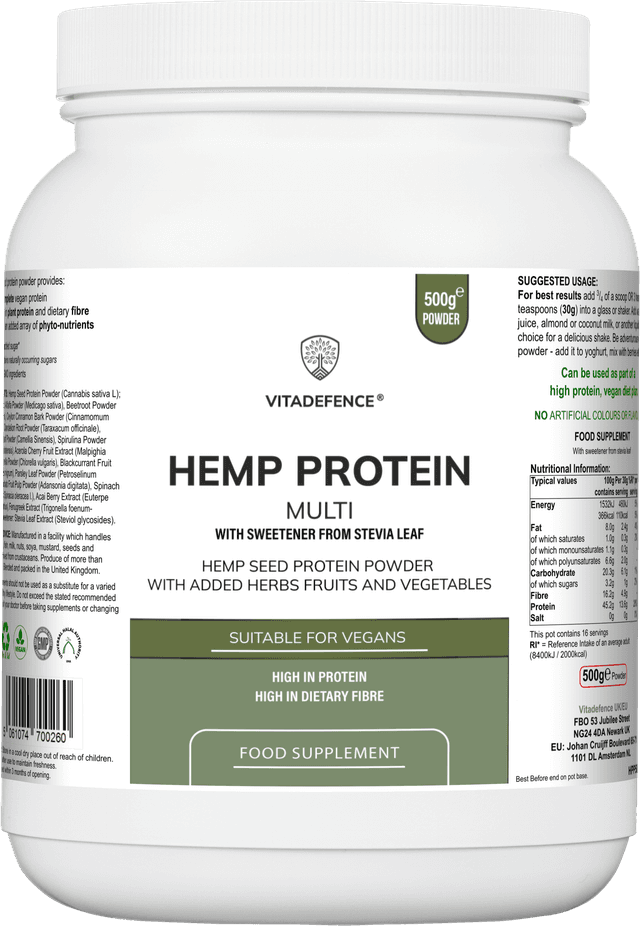
A 500g pot of cold-milled hemp seed, quietly blended with thirteen real-food plants.
If you can't quite stomach another chocolate whey
Most protein powders taste like sweets. There's a reason — whey on its own is bitter, and the only way to make 25 grams of it palatable at 7am is to bury it under cocoa, sucralose, and gum. After a year, the breakfast that was meant to feel clean starts to feel like dessert. The morning shake stops being a meal and starts being a confectionery problem.
Hemp protein is a different proposition. It comes from a seed — Cannabis sativa L., the food strain, no psychoactive compounds — that has been grown for textile and food use for the better part of six thousand years. The seed is cold-milled, the oil partly removed, and what remains is a soft, grassy, almost nutty powder the colour of moss. It tastes like food, because it is food.
This pot is hemp seed protein blended with thirteen quiet partners — alfalfa, beetroot, cinnamon, dandelion, green tea, spirulina, acerola, chlorella, blackcurrant, parsley, baobab, spinach, acai and fenugreek — sweetened only with stevia leaf. Sixteen 30-gram servings. The kind of breakfast you build in three minutes and forget about for the rest of the morning.
The pot, in your hand
A clean cream tub, the green band of our label running around it, a scoop tucked under the seal. Five hundred grams of soft moss-coloured powder inside. Three heaped teaspoons — about 30g — into a glass of plant milk or water. Stir, blend, drink. No artificial colour. No artificial sweetener. The only sweetness is a tiny pinch of stevia leaf extract, the way the powder ships from the mill.
It will not make a thick milkshake. Hemp protein never does. It makes a drink — light, grainy in the way a real seed should be, slightly green, a little bit alive. The texture takes a week to get used to. After that you don't notice.
The story of hemp seed
Hemp is one of humanity's oldest cultivated plants. Archaeological seed remains have been found in Neolithic Chinese settlements going back to 2700 BC. The Greek historian Herodotus, writing in the fifth century BC, described Scythian funeral rituals using hemp smoke. By the medieval period, hemp was the rope of European navies, the canvas of European sailcloth, and — quietly — the porridge of European peasants who knew the seed itself was food.
The seed sits inside a small papery shell. Crack it open and the kernel inside is pale green and oily. Cold-pressed, it gives a fine olive-coloured cooking oil. Cold-milled after pressing, the residue cake is what becomes hemp protein powder — concentrated, easy to digest, naturally rich in the eight amino acids the body cannot make for itself, including the three that drive muscle repair.
What sets hemp apart from soy or pea is digestibility. Hemp seed contains two storage proteins, edestin and albumin, that the human gut handles unusually gently. People who bloat on whey, who burp on soy, who can't quite get pea down without a stomach ache, often find hemp simply works. It's not the strongest protein source on the shelf — but for a daily breakfast that doesn't fight your gut, it's one of the kindest.
Alfalfa, the lucerne of the field
Alfalfa — Medicago sativa, also called lucerne — was domesticated in ancient Persia, carried into Greece by the Median armies in 491 BC, and spread across the Roman empire as horse fodder. The Spanish brought it to the Americas. The Mormons planted it across Utah. By the twentieth century it was the world's most-grown forage crop, deep-rooted enough to mine minerals from soil layers other plants couldn't reach.
In a powder like this, dried alfalfa leaf is a green-vegetable concentrate — chlorophyll, trace minerals, a soft grassy note in the cup. We use it for the same reason farmers feed it to dairy cows: it's nutritionally dense, the plant pulls minerals from deep ground, and it has been part of human food culture for two and a half thousand years.
Beetroot, the deep red root
Long before beetroot was a sports-nutrition ingredient, it was Sunday lunch. The Romans cultivated it first for its leaves, then its root. In medieval monastery gardens it was a winter staple — easy to grow, stores all winter, dyes everything it touches a colour somewhere between burgundy and oxblood. Beetroot powder gives this blend its faint pinkish edge and its deep dietary nitrate content.
Spirulina and chlorella, the blue-green and the green
Spirulina (Arthrospira platensis) is a microscopic spiral-shaped freshwater algae. The Aztecs harvested it from Lake Texcoco and pressed it into dried cakes. Chlorella is a single-celled green algae cultivated in Japan and Taiwan since the 1940s. Both are mostly protein by dry weight, both are intensely pigmented, both have been part of mainstream East Asian and Latin American food culture for longer than the modern supplement industry has existed.
In this blend they're a small fraction of the whole — green minerals and chlorophyll, not the headline.
Acerola and acai, the bright pulp of the tropics
Acerola cherries (Malpighia glabra) grow on a small tree across the Caribbean and Brazil. The fruit is cherry-sized, intensely sour, and one of the natural world's densest known sources of vitamin C. Acai (Euterpe oleracea) is a palm fruit from the Brazilian Amazon — almost black-purple when ripe, rich in the deep anthocyanin pigments that give blueberries and elderberries their colour. Both come into the powder dried and milled, neither dominant — small splashes of tropical pigment in the green.
Baobab, the upside-down tree
The baobab grows across the African savannah, sometimes for two thousand years. The fruit looks like a velvet rugby ball; inside, the pulp dries naturally on the tree into a chalky, citrusy powder. In Mali and Senegal it has been food and folk medicine for as long as anyone has been counting. We use a small amount of the dried fruit pulp here for tartness and for the whole-food fibre profile it carries.
Spinach, parsley, blackcurrant — the kitchen-garden trio
Three plants you already know, three plants most modern adults eat too little of. Spinach for the iron and folate, parsley for the green-leafy minerals, blackcurrant for the deep pigment of British hedgerows. None of them are dramatic, all of them are exactly what your grandmother would have grown by the back door.
Cinnamon, ginger's cousin
Ceylon cinnamon (Cinnamomum zeylanicum) — true cinnamon, not the cassia bark sold cheaply — is sourced from the inner bark of evergreen trees in Sri Lanka. Used in Egyptian embalming three thousand years ago, traded along the spice routes to medieval Europe at prices higher than gold. Here, a small pinch sweetens the green of the powder without sugar.
Dandelion root and fenugreek
Dandelion root has been the bitter spring tonic of European herbal practice for centuries. Fenugreek seed (Trigonella foenum-graecum) is a North African and South Asian kitchen staple, the green-curry note in many traditional dals. Both are quiet additions, supporting the bitter end of the flavour profile that makes the shake taste like food rather than dessert.
How to use it
Three heaped teaspoons — about 30 grams — into a glass or shaker. Add water, plant milk, oat milk, almond, coconut, or fruit juice. Stir, shake, blend. One pot is sixteen servings — about two weeks of daily breakfasts, three weeks if you take a couple of days off.
The texture is grainier than whey. The colour is greener. The taste is grassy-nutty with a small sweetness from the stevia leaf. After a week your tongue stops protesting and the breakfast that started life as a chore turns into a habit.
You can also stir it into porridge, fold it through yoghurt, blend it with frozen berries and a banana for a smoothie, or sprinkle a teaspoon over a salad. It's a food powder, not a sealed nutraceutical — treat it like a flour and the kitchen opens up.
Honest caveats
This is a food supplement. It is not a meal-replacement on its own. It supplies plant protein and a profile of greens and berries, but it does not replace a varied diet — it adds to one. If you are pregnant, breastfeeding, taking medication, or living with a medical condition, talk to your GP or pharmacist first. Hemp seed is a food crop with no psychoactive content, but if you are subject to drug testing in elite sport please check your governing body's stance on hemp foods. Keep the pot sealed, cool, dry, out of reach of children.
If after eight weeks your breakfast hasn't settled into something you actually look forward to, stop. A protein powder you don't enjoy is a protein powder you won't drink, and 500g of unloved powder at the back of a cupboard helps no-one.
— Vitadefence
Why Choose Stevia Protein Powder?
If you've ever scanned the back of a protein tub and felt uneasy about the ingredients list, you're not alone. Many protein powders rely on artificial sweeteners like sucralose or aspartame to mask the bitterness of isolated proteins. These can leave an unpleasant aftertaste, cause digestive discomfort, or simply feel like too much chemical intervention for a simple morning shake. Stevia offers a different path—a plant-based sweetener derived from the leaves of the Stevia rebaudiana plant, with zero calories and a clean, natural sweetness that complements whole-food ingredients without overpowering them.
Stevia protein powder is particularly well-suited to plant-based blends like hemp protein, which has a naturally earthy, nutty flavour that doesn't need to be hidden. Instead of fighting the taste of the seed, stevia gently rounds it out, allowing the subtle notes of greens, berries, and spices to come through. This means your shake tastes like real food—not a candy bar in disguise. For anyone looking to reduce their intake of processed additives, stevia provides a simple, transparent way to enjoy a protein boost without the artificial baggage.
Beyond taste, stevia is a practical choice for those managing blood sugar levels or following a low-glycaemic lifestyle. Unlike sugar or high-fructose sweeteners, stevia does not spike insulin, making it a supportive addition to a balanced diet. When you choose a stevia-sweetened protein powder, you're opting for a cleaner, more mindful approach to nutrition—one that respects both your body and the ingredients it's made from.
For a complete plant-based protein that's naturally sweetened with stevia and packed with greens, explore our Hemp Protein Multi blend.
Why Choose Stevia Protein Powder?
If you're searching for "protein powder with stevia," you're probably tired of the artificial aftertaste that comes with most sweeteners. You want something that tastes clean, not cloying. Stevia leaf offers a gentle sweetness without the chemical edge of sucralose or aspartame, and it won't spike your blood sugar the way sugar or maltodextrin can. It's a simple swap that makes your morning shake feel more like real food and less like a lab experiment.
Stevia works particularly well with plant-based proteins because it doesn't overpower their natural flavours. Hemp protein has a mild, earthy taste that pairs beautifully with stevia's subtle sweetness. You get a smooth, balanced shake that's easy to drink every day, not just when you're in the mood for dessert. Plus, stevia is calorie-free and doesn't contribute to the digestive discomfort some people experience with sugar alcohols like xylitol or erythritol.
When you choose a protein powder sweetened with stevia, you're opting for transparency. You can read the ingredients list and recognise every name. No hidden chemicals, no artificial flavours—just protein, plants, and a leaf that's been used as a sweetener for centuries. It's the kind of simplicity that makes your morning routine feel lighter, too.
For a clean, plant-based option that uses only stevia for sweetness, explore our hemp protein multi blend.
Why Choose Stevia Protein Powder?
If you've ever scanned a protein label and felt a little uneasy about the long list of artificial sweeteners, you're not alone. Many protein powders rely on sucralose, aspartame, or sugar alcohols to mask the bitter taste of protein isolates—but those ingredients can leave an unpleasant aftertaste or cause digestive discomfort. Stevia protein powder offers a different path: sweetness that comes from the stevia leaf, a plant native to South America that has been used for centuries. It's a clean, natural alternative that lets you enjoy your protein shake without wondering what you're actually consuming.
Stevia works beautifully in protein powders because it's intensely sweet in tiny amounts—so you get a pleasant taste without adding calories or spiking your blood sugar. When paired with hemp protein, which has a naturally mild, nutty flavour, stevia creates a balanced, drinkable shake that doesn't need artificial help. Whether you're mixing it into a morning smoothie, stirring it into porridge, or shaking it with water post-workout, stevia-sweetened protein feels like real food, not a chemistry experiment.
For anyone looking to reduce their intake of processed ingredients, stevia protein powder is a simple swap that makes a real difference. It's especially popular among those following plant-based, keto, or low-glycemic diets, but really anyone who prefers clean labels will appreciate it. If you're curious about trying a stevia-sweetened option, our hemp protein blend is a great place to start—it's naturally sweetened and packed with whole food ingredients. Learn more about how hemp protein can support your daily routine.
Why Choose a Stevia Protein Powder?
If you've ever scanned the back of a protein tub and felt uneasy about ingredients like sucralose, aspartame, or artificial flavours, you're not alone. Many protein powders rely on these synthetic sweeteners to mask the bitter taste of whey or pea protein, but they can leave an unpleasant aftertaste and raise questions about long-term use. Stevia offers a different path—a plant-based sweetener derived from the stevia leaf that provides natural sweetness without the chemical processing or blood sugar spikes associated with artificial alternatives.
Stevia protein powder works particularly well with plant-based proteins like hemp because both come from whole food sources. The stevia leaf adds a gentle sweetness that complements hemp's naturally nutty, earthy flavour rather than trying to overpower it with synthetic candy-like tastes. This means your morning shake tastes like real food, not a dessert substitute, and you're not consuming hidden additives just to get your protein fix. For anyone looking to reduce their intake of artificial ingredients while still enjoying a pleasant-tasting protein shake, stevia-sweetened options provide a clean, straightforward solution.
When choosing a stevia protein powder, look for products that use whole stevia leaf extract rather than highly processed derivatives, and check that the sweetness level matches your preference—some stevia blends can be quite potent. The best formulations balance the stevia with complementary flavours like vanilla, cacao, or the natural taste of the protein source itself, creating a shake that's both nutritious and genuinely enjoyable to drink.
For more on how whole food ingredients can transform your protein routine, explore our guide to plant-based protein powders.
Why Choose Stevia Protein Powder?
If you've ever scanned the back of a protein tub and felt a little uneasy about the ingredients list, you're not alone. Many protein powders rely on artificial sweeteners like sucralose or aspartame to mask the bitterness of isolated proteins. But for some of us, that synthetic sweetness just doesn't sit right—whether it's the aftertaste, the bloating, or simply the desire for something more natural. That's where stevia protein powder comes in.
Stevia is a plant-based sweetener derived from the leaves of the Stevia rebaudiana plant. It's calorie-free, doesn't spike blood sugar, and has been used for centuries in South America. When paired with hemp protein, it creates a naturally sweet, earthy flavour profile that doesn't need any chemical help. You get the clean, grassy taste of cold-milled hemp seed, gently lifted by stevia's subtle sweetness—no artificial anything, just real food ingredients working together.
Choosing a stevia-sweetened protein powder means you're prioritising whole-food nutrition without compromising on taste. It's ideal for smoothies, shakes, or even stirred into porridge, giving you a protein boost that feels as good as it tastes. If you're looking for a protein that respects your body and your palate, stevia-sweetened hemp protein is a gentle, effective choice.
For more on how hemp protein compares to other plant-based options, see our guide on vegan protein with greens.
Why Stevia Makes This Protein Powder Different
If you've ever scanned the back of a protein tub and felt uneasy about ingredients like sucralose, aspartame, or artificial flavours, you're not alone. Many protein powders rely on synthetic sweeteners to mask the bitterness of isolated proteins, but that can leave you wondering what you're actually putting into your body each morning. That's where stevia comes in — a plant-based sweetener derived from the leaves of the Stevia rebaudiana plant, which has been used for centuries in South America. It provides natural sweetness without the chemical aftertaste or the blood sugar spikes that some artificial sweeteners can cause.
This hemp protein blend uses stevia leaf as its only sweetener, working in harmony with the earthy, nutty notes of cold-milled hemp seed. Instead of fighting the natural flavour profile with heavy cocoa or synthetic additives, the stevia gently lifts the taste while keeping the ingredient list clean and recognisable. You get a protein powder that tastes like real food because it is real food — no hidden numbers, no lab-created compounds, just plants sweetening plants.
For anyone looking to move away from dessert-like shakes and toward something that feels more like a whole-food breakfast, stevia-sweetened hemp protein offers a straightforward solution. It's a small change that makes a big difference in how your morning routine feels — and how your body responds.
Looking for more clean protein options? Explore our range of plant-based protein powders with natural ingredients.
Why Stevia Protein Powder Works When Others Don’t
If you’ve ever tried to switch to a healthier protein powder, you’ve probably run into the same problem: the “healthy” ones taste like cardboard, and the tasty ones are packed with artificial sweeteners that leave a weird aftertaste. You’re not being picky—you’re just looking for something that actually works with your body, not against it. That’s where stevia protein powder comes in.
Stevia is a leaf, not a lab creation. It’s been used for centuries in South America to sweeten drinks naturally, and it has zero impact on blood sugar. Unlike sucralose or aspartame, stevia doesn’t trick your brain into craving more sugar later. When paired with a clean protein like hemp, it creates a powder that’s genuinely pleasant to drink—mildly sweet, earthy, and satisfying—without the chemical finish. You get the sweetness you need to make a morning shake enjoyable, but your body still recognizes it as real food.
This particular blend uses stevia leaf to complement the natural nuttiness of cold-milled hemp seed, alongside thirteen whole-food greens and berries. The result is a protein powder that tastes like a gentle green smoothie, not a candy bar. It’s the kind of breakfast that supports your energy without spiking your cravings—and that’s a rare thing in a tub.
For more on how plant-based proteins compare, see our guide to the best vegan protein powders.
Why Choose Stevia Protein Powder?
If you've ever scanned the back of a protein tub and felt uneasy about the long list of artificial sweeteners, you're not alone. Many protein powders rely on sucralose, aspartame, or sugar alcohols to mask the bitter taste of isolated protein—but those ingredients can leave an unpleasant aftertaste or upset your digestion. That's where stevia protein powder comes in. Stevia is a plant-based sweetener derived from the leaves of the Stevia rebaudiana plant, offering natural sweetness without the calories or chemical processing. It's a gentler choice that still makes your morning shake enjoyable, without the synthetic edge.
Our hemp protein multi uses stevia leaf as its only sweetener, complementing the earthy, nutty flavour of cold-milled hemp seed rather than overpowering it. The result is a protein powder that tastes like real food—mildly sweet, grassy, and wholesome—perfect for blending into smoothies, porridge, or simply shaking with water. Because stevia is heat-stable and low-glycaemic, it won't spike your blood sugar or leave that metallic finish some artificial sweeteners do. It's a small switch that makes a big difference to how your body feels after that first sip.
Whether you're new to plant-based protein or looking to simplify your supplement routine, a stevia-sweetened option helps you avoid hidden additives while still getting the clean, complete protein your body needs. It's protein, the way nature intended—just with a little help from a leaf.
For more on how hemp protein compares to other plant-based options, read our guide to vegan protein powders with natural ingredients.
Why Choose Stevia Protein Powder?
If you've ever scanned a protein label and felt a little uneasy about the long list of artificial sweeteners, you're not alone. Many protein powders rely on sucralose, aspartame, or sugar alcohols to mask the bitterness of isolated proteins—but those can leave an unpleasant aftertaste or upset your digestion. Stevia offers a different path. It's a plant-based sweetener, derived from the leaves of the Stevia rebaudiana plant, that provides natural sweetness without the chemical processing or the blood sugar spike. For anyone looking to keep their morning shake clean, simple, and genuinely whole-food, stevia-sweetened protein is a quiet but meaningful upgrade.
Our hemp protein blend uses stevia leaf as its only sweetener—no artificial additives, no hidden gums, no synthetic flavours. The result is a protein powder that tastes gently sweet, not cloying, and works beautifully in smoothies, overnight oats, or simply stirred into water. Because hemp protein has a naturally mild, nutty flavour, stevia complements it without overpowering the earthy notes from the seed. You get the protein you need, the sweetness you want, and none of the ingredients you'd rather skip.
Choosing a stevia protein powder also means you're supporting a more transparent approach to nutrition. Stevia is calorie-free, tooth-friendly, and suitable for most dietary patterns, including keto and low-glycemic lifestyles. It's a small switch that makes a big difference in how your protein feels—both on the tongue and in your body. If you're ready to move away from artificially sweetened shakes, this is a gentle, plant-powered place to start.
For more on how hemp protein compares to other plant-based options, see our guide to vegan protein powders with clean ingredients.
Why Choose a Protein Powder with Stevia?
If you've ever tried to find a protein powder that doesn't taste like artificial candy, you know the struggle. Most options on the shelf are loaded with sucralose, aspartame, or sugar alcohols that can leave an unpleasant aftertaste or upset your stomach. That's where stevia comes in—a natural sweetener derived from the leaves of the stevia plant that provides gentle sweetness without the chemical edge. For many people, switching to a stevia-sweetened protein powder is the difference between forcing down a shake and actually looking forward to it.
Stevia works differently than artificial sweeteners. It doesn't spike your blood sugar or feed gut bacteria that cause bloating, making it a smart choice if you're sensitive to other sweeteners or simply prefer ingredients you can recognise. When paired with a plant-based protein like hemp, stevia complements the naturally earthy, nutty flavour rather than trying to mask it. The result is a protein powder that tastes clean and balanced—sweet enough to be pleasant, but subtle enough that you can still taste the real food ingredients underneath.
Our hemp protein blend uses stevia leaf as its only sweetener, alongside thirteen whole-food plants that bring their own gentle flavours. This means you get a protein powder that works beautifully in smoothies, porridge, or simply shaken with water or milk—without the cloying sweetness or chemical aftertaste that often comes with conventional options. It's protein the way it should be: honest, nourishing, and made with ingredients you can feel good about.
For more on how whole-food ingredients can transform your morning routine, explore our guide to clean protein powders.
Why Choose Stevia Protein Powder?
If you've ever scanned a protein label and felt uneasy about the long list of artificial sweeteners, you're not alone. Many protein powders rely on sucralose, aspartame, or sugar alcohols to mask the bitter taste of protein isolates—but these can leave an unpleasant aftertaste or cause digestive discomfort. Stevia protein powder offers a different path: sweetness that comes from the stevia leaf, a plant that has been used for centuries in South America. It's a clean, natural alternative that lets you enjoy your protein shake without the chemical finish.
Stevia works beautifully with plant-based proteins like hemp because it doesn't overpower the subtle, nutty flavour of the seed. Instead, it adds a gentle sweetness that makes your morning shake feel like a wholesome breakfast, not a dessert substitute. You get the protein you need—around 15 grams per serving in our blend—without the gum, the artificial flavours, or the sugar crash. It's protein the way nature intended, simply sweetened and packed with real food ingredients.
Whether you're blending it into a smoothie with berries and spinach or shaking it with water for a quick post-workout refuel, stevia-sweetened protein powder keeps your nutrition clean and your taste buds happy. No guessing, no hidden ingredients—just honest protein that supports your active lifestyle.
For a complete plant-based protein that combines hemp with thirteen greens and stevia, explore our Hemp Protein Multi.
Why Choose a Stevia-Sweetened Protein Powder?
If you're searching for "protein powder with stevia," you're likely looking for a way to get your daily protein without the artificial aftertaste or blood sugar spike that comes with many sweeteners. Stevia, a leaf-derived natural sweetener, offers a clean, plant-based alternative that doesn't leave you feeling like you've just had dessert for breakfast. It's a simple swap that makes a big difference, especially if you're trying to reduce your intake of processed ingredients or manage your sugar cravings.
Many protein powders rely on sucralose, aspartame, or sugar alcohols to mask the bitterness of protein isolates. While these work, they can sometimes cause digestive discomfort or leave a lingering chemical taste. Stevia, on the other hand, provides a gentle sweetness that complements the natural, earthy flavour of plant proteins like hemp. It's a more honest approach to flavouring—one that lets the real food ingredients shine through without needing to be hidden behind a heavy chocolate or vanilla mask.
Choosing a stevia-sweetened protein powder means you're opting for a cleaner ingredient list and a more balanced energy release. It's ideal for morning shakes, post-workout recovery, or simply adding a protein boost to your day without the sugar crash. For a plant-based option that combines hemp protein with greens and is sweetened only with stevia leaf, explore our Hemp Protein Multi blend.
Why Choose Stevia Protein Powder?
If you've ever scanned the back of a protein tub and felt uneasy about the ingredient list, you're not alone. Many protein powders rely on artificial sweeteners like sucralose or aspartame to mask the bitterness of isolated proteins. But for some of us, that synthetic sweetness just doesn't sit right—whether it's the aftertaste, the bloating, or simply wanting to eat food that tastes like food. That's where stevia protein powder comes in.
Stevia is a plant-based sweetener derived from the leaves of the Stevia rebaudiana plant. It's calorie-free, doesn't spike blood sugar, and has been used for centuries in South America. When paired with hemp protein, it creates a naturally sweet shake without the chemical finish. The result is a protein powder that tastes clean and mild—not like a candy bar in a shaker. You get the earthy, nutty notes of hemp seed, gently lifted by stevia's subtle sweetness, making it perfect for smoothies, overnight oats, or simply stirred into water.
Choosing stevia-sweetened protein also means you're avoiding the digestive discomfort that some artificial sweeteners can cause. For anyone with a sensitive stomach or a preference for whole foods, it's a gentler choice. And because hemp protein is already rich in fibre, omega-3s, and all nine essential amino acids, you're getting a complete, plant-based protein that supports sustained energy—not a sugar crash. It's protein the way nature intended, just a little sweeter.
For a clean, plant-based option that skips the synthetic stuff, explore our stevia-sweetened hemp protein blend.
Why Choose a Stevia-Sweetened Protein Powder?
If you're searching for "protein powder with stevia," you're likely looking for a way to get your daily protein without the artificial aftertaste or sugar crash that comes with many mainstream options. Maybe you've tried a few different powders and found them too sweet, or perhaps you're simply trying to reduce your intake of processed sweeteners. Whatever your reason, choosing a stevia-sweetened protein powder can be a game-changer for your morning routine.
Stevia is a natural, plant-based sweetener derived from the leaves of the Stevia rebaudiana plant. Unlike artificial sweeteners such as sucralose or aspartame, stevia has zero calories and a negligible effect on blood sugar levels. This makes it an excellent choice for anyone watching their sugar intake, managing their weight, or simply wanting a cleaner ingredient list. When paired with a protein source like hemp, you get a powder that tastes subtly sweet without being cloying, allowing the natural, earthy flavours of the seeds and greens to come through.
Our hemp protein multi is sweetened only with stevia leaf, creating a balanced, gentle flavour profile that works beautifully in smoothies, porridge, or simply shaken with water. It's protein the way nature intended—supported by a blend of thirteen real-food plants and sweetened by a leaf, not a lab. If you're ready to move away from dessert-like shakes and towards a more grounded, nourishing breakfast, this could be the change you're looking for.
For more on how a whole-food protein fits into a balanced diet, explore our guide to plant-based nutrition.
Why Stevia Protein Powder Works When You’re Tired of Fake Sweetness
If you’ve ever scanned a protein label and felt a little uneasy about the long list of artificial sweeteners, you’re not alone. Many powders rely on sucralose or aspartame to mask the bitterness of whey or pea protein, leaving a chemical aftertaste that can make your morning shake feel more like a lab experiment than real food. Stevia protein powder offers a different path—one that sweetens naturally, without the synthetic edge.
Stevia comes from the leaves of the Stevia rebaudiana plant, and it’s been used for centuries in South America as a natural sweetener. Unlike sugar alcohols or artificial sweeteners, stevia doesn’t spike blood sugar or cause digestive upset for most people. When paired with a plant-based protein like hemp, it creates a powder that tastes gently sweet—like a whisper of honey or a hint of green tea—without overpowering the earthy, nutty notes of the seed. That means your shake can feel like a wholesome meal, not a dessert substitute.
Choosing a stevia-sweetened protein powder also means you’re avoiding the hidden additives that can accumulate over time. No gums, no artificial flavours, no synthetic aftertaste. Just clean protein, whole-food greens, and a touch of stevia leaf to round it out. It’s the kind of simplicity that makes your morning routine feel lighter—and your body will thank you for it.
For more on how hemp protein compares to other plant-based options, see our guide on vegan protein powders with natural sweeteners.
Why Choose Stevia Protein Powder?
If you've ever scanned the back of a protein tub and felt uneasy about ingredients you can't pronounce, you're not alone. Many protein powders rely on artificial sweeteners like sucralose or aspartame to mask the bitterness of isolated proteins. But for some of us, that synthetic sweetness doesn't sit right—whether it's the aftertaste, the bloating, or simply wanting to eat food that looks like food. That's where stevia comes in.
Stevia is a leaf, plain and simple. It's been used as a sweetener for centuries in South America, and it brings a gentle, natural sweetness without the chemical processing of artificial alternatives. When you choose a protein powder sweetened with stevia, you're opting for something that works with your body rather than puzzling it. It's especially helpful if you're managing blood sugar levels, since stevia doesn't spike glucose the way sugar or maltodextrin can. And because it's calorie-free, it keeps your shake clean and straightforward.
Our hemp protein blend uses stevia leaf to round out the earthy, grassy notes of cold-milled hemp seed—not to hide them, but to make them drinkable. The result is a protein powder that tastes like real plants, not candy. If you're looking for a morning shake that feels more like nourishment than a treat, stevia-sweetened protein is a simple, honest choice.
For more on how whole-food ingredients can transform your daily routine, explore our guide to clean protein powders.
Why Choose Stevia Protein Powder?
If you've ever scanned a protein label and felt a little uneasy about the long list of unpronounceable ingredients, you're not alone. Many protein powders rely on artificial sweeteners like sucralose or aspartame to mask the bitter taste of isolated proteins. But for those who prefer a cleaner, more natural approach, stevia protein powder offers a refreshing alternative—sweetness that comes from the stevia leaf, not a lab.
Stevia is a plant-based sweetener that has been used for centuries, and it brings zero calories and a negligible impact on blood sugar. When paired with hemp protein, it creates a powder that tastes gently sweet without the cloying aftertaste of synthetic alternatives. You get the earthy, nutty notes of the hemp seed, lifted just enough by stevia to make your morning shake feel like a wholesome breakfast rather than a chemical experiment. It's protein that works with your body, not against it.
For anyone looking to reduce their intake of processed ingredients, stevia-sweetened hemp protein is a straightforward swap. It blends easily into smoothies, oatmeal, or even baked goods, and it keeps the ingredient list short and recognisable. If you're ready to move away from dessert-flavoured powders and towards something that tastes like real food, this is a gentle, effective step in that direction.
For more on how hemp protein compares to other plant-based options, see our guide on vegan protein with greens.
Why Choose a Stevia Protein Powder?
If you've ever scanned the back of a protein tub and found yourself squinting at "sucralose," "acesulfame K," or "aspartame," you're not alone. Many protein powders rely on artificial sweeteners to mask the bitterness of isolated protein—but that can leave you wondering what else you're actually consuming. A stevia-sweetened protein powder offers a different path: sweetness that comes from a leaf, not a lab. Stevia leaf extract has been used for centuries in South America and Japan, and it provides a clean, plant-based sweetness without the chemical aftertaste or the blood-sugar spikes that some artificial sweeteners can trigger.
This hemp protein blend takes that approach to heart. Instead of masking the natural flavour of the protein with synthetic compounds, it works with it. The stevia leaf adds just enough sweetness to balance the earthy, grassy notes of cold-milled hemp seed, while the thirteen real-food plants—from alfalfa to acai—bring their own subtle flavours to the mix. The result is a protein powder that tastes like whole food, because it is. No need to hold your nose or chase it with a flavoured milk alternative; this is a shake you can actually enjoy drinking.
For anyone who wants to avoid artificial sweeteners but still craves a hint of sweetness in their morning shake, stevia-sweetened protein is a natural fit. It pairs beautifully with unsweetened almond milk, a handful of berries, or even just water—and it won't leave that lingering chemical taste on your tongue. If you're curious about how hemp protein compares to other plant-based options, take a look at our guide to the best vegan protein powders in the UK.
— Vitadefence