FREE Royal Mail · 2–3 daysGMP quality standardsMade in the UKVAT included
Protein & amino acids · 100% Plant-based · Vegan · Plant-Based Protein Powder with Fruits, Herbs & Vegetables · 500 g
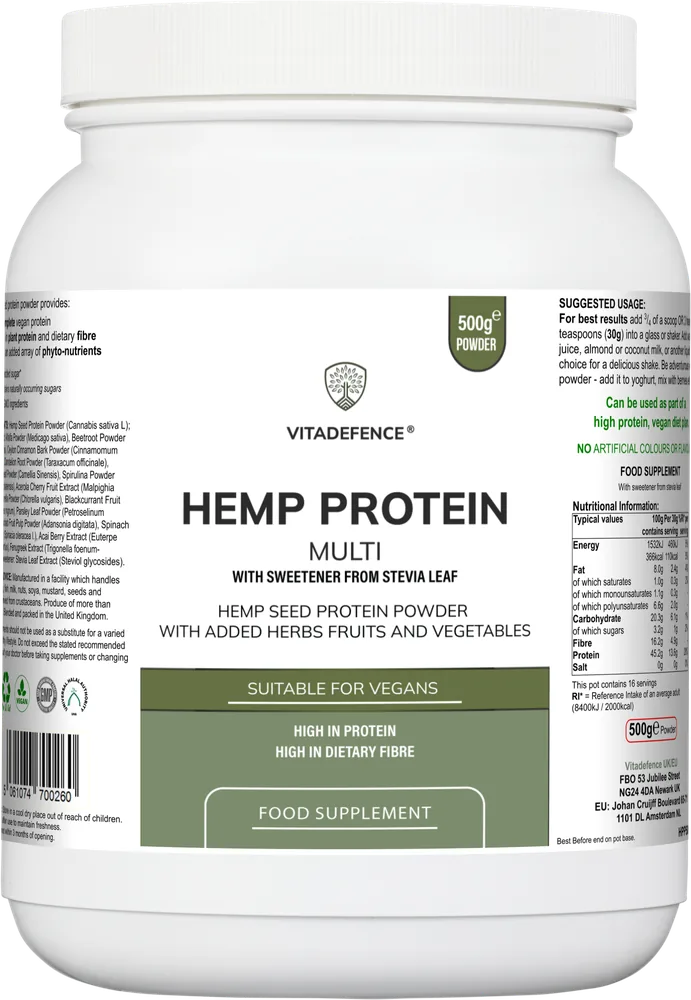
Hemp Seed Protein Powder (Cannabis sativa L); Herbal Blend: (Alfalfa Powder (Medicago sativa), Beetroot Powder (Beta Vulgaris), Ceylon Cinnamon Bark Powder (Cinnamomum zeylanicum), Dandelion Root Powder (Taraxacum officinale), Green Tea Leaf Powder (Camellia Sinensis), Spirulina Powder (Arthrospira platensis), Acerola Cherry Fruit Extract (Malpighia glabra), Chlorella Powder (Chlorella vulgaris), Blackcurrant Fruit Extract (Ribes nigrum), Parsley Leaf Powder (Petroselinum crispum), Baobab Fruit Pulp Powder (Adansonia digitata), Spinach Leaf Powder (Spinacia oleracea l.), Acai Berry Extract (Euterpe Oleracae Martius), Fenugreek Extract (Trigonella foenum-graecum); Sweetener: Stevia Leaf Extract (Steviol glycosides).
Made by an Informed Manufacturer in an Informed Manufacturer Facility.
For best results add ¾ of a scoop OR 3 heaped teaspoons (30g) into a glass or shaker. Add water, fruit juice, almond or coconut milk, or another liquid of your choice for a delicious shake. Be adventurous with this powder - add it to yoghurt, mix with berries etc.
Store in a cool, dry place, out of reach of children. Do not use if the seal is damaged. Best before date printed on the base.
Suitable for vegetarians and vegans · Halal approved
Contains 16 servings. Reference intake of an average adult (8400kJ / 2000kcal) (%RI* = Reference Intake).
Looking for hemp protein? Here is ours: Hemp Protein Multi (Plant-Based Protein Powder with Fruits, Herbs & Vegetables, 500 g), made in the UK.
Most protein powders taste like sweets. After a year, the breakfast that was meant to feel clean starts to feel like dessert. The morning shake stops being a meal and starts being a confectionery problem.
Hemp protein is a different proposition. It comes from a seed — Cannabis sativa L., the food variety, with only trace THC — that has been grown for textile and food use for the better part of six thousand years. The seed is cold-milled, the oil partly removed, and what remains is a soft, grassy, almost nutty powder the colour of moss. It tastes like food, because it is food.
Sixteen 30-gram servings. The kind of breakfast you build in three minutes and forget about for the rest of the morning.
A clean cream tub, the green band of our label running around it, a scoop tucked under the seal. Five hundred grams of soft moss-coloured powder inside. Three heaped teaspoons — about 30g — into a glass of plant milk or water. Stir, blend, drink. No artificial colour. No artificial sweetener. The only sweetness is a tiny pinch of stevia leaf extract, the way the powder ships from the mill.
It will not make a thick milkshake. Hemp protein never does. It makes a drink — light, grainy in the way a real seed should be, slightly green, a little bit alive. The texture takes a week to get used to. After that you don't notice.
Hemp is one of humanity's oldest cultivated plants. Archaeological seed remains have been found in Neolithic Chinese settlements going back to 2700 BC. The Greek historian Herodotus, writing in the fifth century BC, described Scythian funeral rituals using hemp smoke. By the medieval period, hemp was the rope of European navies, the canvas of European sailcloth, and — quietly — the porridge of European peasants who knew the seed itself was food.
The seed sits inside a small papery shell. Crack it open and the kernel inside is pale green and oily. Cold-pressed, it gives a fine olive-coloured cooking oil. Cold-milled after pressing, the residue cake is what becomes hemp protein powder — concentrated, easy to digest, contains all nine essential amino acids. Protein contributes to the maintenance of muscle mass.
What sets hemp apart from soy or pea is digestibility. Hemp seed's main proteins are edestin and albumin. It's not the strongest protein source on the shelf — but for a daily breakfast that doesn't fight your gut, it's one of the kindest.
Alfalfa — Medicago sativa, also called lucerne — was domesticated in ancient Persia, carried into Greece by the Median armies in 491 BC, and spread across the Roman empire as horse fodder. The Spanish brought it to the Americas. The Mormons planted it across Utah. By the twentieth century it was the world's most-grown forage crop, deep-rooted enough to mine minerals from soil layers other plants couldn't reach.
In a powder like this, dried alfalfa leaf is a green-vegetable concentrate — chlorophyll, trace minerals, a soft grassy note in the cup. We use it for the same reason farmers feed it to dairy cows: it's nutritionally dense, the plant pulls minerals from deep ground, and it has been part of human food culture for two and a half thousand years.
Long before beetroot was a sports-nutrition ingredient, it was Sunday lunch. The Romans cultivated it first for its leaves, then its root. In medieval monastery gardens it was a winter staple — easy to grow, stores all winter, dyes everything it touches a colour somewhere between burgundy and oxblood. Beetroot powder gives the blend its pinkish edge.
Spirulina (Arthrospira platensis) is a microscopic spiral-shaped freshwater algae. The Aztecs harvested it from Lake Texcoco and pressed it into dried cakes. Chlorella is a single-celled green algae cultivated in Japan and Taiwan since the 1940s. Both are mostly protein by dry weight, both are intensely pigmented, both have been part of mainstream East Asian and Latin American food culture for longer than the modern supplement industry has existed.
In this blend they're a small fraction of the whole — green minerals and chlorophyll, not the headline.
Acerola cherries (Malpighia glabra) grow on a small tree across the Caribbean and Brazil. The fruit is cherry-sized, intensely sour, and one of the natural world's densest known sources of vitamin C. Acai (Euterpe oleracea) is a palm fruit from the Brazilian Amazon — almost black-purple when ripe, rich in the deep anthocyanin pigments that give blueberries and elderberries their colour. Both come into the powder dried and milled, neither dominant — small splashes of tropical pigment in the green.
The baobab grows across the African savannah, sometimes for two thousand years. The fruit looks like a velvet rugby ball; inside, the pulp dries naturally on the tree into a chalky, citrusy powder. Has been food for centuries for as long as anyone has been counting. We use a small amount of the dried fruit pulp here for tartness and for the whole-food fibre profile it carries.
Three plants you already know, three plants most modern adults eat too little of. Spinach, parsley and blackcurrant powders. None of them are dramatic, all of them are exactly what your grandmother would have grown by the back door.
Ceylon cinnamon (Cinnamomum zeylanicum) — true cinnamon, not the cassia bark sold cheaply — is sourced from the inner bark of evergreen trees in Sri Lanka. Used in Egyptian embalming three thousand years ago, traded along the spice routes to medieval Europe at prices higher than gold. Here, a small pinch sweetens the green of the powder without sugar.
Dandelion root has been the bitter spring tonic of European herbal practice for centuries. Fenugreek seed (Trigonella foenum-graecum) is a North African and South Asian kitchen staple, the green-curry note in many traditional dals. Both are quiet additions, supporting the bitter end of the flavour profile that makes the shake taste like food rather than dessert.
Three heaped teaspoons — about 30 grams — into a glass or shaker. Add water, plant milk, oat milk, almond, coconut, or fruit juice. Stir, shake, blend. One pot is sixteen servings — about two weeks of daily breakfasts, three weeks if you take a couple of days off.
The texture is grainier than whey. The colour is greener. The taste is grassy-nutty with a small sweetness from the stevia leaf. After a week your tongue stops protesting and the breakfast that started life as a chore turns into a habit.
You can also stir it into porridge, fold it through yoghurt, blend it with frozen berries and a banana for a smoothie, or sprinkle a teaspoon over a salad. It's a food powder, not a sealed nutraceutical — treat it like a flour and the kitchen opens up.
This is a food supplement. It is not a meal-replacement on its own. It supplies plant protein and a profile of greens and berries, but it does not replace a varied diet — it adds to one. If you are pregnant, breastfeeding, taking medication, or living with a medical condition, talk to your GP or pharmacist first. Hemp seed is a food crop with no psychoactive content, but if you are subject to drug testing in elite sport please check your governing body's stance on hemp foods. Keep the pot sealed, cool, dry, out of reach of children.
If after eight weeks your breakfast hasn't settled into something you actually look forward to, stop. A protein powder you don't enjoy is a protein powder you won't drink, and 500g of unloved powder at the back of a cupboard helps no-one.
— Vitadefence


