Showcase
Magnesium Multi
Four forms of magnesium — citrate, oxide, hydroxide, sulphate — delivering 498mg per serving, alongside vitamin C, citrus bioflavonoids, sugar beet fibre and apple cider vinegar. The mineral the modern soil and the modern table both keep losing.
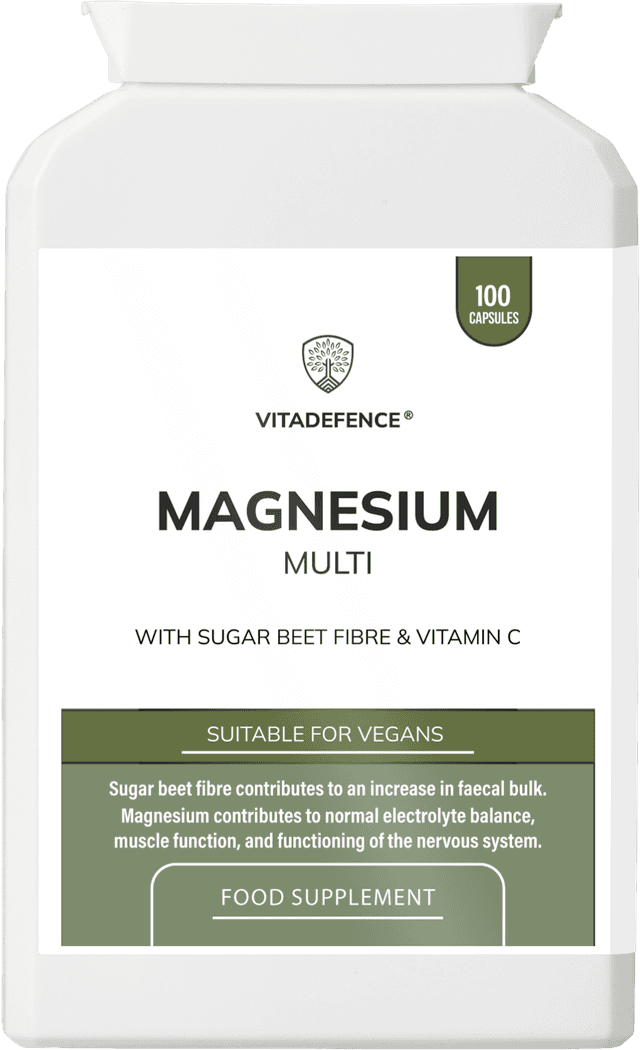
Four kinds of magnesium, one mineral the modern diet keeps losing.
Why almost everyone is a little short
Magnesium is the fourth most abundant mineral in the human body, behind only calcium, sodium, and potassium. About sixty percent of the magnesium you carry sits inside your bones; the rest is in muscle tissue, soft tissue, and a small but critical pool in the blood and cells. It is a cofactor for more than three hundred enzyme reactions — energy production, protein synthesis, muscle contraction, nerve signalling, blood-pressure regulation, blood-sugar control. Without enough magnesium, the body cannot do its ordinary daily work cleanly.
The official recommended intake for a UK adult is around 300 milligrams a day for men, 270mg for women. The official National Diet and Nutrition Survey suggests roughly half of UK adults fall below that intake. For teenagers and women in their thirties to fifties, the proportion runs higher.
There are three reasons. The first is the soil. Forty years of intensive arable farming, fertilised heavily with nitrogen, phosphorus and potassium but not topped up on the trace minerals, has left British soils with measurably lower magnesium concentrations than they had in the 1950s. The vegetables grown on that soil carry less magnesium than their grandparents did.
The second is the diet. Magnesium is concentrated in dark leafy greens, whole grains, beans, nuts, and seeds — exactly the foods that have been displaced over the last fifty years by white bread, refined cereals, takeaway dinners, and processed food. The shopping basket has shifted away from the magnesium-rich aisle.
The third is modern stress. The body excretes magnesium more rapidly under sustained adrenaline — the chronic low-grade stress that comes with long working weeks, poor sleep, and constant digital input. Coffee, alcohol, and certain medications (proton pump inhibitors, some diuretics) accelerate the loss further.
The shortfall is not a diagnosis. It is a slow background drift. People feel it as the kind of muscle cramp that wakes you at 3am and won't release without a glass of water. As tight shoulders. As an inability to fall asleep when the body is tired. As a faint tremor in the eyelid. As a heart that picks up rhythms it didn't used to. Nothing dramatic. Nothing a blood test will routinely catch (only one percent of the body's magnesium is in the blood, and the body works very hard to keep that one percent stable). Just a quiet, daily, low-grade insufficiency.
This little bottle is one quiet answer.
The bottle, in your hand
A clean cream pot, the green band of our label running around it. One hundred vegan capsules inside — fifty servings of two capsules each, or twenty-five days at the upper end of the dosing range. The capsules are HPMC, plant-derived, suitable for vegetarian, vegan, kosher and halal kitchens.
Inside each two-capsule serving: 498 milligrams of elemental magnesium — that's 132% of the daily nutrient reference value — drawn from four different magnesium compounds, alongside 50mg of vitamin C, 110mg of sugar beet fibre, citrus bioflavonoids, apple cider vinegar powder, and a small dose of fructo-oligosaccharides for the gut. The capsule shell itself contributes 240mg of plant fibre.
Two capsules, one serving, taken with water on an empty stomach. The dosing range is one to four servings a day depending on your needs. Most people sit at one or two.
Why four forms of magnesium
This is the thinking that earned this bottle its name.
Most magnesium supplements on the shelf are a single form — usually magnesium citrate, sometimes magnesium glycinate, sometimes the cheaper magnesium oxide. Each form has a different profile: a different absorption rate, a different effect on the bowel, a different texture in the body. There is no single magnesium form that wins on every metric. They are different tools for different aspects of the same job.
This bottle uses four forms in a deliberate blend.
Magnesium oxide. The densest form by elemental weight — about 60% pure magnesium by mass, more than any other compound. The trade-off is lower absorption per gram in the upper gut. What it does well is sit further along in the bowel and contribute to bowel motility, which is the gentle laxative property that magnesium is sometimes known for.
Magnesium hydroxide. Closely related to oxide, slightly more soluble, also high in elemental magnesium. The classic form used in milk-of-magnesia preparations.
Magnesium citrate. The most popular consumer-research form. Magnesium bound to citric acid, well-absorbed in the small intestine, the form most often used in studies of muscle cramps and sleep quality.
Magnesium sulphate heptahydrate. Best known as Epsom salt — the form people dissolve in bath water for sore muscles. Highly water-soluble, useful for fast absorption, gentle on the system.
A blend of all four delivers magnesium across multiple absorption sites along the digestive tract — some early, some late, some quickly, some slowly — instead of a single one-shot release. The same total elemental magnesium dose, more thoroughly used.
The label warns plainly that 450mg of magnesium may cause mild stomach upset in sensitive individuals. This is honest. Magnesium oxide in particular can have a laxative effect at higher doses. Start at one serving a day for the first three or four days; step up only if your gut tolerates it.
The supporting cast
Vitamin C (50mg, 62% NRV). Ascorbic acid earns its place here for two reasons. First, vitamin C improves the absorption of magnesium and several trace minerals. Second, vitamin C contributes — to use the EFSA-authorised plain wording — to normal energy-yielding metabolism, to the reduction of tiredness and fatigue, to the normal function of the immune system, and to the protection of cells from oxidative stress. Boring, structural, daily.
Citrus bioflavonoids. The flavonoid family present in the white pith of oranges, lemons, and grapefruit — the part of the fruit most people throw away. Hesperidin, naringin, and rutin are the three best-studied. They earn a quiet seat at this table because traditional herbal practice has paired them with vitamin C for the better part of a century.
Sugar beet fibre (110mg). Sugar beet — Beta vulgaris, the same species as red beetroot but a different cultivar grown for sugar — leaves a fibre-rich pulp after the sugar is extracted. The fibre is mostly pectin and cellulose, gut-friendly food for the bacteria of the lower bowel. A small but useful contribution to daily fibre intake.
Apple cider vinegar powder. A concentrated, dried form of the same fermented apple juice that has been a kitchen staple for two thousand years. Its place in this bottle is digestive — a faint stimulus to the appetite, a small contribution to the acid environment of the stomach during a magnesium meal.
Fructo-oligosaccharides. Short chains of fructose found naturally in onions, leeks, asparagus, bananas and chicory root. A prebiotic — food for the beneficial bacteria of the lower bowel. The small dose here, 14mg per serving, sits in alongside the sugar beet fibre to keep the gut happy.
How to use it
Two capsules — one serving — on an empty stomach, with a glass of water. The bottle's traditional pairing is to follow the dose with a glass of orange juice, or freshly-squeezed lemon juice in water. The acidity helps the magnesium oxide and hydroxide dissolve and shifts a touch more of the elemental mineral into solution.
A note on grapefruit juice. It is sometimes recommended for the same acidity reason, but grapefruit interacts with statins (atorvastatin, simvastatin), several calcium-channel blockers, ciclosporin, and a handful of other prescription medicines through the CYP3A4 enzyme in the gut wall. If you take any prescription medication, skip the grapefruit and use orange or lemon water instead — and check with your pharmacist before starting grapefruit juice as a daily routine. Plain water is always fine.
You can repeat the dose up to four times a day. Most people sit comfortably at one or two servings. Many take their first serving in the morning and a second in the evening — the evening dose pairs well with the way magnesium contributes to muscle relaxation and to a calmer transition into sleep.
If you find your stools are looser than usual, drop back to one serving a day and let the gut adjust. Sensitivity varies — some people tolerate four servings without any noticeable bowel effect; others find that two is plenty.
How long until you notice anything
Magnesium works in the background. Most people who notice a difference notice it within the first two to four weeks — slightly fewer night cramps, a slightly easier transition into sleep, slightly less tightness in the shoulders by mid-afternoon. None of these are dramatic. All of them are the quiet absence of small daily insufficiencies that you'd stopped noticing because they had become the baseline.
If after eight weeks nothing has shifted, stop. A supplement that isn't doing anything for you isn't worth the money.
Honest caveats
This is a food supplement — it complements a varied diet, doesn't replace one. If you have kidney disease, magnesium supplementation needs a clinician's input — the kidneys are the main route by which excess magnesium leaves the body, and impaired kidney function can let levels rise too high. If you are on diuretics, blood-pressure medication, or any prescription medicine, run this past your GP or pharmacist first — magnesium can interact with several drug classes. If you are pregnant or breastfeeding, talk to a healthcare professional before adding it.
Don't exceed four servings a day. Keep the bottle cool, dry, sealed, out of reach of children.
If you read this far, thank you. We tried to write the kind of page we'd want to read — no neon promises. Just a mineral the modern soil keeps losing, four forms of it in one capsule, a small daily ritual that the British diet has been quietly missing for forty years.
— Vitadefence
— Vitadefence