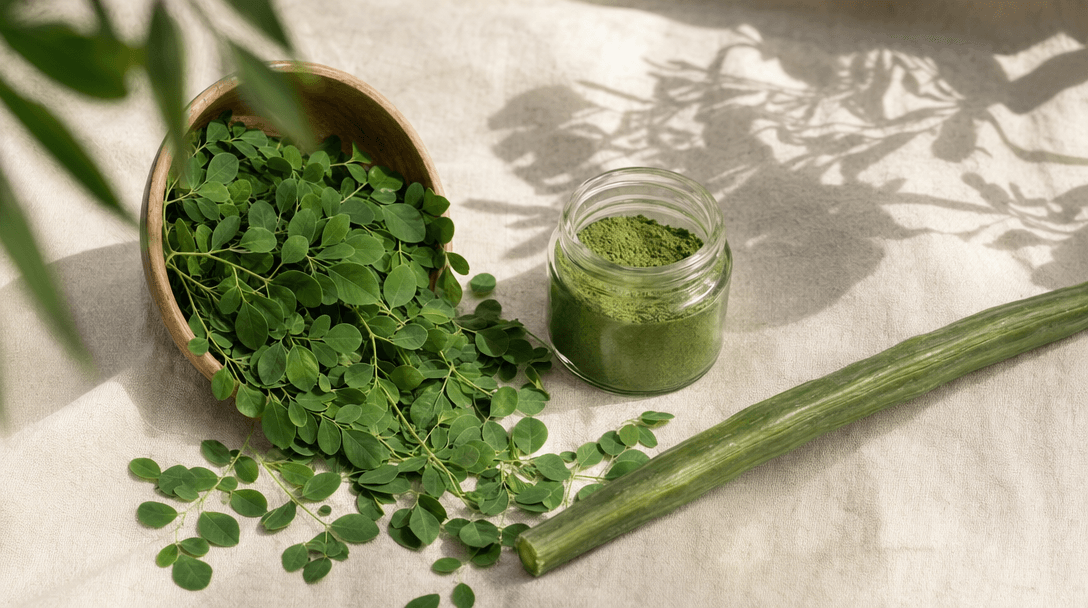
10 Reasons Moringa Earns a Place in Your Daily Routine
Moringa carries 2,000+ years of traditional use and a growing modern evidence base. Ten honest reasons it earns a daily place in your routine.
By Vitadefence Team
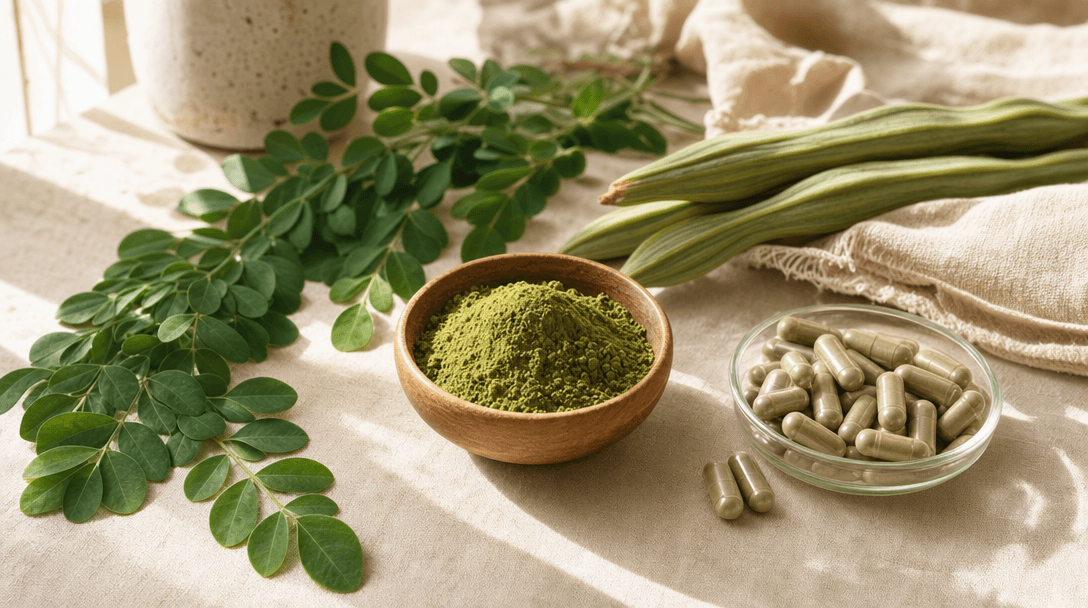
You've probably eaten broccoli without thinking it's a superfood. Yet a single dried green powder — moringa leaf — gets called miraculous. The reality is somewhere between "yet another wellness trend" and "genuinely impressive plant". Here are ten reasons it earns a daily place, with the evidence honest about what we know and what we don't.
1. The nutrient density is real
Moringa leaf, gram-for-gram, packs more iron than spinach, more vitamin C than oranges (in fresh form), and more calcium than milk. Quoting absolute numbers gets misleading because servings differ — but as a daily 1–2 gram capsule, it provides a meaningful nutritional contribution alongside food.
2. Complete plant protein
Moringa is one of few plants with a complete amino-acid profile, including all nine essential amino acids. Useful for vegans, vegetarians, and anyone topping up plant protein in a smoothie or breakfast.
3. Antioxidant load that earns the label
The leaf contains polyphenols (quercetin, kaempferol, chlorogenic acid) and isothiocyanates that show strong antioxidant activity in laboratory tests. EFSA has not approved a specific moringa antioxidant claim yet, but the underlying chemistry is consistent with what we'd expect from green leafy plants generally.
4. Iron support — particularly relevant for women
The iron content of moringa leaf is genuinely high, and combined with its natural vitamin C, absorption is supported. This doesn't replace clinical iron treatment for diagnosed deficiency, but it's a sensible daily dietary contribution for menstruating women whose iron intake is borderline.
5. Encouraging blood sugar research
Several small clinical studies (Kushwaha et al., 2014; Anthanont et al., 2016) have shown modest improvements in fasting blood glucose with moringa leaf supplementation in adults with metabolic concerns. The trials are small and the effects modest. If you're managing blood sugar medically, talk to your GP before adding moringa — it's a dietary support, not a medication replacement.
6. Anti-inflammatory mechanism (in pre-clinical work)
Isothiocyanates (the same family as broccoli sulforaphanes) are present in moringa leaf and show anti-inflammatory effects in cell and animal studies. Whether this translates fully to human inflammation outcomes is still being studied — but the mechanism is plausible and the food-tradition evidence is long-standing.
7. Skin-supporting nutrients
Vitamin C contributes to normal collagen formation, vitamin A (beta-carotene in moringa) supports skin maintenance, and zinc is present at small but useful levels. Moringa contributes to a baseline of skin-supporting nutrients without claiming to be a topical treatment.
8. Digestive comfort from the fibre and chlorophyll
Moringa leaf powder contains soluble and insoluble fibre and a high chlorophyll load. Both contribute to digestive comfort in different ways — fibre as a substrate for gut bacteria, chlorophyll for its mild deodorising and binding properties (folk-traditional, not pharmacologically proven, but unlikely to cause harm).
9. Long traditional safety record
Moringa has been a leaf vegetable in Indian, Bangladeshi, and Filipino cooking for thousands of years. The safety profile of the leaf at culinary and supplement-typical doses is well-established. (Important caveat: the root and bark are different — use only the leaf for daily supplementation, and avoid in pregnancy.)
10. It doesn't taste like a punishment
Compared to spirulina (which can taste strongly of pond) or wheatgrass (assertive grass), moringa leaf powder is mildly grassy and slightly sweet — closer to matcha. It blends easily into smoothies, oatmeal, or yoghurt without dominating the flavour. For people who avoid green powders because of taste, moringa is the easiest entry point.
How to add it sensibly
- Capsule form: 1–2 capsules daily with breakfast, providing 400–1200 mg of leaf powder.
- Loose powder: 1 teaspoon (~3g) added to a smoothie, daal, or scrambled eggs.
- With food: the iron and fat-soluble vitamins absorb better with a meal.
- Time horizon: 6–8 weeks of consistent daily use is the sensible window for noticing baseline shifts in energy or digestion.
What to look for in a quality product
- Young leaves only (not stems or branches).
- Shade-dried or low-temperature processed.
- Vibrant green colour (faded grey-green suggests over-processing or old stock).
- Organic where possible.
- UK or EU GMP-manufactured.
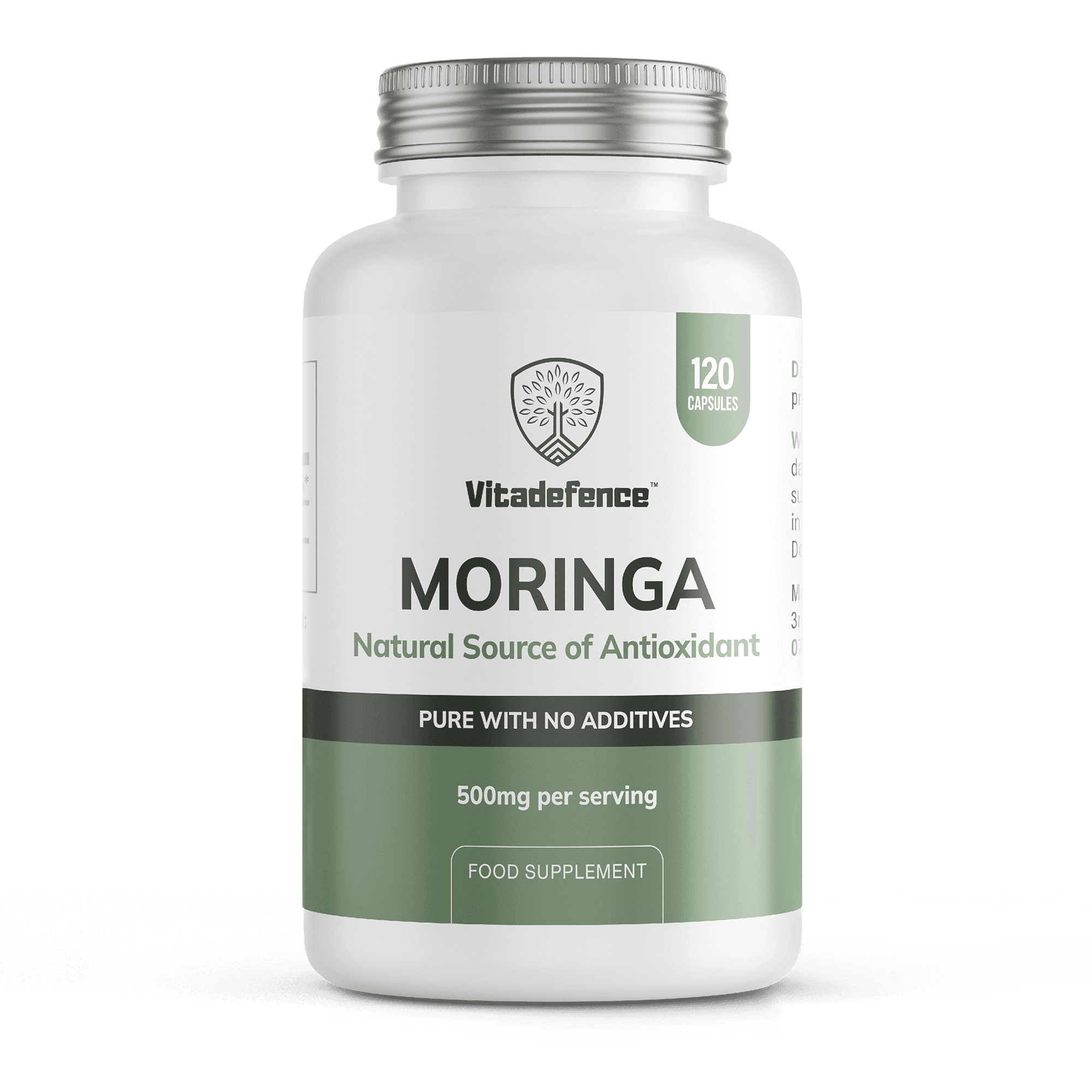
Our Moringa Oleifera capsules use shade-dried young leaf powder.
Pairs well with
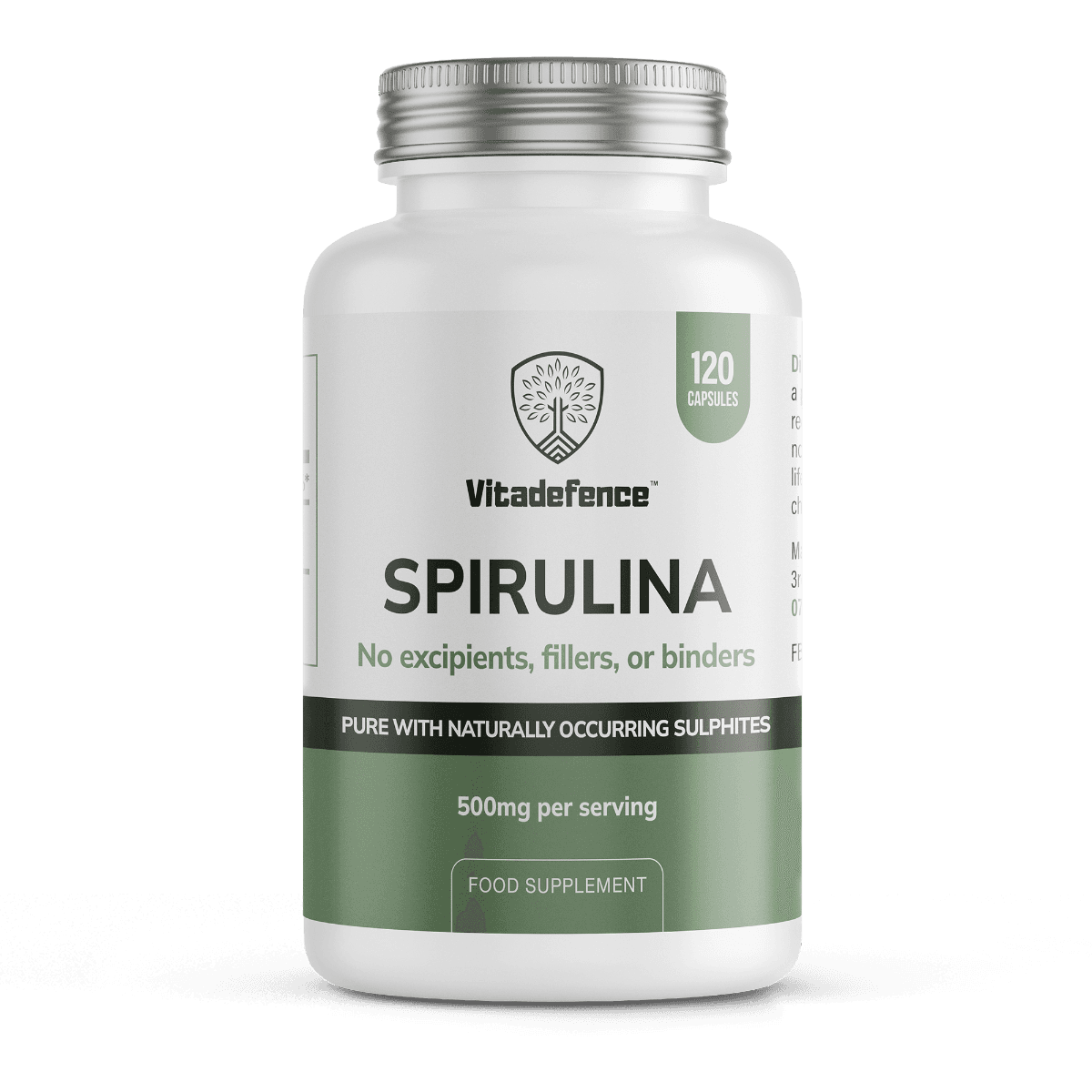
- Spirulina — broader green-protein profile. Spirulina on its own or alongside moringa works well.
- Vitamin C — supports the iron absorption from moringa leaf.
- A daily multi — moringa contributes, but doesn't replace a multivitamin.
What moringa is not
It's not a treatment for diabetes, high blood pressure, or any specific condition. It's not a meal replacement. It's not a substitute for vegetables. It's a nutrient-dense, traditionally-used green leaf with a growing modern evidence base — used as part of a varied diet, it's a sensible daily contribution.
The takeaway
Moringa earns its place quietly. Real nutrition density, a long safety record, encouraging research signals, and a flavour that doesn't punish you. Add it to a smoothie or take a capsule with breakfast. Give it 6–8 weeks. Most people who stick with it find it becomes a routine they don't think about — the kind of supplement that just lives in the morning rhythm.
Recommended for You
Moringa Oleifera — shade-dried young leaf, daily vegan capsule.This article is for informational purposes only and does not constitute medical advice. Vitadefence supplements are food supplements, not medicines. They should not be used as a substitute for a varied diet and a healthy lifestyle. Consult a healthcare professional if you are pregnant, breastfeeding, on medication, or have a medical condition.
Related products
More from the journal
Spirulina: The Original Superfood — Protein, B12, and Phycocyanin Antioxidant Power
9 min · Ingredients
Siberian Ginseng Benefits: Why This Adaptogen Is Different From Panax Ginseng
7 min · Ingredients