Supplements for Gut Health and Bloating: Fibre, Cultures, Enzymes
Supplements for Gut Health and Bloating: Fibre, Cultures, Enzymes. Evidence-led plain-English guide from Vitadefence UK.
By Vitadefence Team
Up to one in three people in the UK experience bloating regularly, yet the causes are rarely straightforward. While fibre, live cultures and digestive enzymes each play a distinct role in gut comfort, knowing which one to take — and when — can mean the difference between relief and more discomfort. This guide breaks down the evidence behind each category, the doses that actually work, and how to choose a supplement that supports rather than masks the underlying issue.
Why bloating happens: the gut environment in brief
Bloating is a sensation of increased abdominal pressure, often accompanied by visible distension. It can stem from slowed gut motility, an imbalance in the colonic microbiome, or inadequate digestive enzyme output — or a combination of all three. While occasional bloating after a large meal is normal, persistent bloating may indicate that the gut's microbial ecosystem or digestive capacity needs support.
Research published in Nature Reviews Gastroenterology & Hepatology (2018) highlights that bloating correlates with altered gas production and transit, not necessarily excess gas itself. That distinction matters: interventions that modify gut motility or the composition of gas-producing bacteria may be more effective than those that simply add bulk.
For a deeper look at how diet interacts with the gut microbiome, our guide on gut health and diet covers the prebiotic and fermentable fibre considerations in detail.
Fibre for gut health: which type works for bloating?
Fibre is not a single substance. It ranges from insoluble (wheat bran, cellulose) to soluble (psyllium, inulin, beta-glucans), and each behaves differently in the gut. For bloating, the type and dose matter enormously.
Soluble vs insoluble fibre
Insoluble fibre adds bulk and speeds transit, but in sensitive individuals it can exacerbate bloating if the colon is already sluggish. Soluble fibres, particularly psyllium husk, form a gel that slows gastric emptying and normalises stool consistency — which can reduce bloating in both constipation-predominant and diarrhoea-predominant IBS.
A 2015 randomised controlled trial in Alimentary Pharmacology & Therapeutics found that psyllium (10–12 g/day) significantly improved global IBS symptoms, including bloating, compared to placebo. The mechanism appears to be a combination of stool bulking and modulation of colonic fermentation.
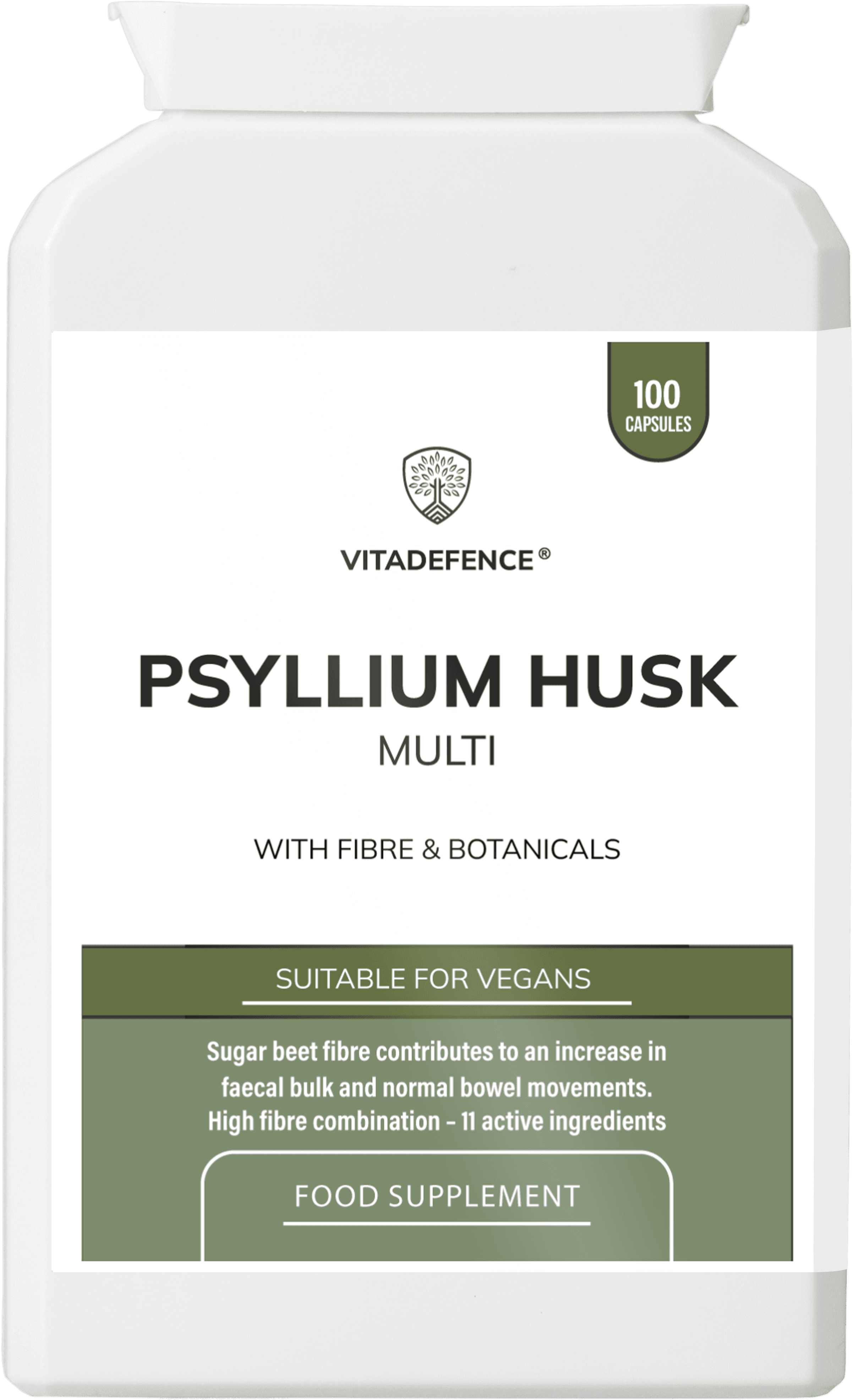
Our Psyllium Husk Multi provides 4 g of psyllium per serving (two capsules) — a practical starting dose that can be titrated up. We use whole husk rather than powdered isolates to preserve the natural fibre matrix.
Who should be cautious with fibre for bloating
If you have small intestinal bacterial overgrowth (SIBO) or a known sensitivity to fermentable fibres (FODMAPs), high-dose psyllium may initially worsen gas. Start with half a serving and increase gradually over two weeks. Those with a history of bowel obstruction or strictures should avoid high-fibre supplements unless cleared by a gastroenterologist.
Live cultures (probiotics): the evidence for bloating
The term "probiotic" covers dozens of bacterial strains, each with different metabolic outputs. For bloating, the most studied strains belong to the Bifidobacterium and Lactobacillus genera, followed by Saccharomyces boulardii.
What the clinical data says
A 2020 meta-analysis in Nutrients pooled data from 21 trials and found that multi-strain probiotics (≥2 strains) significantly reduced bloating severity compared to placebo. The effect was modest but consistent, with a standardised mean difference of −0.35. Importantly, the benefit was greatest in people who had baseline bloating ≥3 on a 10-point scale — suggesting that probiotics are not a universal fix but can help a subset of individuals.
Specific strains with supporting evidence include:
- Bifidobacterium lactis HN019 — improved gut transit and reduced bloating in a 2014 trial (3 billion CFU/day)
- Lactobacillus plantarum 299v — reduced abdominal pain and bloating in IBS patients (10 billion CFU/day)
- Saccharomyces boulardii — reduced diarrhoea-associated bloating, though less studied for functional bloating alone
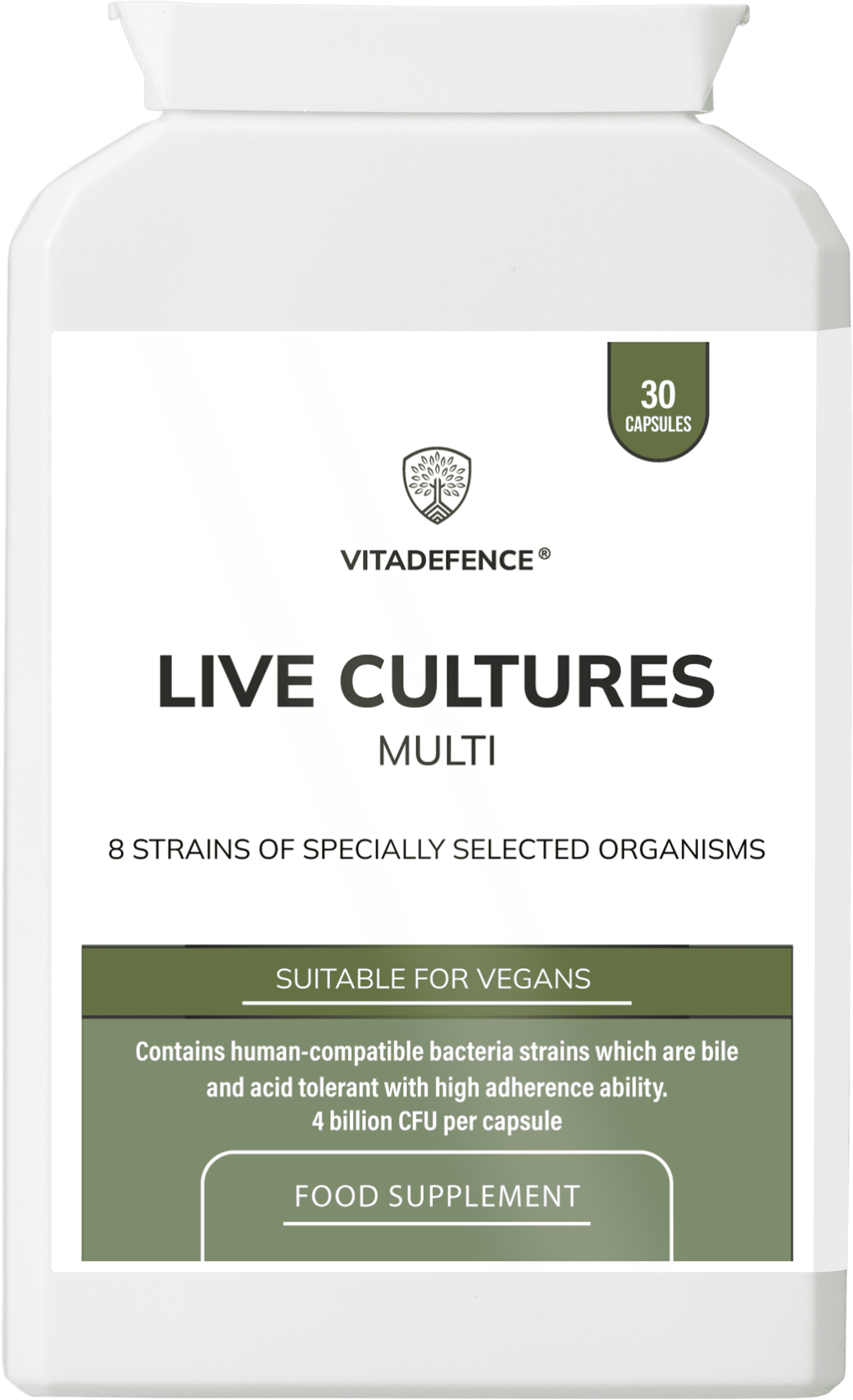
Our Live Cultures Multi contains 12 strains at 20 billion CFU per capsule, with each strain individually identified on the label. We do not use proprietary blends — every strain and its CFU count is transparent.
Who benefits most from live cultures
Probiotics are most likely to help if you have post-prandial bloating that worsens with fermentable foods, or if you have taken antibiotics in the past six months. They are less effective in people with severe constipation-predominant IBS or those with known histamine intolerance (some Lactobacillus strains produce histamine).
Digestive enzymes: when the gut needs a helping hand
Digestive enzymes break down macronutrients into absorbable units. If endogenous enzyme production is insufficient — due to age, pancreatic insufficiency, or simply a heavy meal — undigested food reaches the colon, where bacteria ferment it and produce gas.
Which enzymes matter for bloating
Three enzyme groups are most relevant:
- Amylase — breaks down starches; useful after high-carb meals
- Lipase — breaks down fats; can reduce fatty stool and associated bloating
- Protease — breaks down proteins; may help if bloating follows high-protein meals
- Alpha-galactosidase — specifically targets oligosaccharides (beans, lentils, cruciferous vegetables); the enzyme in products like Beano
- Lactase — for lactose maldigestion
A 2018 randomised trial in Journal of the American College of Nutrition gave a multi-enzyme blend (including alpha-galactosidase, amylase, lipase and protease) to people with functional bloating. After 30 days, the enzyme group reported a 40% reduction in bloating severity versus 12% in the placebo group. The effect was most pronounced in people who reported bloating within 2–3 hours of eating.
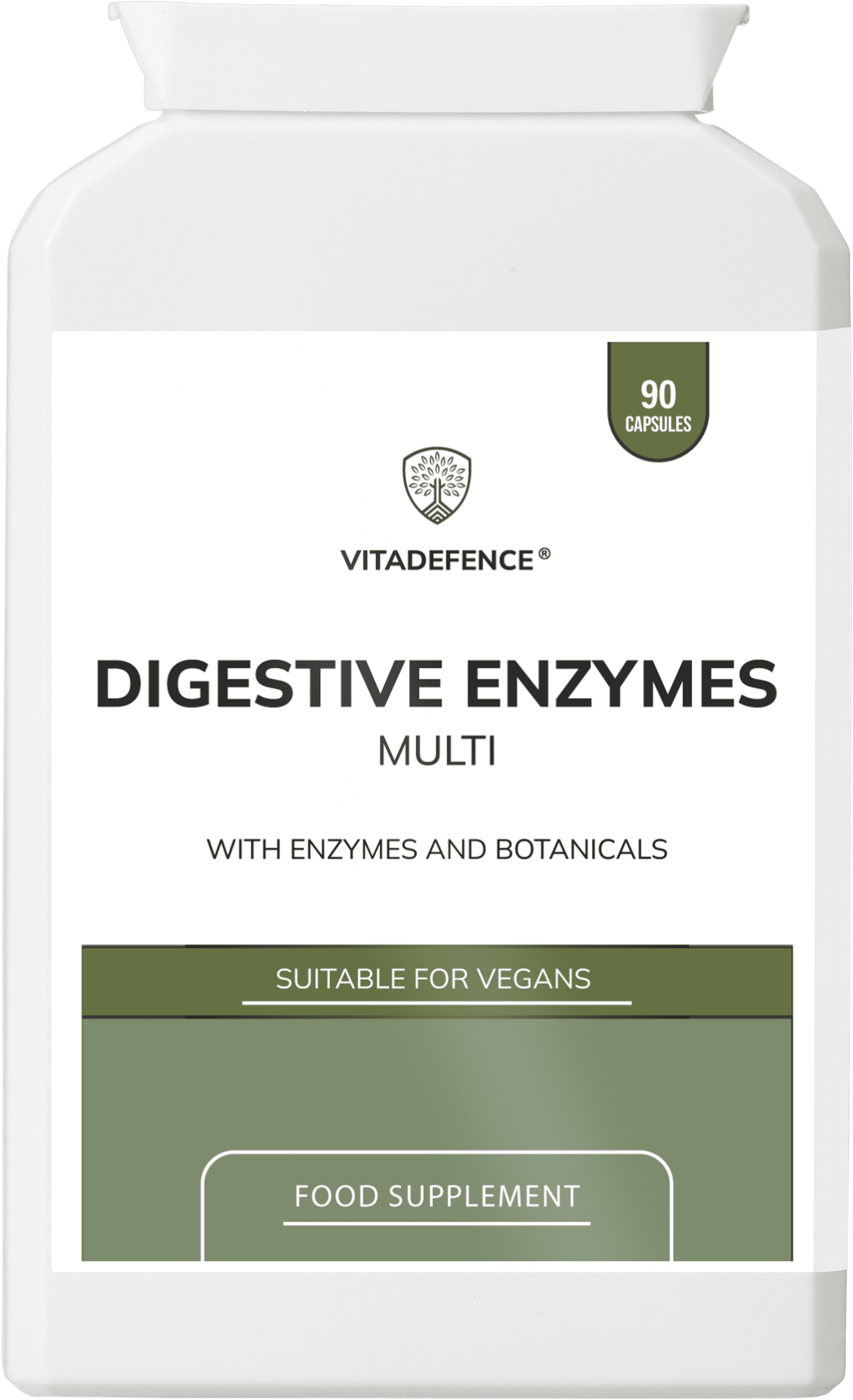
Our Digestive Enzyme Multi contains 10 enzymes, including alpha-galactosidase and lactase, with activity levels expressed in FCC units (Food Chemical Codex) rather than vague "mg" amounts. Each capsule provides 1000 FCC units of lactase and 300 FCC units of alpha-galactosidase — doses consistent with clinical literature.
Who should be cautious with digestive enzymes
Enzymes are generally safe, but people with a history of gastric ulcers or pancreatitis should consult a healthcare professional before taking high-dose protease. Those on blood-thinning medication (warfarin) should note that some protease blends may theoretically enhance anticoagulant effects, though the risk is low at typical doses.
Practical guidance: combining fibre, cultures and enzymes
For most people with persistent bloating, a layered approach works best:
- Start with digestive enzymes taken with meals for 2 weeks. If bloating reduces by 50% or more, you may have a digestive enzyme insufficiency.
- Add a probiotic taken on an empty stomach (morning, 30 minutes before food) for another 4 weeks. If symptoms improve further, the microbiome is likely a contributing factor.
- Introduce psyllium gradually — start with half the recommended dose for 7 days, then increase to full dose. Monitor stool consistency and gas.
If you prefer a single solution, our gut health bundle combines all three products at a 15% discount, with free Royal Mail Tracked 48 delivery.
Who should try these supplements
These supplements are appropriate for adults who experience:
- Bloating that occurs 2–6 times per week
- Bloating after meals, especially high-carb or high-fat meals
- Alternating stool consistency (constipation and loose stools)
- Mild abdominal discomfort that does not interfere with daily life
They are not a substitute for medical investigation if you have:
- Unexplained weight loss
- Blood in stool
- Severe, progressive pain
- Family history of colorectal cancer
In those cases, see your GP before starting any supplement.
Who should be cautious
- Pregnant or breastfeeding women — limited safety data for high-dose multi-strain probiotics; stick to single-strain products with established safety records.
- Immunocompromised individuals — live cultures carry a theoretical risk of translocation; seek medical advice first.
- People with gastroparesis — high-fibre supplements can worsen gastric retention; opt for enzymes alone.
- Those with histamine intolerance — avoid Lactobacillus strains that produce histamine (e.g., L. casei, L. bulgaricus).
Frequently asked questions
Can I take psyllium and probiotics together?
Yes, but space them out. Take probiotics on an empty stomach (morning) and psyllium with meals or before bed. Psyllium can bind to probiotics if taken simultaneously, potentially reducing their viability.
How long before digestive enzymes work for bloating?
Most people notice a difference within 3–7 days, particularly if bloating occurs within 2 hours of eating. If no improvement after 14 days, enzymes are unlikely to be the solution for you.
Do I need to refrigerate live cultures?
Not necessarily. Many modern probiotic strains are freeze-dried and stable at room temperature. Our Live Cultures Multi is shelf-stable for 24 months below 25°C. Always check the label — if it says "refrigerate after opening", follow that instruction.
Can fibre supplements cause more bloating initially?
Yes. If you are not accustomed to high-fibre foods, psyllium can cause transient gas and bloating for the first 5–10 days. This usually resolves as the gut microbiome adapts. Starting with a low dose (half a serving) and increasing slowly minimises this effect.
What about prebiotics like inulin for bloating?
Inulin and other fermentable fibres (FOS, GOS) can worsen bloating in sensitive individuals because they are rapidly fermented by colonic bacteria. Psyllium is a better choice for bloating because it is less fermentable and forms a gel that normalises transit.
Are these supplements safe for long-term use?
Yes, for most people. Psyllium has been used for decades as a bulk laxative. Probiotics are generally considered safe for continuous use, though some experts recommend cycling (e.g., 8 weeks on, 2 weeks off) to prevent microbial dependency. Digestive enzymes are best used on an as-needed basis rather than indefinitely.
How Vitadefence does it
Every supplement we make is manufactured in our GMP-certified UK facility (3rd Floor, 86-90 Paul Street, London EC2A 4NE). We use HPMC capsules (vegetarian, non-GMO) rather than gelatin, and we never use proprietary blends — every ingredient and its dose is listed on the label. Our products are registered with the UK's Information Commissioner's Office (ICO ZC106169) and comply with EU Regulation 1924/2006 for health claims.
We offer free Royal Mail Tracked 48 delivery on all orders, with no minimum spend. You can read verified customer reviews on our reviews page to see how others have used these supplements for bloating.
Bottom line
Bloating has multiple causes, and no single supplement will work for everyone. Fibre (psyllium), live cultures (multi-strain probiotics) and digestive enzymes each address a different mechanism: stool bulking, microbiome balance and macronutrient breakdown. The most effective strategy is to identify your personal trigger pattern and choose the supplement — or combination — that matches it.
If you are ready to start, our Digestive Enzyme Multi is the best entry point for meal-related bloating. For a comprehensive approach, the gut health bundle gives you all three products with free delivery.
This article is for educational purposes only and does not constitute medical advice. The health claims referenced are authorised under EU Regulation 1924/2006 for vitamins and minerals only. Botanicals and other ingredients are described under the traditional use category. Always consult a qualified healthcare professional before starting any new supplement regimen, especially if you are pregnant, breastfeeding, taking medication or have a diagnosed medical condition. Individual results may vary.
Related products
More from the journal
Spirulina: The Original Superfood — Protein, B12, and Phycocyanin Antioxidant Power
9 min · Ingredients
Siberian Ginseng Benefits: Why This Adaptogen Is Different From Panax Ginseng
7 min · Ingredients