Discover the Power of Chlorophyllin: The Green Pigment Worth a Closer Look
Chlorophyllin — the water-soluble form of chlorophyll — has a small but interesting evidence base for antioxidant support and skin health. The honest version.
By Vitadefence Team
If you've shopped for green powders or browsed the alternative health corner of any chemist, you've come across chlorophyllin. The name sounds like green plant biology, which it more or less is. The marketing claims around it can get enthusiastic; the honest science is more interesting and more measured. Here's what's worth knowing.
What chlorophyllin is (and what it isn't)
Chlorophyll is the green pigment in plants — the molecule that converts sunlight into chemical energy through photosynthesis. It contains a magnesium atom at its centre and is fat-soluble, which makes it less practical as a supplement.
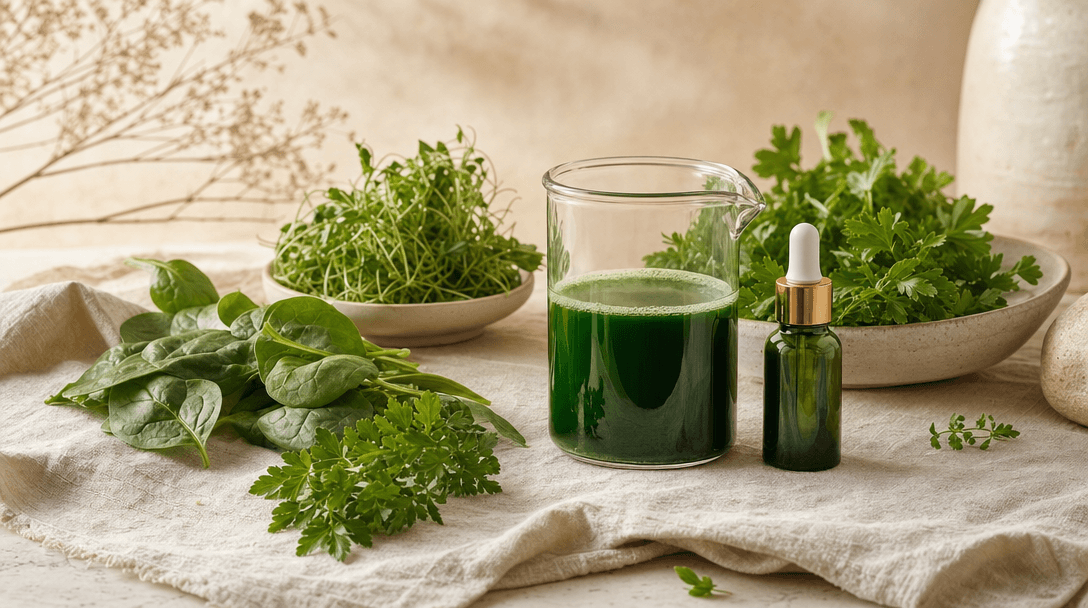
Chlorophyllin is the water-soluble version, made by replacing the magnesium with sodium and copper through a chemical processing step. Despite the chemistry tweak, chlorophyllin retains the antioxidant and binding properties of its natural cousin, while being far more bioavailable through the digestive tract. Most "liquid chlorophyll" products on the market are actually chlorophyllin — the names get used interchangeably in everyday language.
The traditional and modern uses
Chlorophyllin has been studied since the 1940s, originally for its mild deodorising properties (it was prescribed in nursing homes for body and breath odour). More recently, the research has broadened into a few specific areas:
- Antioxidant activity — chlorophyllin neutralises free radicals in laboratory tests, with comparable activity to several other plant antioxidants.
- Aflatoxin binding — the most-cited research. Chlorophyllin binds to dietary aflatoxins (a class of fungal toxins occasionally present in stored grains and nuts) in the gut, reducing absorption (Egner et al., Carcinogenesis, 2001 — small clinical study in a high-aflatoxin-exposure population).
- Skin support — small studies (e.g. McCook et al., 2015) suggest topical chlorophyllin may improve appearance of mild acne and skin texture; oral effects are less well-studied.
- Mild deodorant effect — historical use, with modest evidence for mouth and body odour.
The honest scientific picture
The evidence base for chlorophyllin is best described as "small, encouraging, and exploratory". A handful of well-designed studies exist, mostly in narrow populations or on specific outcomes. It's not a heavy-evidence supplement like vitamin D or omega-3. But it has a clean safety profile across decades of use, plausible mechanisms, and enough preliminary signal to make it a reasonable add-on for the right person.
What chlorophyllin won't do
- It's not a "blood cleanser" or "detoxer" in the sense the marketing sometimes implies. The body has organs (liver, kidneys) that handle that work.
- It's not a treatment for any disease.
- It doesn't replace fibre, fluids, or actual vegetables.
- It's not a substitute for a nutrient-dense diet.
Who might find it useful
- People interested in adding a mild antioxidant green-pigment supplement to their stack.
- Those wanting a topical or oral support for mild skin concerns (alongside conventional skincare).
- Anyone who eats a diet relatively low in green leafy vegetables, as a small contribution toward "more green stuff".
How to take it
- Liquid form: drops in water, typically 1–2 teaspoons daily. The water turns vivid green.
- Tablet/capsule form: 100–200 mg daily.
- Timing: with food, especially if your stomach is sensitive.
- Caution: may slightly stain stools green — harmless but worth knowing. People on warfarin or other blood thinners should speak to a GP first, as natural chlorophyll-related compounds contain vitamin K.
Better alternatives if you want green-pigment nutrients
If your goal is broader green nutrition rather than chlorophyllin specifically, whole-food sources usually deliver more value:
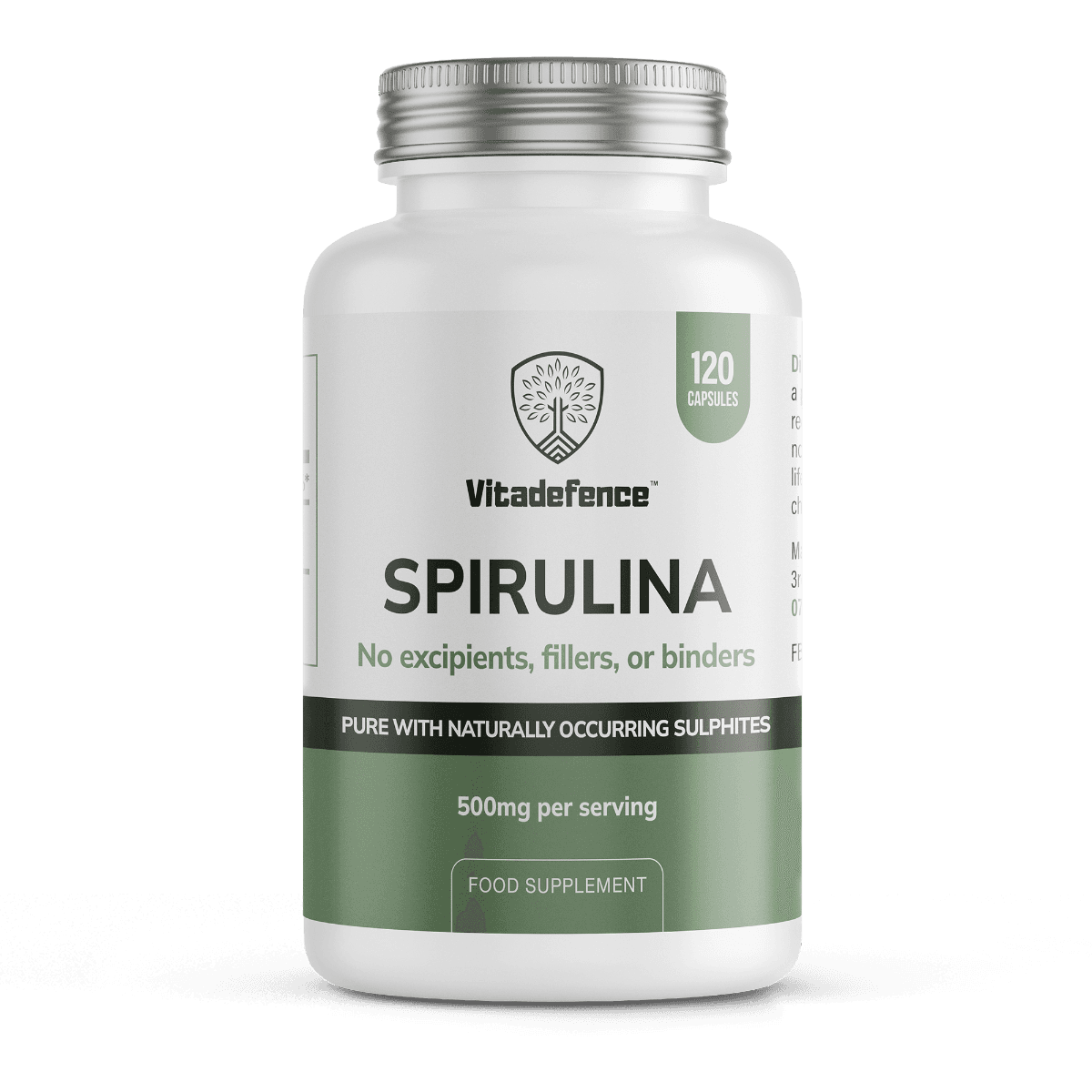
- Spirulina — combines chlorophyll with high-quality plant protein, iron, and B vitamins. Our Spirulina is a denser nutritional package than isolated chlorophyllin.
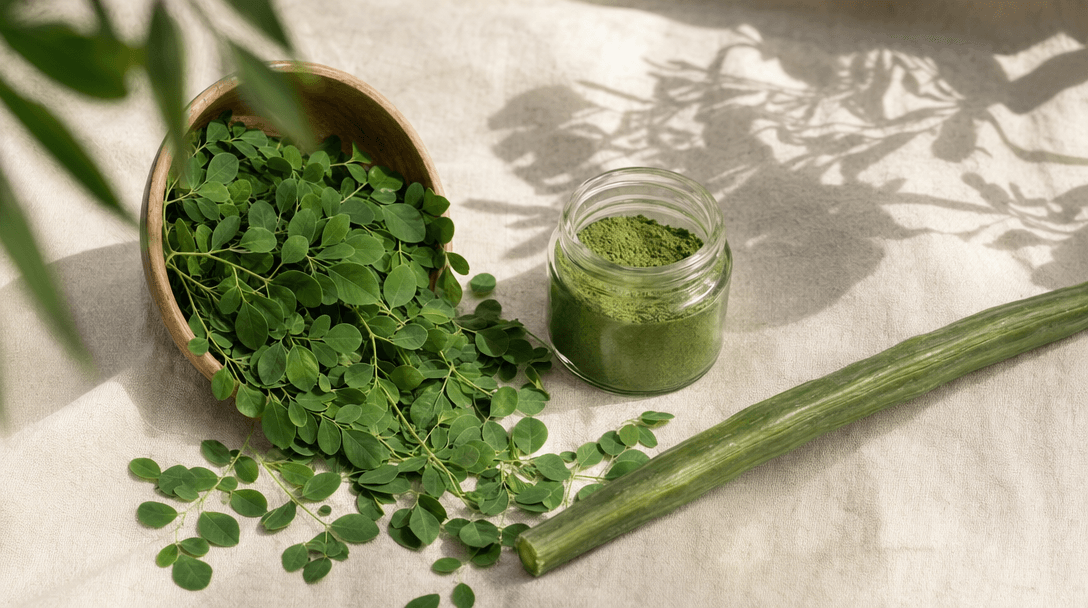
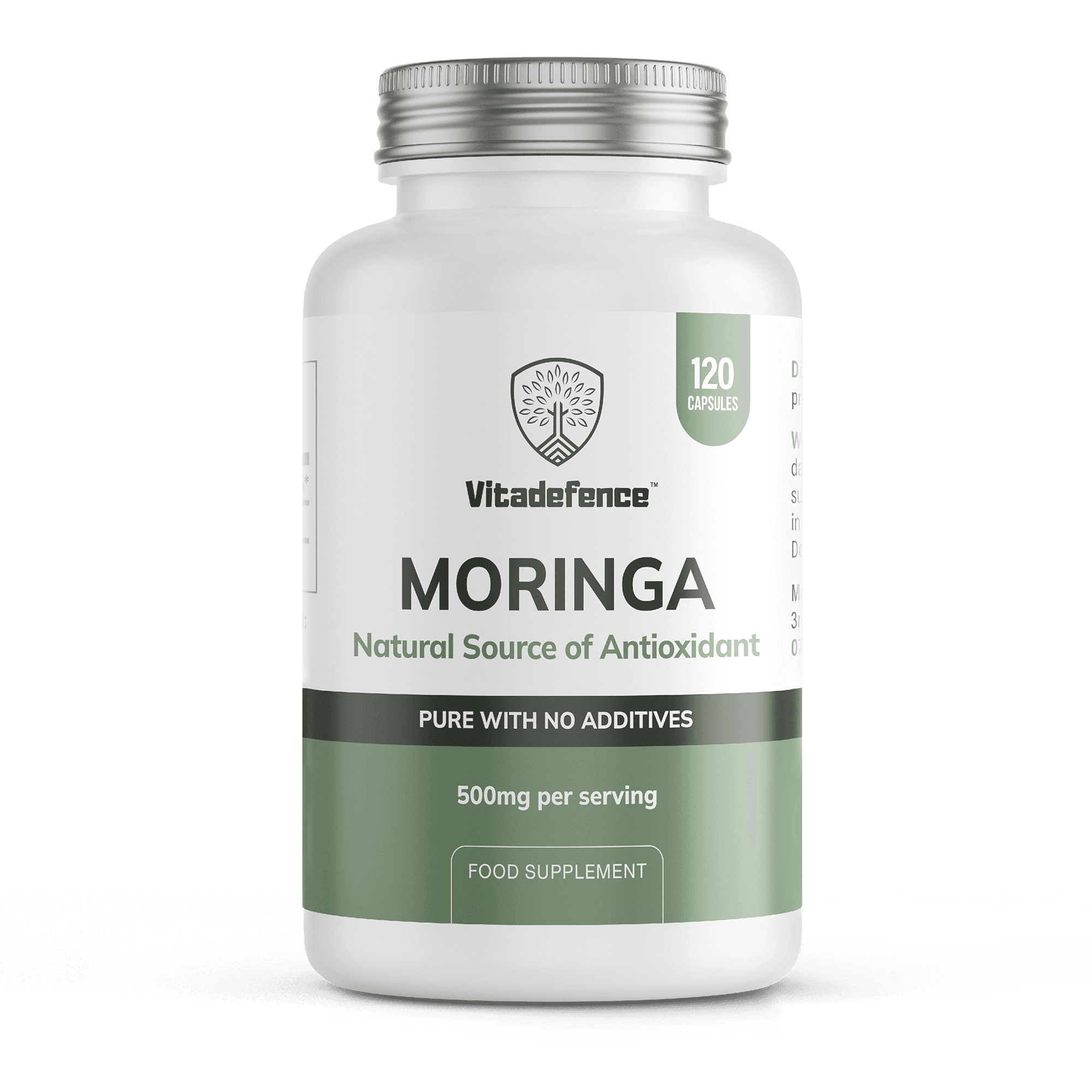
- Moringa — chlorophyll alongside calcium, iron, and a complete amino acid profile. Moringa Oleifera.
- Wheatgrass and barley grass powders — similar profile to moringa, though less nutritionally dense.
For a daily green-pigment + antioxidant base, these are usually a better return than chlorophyllin alone.
The takeaway
Chlorophyllin is an interesting niche supplement with a small but credible evidence base for antioxidant activity, dietary aflatoxin binding (in specific contexts), and mild skin support. It's not a miracle, not a detox, and not a replacement for vegetables. As an add-on, it's reasonable. As a foundation, it's not. Most people are better served by whole-food green sources like spirulina or moringa, which provide chlorophyll alongside the broader nutrition that comes with whole-leaf or whole-cell supplements.
Recommended for You
Spirulina — chlorophyll plus high-quality plant protein and iron.This article is for informational purposes only and does not constitute medical advice. Vitadefence supplements are food supplements, not medicines. They should not be used as a substitute for a varied diet and a healthy lifestyle. Consult a healthcare professional if you are pregnant, breastfeeding, on medication, or have a medical condition.
Related products
More from the journal
Spirulina: The Original Superfood — Protein, B12, and Phycocyanin Antioxidant Power
9 min · Ingredients
Siberian Ginseng Benefits: Why This Adaptogen Is Different From Panax Ginseng
7 min · Ingredients