Discover the Vitamins That Actually Move the Needle on Daily Health
There are 13 essential vitamins. Eight of them genuinely move the needle for most UK adults. Here are the priorities — and where the gaps usually live.
By Vitadefence Team
You've heard "you should take your vitamins" since you were six. The advice never quite specified which vitamins, in what amounts, or why. Here's the cleaned-up version — the eight vitamins that actually move the needle for most UK adults, and where they tend to fall short.
Why "all 13" is a misleading frame
Yes, there are 13 essential vitamins. But on a UK mixed diet, most adults meet recommended intakes for thiamine (B1), riboflavin (B2), niacin (B3), pantothenic acid (B5), vitamin K, biotin, and vitamin E without trying. The intakes that consistently fall short — based on the National Diet and Nutrition Survey rolling reports — are clustered around just a handful. That's where supplementation most reliably helps.
The eight that genuinely matter for most adults
1. Vitamin D
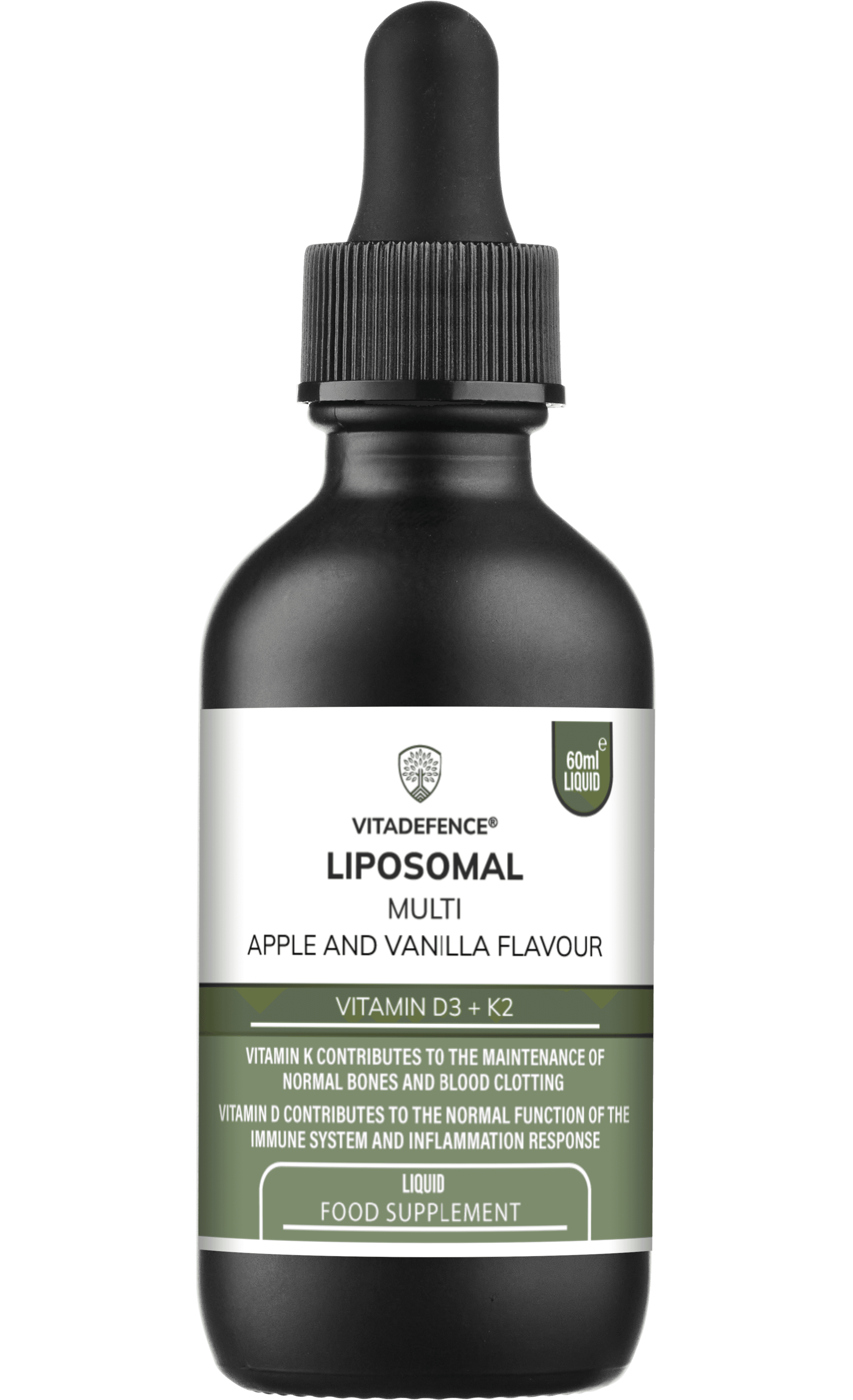
The UK is too far north for adequate skin synthesis between October and March. Public Health England recommends 10 mcg (400 IU) daily for the entire UK population year-round, with stronger emphasis October–March. Many adults benefit from 25 mcg (1,000 IU) in winter. EFSA-approved: contributes to normal bone, muscle, and immune function. Most reliable supplement form: D3 (cholecalciferol), ideally with K2 for full effect on calcium handling. Our Liposomal D3+K2 covers both.
2. Vitamin B12
Particularly critical for vegetarians, vegans, adults over 50 (absorption declines with age), and people on metformin or proton-pump inhibitors. EFSA-approved: contributes to normal energy metabolism, normal nervous system, and reduction of tiredness. Active forms: methylcobalamin or hydroxocobalamin.
3. Folate (B9)
Critical for women planning pregnancy. The UK fortification of flour with folic acid was enacted in 2024, but supplementation remains the most reliable way to hit pre-conception targets. Active form: methylfolate (5-MTHF) over folic acid, especially for the meaningful percentage of people with MTHFR polymorphisms.
4. Vitamin C
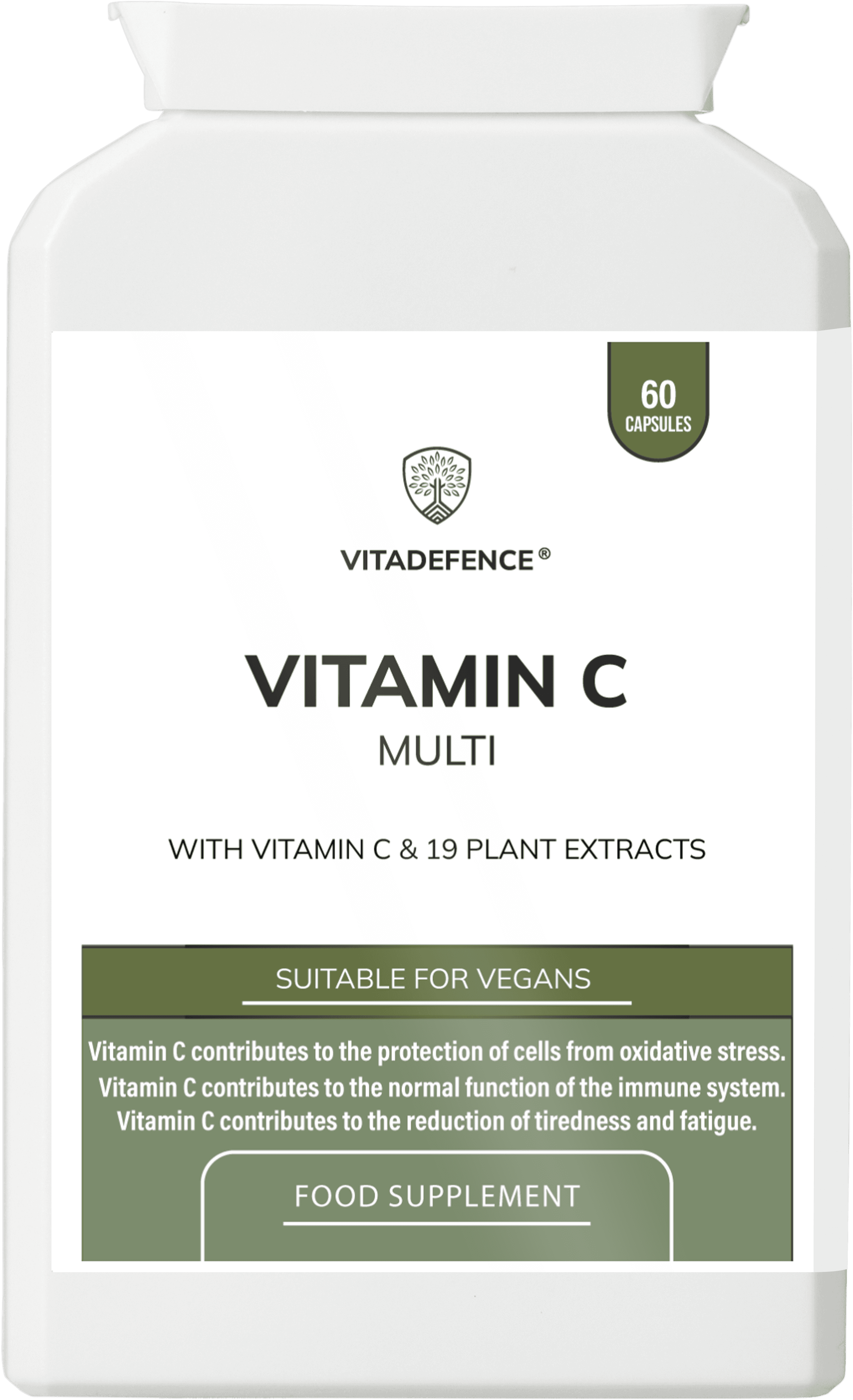
Met by a varied diet rich in fruit and vegetables — but easily missed on a busy week. EFSA-approved health claims include collagen formation, immune function, iron absorption, and reduction of tiredness. Daily target 80 mg, with 200 mg sensible during cold-and-flu season. Our Vitamin C Multi pairs it with 19 botanicals.
5. Vitamin B6
Often borderline in older adults. EFSA-approved: contributes to normal protein and glycogen metabolism, normal red blood cell formation, normal nervous system function. Active form: pyridoxal-5-phosphate (P-5-P).
6. Vitamin A
Total intake from food (preformed retinol from animal sources + carotenoids from plants) tends to be adequate but unevenly distributed. People with low consumption of dairy, eggs, and orange/green vegetables can fall short. EFSA-approved: contributes to normal vision, immune function, skin maintenance.
7. Vitamin K2
Less commonly discussed, but increasingly recognised for its role in directing calcium to bone (and away from arterial walls). UK intake of K2 is low because dietary K2 sources (natto, certain cheeses, animal liver) are uncommon in British meals. K2 as MK-7 has the longest half-life and best evidence base.
8. Vitamin E
Mostly adequate from a varied diet (nuts, seeds, vegetable oils), but worth knowing about because it works as a tag-team antioxidant with vitamin C. EFSA-approved: contributes to protection of cells from oxidative stress.
The five that usually take care of themselves
- B1 (thiamine) — abundant in whole grains and pork.
- B2 (riboflavin) — milk, eggs, leafy greens.
- B3 (niacin) — meat, fish, peanuts; can be made from tryptophan.
- B5 (pantothenic acid) — found in nearly all foods.
- Biotin (B7) — eggs, nuts, whole grains; rarely deficient.
A quality multivitamin will still include them at modest doses, which is fine — it's nutritional insurance, not waste.
The clean way to cover all eight
A daily multivitamin formulated with active forms covers most of the priority eight in one capsule. Top up with:
- Extra D3 in winter (1,000 IU on top of the multi if your multi only contains 400).
- Extra B12 if you're vegan (sublingual once a week works for most people).
- Extra vitamin C during illness or training stress.
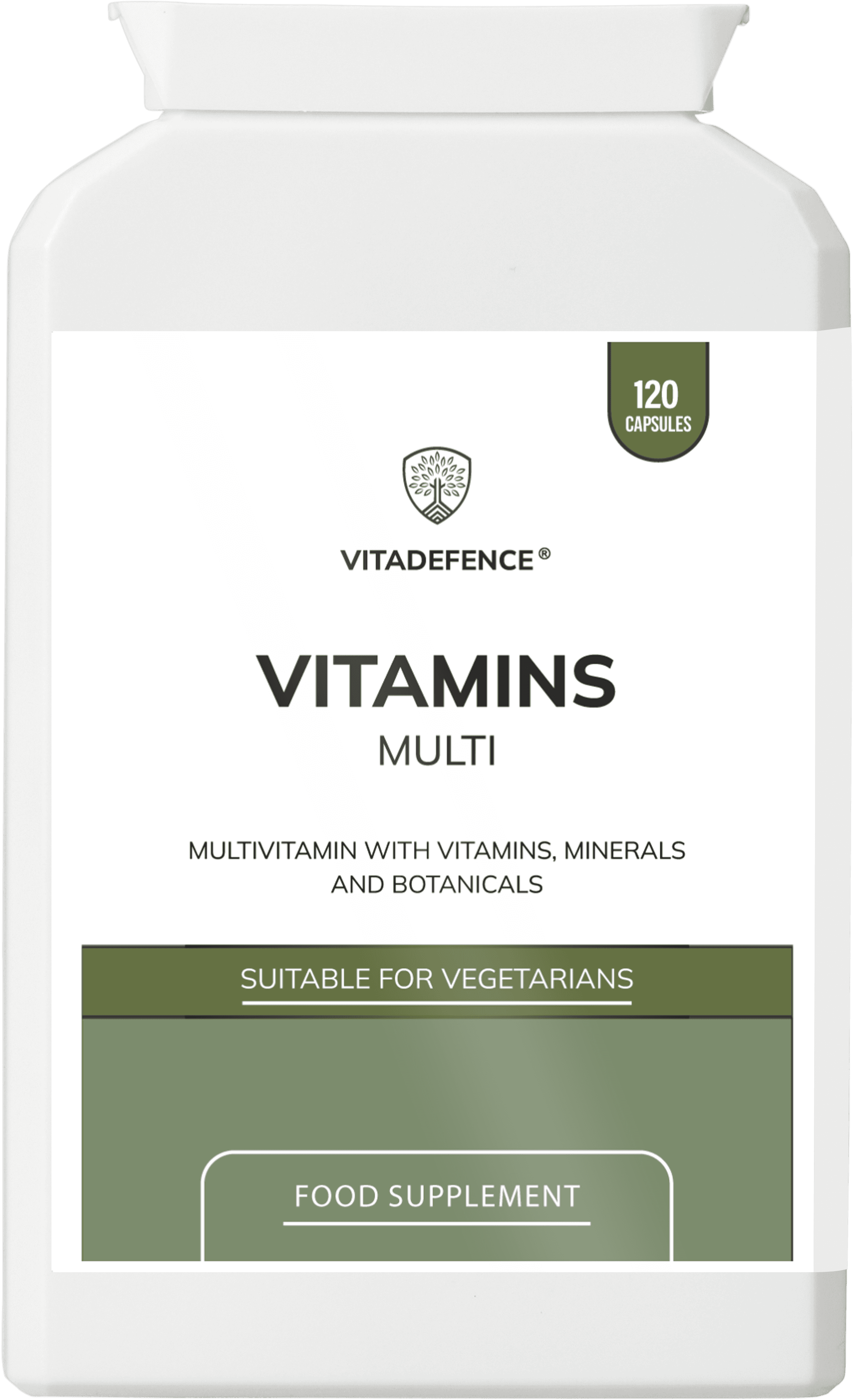
Our Vitamins Multi includes all eight priority vitamins in active forms at sensible NRV doses, plus the secondary five for completeness.
How to take vitamins well
- Fat-soluble (A, D, E, K): take with the largest fat-containing meal of the day.
- Water-soluble (B-complex, C): any time with water, ideally with food to prevent stomach upset.
- Iron and calcium: separate by 2 hours — they compete for absorption.
- Avoid taking with strong tea or coffee: tannins and caffeine reduce absorption of several minerals.
What about food first?
Food first, always. A varied British diet emphasising vegetables, fruit, whole grains, oily fish, eggs, and pulses covers most needs. Supplements fill the gaps the diet doesn't reach — they don't replace it. Two portions of oily fish a week, a handful of nuts daily, and proper portions of leafy green vegetables will outperform any pill in long-term outcomes.
The takeaway
Eight vitamins move the needle for most UK adults. The other five mostly take care of themselves. A quality multivitamin in active forms is the cheapest insurance you can buy, and a few targeted top-ups (D3 in winter, B12 for vegans) close the remaining gaps. The rest is food, sunlight, and consistency.
Recommended for You
Vitamins Multi — 23 essentials in active forms, single capsule.This article is for informational purposes only and does not constitute medical advice. Vitadefence supplements are food supplements, not medicines. They should not be used as a substitute for a varied diet and a healthy lifestyle. Consult a healthcare professional if you are pregnant, breastfeeding, on medication, or have a medical condition.
Related products
More from the journal
Spirulina: The Original Superfood — Protein, B12, and Phycocyanin Antioxidant Power
9 min · Ingredients
Siberian Ginseng Benefits: Why This Adaptogen Is Different From Panax Ginseng
7 min · Ingredients