HPMC vs Gelatine Capsules: The Material Science of Capsule Shells
If your supplement is in a capsule, the shell itself is part of the product. HPMC and gelatine are the two main options. Here is the actual material science — composition, dissolution, allergen profile, and ethical context.
By Vitadefence Team
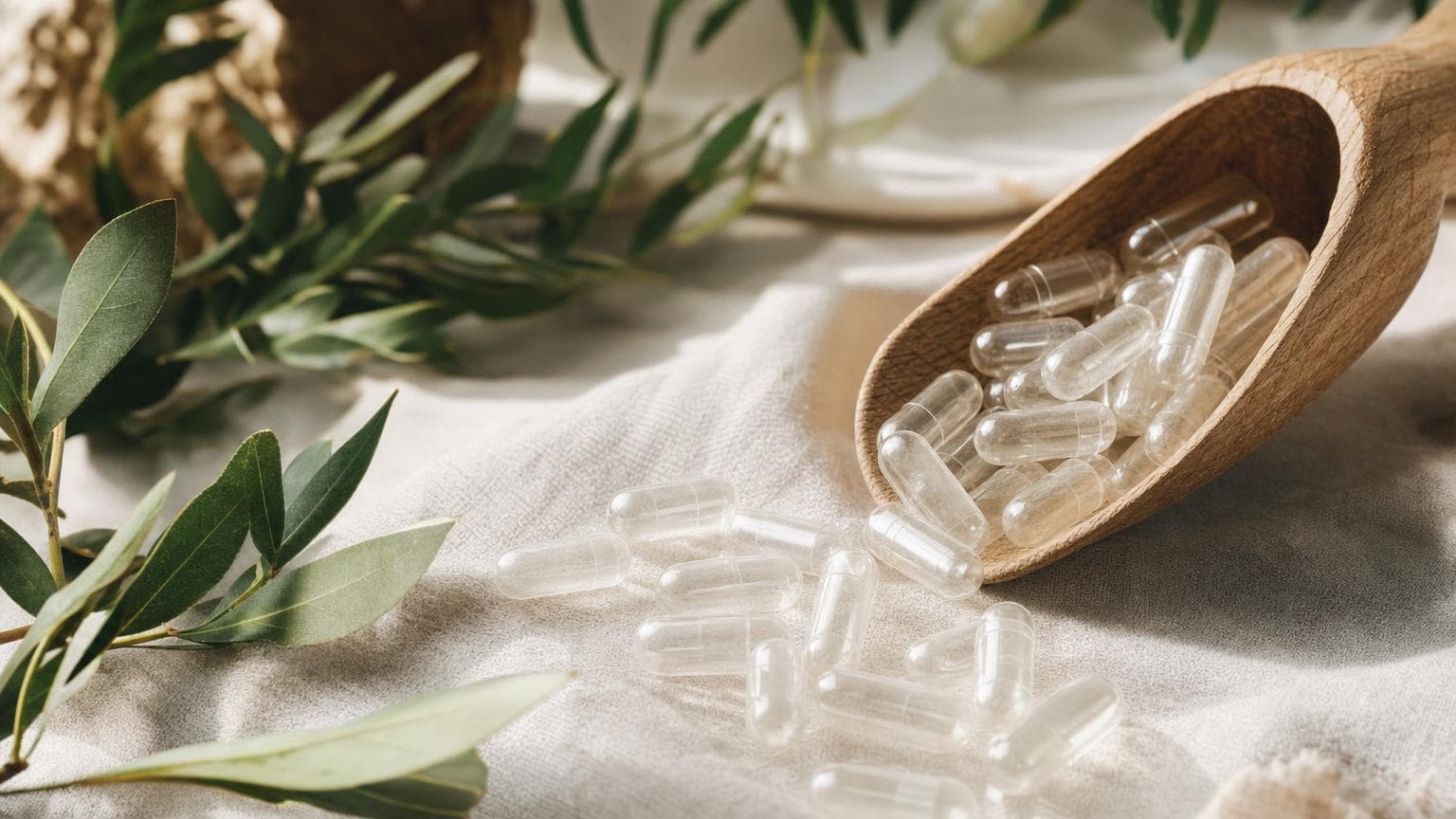
Every capsule on the market uses one of two shell materials: gelatine (animal-derived) or HPMC (plant-derived). The two are not interchangeable. Their physical properties are different, their dissolution profiles are different, their stability under heat and humidity is different, and their suitability for different fillers is different. Here is the comparison without marketing fluff.
What gelatine actually is
Gelatine is a hydrolysed collagen extracted from the skin, bone, and connective tissue of cattle, pigs, or fish. The collagen is broken down by acid or alkaline treatment to form a clear, water-soluble protein matrix. For capsule manufacturing, pharmaceutical-grade gelatine is purified to specific bloom strength (gel firmness) and viscosity ranges. Capsule grade is typically 220-300 bloom.
Gelatine capsules have been the standard since 1834 (Mothes' patent). They are well-understood, cheap to manufacture, and dissolve cleanly in stomach acid within 5-15 minutes.
What HPMC is
HPMC = hydroxypropyl methylcellulose. It is a chemically modified cellulose derived from wood pulp or cotton fibre. Cellulose is treated with caustic soda then with methyl chloride and propylene oxide to introduce methyl and hydroxypropyl substituent groups. The result is a water-soluble, film-forming polymer that is approved as a pharmaceutical excipient (E464 in food legislation).
HPMC capsules entered commercial pharmaceutical use in the late 1990s. Today the major manufacturers are Capsugel (now Lonza) with Vcaps Plus, ACG Worldwide with NaturALL, and Suheung with Suheung HPMC. The capsule manufacturing process — dipping, drying, banding, polishing — is broadly the same as for gelatine, but the polymer formulation is plant-based.
Composition: what is in each shell
Gelatine capsules: gelatine (typically 200-300 mg per size 0 capsule), water, plasticiser (small amounts), and optional colourants. The animal source must be disclosed on the label or specification.
HPMC capsules: hydroxypropyl methylcellulose (200-220 mg per size 0 capsule), water, gelling system (small amounts of carrageenan or gellan gum, depending on manufacturer), and optional colourants. Vegan, vegetarian, kosher, halal-suitable depending on the gelling system and any colourant.
Dissolution profiles
Gelatine capsules dissolve faster in acidic conditions (gastric pH 1.2-3) — typically 5-12 minutes. HPMC capsules dissolve in 12-25 minutes in the same conditions, depending on the specific formulation. For most supplements this difference is irrelevant; for time-sensitive medication this might matter, which is why HPMC formulations have evolved (Vcaps Plus uses a different gelling system to match gelatine dissolution more closely).
In intestinal pH (6-7) both shells dissolve cleanly within minutes.
Stability under heat and humidity
Gelatine becomes brittle below 35-40% relative humidity and softens above 60% RH. It is also heat-sensitive — sustained temperatures above 30°C accelerate cross-linking, which can slow dissolution. This is why gelatine-encapsulated products often specify cool, dry storage.
HPMC is far less humidity-sensitive — it remains physically stable across 15-65% RH. It is also more heat-stable, with no significant cross-linking under typical storage conditions. For a botanical extract sensitive to moisture, this can be an advantage.
Compatibility with fillers
Gelatine cross-links with aldehyde groups. Fillers containing reducing sugars, certain plant extracts, or aldehyde-generating ingredients can slowly tan the gelatine over time, reducing dissolution. HPMC is chemically inert to aldehydes — this is one reason botanical-extract supplement manufacturers often choose HPMC.
Allergens and dietary restrictions
Gelatine is animal-derived. Bovine gelatine excludes some dietary preferences (Hindu, certain orthodox observant). Porcine gelatine excludes Halal, Kosher, and Hindu observance. Fish gelatine is fish-derived (allergen). HPMC is plant-derived, with no animal contact in the manufacturing chain — vegan, vegetarian, and acceptable across Halal, Kosher, and Hindu dietary frameworks (subject to confirmation of any colourants and gelling system).
Sustainability considerations
Both materials have sustainability profiles. Gelatine is a co-product of meat processing — it valorises material that would otherwise be waste, but its supply is tied to the animal-agriculture footprint. HPMC is from cellulose, which has a lower carbon footprint per kg of finished capsule but uses more processing chemistry. Neither is a clear winner; the choice depends on which trade-offs matter to the buyer.
Why Vitadefence uses HPMC
Three reasons:
- Vegan-suitable. Our customer base includes vegetarians and vegans by design.
- Botanical-extract compatibility. Our extracts include polyphenols and reducing-sugar-containing botanical material; HPMC is chemically inert and avoids the slow gelatine-tanning issue.
- Storage robustness. Customers store supplements in bathrooms and kitchens. HPMC tolerates higher humidity without becoming brittle.
What about pullulan?
Pullulan is a third option — a polysaccharide from Aureobasidium pullulans (a fungus). It is also vegan and has very low oxygen permeability. It is used by some manufacturers but is more expensive than HPMC. Functionally it sits between HPMC and gelatine.
Reading a label
If a supplement label says 'capsule shell: hydroxypropyl methylcellulose' or 'capsule shell: HPMC', it is plant-based. If it says 'capsule shell: gelatine', it is animal-derived. If it just says 'capsule', that is insufficient — ask the manufacturer.
Related reading
This regulatory information describes Eleutherococcus senticosus root in the context of traditional herbal medicinal products under EU Directive 2004/24/EC. Vitadefence Siberian Ginseng is sold as a food supplement under EU food law (not as a registered traditional herbal medicinal product). The EMA monograph is cited here as public regulatory context, not as a claim about our food supplement. This article is educational. Material specifications described are typical industry values; specific manufacturers may use different formulations within regulatory limits. Vitadefence products are food supplements and are not intended to diagnose, treat, cure, or prevent any disease.
Related products
More from the journal
Spirulina: The Original Superfood — Protein, B12, and Phycocyanin Antioxidant Power
9 min · Ingredients
Siberian Ginseng Benefits: Why This Adaptogen Is Different From Panax Ginseng
7 min · Ingredients