The Most Common Additives and Fillers Found in Supplements (and How to Spot Them)
If you turn over almost any supplement bottle, the back label has a list that drops off into unfamiliar territory after the actual active ingredients. Those are the fillers, binders, flow agents, and coatings. Some are fine. Some are worth avoiding. Here is the practical version.
By Vitadefence Editorial
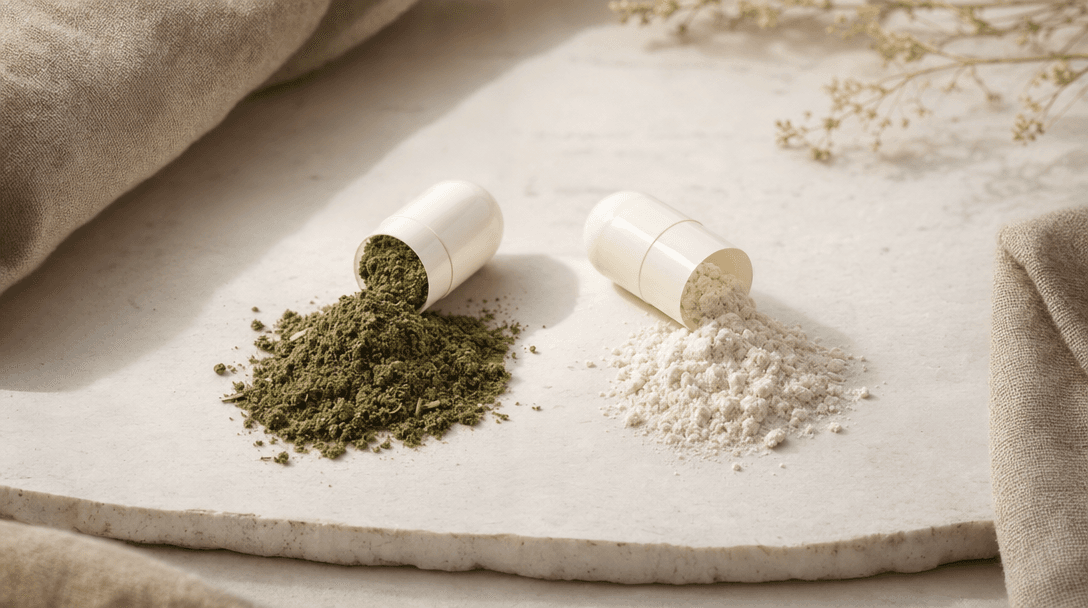
If you have ever flipped over a supplement bottle and felt your eyes glaze over halfway down the ingredient list, you are not alone. The first few items are usually the active ingredients you bought the product for. The last few are typically fillers, binders, flow agents, anti-caking agents, and capsule shell components. Some of those are fine and necessary. Some are worth knowing about. A few are worth avoiding.
This is the practical, plain-English breakdown of the most common supplement additives, what each one actually does, and how to read a label without needing a chemistry degree.
Why this matters before you swallow the capsule
You take a supplement to put one or more specific things into your body — vitamin D, magnesium, an adaptogen, a probiotic strain. Anything else in the capsule that you did not specifically buy is a co-passenger. Most are inert and harmless. Some have legitimate manufacturing reasons. A few have either gut-disturbing effects on sensitive people or have been the subject of recent regulatory reassessment in the UK and EU.
Knowing the names lets you do two things: judge the overall quality of a product at a glance, and avoid specific additives that do not work for your body.
The common fillers and what they do
Microcrystalline cellulose (E460)
One of the most common fillers in capsule and tablet supplements. Made from refined wood pulp or cotton, it is essentially purified plant fibre. EFSA has authorised it as a safe food additive. It is inert, used to bulk out capsules to a consistent volume, and the body does not absorb it. Generally fine.
Magnesium stearate
The most controversial-by-internet-comment filler in the supplement world. It is a "flow agent" — a small amount of magnesium stearate (typically less than 1% of the capsule weight) prevents the powder from sticking to manufacturing machinery and ensures consistent capsule fill weight.
Honest version: the regulatory bodies (EFSA, FDA, MHRA) consider magnesium stearate safe at the trace levels used in supplements. The internet concern about it "blocking absorption" comes from older laboratory studies that have not held up under realistic dietary conditions. That said, many premium supplement makers have moved away from it because (a) it is unnecessary for small-batch production where mechanical issues are less of a problem, and (b) consumer preference. Its presence is not a red flag, but its absence is often a quality signal.
Maltodextrin
A starch-derived powder used as a bulking agent and carrier. Often sourced from corn, sometimes from potato or rice. Two reasons to look for non-maltodextrin alternatives: it has a high glycemic index (relevant if you are watching blood sugar), and the corn-sourced version is often GMO unless explicitly stated otherwise. Not dangerous, but worth knowing about if you are diabetic or insulin-sensitive.
Silicon dioxide (E551)
An anti-caking agent — keeps powder dry and free-flowing. Used in tiny amounts. EFSA reviewed it in 2018 and confirmed it is safe at typical dietary levels. Generally fine.
Titanium dioxide (E171)
This is the one that has changed in the last few years. Titanium dioxide was historically used as a white colouring and opacifier in tablet coatings and capsule shells. In May 2021, EFSA concluded that it could no longer be considered safe as a food additive, primarily due to genotoxicity concerns. The EU banned its use in food and food supplements from August 2022 onward, with a six-month transition period.
The UK has so far taken a different position — UK food regulators reviewed the same evidence and decided not to ban it. Either way, the global trend among premium supplement makers is to remove it, and finding it on a label of a product manufactured in 2024 or later is increasingly unusual. Worth checking.
Hydroxypropyl methylcellulose (HPMC)
This is what most modern vegan capsule shells are made from. It is plant-derived, replaces traditional gelatine (which comes from animal collagen), and is inert in the gut. Used by the major UK GMP supplement manufacturers including the one Vitadefence works with. Standard, safe, and the right choice if you want vegan capsules.
Gelatine
The traditional capsule shell material, made from animal collagen (typically beef or pork). Functionally fine, but rules out vegan and most halal/kosher buyers. The shift to HPMC over the last decade has been driven mostly by consumer preference rather than safety concerns.
Stearic acid and palmitic acid
Naturally-occurring saturated fatty acids used as lubricants and binders. Found naturally in olive oil, palm oil, and animal fats. Generally inert at supplement levels. Vegan unless animal-sourced (most modern supplement-grade is plant-derived).
Stoneground brown rice flour
A clean, whole-food bulking agent. When you see it listed (as in many Vitadefence capsule formulas), it is usually a sign the manufacturer chose a recognisable food ingredient over a refined chemical filler. Inert, gluten-free, and naturally non-GMO.
Bamboo extract / silica
Used both as a flow agent and as a source of natural silica. Plant-derived, well tolerated, and contributes a minor amount of bioavailable silicon to the formula.
The ones to look at twice
The short list of additives where it is worth checking and asking why they are present:
- Titanium dioxide (E171) — banned as a food additive in the EU since 2022 due to EFSA's reassessment. UK status differs but global supplement quality direction is removal.
- Artificial colours (E102 tartrazine, E110 sunset yellow, E129 allura red, others) — historically associated with hyperactivity in some children (Southampton study, McCann et al., 2007) and required warning labels in the EU. There is rarely a good reason for them in a supplement.
- Aspartame, sucralose, and acesulfame potassium — artificial sweeteners. The science on long-term safety is debated. Several premium supplement makers use stevia or monk fruit instead.
- Hydrogenated vegetable oils — partially hydrogenated oils introduce trans fats. Avoid.
- Polysorbate 80 and other PEGs — emulsifiers used in some softgels. Some emerging research on gut microbiome effects. Worth asking why they are needed.
How to read a label like a pro
- Active ingredients first. Are they in bioavailable forms? (Methylfolate vs folic acid, methylcobalamin vs cyanocobalamin, magnesium glycinate vs oxide, vitamin D3 vs D2.)
- Filler list short and recognisable? Whole-food fillers like rice flour or bamboo extract are a stronger signal than a long list of E-numbers.
- Does it state non-GMO? Particularly relevant if maltodextrin or ascorbic acid is on the label.
- GMP-certified facility? Quality at the manufacturing level is hard to fake.
- Vegan capsule shell (HPMC) or animal gelatine? Personal preference, but worth knowing.
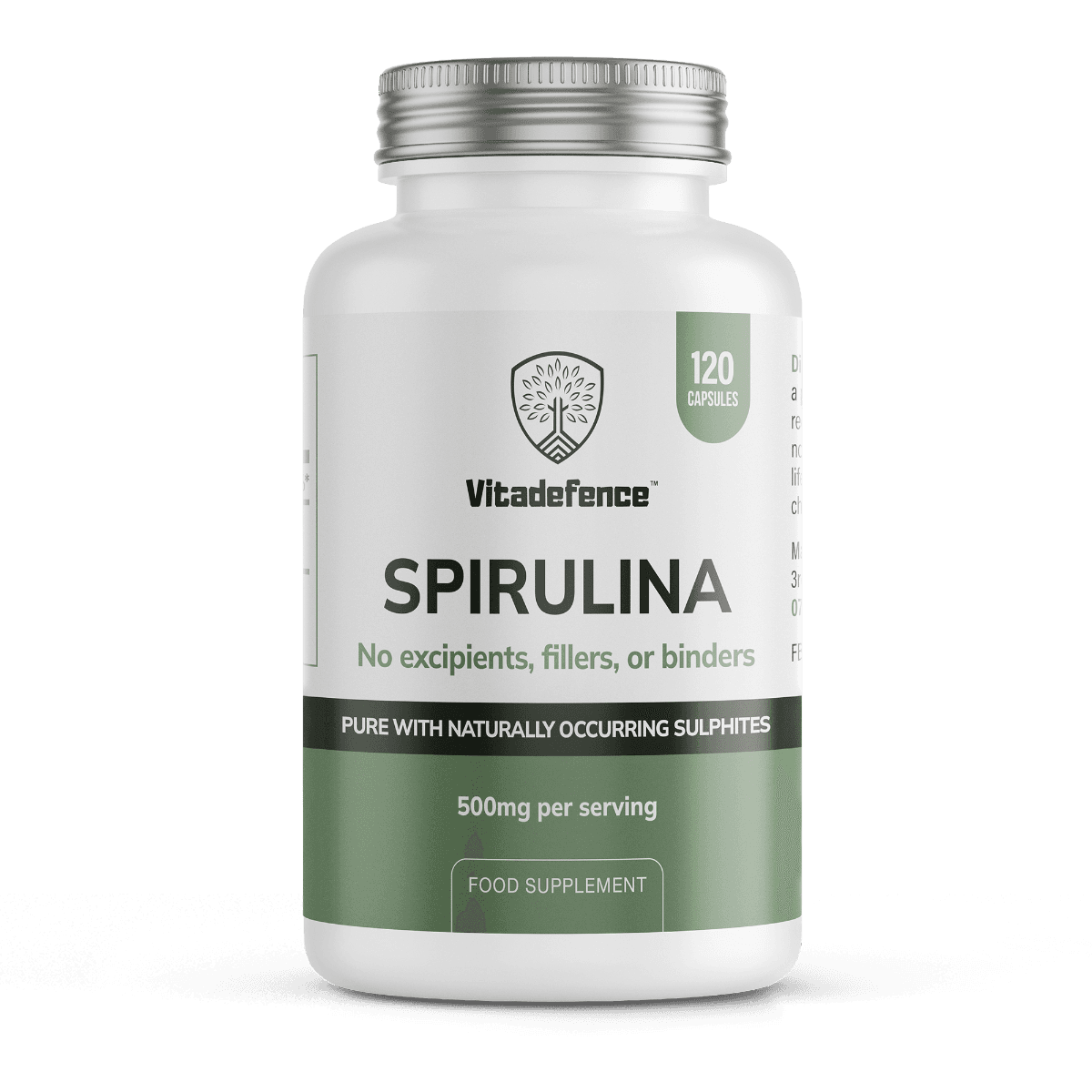
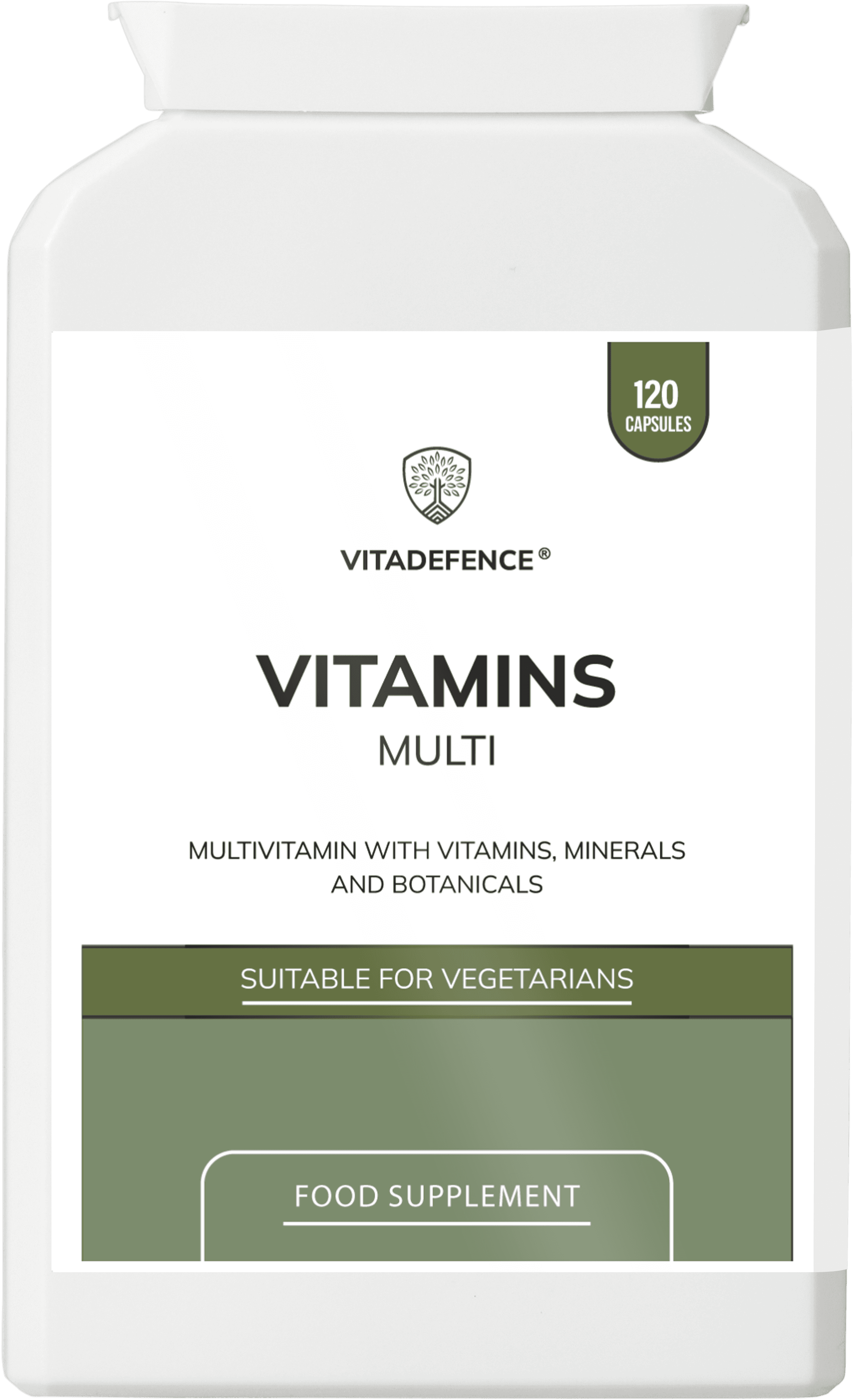
At Vitadefence, the capsule formulas use HPMC vegan shells, stoneground brown rice flour and bamboo extract as the primary bulking agents, and avoid titanium dioxide, artificial colours, and unnecessary additives. The full ingredient list for every product is published on the product page so you can see exactly what is in it before you buy. The Spirulina capsules are a clean, single-ingredient example, and the Vitamins Multi formula shows the full ingredient stack of a complete daily multi.
The takeaway
Most additives in a well-made supplement are inert, necessary, and safe. A few are worth knowing about — titanium dioxide, artificial colours, certain artificial sweeteners, and unnecessary emulsifiers. The fastest quality test for any supplement is a quick scan of its ingredient list: short, recognisable, food-grade fillers and bioavailable active forms are almost always the products of a manufacturer that takes the rest of the formulation seriously.
This article is for informational purposes only and does not constitute medical advice. Vitadefence supplements are food supplements, not medicines, and should not be used as a substitute for a varied diet and a healthy lifestyle. Consult a healthcare professional if you are pregnant, breastfeeding, on medication, or have a medical condition.
Related products
More from the journal
Spirulina: The Original Superfood — Protein, B12, and Phycocyanin Antioxidant Power
9 min · Ingredients
Siberian Ginseng Benefits: Why This Adaptogen Is Different From Panax Ginseng
7 min · Ingredients