The Vegan Supplement Guide: The Five Nutrients Plant-Based Eaters Actually Need
A whole-food plant diet covers most of your nutritional needs. The five gaps that matter — B12, D, omega-3, iron, iodine — are all easy to fix.
By Vitadefence Team
You've gone vegan, or you're seriously considering it. Maybe for ethical reasons, maybe for health, maybe because the climate maths finally clicked. The first thing well-meaning relatives ask is "but what about your B12?" — usually before "are you eating enough vegetables?". They're not entirely wrong: a plant-based diet covers most nutritional needs well, but a small handful of nutrients need real attention. Here's the honest list.
Why vegan diets work for most adults
A varied plant-based diet — whole grains, legumes, nuts, seeds, vegetables, fruit, with optional fortified foods — meets or exceeds requirements for fibre, folate, vitamin C, magnesium, potassium, antioxidants, and many B vitamins. The British Dietetic Association's position is that well-planned vegan diets are appropriate for all life stages. The "well-planned" part is doing real work in that sentence.
The five nutrients that need attention
1. Vitamin B12 — non-negotiable
B12 is the only nutrient that genuinely requires supplementation on a fully plant-based diet. It's made by bacteria, not plants, and reliable sources outside animal products are limited to fortified foods (some plant milks, nutritional yeast, breakfast cereals) or supplements. Long-term untreated B12 deficiency causes serious neurological harm and the early symptoms (fatigue, tingling) are easy to miss.
Sensible target: 25–250 mcg daily, or 1,000 mcg twice weekly. Methylcobalamin or hydroxocobalamin are well-absorbed forms.
2. Vitamin D — needed by everyone in the UK
This isn't a vegan-specific issue — Public Health England recommends supplementation for the entire UK population during October–March because of low sunlight angle. For vegans, look for D3 derived from lichen (a vegan-friendly source) rather than D2 (less effective at raising blood levels) or sheep's-wool D3 (not vegan).
Target: 10 mcg (400 IU) minimum daily, 25 mcg (1,000 IU) sensible for most adults in winter.
3. Omega-3 (specifically EPA and DHA)
Plant sources of omega-3 (flaxseed, chia, walnut) provide ALA. The body converts ALA to EPA and DHA but inefficiently — typically 5–10% conversion to EPA, lower for DHA. Algal oil supplements provide EPA and DHA directly from the same source fish get them from (microalgae), with no fish required.
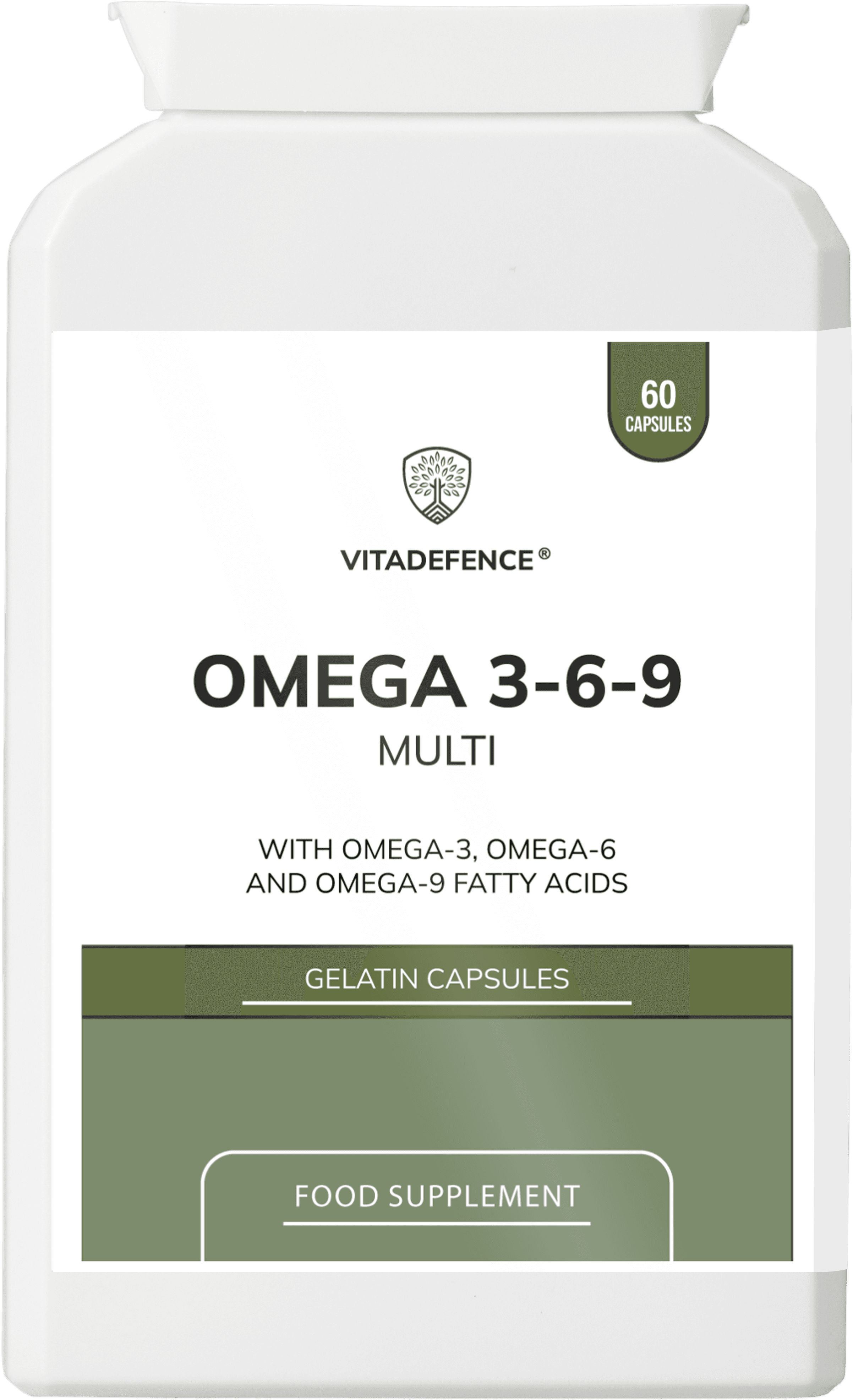
Target: 250–500 mg combined EPA+DHA daily. Our Omega 3-6-9 Multi covers this for non-vegans; for strict vegans, look for an algal oil capsule specifically.
4. Iron — especially for women
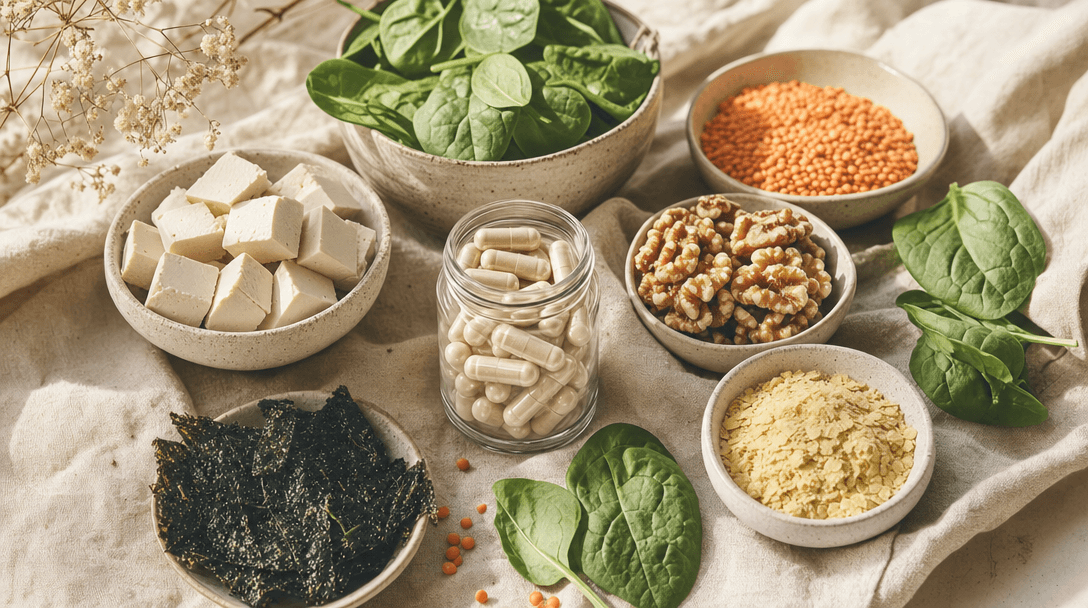
Plants contain plenty of iron, but it's non-haem iron, which is absorbed less efficiently than the haem iron from animal products. The fix is mostly dietary: pair iron-rich foods (lentils, beans, dark leafy greens, tofu, fortified grains) with vitamin C in the same meal — squeeze of lemon on spinach, peppers in a lentil dish. This can two- to four-fold the absorption.
If you're a menstruating woman, vegetarian or vegan, get your ferritin checked annually. It's a cheap blood test and the results will tell you whether dietary changes are enough or whether short-term supplementation is needed (under GP guidance).
5. Iodine
This is the quietly missed one. Iodine in the British diet comes mostly from dairy and white fish. Without those, intake can drop below the recommended 150 mcg/day. Plant sources of iodine include seaweed (variable, sometimes too high), iodised salt (rare in the UK compared to mainland Europe and the US), and fortified plant milks. A daily multivitamin with iodine in a sensible amount fills the gap reliably.
Nutrients people worry about that usually take care of themselves
- Protein: easy to meet on a varied vegan diet (legumes, tofu, tempeh, seitan, nuts, seeds, whole grains). Aim for 1–1.2 g per kg body weight if active.
- Calcium: dark leafy greens (kale, bok choy), tahini, almonds, fortified plant milks. Most fortified plant milks now match dairy's calcium per litre.
- Zinc: covered by pumpkin seeds, lentils, chickpeas, cashews. Soaking legumes and grains improves absorption by reducing phytates.
- Selenium: 1–2 Brazil nuts a day. That's it — done.
What about spirulina, chlorella, and other "superfoods"?
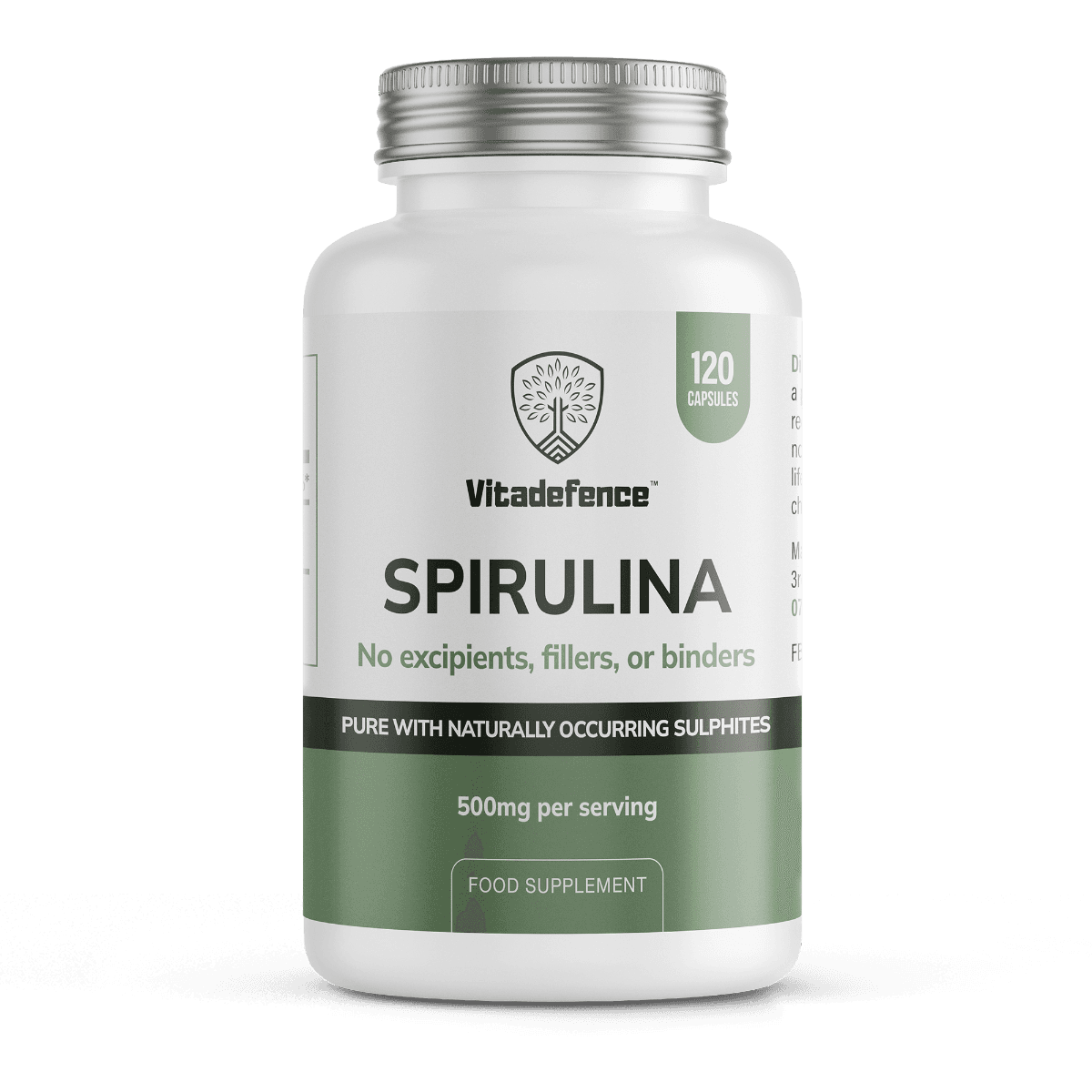
These are nutritious additions, not B12 replacements. Some spirulina products claim to provide B12, but the form is largely pseudo-B12 (analogues that the body can't use). Use spirulina for its protein and antioxidant profile — see our Spirulina — but supplement true B12 separately.
The minimum sensible vegan stack
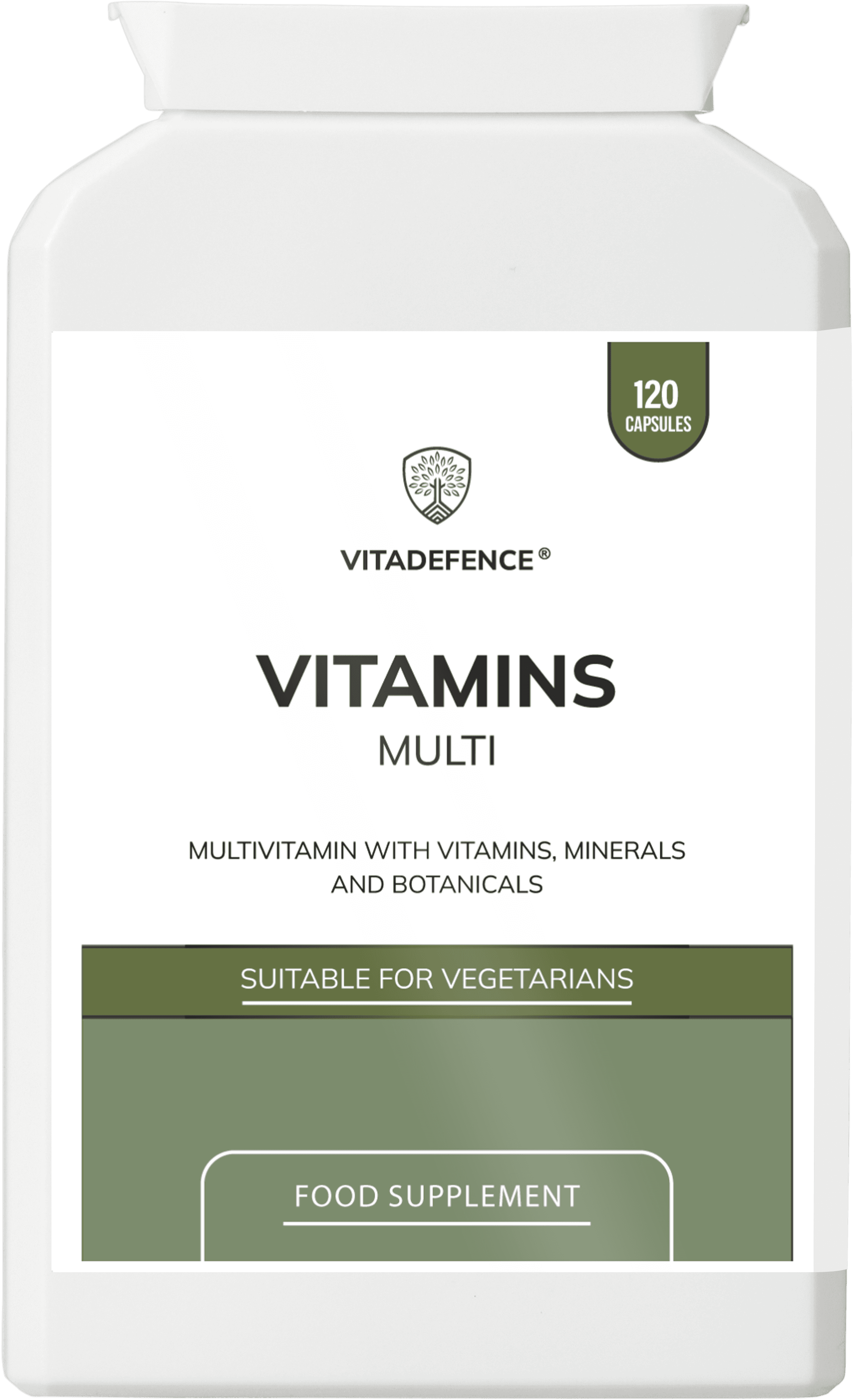
- A quality vegan multivitamin with B12, D3 (lichen), and iodine — like our Vitamins Multi.
- An algal omega-3 (EPA+DHA) capsule.
- Optional: extra B12 sublingual once a week if you don't trust the multi alone.
- Optional: separate iron, only if your ferritin levels indicate it.
The takeaway
A well-planned vegan diet is genuinely complete with five small additions: B12 always, D3 in winter (or year-round), algal omega-3, attention to iron, and iodine. Cover those and you're not playing nutritional catch-up — you're eating a diet that does well on its own metrics.
Recommended for You
Vitamins Multi — vegan, with B12, D3, and iodine in active forms.This article is for informational purposes only and does not constitute medical advice. Vitadefence supplements are food supplements, not medicines. They should not be used as a substitute for a varied diet and a healthy lifestyle. Consult a healthcare professional if you are pregnant, breastfeeding, on medication, or have a medical condition.
Related products
More from the journal
Spirulina: The Original Superfood — Protein, B12, and Phycocyanin Antioxidant Power
9 min · Ingredients
Siberian Ginseng Benefits: Why This Adaptogen Is Different From Panax Ginseng
7 min · Ingredients