What Is Moringa and Where Does It Come From?
Moringa is one of the rare plants that earns its 'superfood' label honestly. Here's where it actually comes from, what's in the leaf, and how it ended up in your supplement.
By Vitadefence Team
You've seen "moringa" appear on smoothie menus, supplement labels, and in articles about superfoods. The word sounds tropical, possibly trendy, possibly invented. It's none of those things. Moringa is one of the oldest cultivated plants in human history, with thousands of years of food and medicinal use across South Asia and East Africa. Here's the honest story.
The plant itself
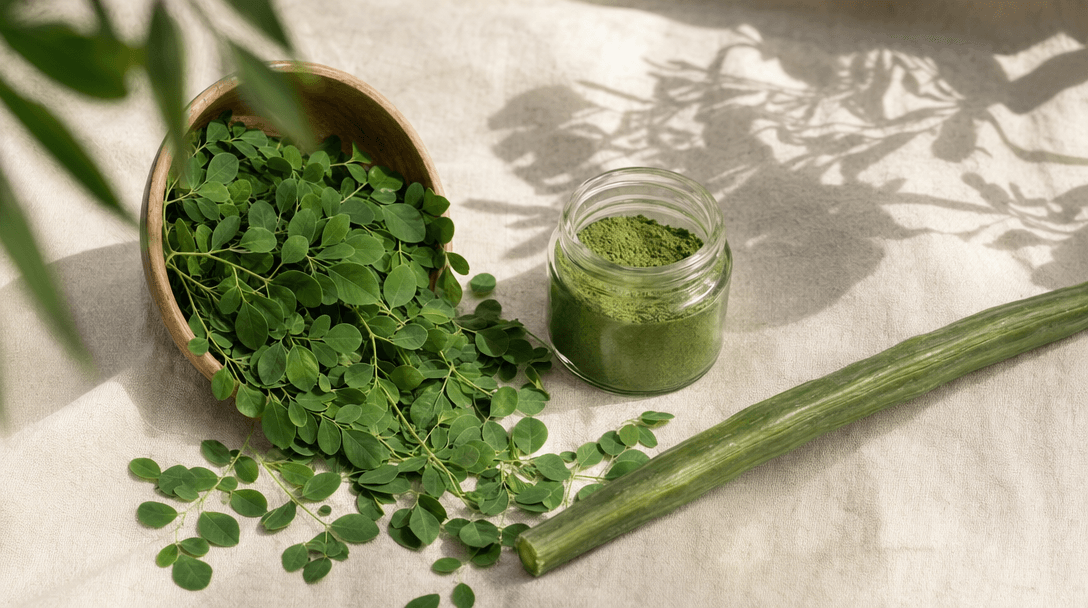
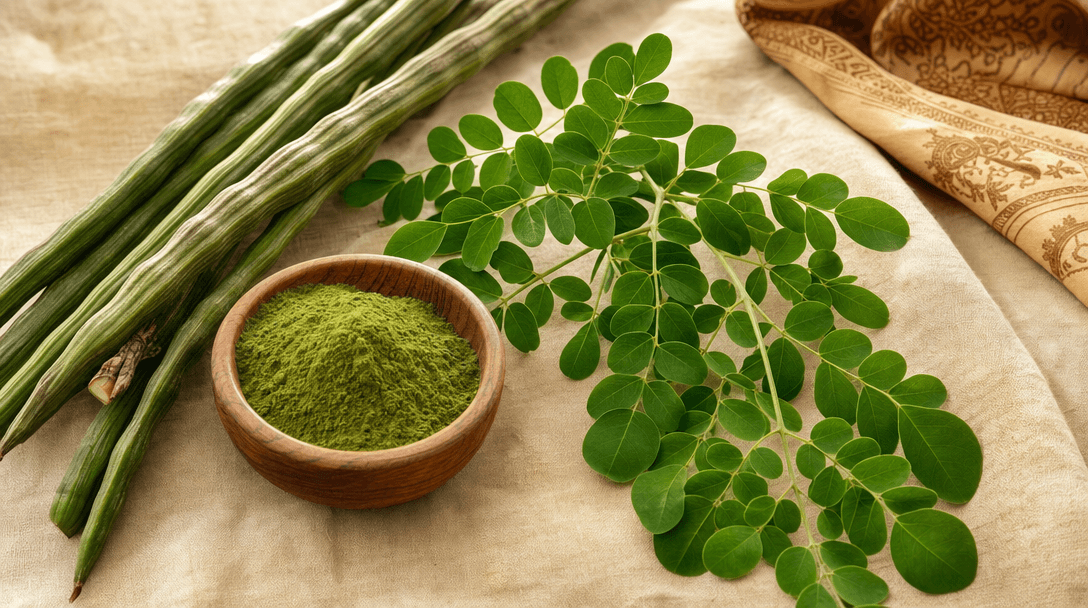
Moringa oleifera is a fast-growing, drought-resistant tree native to the foothills of the Himalayas in northern India. It now grows across the tropical and subtropical belt — Pakistan, Bangladesh, Nepal, Sri Lanka, parts of East Africa (Kenya, Ethiopia), the Philippines, and the Caribbean. The tree can reach 10 metres in a few years and produces leaves, pods (called "drumsticks"), seeds, and edible flowers.
In India, it's called "drumstick tree" or sahjan. In the Philippines, it's malunggay. In English-language commerce, it's most often referred to by its Latin name: Moringa oleifera.
Why it earned the "miracle tree" label
The nickname comes from the breadth of nutrients in the leaf, not from miracle medical claims. Moringa leaves contain (per 100 g of dried leaf, approximately):
- 27 g protein — substantial for a plant leaf
- 2,000+ mg calcium
- 30+ mg iron
- Complete amino acid profile (all nine essentials)
- Vitamins A, C, B-complex, and K
- Polyphenols and antioxidants including quercetin, kaempferol, and chlorogenic acid
For populations where food security is fragile, moringa has been studied as a meaningful nutritional support. UN agencies and food-aid organisations have used moringa-leaf programmes in malnutrition-prone areas, with documented improvements in nutritional markers (review: Stohs and Hartman, 2015, Phytotherapy Research).
The traditional uses
In Ayurvedic medicine — one of the oldest documented systems of plant-based health — moringa has been used for over 2,000 years. Different parts of the tree were used for different purposes: leaves for general nutrition and "vitality", seeds for water purification (real — moringa seeds bind impurities in dirty water), bark and root in more specialised preparations.
The water-purification use is interesting on its own. Crushed moringa seeds release proteins that bind to suspended particles in water, allowing them to settle. This isn't folklore — it's a documented chemistry effect, used in real water-treatment programmes.
What the modern research shows
The scientific literature on moringa is growing, with the strongest signals in:
- Antioxidant activity: moringa leaf extract has high oxygen radical absorbance capacity (ORAC) values in laboratory testing.
- Blood sugar markers: several small clinical studies (e.g. Kushwaha et al., 2014) suggest modest improvements in fasting blood glucose; more robust trials are still needed.
- Inflammation markers: moringa contains isothiocyanates (similar compounds to those in broccoli) that show anti-inflammatory effects in pre-clinical studies.
- Nutritional supplementation: as a dense, broad-spectrum nutrient source, the case is well-established.
The overall evidence base is encouraging but still developing. Moringa is a genuine nutritional support — not a treatment for any condition.
How moringa is processed for supplements
The leaves are typically harvested young, dried at low temperatures (to preserve heat-sensitive nutrients like vitamin C and chlorophyll), and ground into a fine green powder. From there, it's encapsulated or sold as loose powder. Quality matters here — sun-drying preserves more of the chlorophyll and antioxidants than industrial heat-drying.
Look for products that:
- Are made from young leaves (not stems)
- Are shade- or low-temperature dried
- Have a vibrant green colour (faded olive or brown suggests over-processing)
- Are organic-certified where possible (moringa is sometimes grown with pesticides in commercial plantations)
How to take it
- Dose: Most studies use 1–2 g of leaf powder daily. Capsules typically deliver 400–600 mg per capsule.
- Timing: With breakfast. Some people add the powder to smoothies for a slightly grassy, mild green-tea-like flavour.
- Caution: Pregnant women should avoid moringa root and bark (potential uterine effects). Leaf is generally considered safe but always speak to a GP if pregnant or on medication.
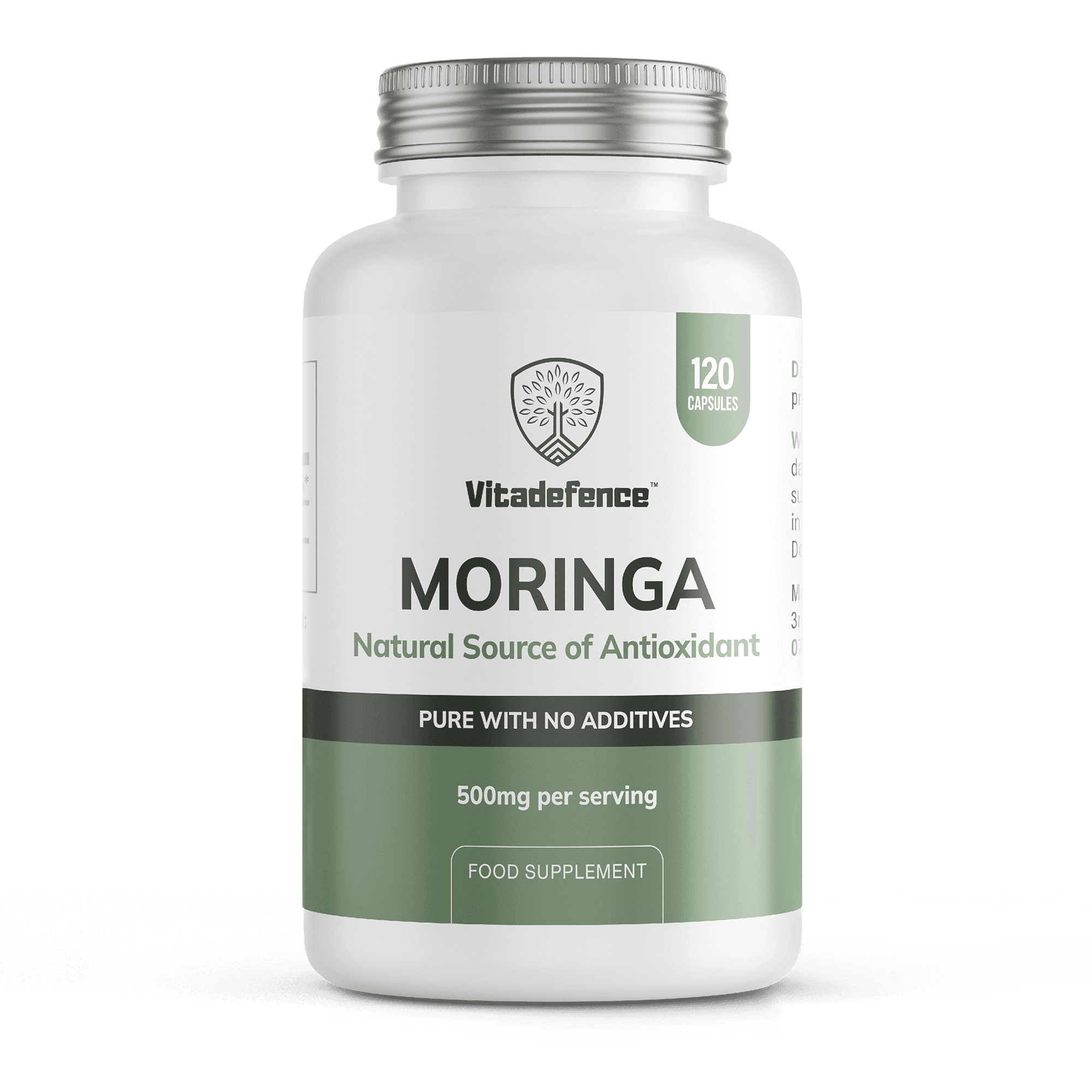
Our Moringa Oleifera capsules use shade-dried leaf powder for daily use.
How moringa fits with other green superfoods
Moringa, spirulina, and chlorella are sometimes lumped together as "green superfoods" — but they're quite different. Moringa is a tree leaf with a broad mineral and protein profile. Spirulina is a cyanobacteria (blue-green algae) particularly rich in protein and iron. Chlorella is a freshwater algae with a strong chlorophyll profile and binding properties. Each does a different job; together they cover overlapping but distinct nutritional bases.
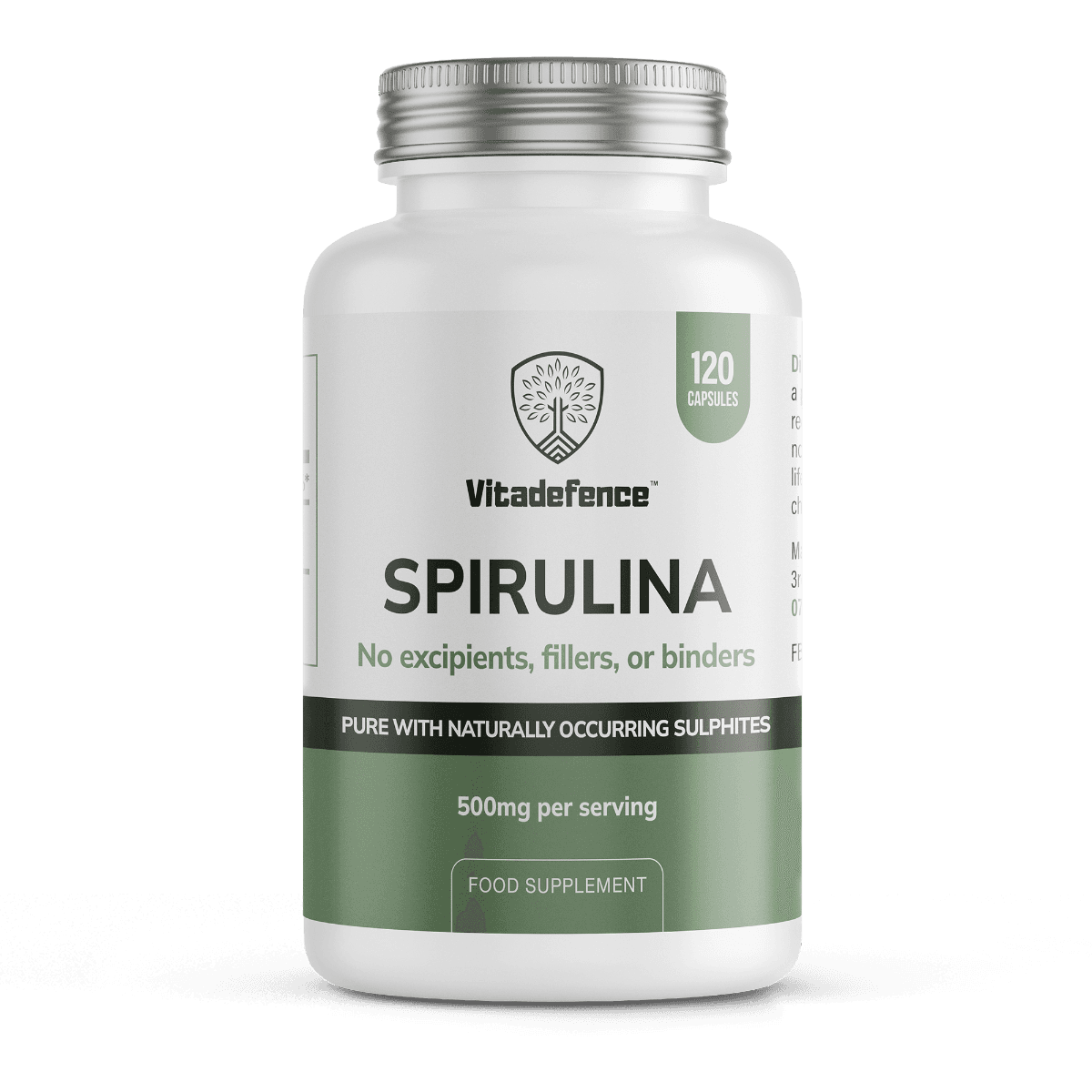
Our Spirulina pairs well with moringa for a broader green nutrient profile.
The takeaway
Moringa is a tree from the Himalayan foothills with thousands of years of culinary and medicinal use, an unusually dense leaf nutrition profile, and a growing modern evidence base. It's not a miracle, but it's an honest workhorse — the kind of plant whose place in your stack earns itself rather than demands attention.
Recommended for You
Moringa Oleifera — shade-dried leaf powder, vegan capsules.This article is for informational purposes only and does not constitute medical advice. Vitadefence supplements are food supplements, not medicines. They should not be used as a substitute for a varied diet and a healthy lifestyle. Consult a healthcare professional if you are pregnant, breastfeeding, on medication, or have a medical condition.
Related products
More from the journal
Spirulina: The Original Superfood — Protein, B12, and Phycocyanin Antioxidant Power
9 min · Ingredients
Siberian Ginseng Benefits: Why This Adaptogen Is Different From Panax Ginseng
7 min · Ingredients