
What Is Moringa Oleifera? A Nutrient-Rich Plant with a Long History of Use
Contents
1 - Introduction
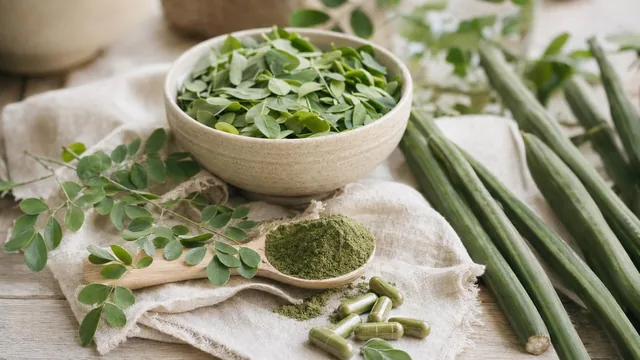
Moringa Oleifera, often called the “miracle tree,” has been valued for centuries in traditional wellness practices across Asia, Africa, and beyond. Its nutrient-rich leaves, seeds, and pods have been part of everyday diets in many cultures, often enjoyed for their contribution to a balanced and healthy lifestyle. Today moringa is sold worldwide as a powder and in capsules.
In this article, we’ll explore the origins of Moringa, its traditional uses, its nutritional profile, and practical ways to enjoy it in your daily routine.
The Origins of Moringa Oleifera
Moringa Oleifera is native to the foothills of the Himalayas in India and is now cultivated in tropical and subtropical regions around the world. Its ability to grow quickly, even in dry and challenging conditions, has made it a reliable and sustainable food source in many communities. Known for its delicate green leaves and elongated seed pods, the Moringa tree has become a symbol of nourishment in areas where other crops can struggle.
Traditional Uses of Moringa
Across generations, Moringa leaves have been traditionally used in herbal practice to support:• General wellbeing• Natural energy levels• Immune health• Daily nutritional needs
Passed down through food and teas. While modern science continues to study Moringa’s nutritional value, its role in traditional diets remains an important reason why it’s still popular today.
Nutritional Profile of Moringa
Moringa also contains potassium, magnesium, and a range of beneficial plant compounds such as polyphenols.
How to Incorporate Moringa Into Your Routine
Adding Moringa to your diet can be simple and enjoyable. Some popular ways to use it include:• Smoothies – Blend Moringa powder with fruits like banana, pineapple, or mango for a refreshing drink.• Teas – Steep dried Moringa leaves for a light, earthy herbal tea.• Cooking – Sprinkle Moringa powder over soups, salads, or roasted vegetables.• Capsules – Convenient for daily supplementation, especially when travelling or busy.
The taste of Moringa is often described as slightly earthy and spinach-like, making it easy to pair with both sweet and savoury recipes.
Choosing a Quality Moringa Supplement
Not all Moringa products are created equal. To ensure you’re getting the best quality:• Look for products that are additive-free and made to GMP (Good Manufacturing Practice) standards.• Choose a reputable brand with transparent sourcing and testing.• Consider capsule form for convenience, or powder if you like experimenting with recipes.
Vitadefence Moringa capsules are made in the UK to GMP standards and contain only pure Moringa leaf powder with no additives — pure moringa leaf powder in an HPMC capsule.
Conclusion
Moringa oleifera has a long history of use. Whether you’re adding the powder to a smoothie, enjoying it as tea, or taking it as a supplement, it’s an easy way to bring more plant-based nutrition into your daily routine. By choosing a high-quality, additive-free product, you can be confident you’re enjoying Moringa just as it has been used for centuries — naturally and simply.
This article is for informational purposes only and does not constitute medical advice. Vitadefence supplements are food supplements, not medicines. They should not be used as a substitute for a varied diet and a healthy lifestyle. Consult a healthcare professional if you are pregnant, breastfeeding, on medication, or have a medical condition.