What Is Siberian Ginseng Root? A Plain-English Guide
Siberian Ginseng isn't actually ginseng — it's a related shrub with a long Russian sports-medicine history. Here's the plain-English version.
By Vitadefence Team
You're tired in a low-grade, ongoing way. Not sick. Just running flat. You read about ginseng and the term "adaptogen" comes up. Then you spot Siberian Ginseng on a shelf and wonder if it's the same plant. Short answer: no. Slightly longer answer below — because the difference matters more than the name suggests.
The naming confusion (and why it's understandable)
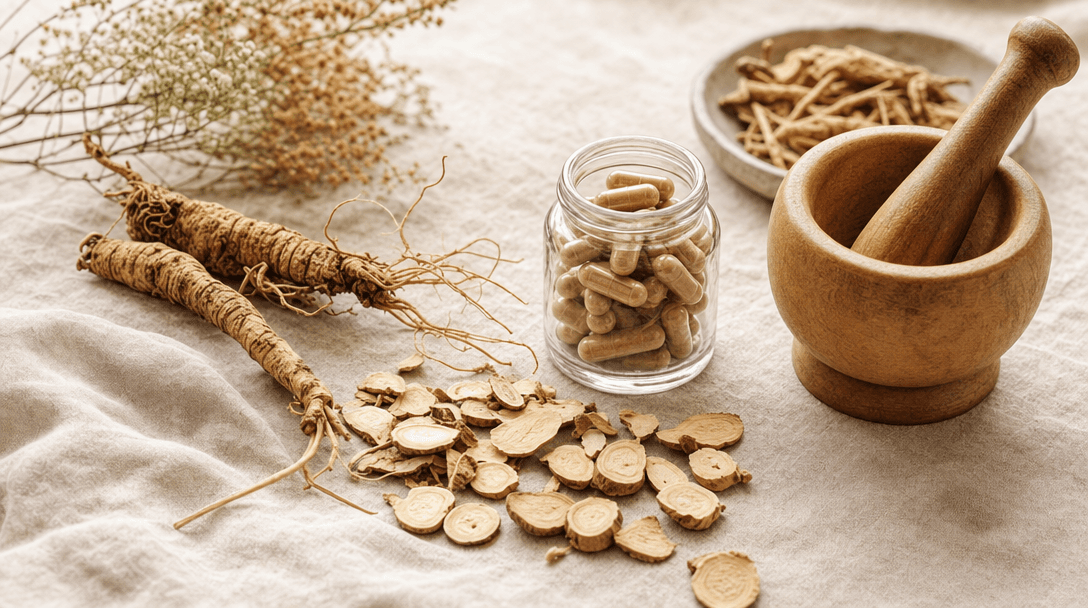
The word "ginseng" historically referred to Panax ginseng, the East Asian root with a long Chinese and Korean medicinal record. Siberian Ginseng — botanical name Eleutherococcus senticosus, also called Eleuthero — is a completely different plant from a related family. It grows wild across Siberia, Northern China, Korea, and Japan. Soviet researchers in the 1950s, looking for plants that could support human performance under extreme conditions, studied Eleuthero heavily and gave it the "Siberian" prefix to ride the ginseng reputation. The name stuck. Botanically, it's a cousin, not a sibling.
What "adaptogen" actually means
The term was coined by Soviet pharmacologist Nikolai Lazarev in 1947 for plants that, in his view, helped the body adapt to non-specific stress without major side effects. Modern definitions tighten this: an adaptogen modulates the stress-response axis (HPA), promotes homeostasis, and is generally well-tolerated for everyday use. Eleuthero, ashwagandha, rhodiola, and Panax ginseng all sit in this category. They are not stimulants in the caffeine sense — they don't push you up, they help you bend without breaking.
What's in the root?
The active compounds in Eleuthero are a group called eleutherosides (B, B1, D, E, etc.) along with polysaccharides and lignans. Standardised extracts typically declare a percentage of eleutherosides on the label — this is the marker compound that quality manufacturers measure to ensure batch-to-batch consistency.
Traditional and modern use
In Russian and East Asian traditions, Eleuthero was given to factory workers, deep-sea divers, soldiers, and Olympic athletes through the 1960s and 70s as a daily tonic for stamina and fatigue resistance. Modern human trials are smaller in scale than for Panax ginseng but include:
- Hartz et al. (2004), Psychological Medicine: placebo-controlled trial in chronic fatigue patients showed modest improvement in some subgroups.
- Kuo et al. (2010): reported improvements in cardiopulmonary fitness markers and perceived exertion during exercise.
- Several Russian-language reviews on cold-and-flu-season use, with cautious positive findings.
The honest summary: the Western evidence base is moderate, with several encouraging signals and an excellent safety record over decades of traditional use. It is not a "proven" energy treatment in the regulatory sense — but it has earned its place in the adaptogen drawer.
Siberian Ginseng vs Panax Ginseng — which to choose?
| Aspect | Siberian (Eleuthero) | Panax |
|---|---|---|
| Botanical family | Araliaceae, but different genus | Araliaceae, Panax genus |
| Active compounds | Eleutherosides | Ginsenosides |
| Feel/character | Steady, grounding, stamina-focused | Brighter, sharper, often more stimulating |
| Best for | Long working weeks, recovery, endurance | Mental sharpness, peri-menopause, libido |
| Caution | Mild — some hypertension cases recommended to monitor BP | Stronger interactions with caffeine and stimulants |
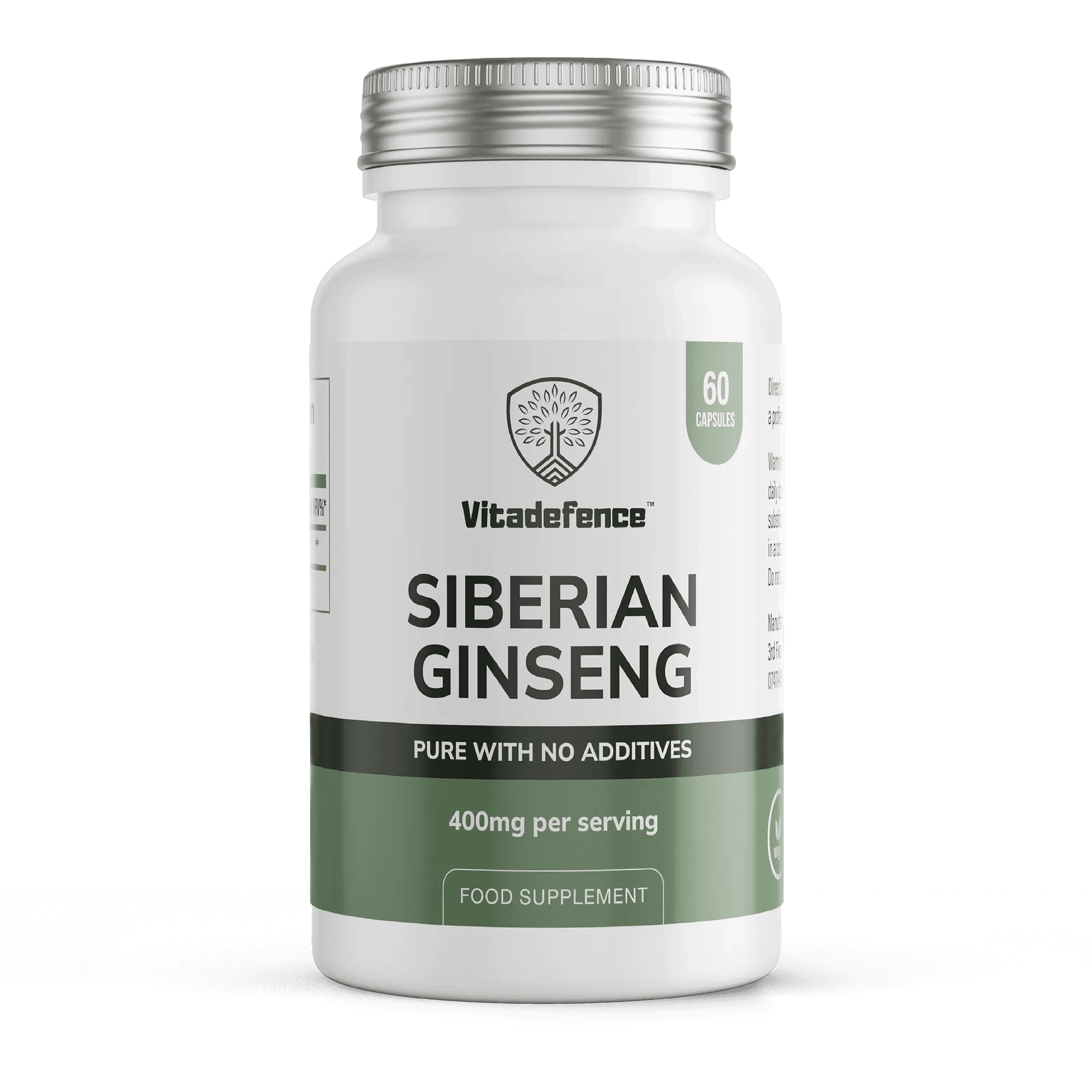
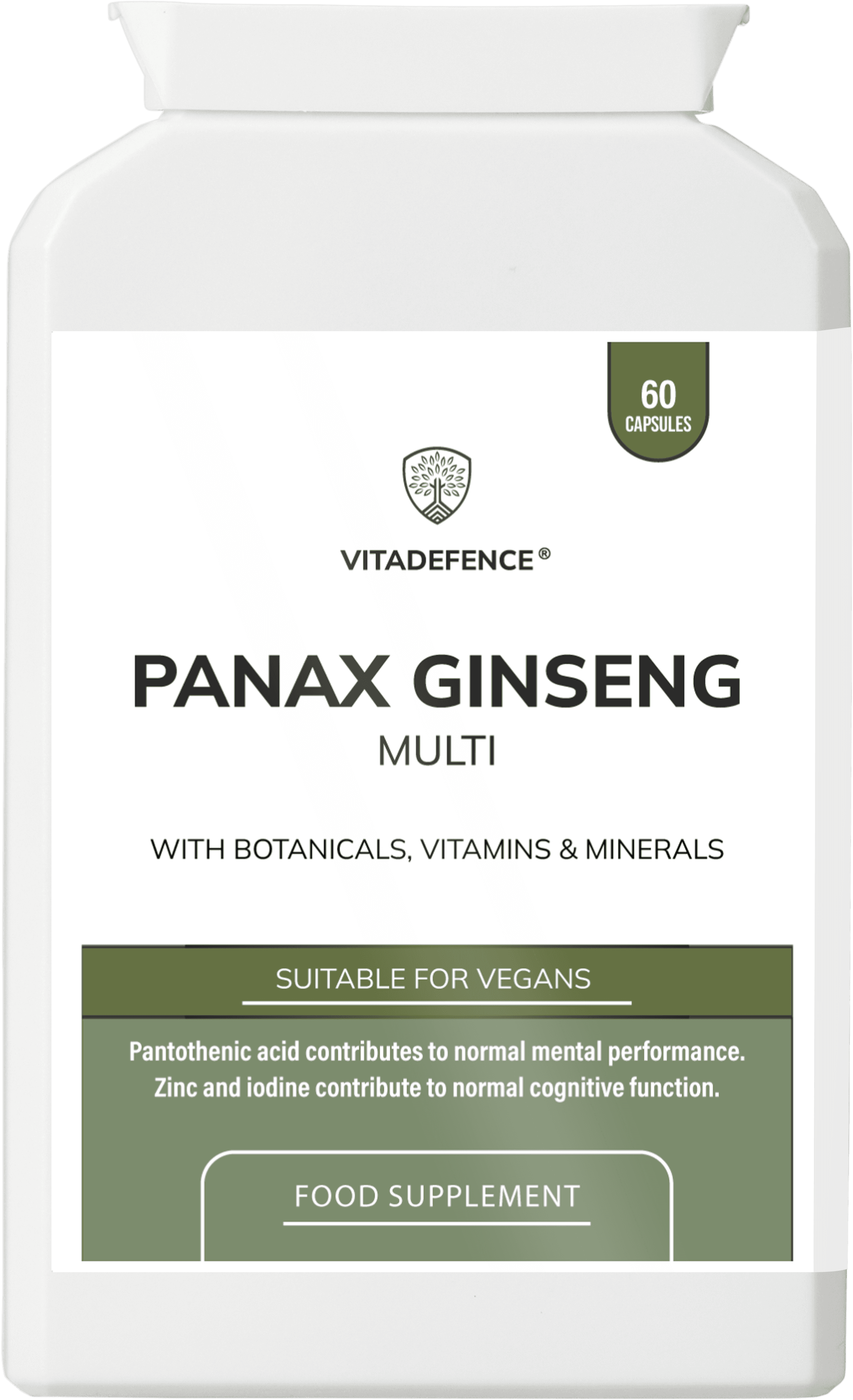
If you're deciding between the two for a daily, year-round tonic, Eleuthero is generally the gentler choice. Our Siberian Ginseng capsules use a standardised root extract for daily morning use. If you're after a sharper cognitive lift, the Panax Ginseng Multi blends Korean ginseng with DHA and B vitamins.
How to take it
- Timing: morning or early afternoon. Avoid evening — even gentle adaptogens can keep some people alert at bedtime.
- Cycling: the traditional pattern is 6–8 weeks on, 1–2 weeks off. This is folk wisdom rather than RCT-backed, but it's how Eleuthero has been used for decades.
- With or without food: works either way. Take with breakfast if you're prone to taking too many capsules on an empty stomach.
Who should be careful
People with poorly controlled hypertension, those on blood thinners, or anyone pregnant or breastfeeding should speak to their GP first. The same applies if you're on medication that affects blood sugar or blood pressure — Eleuthero can have mild effects on both.
The takeaway
Siberian Ginseng is the adaptogen for "I just need to last the week without crashing on Friday". It's not a stimulant, it's not a fix, and it isn't going to replace sleep. But used consistently for a couple of months alongside the basics — sleep, food, exercise — it earns its small daily place. Take your time with it; this is a plant designed to work quietly.
Recommended for You
Siberian Ginseng — standardised Eleuthero root, 90 capsules.This article is for informational purposes only and does not constitute medical advice. Vitadefence supplements are food supplements, not medicines. They should not be used as a substitute for a varied diet and a healthy lifestyle. Consult a healthcare professional if you are pregnant, breastfeeding, on medication, or have a medical condition.
Related products
More from the journal
Spirulina: The Original Superfood — Protein, B12, and Phycocyanin Antioxidant Power
9 min · Ingredients
Siberian Ginseng Benefits: Why This Adaptogen Is Different From Panax Ginseng
7 min · Ingredients