What Is Testosterone? The Essential Hormone for Men's Health
Testosterone isn't just about muscles. It shapes energy, mood, libido, bone, and cognitive sharpness. Here's how to support your body's own production.
By Vitadefence Team
You're 38, sleeping less than you used to, lifting weights less than you used to, and noticing that the spark — the morning drive, the easy focus, the libido that didn't need a thought — has dimmed. You start reading about testosterone and the term feels like it belongs to bodybuilders and TRT clinics, not you. But the biology applies to every man, and the foundations are quieter than the marketing suggests.
What testosterone actually does
Testosterone is the primary male sex hormone, produced mainly in the testes (95%) with a small contribution from the adrenal glands. It's an androgen — it drives the development of male characteristics — but its job in adult men is far broader than reproduction. Day to day, testosterone influences:
- Muscle protein synthesis and recovery
- Bone density
- Red blood cell production
- Libido and erectile function
- Mood, motivation, and cognitive sharpness
- Body composition (fat-to-muscle ratio)
- Energy and stamina
It's why men with clinically low testosterone often describe a constellation of symptoms — not just one — across mood, energy, libido, and physique.
The natural curve
Testosterone production peaks in the late teens and 20s, plateaus through the 30s, and declines roughly 1–2% per year from about age 40 onward. By 60, average levels in healthy men sit at 60–70% of their 25-year-old peak. This is normal biology, not a disease — but the pace of decline varies significantly between individuals.
Lifestyle factors strongly influence how steep the curve gets. Poor sleep, chronic stress, excess body fat, alcohol, and a sedentary lifestyle accelerate decline. Resistance training, sleep, and a nutrient-adequate diet protect against it.
What lowers testosterone (the controllable factors)
- Poor sleep — even one week of restricted sleep (5 hours/night) measurably reduces testosterone in healthy men (Leproult & Van Cauter, JAMA 2011).
- Chronic stress — sustained cortisol suppresses testosterone production.
- Excess body fat — adipose tissue converts testosterone to oestrogen via aromatase enzyme activity.
- Excess alcohol — directly impacts testes' Leydig cell function.
- Nutrient deficiencies — particularly zinc, magnesium, vitamin D, and vitamin K2.
- Lack of resistance exercise — heavy compound lifting acutely raises testosterone and supports baseline levels long-term.
The foundations that support healthy levels
Sleep
Most testosterone production happens during deep sleep. 7–9 hours, consistent timing, dark room, no late-night screens. This single factor outranks any supplement.
Resistance training
Heavy compound movements (squat, deadlift, bench, row) two or three times a week, with progressive load over months. Acute testosterone response from heavy lifting plus the long-term metabolic and lean-mass effects compound over years.
Body composition
Lower body fat, particularly abdominal, supports favourable hormone balance. The mechanism (less aromatase activity, better insulin sensitivity) is well-established.
Nutrition
Adequate protein (1.2–1.6 g/kg bodyweight if active), enough total calories, healthy fats (testosterone is synthesised from cholesterol — chronically low-fat diets aren't favourable), and key micronutrients.
Stress management
The cortisol-testosterone balance is real. Anything that meaningfully lowers chronic stress — meditation, walking, social connection, time outdoors — supports the hormonal picture.
The nutrients that genuinely matter
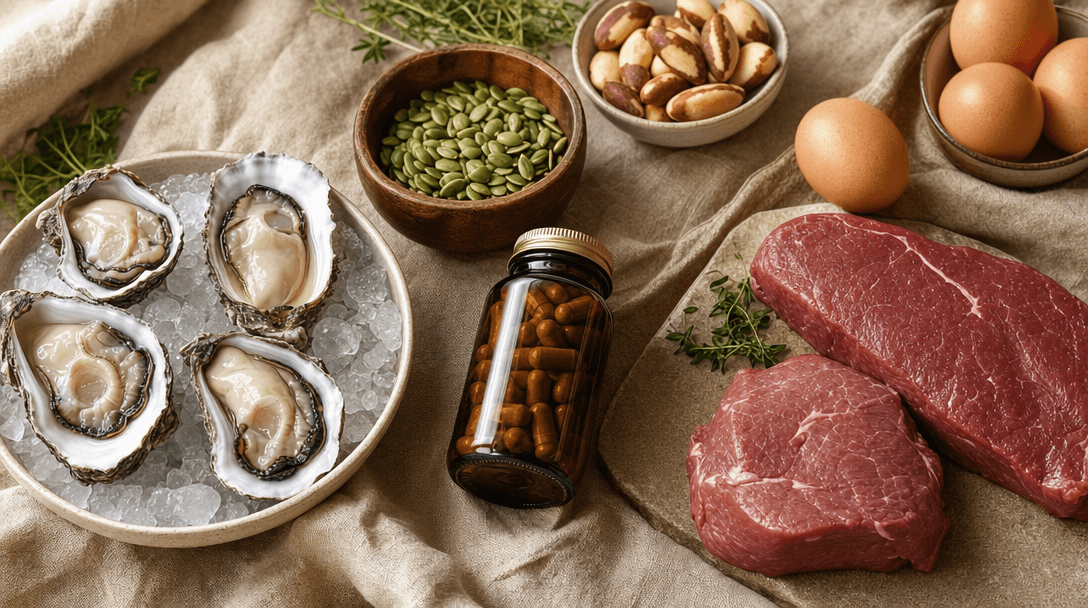
- Zinc — directly involved in testosterone synthesis. Deficiency is associated with reduced testosterone (Prasad et al., 1996). UK adult intake is 9.5 mg/day men, often borderline. Sources: oysters, beef, pumpkin seeds.
- Magnesium — modulates SHBG (sex hormone binding globulin), affecting "free" testosterone availability. UK shortfall is well-documented.
- Vitamin D — receptors in testicular tissue. Adequate vitamin D status correlates with healthier testosterone in observational data.
- Vitamin K2 — emerging evidence for a role in androgen synthesis in animal studies.
- Boron — small studies show modest effects on free testosterone with 6–10 mg daily.
The traditional botanicals
Several plants have a long traditional use in men's vitality and energy:
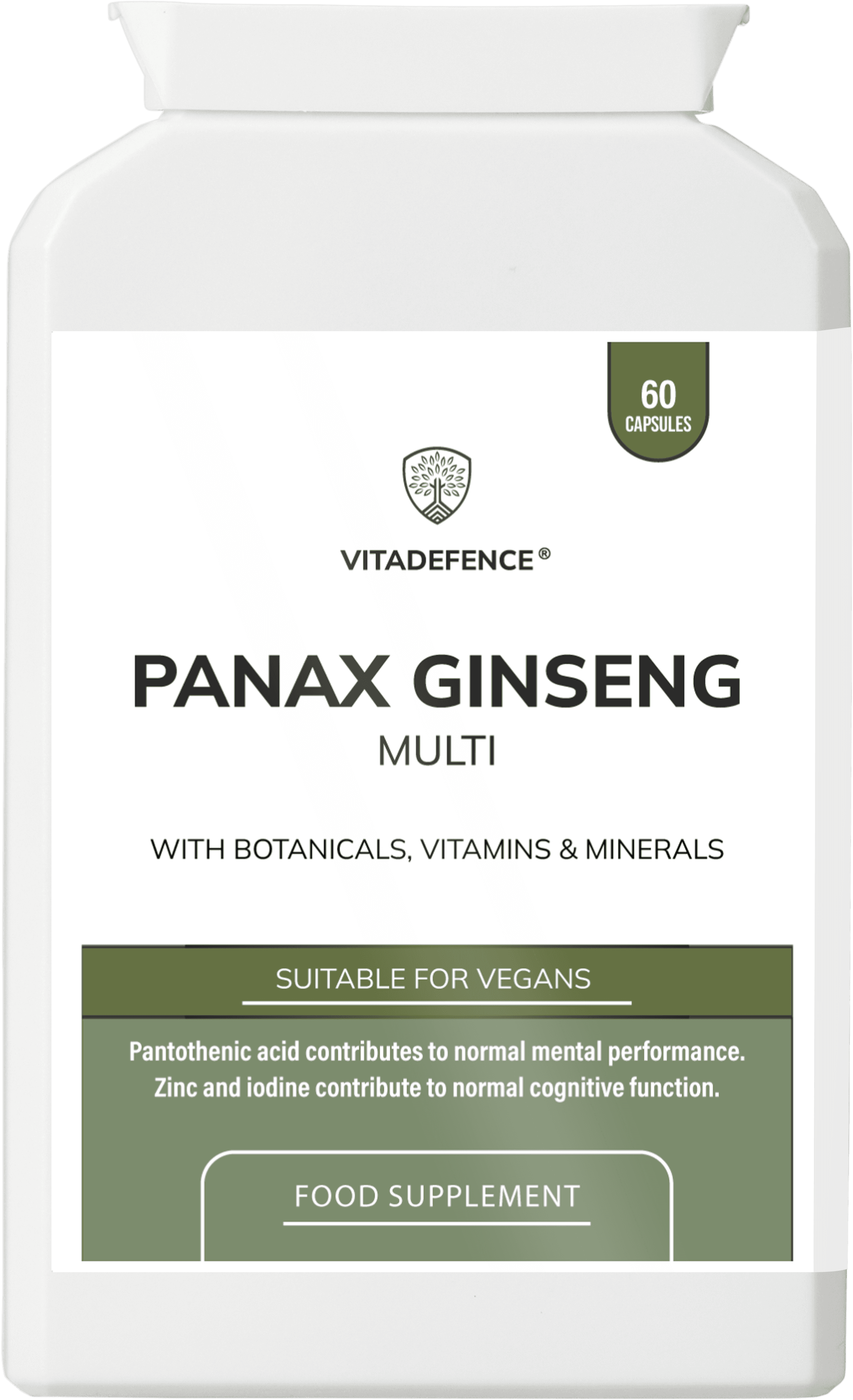
- Panax ginseng — most studied for libido and male sexual function, with several encouraging trials. Our Panax Ginseng Multi pairs Korean ginseng with B-vitamins and DHA.
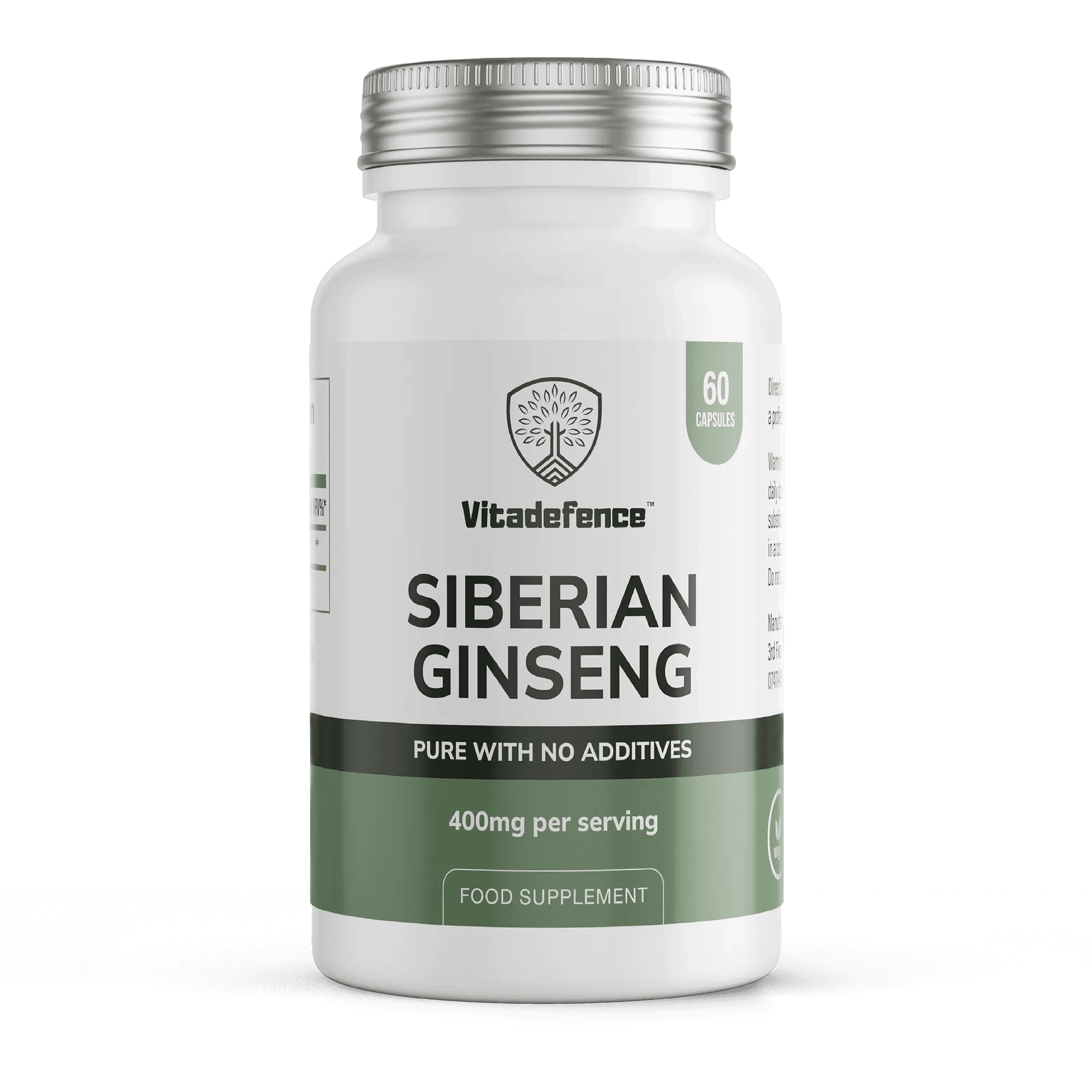
- Siberian ginseng (Eleuthero) — adaptogenic, supports stress resilience and stamina. The Siberian Ginseng capsules use a standardised extract.
- Ashwagandha — adaptogen with several small trials in men showing modest improvements in stamina and stress markers.
- Tongkat Ali, fenugreek, Tribulus — variable evidence; some encouraging signals, none conclusively established.
None of these are testosterone replacements. They're nutritional and adaptogenic supports for a system that runs on sleep, food, and movement.
When to see a GP
If you're experiencing persistent fatigue, low libido, mood changes, or unexplained loss of muscle/strength — book an appointment. A simple blood test (total testosterone, free testosterone, SHBG) will tell you whether you're in the normal range or genuinely low. Self-medicating without diagnosis is a poor strategy.
The takeaway
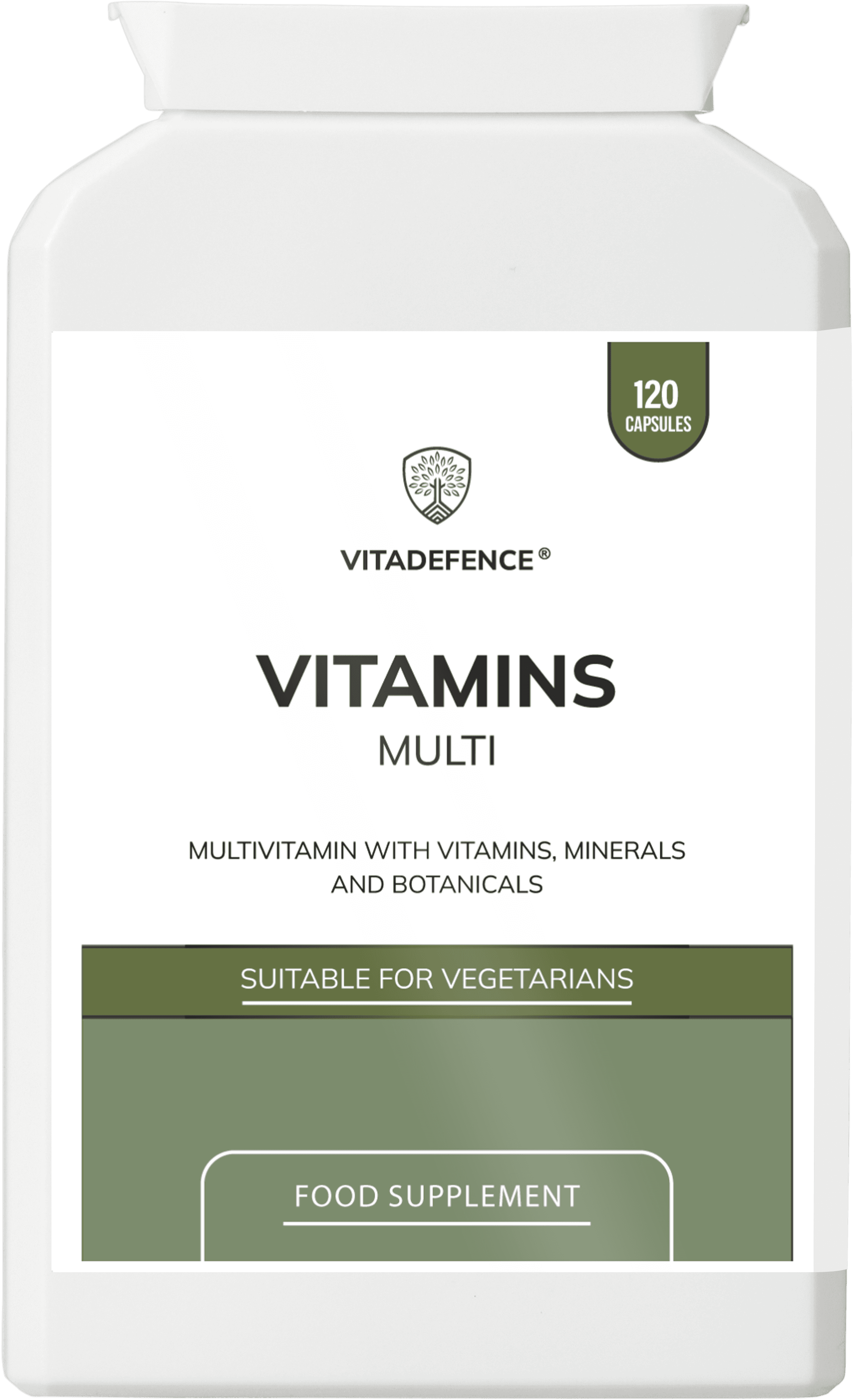
Testosterone is the quiet workhorse behind energy, drive, body composition, and recovery in men. Most men don't need testosterone replacement — they need sleep, resistance training, less body fat, less alcohol, and consistent nutrient intake. Get those right and the hormonal foundations follow. A daily multivitamin like our Vitamins Multi covers the zinc, magnesium, and vitamin D bases without fuss.
Recommended for You
Panax Ginseng Multi — Korean ginseng with B-vitamins, DHA, and minerals.This article is for informational purposes only and does not constitute medical advice. Vitadefence supplements are food supplements, not medicines. They should not be used as a substitute for a varied diet and a healthy lifestyle. Consult a healthcare professional if you are pregnant, breastfeeding, on medication, or have a medical condition.
Related products
More from the journal
Spirulina: The Original Superfood — Protein, B12, and Phycocyanin Antioxidant Power
9 min · Ingredients
Siberian Ginseng Benefits: Why This Adaptogen Is Different From Panax Ginseng
7 min · Ingredients