What 'GMP Certified' and 'Non-GMO' Really Mean on a Supplement Label
GMP-certified and non-GMO sit on the front of half the supplement bottles in your local health shop. They are not marketing fluff, but they are also not interchangeable. Here is what each one actually proves, and why a buyer who reads labels gets a better product.
By Vitadefence Editorial

If you have ever stood in front of a supplement shelf and tried to decide between two bottles that both promise the world, you have probably noticed two phrases sitting next to almost every label: "GMP certified" and "non-GMO." They sound serious. They look like trust signals. But most shoppers — including a lot of people in the wellness space — could not tell you exactly what either one means.
That is a problem, because these two phrases describe two very different things, and only one of them tells you anything about the actual quality of what is inside the capsule. Here is the plain-English version, why both matter, and how to use them when you are reading a label.
Why this matters before we talk about ingredients
You take a supplement because you want it to do something — fill a nutrient gap, support energy, sleep better, recover from exercise. None of that matters if the powder inside the capsule is not what the label claims it is, or if the manufacturing facility was sloppy enough to let cross-contamination, the wrong dosage, or unwanted ingredients slip through.
Food supplements in the UK and EU are not licensed in the same way as medicines. They sit under food law (Regulation (EU) No 178/2002 and the UK Food Safety Act), which means the responsibility for safety and accuracy falls on the manufacturer. That responsibility is enforceable, but it is only as strong as the standards the manufacturer voluntarily holds itself to. GMP and non-GMO certifications are two of those self-imposed bars.
What "GMP certified" actually means
GMP stands for "Good Manufacturing Practice." It is a set of legally-recognised standards covering how a product is made, from raw material through to finished bottle. According to the UK Medicines and Healthcare products Regulatory Agency (MHRA) and the World Health Organization, GMP guidelines cover, broadly:
- Premises and equipment: the facility must be clean, maintained, and designed to prevent contamination between batches.
- Documentation: every step from raw-material delivery to final packaging must be recorded — what came in, what was tested, who handled it, what came out.
- Quality control: samples from each batch must be tested against the specification on the label, often by an independent lab.
- Personnel training: staff must be qualified for the work they do.
- Traceability: if something goes wrong, the manufacturer must be able to trace any batch back to its raw-material source.
"GMP certified" means an external auditor has visited the facility, reviewed the documentation, and signed off that those standards are being met. In the UK, this is typically tied to standards published by the Medicines and Healthcare products Regulatory Agency, the Soil Association, or NSF International. In practice, a credible GMP certification is one of the strongest signals you can get that the bottle in your hand contains what the label says it contains, in roughly the dose stated, with low risk of contamination.
What "non-GMO" actually means
"Non-GMO" means the ingredients in the supplement have not been genetically modified. Genetic modification, in this context, is the laboratory-driven alteration of an organism's DNA — typically to make a crop resistant to a pesticide or to produce a higher yield.
The science around whether GMO foods are harmful to human health is, honestly, mixed and politically loud. The European Food Safety Authority (EFSA) reviews each authorised GMO product individually and approves only those that pass its risk assessment. Many people choose non-GMO supplements for environmental reasons (concerns about monoculture, pesticide use, biodiversity), or for personal preference (wanting to keep their diet closer to traditional, unmodified plant sources), or for traceability — non-GMO ingredients are typically grown by smaller producers with shorter supply chains.
For supplements specifically, the most common GMO ingredients to look out for are corn-derived (maltodextrin, citric acid, ascorbic acid synthesised from corn glucose), soy-derived (lecithin, soy protein), and rapeseed-derived oils. A "non-GMO" label tells you those raw materials came from non-modified varieties.
Where the two overlap — and where they do not
Here is the part most shoppers miss: GMP certification covers how the product is made; non-GMO covers what went into it. A product can be GMP-certified and still contain GMO ingredients. A product can be non-GMO and still come out of a poorly-run facility.
The two together are what you actually want. GMP gives you reliability — the bottle has what the label claims. Non-GMO gives you provenance — those ingredients came from a traditional, unmodified source. A serious supplement maker holds both standards because each one tells you something the other cannot.
What to look for on the label
When you are next reading a supplement label, three quick checks tell you most of what you need to know:
- Find the GMP statement. "Manufactured in a GMP-certified facility" is the minimum. A facility number or the name of the certifying body is even better, because it can be verified.
- Find the non-GMO statement. Either a "non-GMO" badge, an explicit statement, or — strongest signal — an organic certification (organic standards prohibit GMOs by default).
- Look at the ingredient list itself. Short, recognisable, named ingredients are a much better sign than long lists of unfamiliar chemicals. Bioavailable forms (methylfolate, methylcobalamin, chelated minerals, vitamin D3 from lanolin or lichen) are typically used by manufacturers who care about quality across the board.
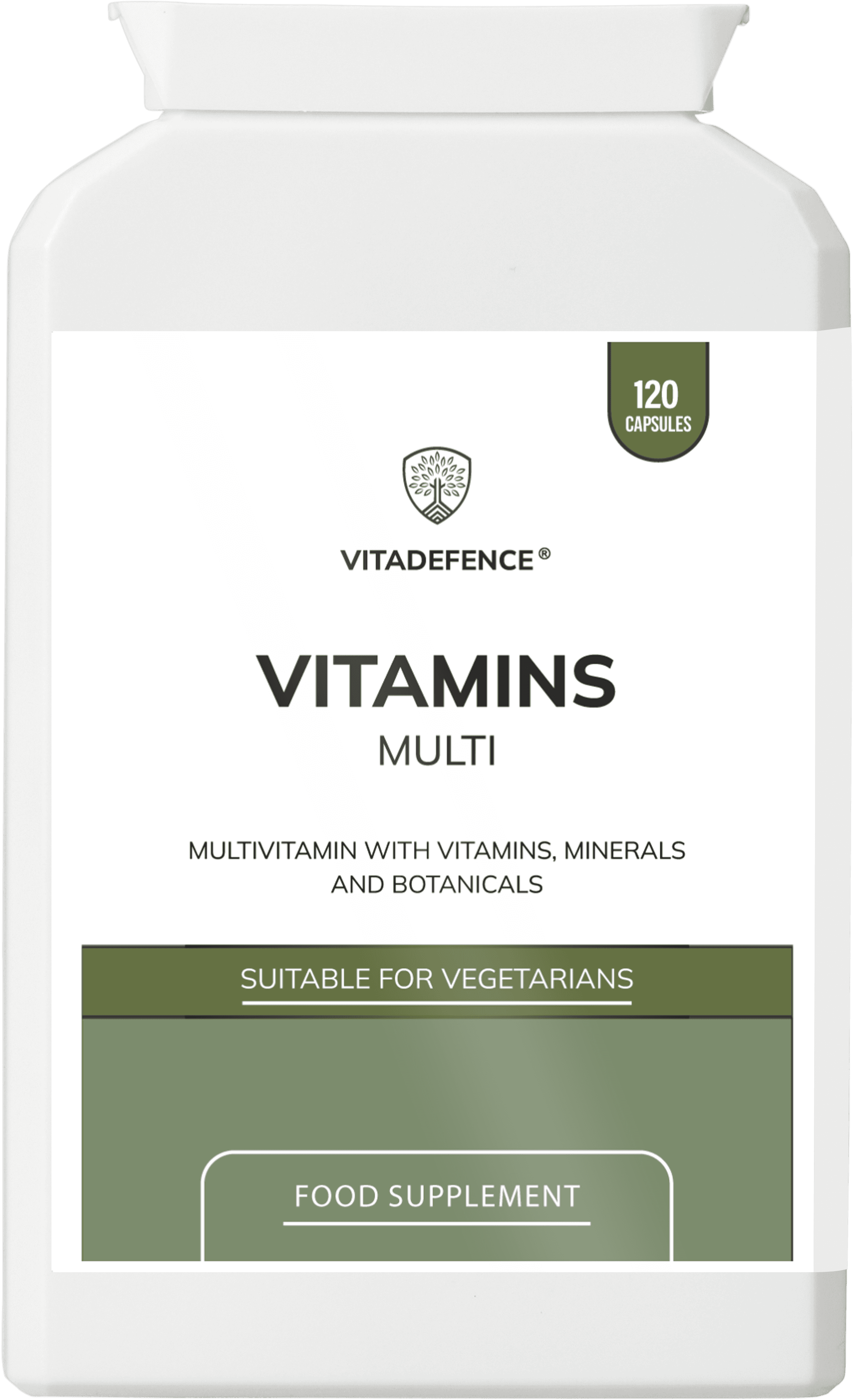
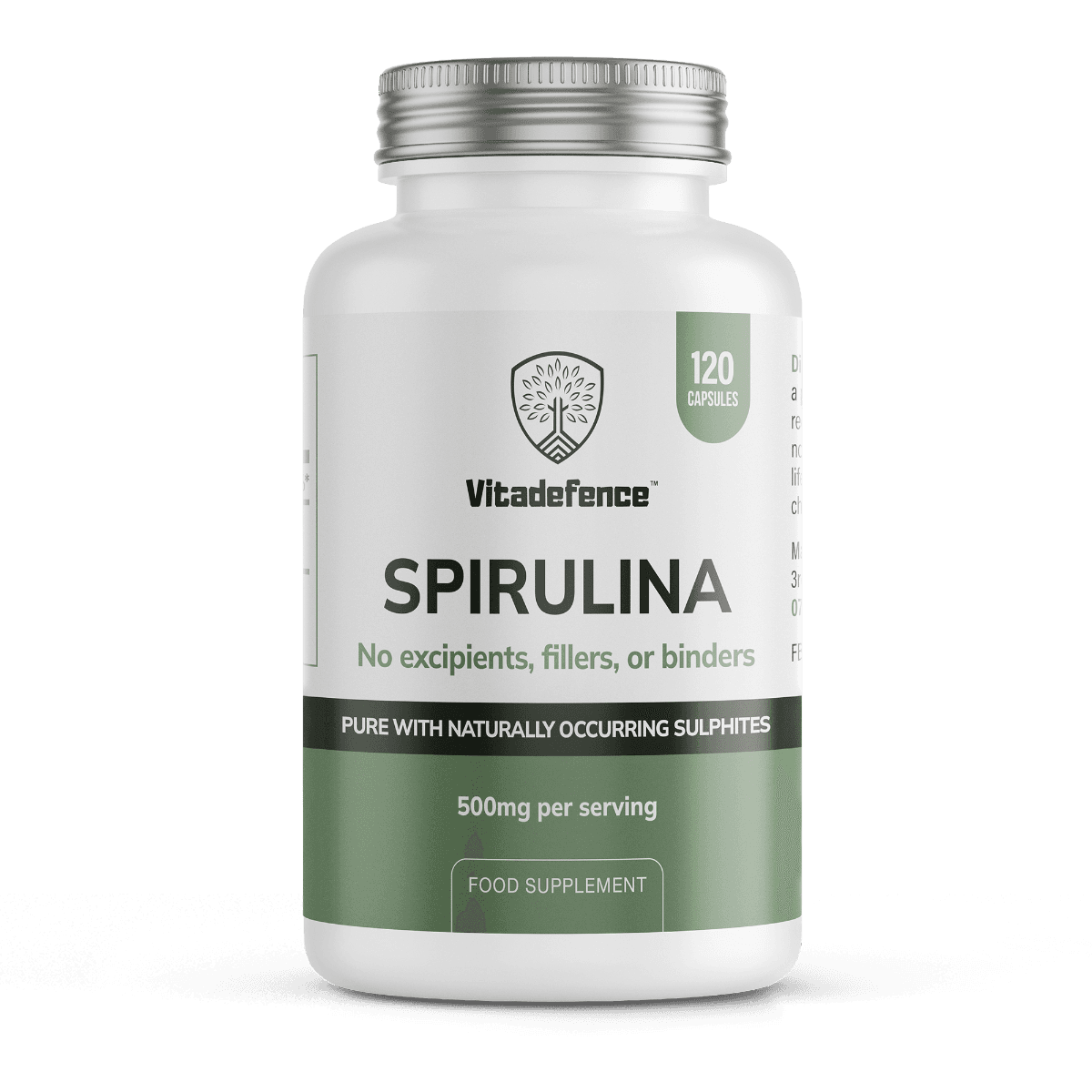
At Vitadefence, every capsule formula is made in a UK GMP-certified facility, with non-GMO ingredient sourcing as the default position rather than a marketing add-on. The full ingredient breakdown is published on each product page so you can see exactly what is in it before you buy. If you are looking for a starting point, the Vitamins Multi formula is a daily-use multi with bioavailable B vitamins, vitamin D3, K2, and live bacteria, made to the standards described above. For something simpler, Spirulina capsules are a single-ingredient option from non-GMO algae sources.
The takeaway
GMP and non-GMO are not interchangeable, and neither is fluff. GMP tells you the manufacturing process is auditable and traceable. Non-GMO tells you the raw materials came from unmodified sources. Together they are a baseline of trust — not the whole story, but the floor below which a serious supplement should not fall. Read the label. If a bottle does not state both, ask yourself why.
This article is for informational purposes only and does not constitute medical advice. Vitadefence supplements are food supplements, not medicines, and should not be used as a substitute for a varied diet and a healthy lifestyle. Consult a healthcare professional if you are pregnant, breastfeeding, on medication, or have a medical condition.
Related products
More from the journal
Spirulina: The Original Superfood — Protein, B12, and Phycocyanin Antioxidant Power
9 min · Ingredients
Siberian Ginseng Benefits: Why This Adaptogen Is Different From Panax Ginseng
7 min · Ingredients