What 'Non-GMO' Means on a Supplement Bottle (and Why a Buyer Should Care)
Non-GMO sits on the front of countless supplement bottles, but most shoppers cannot say exactly what genetic modification is, how it ends up in a capsule, or why a non-GMO product matters to a buyer who reads labels. Here is the plain-English explanation.
By Vitadefence Editorial
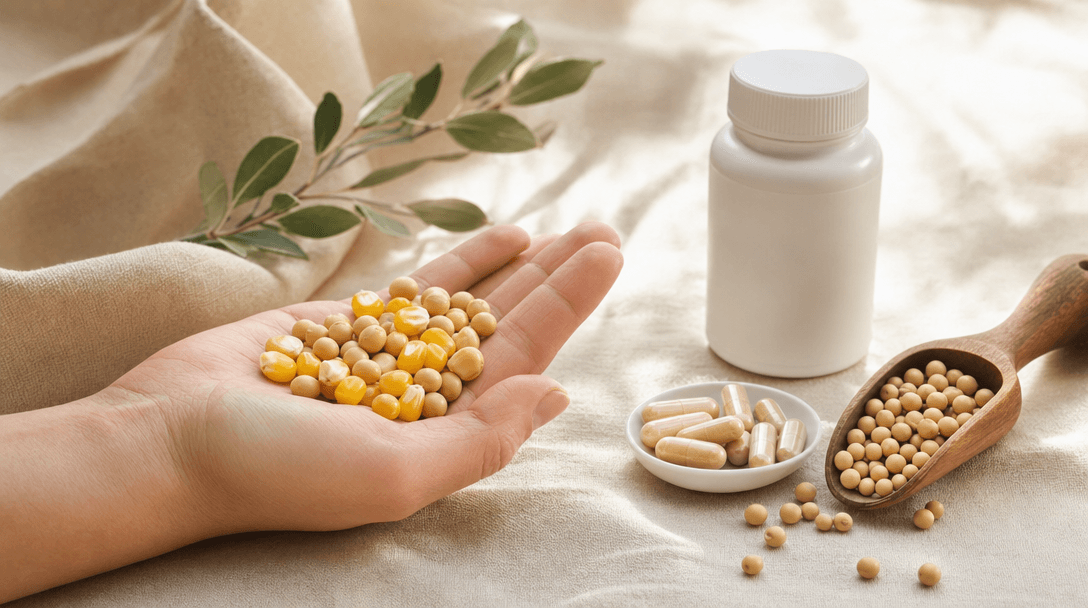
If you have ever picked up a supplement bottle and noticed the words "non-GMO" on the front, you have probably wondered what difference that two-letter detail actually makes. It is a fair question. Genetic modification is one of the most argued-about topics in food, and the supplement industry has happily slapped "non-GMO" on bottles for years without always explaining what it means.
Here is the honest version: what GMO actually is, how it ends up in a capsule, and what a non-GMO supplement is really telling you about itself.
Why this matters before you take the capsule
Most people start thinking about GMOs not because of a single news story, but because they reach a point in life where they want to know more about what they are putting into their bodies. Maybe you have started reading food labels. Maybe a friend mentioned it. Maybe you are pregnant or feeding a child and the bar has shifted. The question becomes: when I take a daily supplement, do I want it sourced from raw materials that have been genetically engineered, or from raw materials that have not?
That is a personal decision, and it is one you can only make if you understand what genetic modification actually is. So let's start there.
What "GMO" actually means
GMO stands for "genetically modified organism." In food and supplements, it almost always refers to a crop whose DNA has been altered in a laboratory — usually to do one of three things:
- Resist a herbicide. The most famous example is Roundup-Ready soy and corn, modified so the crop survives spraying with glyphosate that kills the surrounding weeds.
- Resist insects. Bt corn, for example, is modified to produce its own insecticidal protein, reducing the need for external pesticide.
- Increase yield, drought tolerance, or shelf life. Various commercial GMO varieties target one or more of these traits.
Genetic modification is different from selective breeding, which is the slow, traditional process of crossing two varieties of the same crop over many generations. GMO modification can move genes between species — a bacterial gene into a corn plant, for example. That is the part that triggers most of the ethical and ecological debate.
How GMO ingredients end up in a supplement
You might think a capsule of vitamin C or a bottle of spirulina has nothing to do with corn or soy. In practice, the supplement industry uses GMO-derived raw materials all the time, just not always in obvious ways. The most common routes are:
- Synthetic vitamin C (ascorbic acid). Most pharmaceutical-grade vitamin C is synthesised from corn-derived glucose. If the corn is GMO, the resulting ascorbic acid is technically GMO-derived.
- Maltodextrin and dextrose. Common bulking agents made from corn or potato starch. Often GMO-sourced unless explicitly stated otherwise.
- Soy lecithin. Used as an emulsifier in softgels and powders. Most commercial soy lecithin in the global supply chain is from GMO soy.
- Citric acid. Often produced via fermentation using GMO microbial strains.
- Vitamin E (tocopherols). Frequently extracted from GMO soybean oil unless a non-GMO source is specified.
None of those uses is dramatic. They are typical industrial processing inputs. But they are the reason a "non-GMO" label on a finished supplement is more meaningful than it first appears — it requires the manufacturer to chase non-GMO alternatives all the way back through the raw-material supply chain.
What the science actually says about safety
Honest version: regulators in the UK and EU treat GMOs as something requiring case-by-case authorisation. The European Food Safety Authority (EFSA) reviews each GMO product for human, animal, and environmental safety before it can be sold. Authorised GMOs have passed those reviews. The UK Food Standards Agency follows a similar framework after Brexit.
What this means: if a GMO crop is on the market in the UK or EU, regulators have signed off that it is, in their assessment, as safe as the non-GMO equivalent. There is no large-scale evidence in the peer-reviewed literature that authorised GMOs cause harm to human health when consumed in normal dietary amounts.
So why do people still choose non-GMO? Usually for one of three reasons that are perfectly reasonable but are not strictly health-claim reasons:
- Environmental. Concerns about glyphosate use, monoculture farming, biodiversity loss, and the dominance of a small number of seed companies in the global food supply.
- Traceability. Non-GMO supply chains are typically smaller, often more local, and easier to audit back to a specific farm or co-operative.
- Personal preference. Some people simply prefer their food and supplements to come from sources that match the way crops were grown for the millennia before laboratory genetic engineering existed. That is a values position, not a safety claim, and it is a legitimate one.
What "non-GMO" tells you about the supplement maker
Here is the under-appreciated point: a non-GMO label is also a quality signal about the manufacturer, not just the ingredients. Sourcing non-GMO raw materials costs more, takes more documentation, and requires the manufacturer to vet every supplier in the chain. A company that does that work is often a company that takes the rest of the formulation seriously too — bioavailable vitamin forms, clean fillers, real ingredient amounts on the label.
That correlation is not iron-clad, but it is a useful pattern. If you are reading two labels side by side and one says "non-GMO" and the other says nothing about it, it is worth asking why.
What to look for on the label
- An explicit "non-GMO" statement. Either a badge or a sentence on the label.
- An organic certification. Organic standards (Soil Association, EU organic) prohibit GMOs by default, so an organic product is automatically non-GMO.
- Short ingredient lists with named raw materials. The fewer mystery filler ingredients, the easier it is to verify the product is what it claims to be.
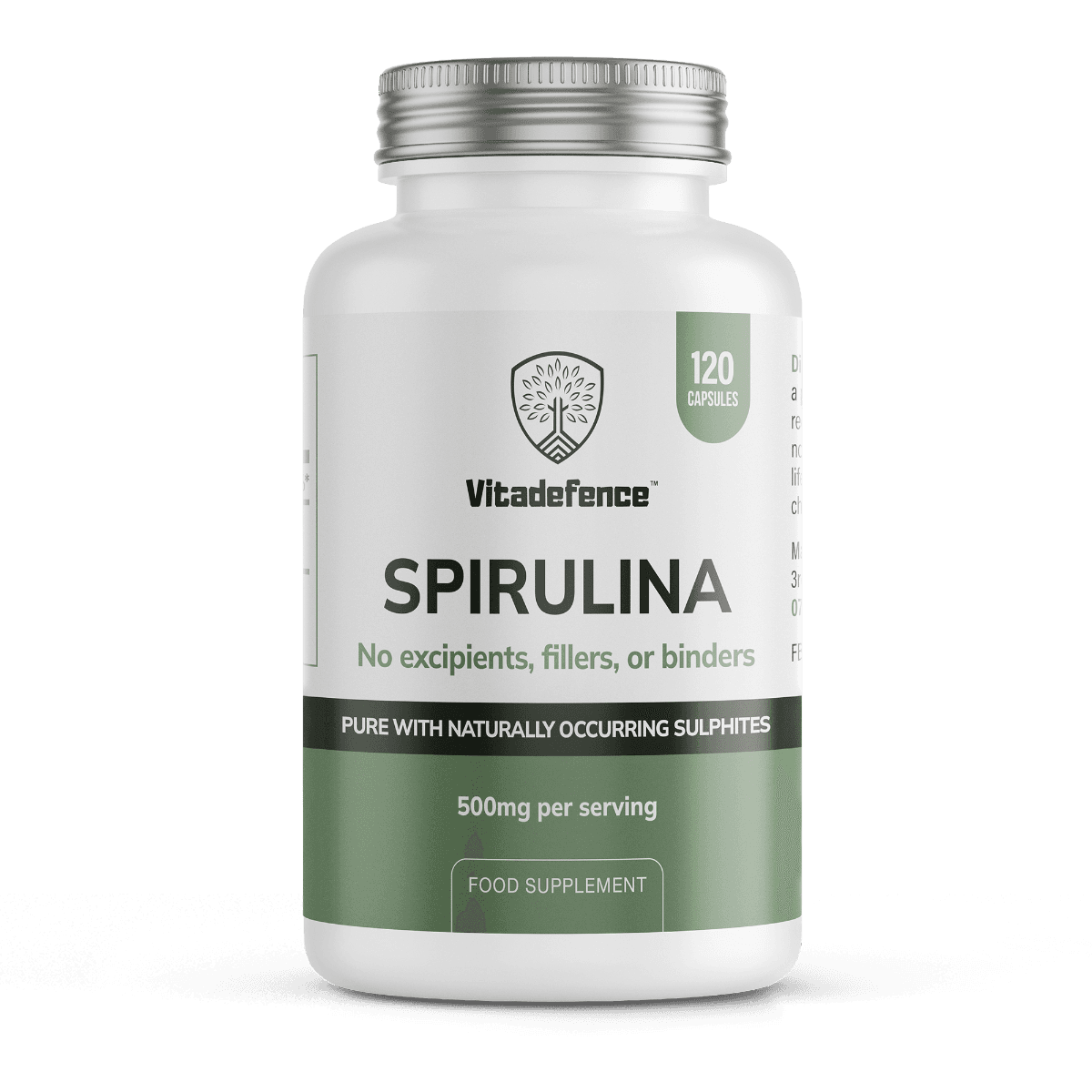
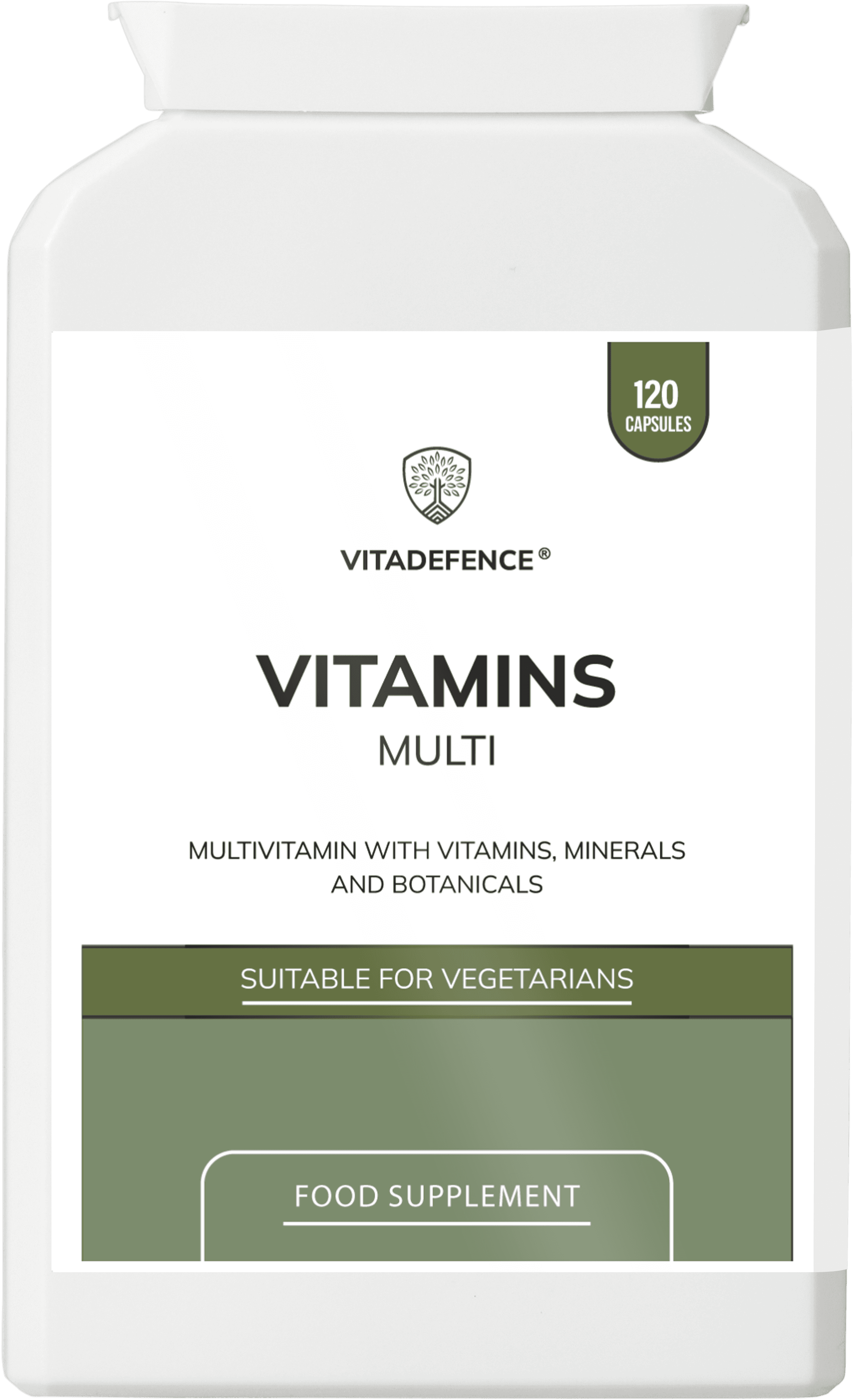
At Vitadefence, capsule formulas are built with non-GMO ingredient sourcing as the default, made in a UK GMP-certified facility. The full ingredient list for every product is published on the product page, with country of origin where relevant. If you want a clean starting point, Spirulina capsules are a single-ingredient option from non-GMO algae sources, and the Vitamins Multi formula is a daily multi with bioavailable vitamins, minerals, and live bacteria from non-GMO raw materials.
The takeaway
Non-GMO is not a magic word, but it is also not nothing. It tells you the manufacturer chased traceable, unmodified raw materials all the way back through the supply chain, and that they are willing to put that work on the label. Whether you choose it for environmental reasons, traceability reasons, or personal preference, you are buying a product with a shorter, cleaner provenance — and that is reason enough.
This article is for informational purposes only and does not constitute medical advice. Vitadefence supplements are food supplements, not medicines, and should not be used as a substitute for a varied diet and a healthy lifestyle. Consult a healthcare professional if you are pregnant, breastfeeding, on medication, or have a medical condition.
Related products
More from the journal
Spirulina: The Original Superfood — Protein, B12, and Phycocyanin Antioxidant Power
9 min · Ingredients
Siberian Ginseng Benefits: Why This Adaptogen Is Different From Panax Ginseng
7 min · Ingredients