Zinc and Men's Health: Testosterone, Prostate, and Immune Function Explained
Zinc is the kind of mineral most men only think about when something feels off. But it sits at the centre of testosterone production, prostate health, immune function, and recovery from training. Here is the honest, evidence-based version of why it matters and how to know if you are getting enough.
By Vitadefence Editorial
If you are a man somewhere between thirty and sixty and you have started paying attention to your energy, your recovery from the gym, your sleep, or how often you catch the same cold your kids bring home from school, zinc is one of the first nutrients worth thinking about. It is not glamorous. It is not the supplement on the front cover of the men's health magazines. But the research linking zinc status to male hormonal, immune, and reproductive function is one of the more consistent stories in nutritional science.
Here is what the evidence actually says, why so many men sit at the bottom end of healthy zinc range without realising, and how to think about it as part of a sensible daily routine.
Why this matters before you take anything
Most men do not think about zinc until something is already off. The early signals — slower recovery from workouts, more frequent colds, lower drive, slightly off-mood, hair thinning — are all things easily blamed on age, stress, or "just being busy." Zinc is one of the simpler nutritional explanations, and the research base is mature enough that it is worth checking before assuming the problem is something else.
There is a second reason. Zinc requirement does not stay flat through life. Hard training, frequent alcohol consumption, certain medications (particularly long-term acid-blocker use), gut conditions that affect absorption, and a diet heavy in refined grains all increase the rate at which zinc leaves the body or the difficulty in absorbing it. Modern lifestyles tilt several of those dials at once.
What zinc actually does in the body
Zinc is an essential trace mineral, meaning the body cannot make it and must take it in through food. It is involved as a cofactor in over 300 enzyme reactions and plays a structural role in roughly 2,500 proteins. According to the European Food Safety Authority (EFSA), zinc has authorised health claims under EU Regulation 1924/2006 for several functions directly relevant to men:
- Contribution to normal fertility and reproduction
- Contribution to maintenance of normal testosterone levels in the blood
- Contribution to normal function of the immune system
- Contribution to protection of cells from oxidative stress
- Contribution to normal cognitive function
- Contribution to maintenance of normal hair, skin, and nails
- Role in the process of cell division
These are not loose marketing claims. EFSA reviewed the evidence and authorised these statements as the ones a manufacturer is allowed to make about zinc in the EU and UK market. Each of them ties back to peer-reviewed research, which is why zinc keeps showing up in the men's-health literature.
Zinc and testosterone
The link between zinc status and testosterone is one of the better-documented findings in male nutrition research. Zinc is involved in the enzyme pathways that produce testosterone in the testes and modulates the activity of luteinising hormone, which signals testosterone production. In studies on men with marginal zinc intake, restoring zinc to the recommended range has been associated with measurable changes in testosterone levels (Prasad et al., 1996, published in Nutrition).
The honest framing: this is not a "boost" story. Zinc supplementation in men who are already within the healthy zinc range does not appear to push testosterone above baseline. The benefit shows up in men who were running low — which, given dietary patterns and training loads, is a meaningful share of the adult male population. EFSA's authorised claim is "maintenance of normal" levels, and that is the right way to think about it.
Zinc and the prostate
The human prostate concentrates more zinc than almost any other soft tissue in the body. Healthy prostate tissue has zinc levels several times higher than surrounding tissue, and that ratio drops in many men as they age. Research has documented this association in the urology literature for decades, although the direction of cause and effect is still actively debated.
What the evidence supports: maintaining adequate zinc intake is part of a sensible nutritional approach to prostate function. The European Food Safety Authority does not authorise a specific prostate health claim for zinc — that would require a stronger evidence base than currently exists — but the broader pattern of zinc playing a role in male reproductive tissue function is well documented.
Zinc and immune function
This is the area with the strongest population-level evidence. EFSA has authorised the claim that zinc contributes to the normal function of the immune system. A Cochrane review (Singh & Das, 2013) on zinc for the common cold found that zinc lozenges or syrups, taken within 24 hours of symptom onset, were associated with shorter cold duration in adults — although the effect size and certainty varied across studies.
For day-to-day immune support, the practical version is simpler: zinc is one of the nutrients most consistently linked to immune cell production and function, and a chronic shortfall tilts immune resilience downward. Maintaining intake matters more than chasing high doses.
How men become zinc-deficient without noticing
Several common patterns push zinc status downward:
- Heavy training. Sweat is a route of zinc loss. Men training five or more times a week with significant sweat output have measurable additional zinc requirements.
- Refined diets. Whole grains, legumes, and red meat are major zinc sources. Diets dominated by refined carbs, processed foods, and limited red meat tend to run lower.
- Alcohol. Frequent alcohol consumption increases urinary zinc excretion.
- Long-term acid-blocker use. Proton pump inhibitors and similar medications reduce stomach acid, which affects zinc absorption from food.
- Gut conditions. Coeliac disease, inflammatory bowel conditions, and bariatric surgery all reduce zinc absorption capacity.
The recommended intake in the UK is around 9.5 mg per day for adult men (NHS Eatwell guidance), with a tolerable upper level around 25 mg from supplements alone. Most multivitamin formulas provide 5–15 mg as a baseline.
Food sources first, supplement second
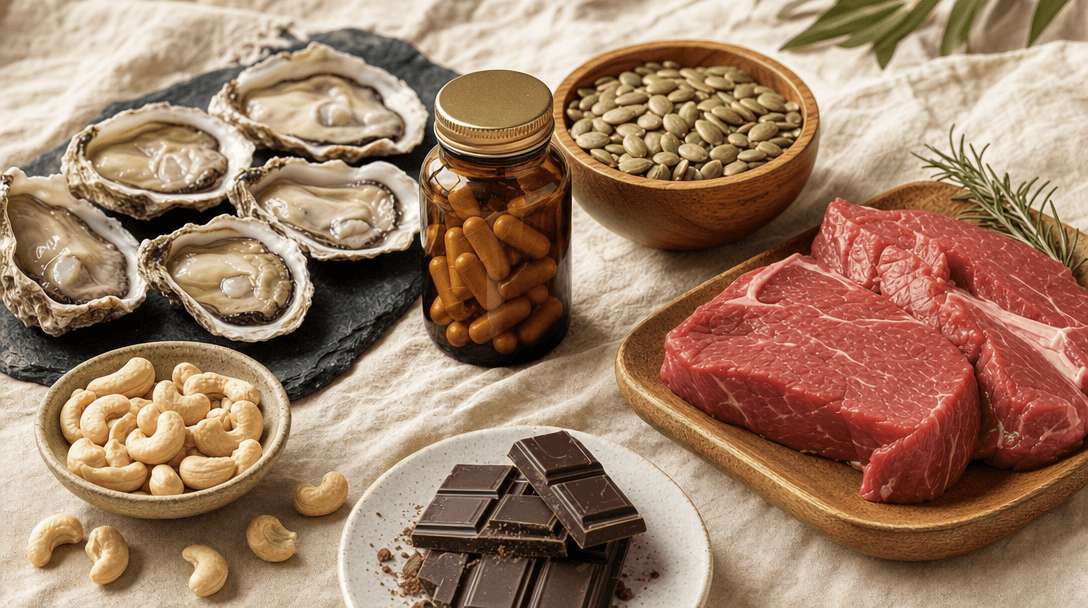
The best approach to zinc is the simple one: get most of it from food. The strongest food sources, ranked by zinc per typical serving, are roughly: oysters (extreme outlier — multiple times daily intake in a single serving), beef and lamb, pumpkin seeds, hemp seeds, lentils and chickpeas, cashews and almonds, oats, and Greek yoghurt.
If your diet is genuinely varied and includes red meat or shellfish a couple of times a week, you are probably fine. If it is not, or if you train hard, drink frequently, or have any of the absorption issues above, a daily multivitamin or targeted formula with zinc is a sensible addition.
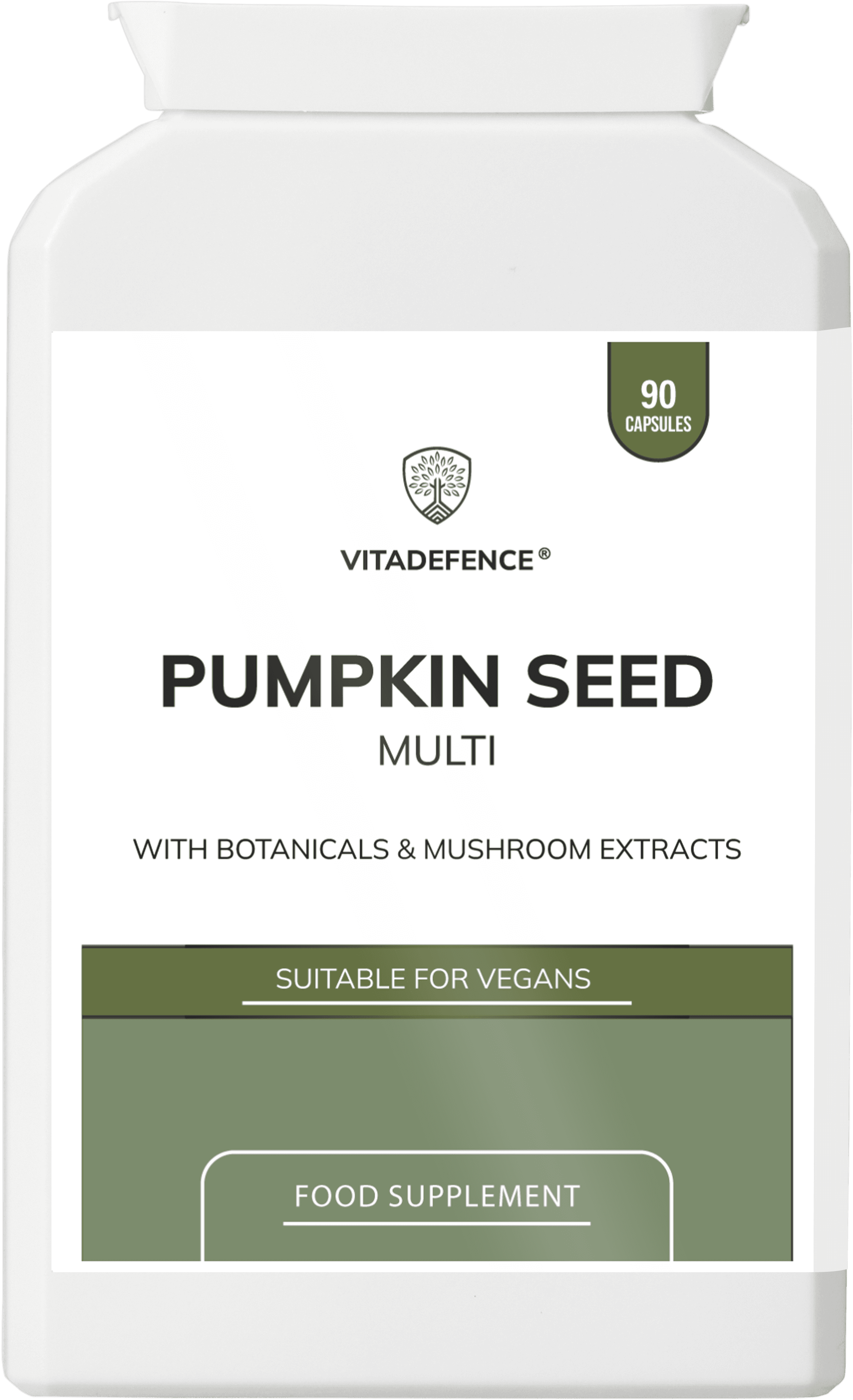
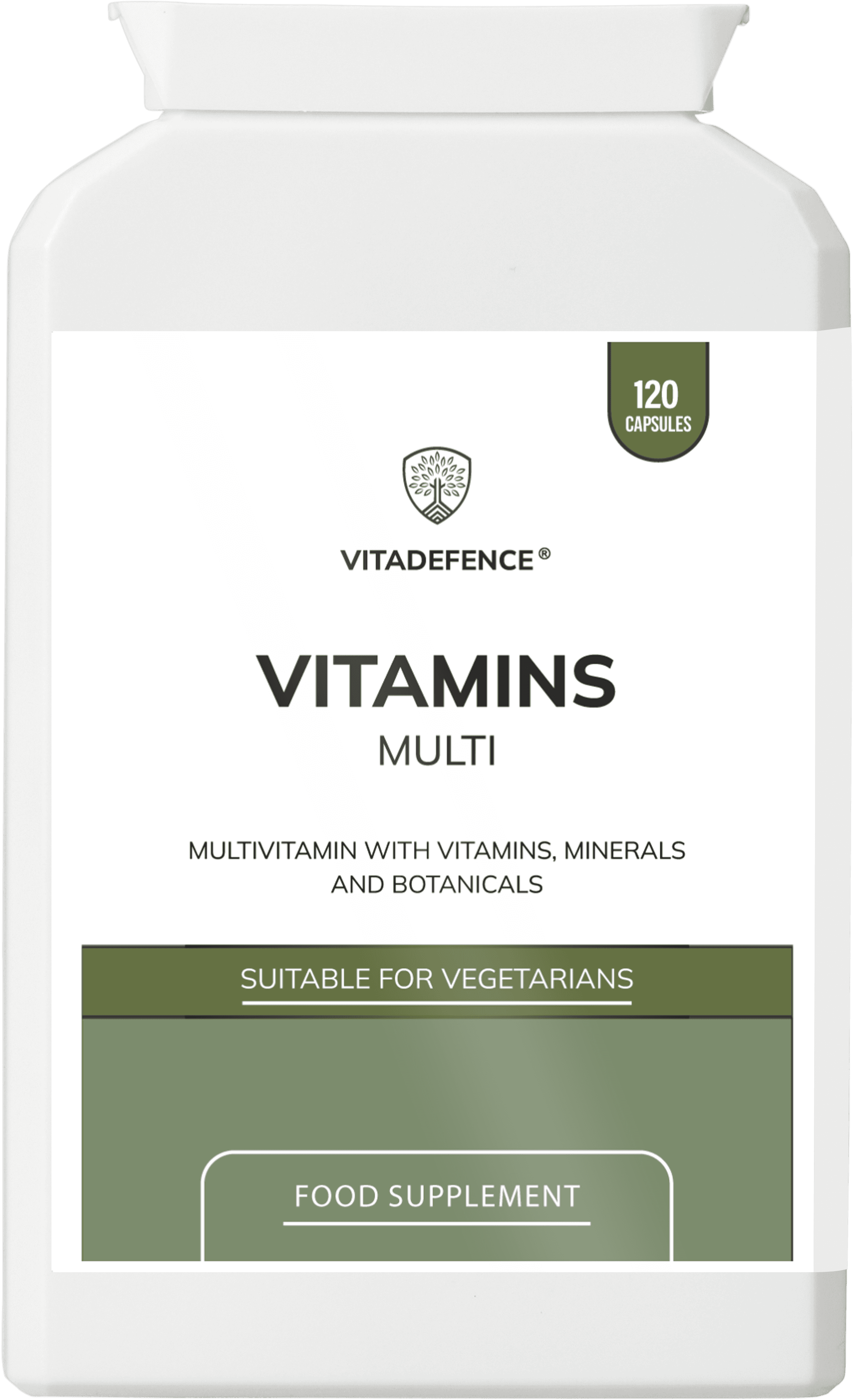
At Vitadefence, the Pumpkin Seed Multi formula is built around traditional men's-health botanicals (pumpkin seed, olive leaf, clove bud, cayenne, and others), and the Vitamins Multi is a broader daily multi with 5 mg zinc citrate alongside the rest of the B-complex, vitamin D3, K2, and live bacteria. Both are made in a UK GMP-certified facility and use non-GMO ingredient sourcing.
The takeaway
Zinc is not a miracle mineral, but it is a quietly important one for men. It supports normal testosterone, immune function, fertility, and cognitive function under EFSA's authorised claims, and the patterns of modern life (training, alcohol, refined diet, certain medications) all tilt status downward. Eat well first. If your routine, diet, or training load makes that hard, a sensible supplement is a low-cost insurance policy worth considering.
This article is for informational purposes only and does not constitute medical advice. Vitadefence supplements are food supplements, not medicines, and should not be used as a substitute for a varied diet and a healthy lifestyle. Consult a healthcare professional if you are pregnant, breastfeeding, on medication, or have a medical condition.
Related products
More from the journal
Spirulina: The Original Superfood — Protein, B12, and Phycocyanin Antioxidant Power
9 min · Ingredients
Siberian Ginseng Benefits: Why This Adaptogen Is Different From Panax Ginseng
7 min · Ingredients