10 Reasons Why MSM Deserves a Place in Your Daily Stack
MSM is sulfur in a usable form — and sulfur is what your joints, skin, and connective tissue are built from. Ten honest reasons to consider it daily.
By Vitadefence Team
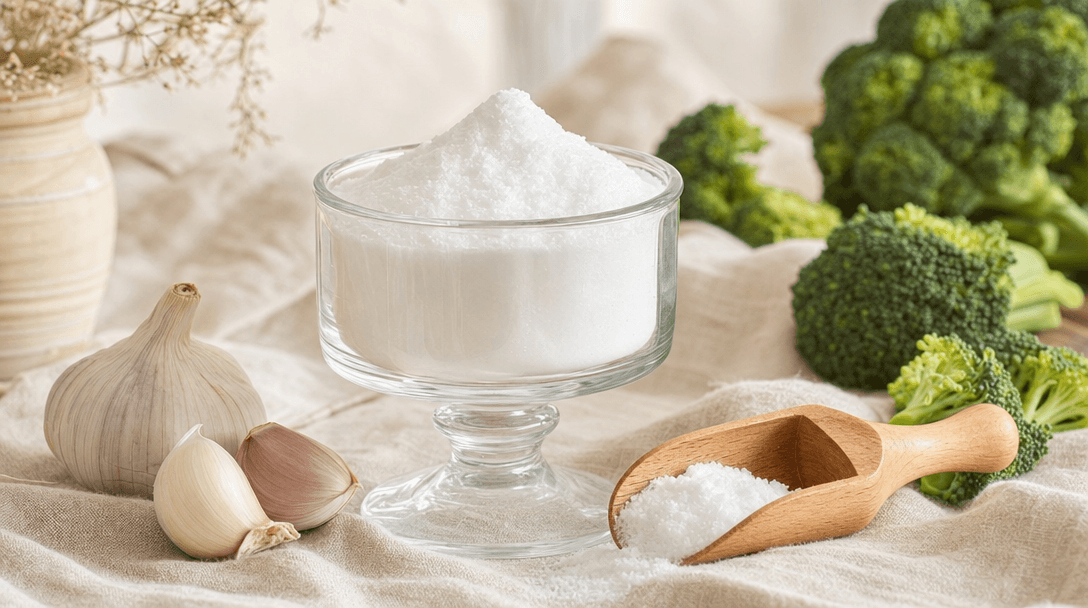
If your knees crack on the stairs, your shoulders feel "sticky" in the morning, or your skin has lost its bounce — there's a common thread you might not have considered. Your body is built on sulfur-rich connective tissue, and sulfur intake from modern food has dropped. MSM is the simplest way to top it back up. Here are ten honest reasons it deserves a daily place.
1. It's the most bioavailable source of dietary sulfur
MSM (methylsulfonylmethane) is a naturally occurring organic sulfur compound found in trace amounts in fresh fruits, vegetables, milk, and grains — but levels are easily lost through cooking, processing, and storage. Supplemental MSM provides a stable, well-absorbed form. Sulfur is the fourth most abundant mineral in the human body and the third most needed for connective tissue, after calcium and phosphorus.
2. Sulfur is structural to cartilage
Glucosamine sulfate, chondroitin sulfate, and keratan sulfate — three of the building blocks of cartilage — share one feature in their names. The body cannot make any of them properly without sulfur on hand. MSM provides that sulfur in a form the body can use directly.
3. The joint pain research is encouraging
A 2011 systematic review in Osteoarthritis and Cartilage looked at the available randomised trials of MSM in osteoarthritis. The trials were small but the trend was consistent: MSM groups showed reductions in WOMAC pain and stiffness scores compared to placebo. A frequently cited 2006 study (Kim et al.) used 3 g twice daily for 12 weeks and reported meaningful improvement in physical function. Useful, though not definitive — the evidence base is moderate, not large.
4. It works well with vitamin C — and not by accident
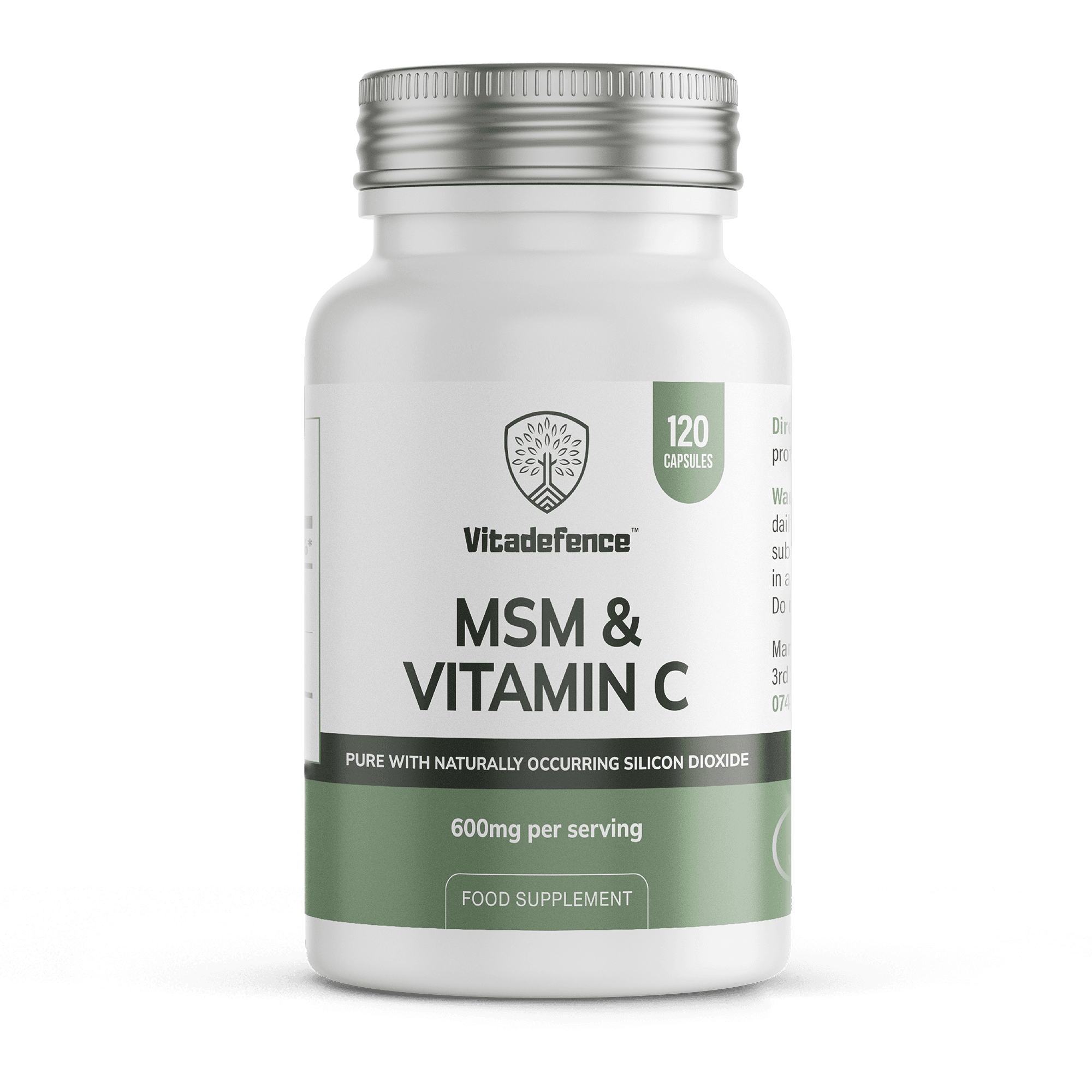
Cartilage and skin are mostly collagen, and collagen synthesis depends on vitamin C. Pairing MSM (the sulfur for connective tissue) with vitamin C (the co-factor for collagen formation) covers two foundations at once. Our MSM with Vitamin C formula was built around this combination.
5. Skin, hair, and nail benefits aren't a marketing add-on
Sulfur is a major component of keratin (hair, nails) and is needed in skin elasticity. Anecdotal feedback on MSM is heavily skewed toward "my skin looks better, my nails grew faster" — though formal trials in cosmetic outcomes are still small. There's a small 2018 study (Muizzuddin et al.) in Natural Medicine Journal that reported improvements in skin elasticity and reduced wrinkles after 16 weeks. Not bulletproof, but a coherent picture.
6. It supports your body's own antioxidant production
Glutathione — the body's master antioxidant — is built from three amino acids, and the rate-limiting one (cysteine) is sulfur-containing. MSM provides bioavailable sulfur to feed that pathway. This isn't a direct antioxidant effect; it's a supply-chain one.
7. Excellent safety profile across decades of use
MSM has been studied at doses up to 6 g per day with consistently mild side-effect profiles — typically minor digestive upset that resolves with food or split dosing. It's one of the better-tolerated joint nutrients on the market. As always, anyone pregnant, breastfeeding, or on medication should check with a GP first.
8. Athletes notice the recovery angle
A small 2012 study in the Journal of the International Society of Sports Nutrition reported that MSM supplementation reduced post-exercise muscle damage markers and perceived soreness. The mechanism is plausible — anti-inflammatory and connective-tissue support — but the trials are still small. Many active people use MSM for this reason regardless of the formal evidence base.
9. It pairs naturally with collagen and turmeric
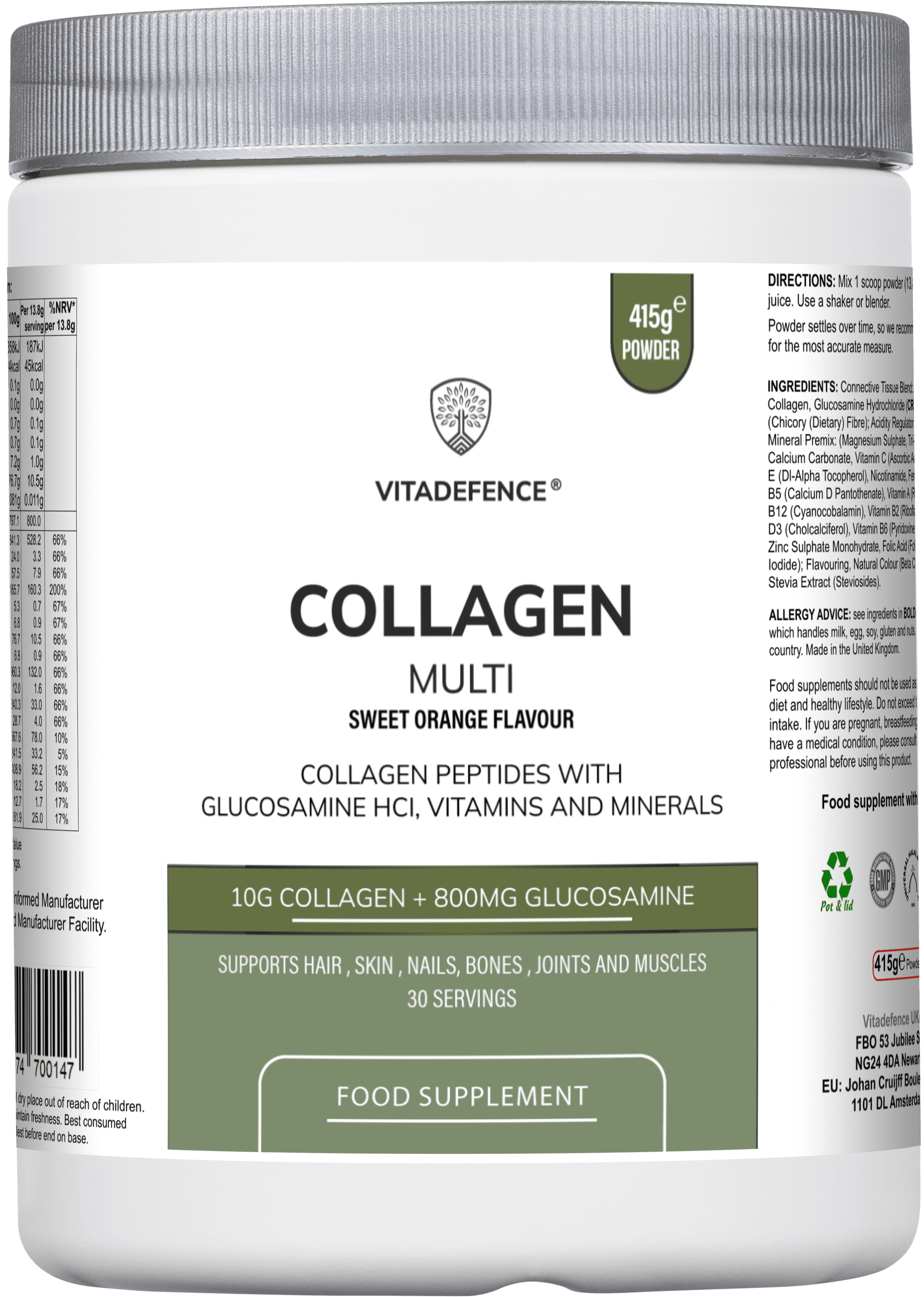
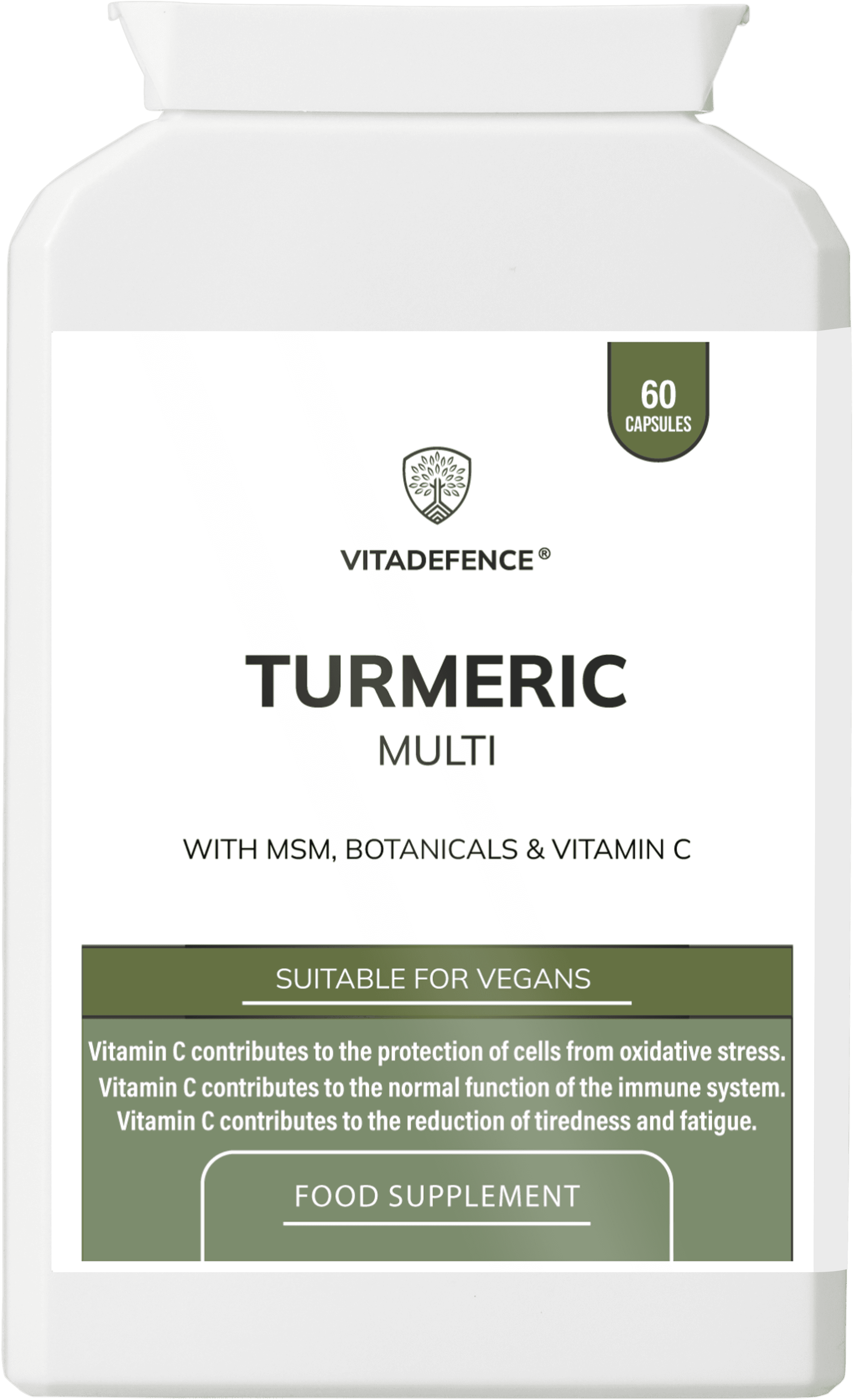
Stack-thinking: MSM provides the sulfur, collagen provides the protein scaffold, vitamin C builds the cross-links, and turmeric supports the inflammatory backdrop. Each does a different job. Our Collagen Multi and Turmeric Multi are designed to complement MSM, not duplicate it.
10. The dose is straightforward
Most clinical studies have used 1.5 to 3 grams per day, divided into two doses. That's typically two to four capsules with breakfast and dinner, depending on the formula. Higher doses (up to 6 g) are sometimes used short-term but most people don't need them. Consistency over 8–12 weeks is more important than dose maximisation.
What MSM is not
MSM is a nutritional support, not a treatment for joint disease. If you have severe pain, persistent swelling, or any joint symptoms that limit your daily activity, please see a GP — there are conditions that need diagnosis and care that no supplement can substitute for.
How to start
- Dose: 1.5–3 g per day, divided into two with food.
- Pair with: 500–1000 mg vitamin C in the same dose.
- Time horizon: 8–12 weeks before judging the result.
- Format: capsules are easier; powder is cheaper per gram if you don't mind the slight bitterness.
The takeaway
MSM is one of those quiet, foundational nutrients that doesn't get marketing love but earns its place by doing real work in connective tissue. If you're an active adult, a creaky-knees adult, or someone whose nails snap and skin feels papery — it's a small daily investment that the biology stands behind.
Recommended for You
MSM with Vitamin C — sulfur and the co-factor for collagen, in one capsule.This article is for informational purposes only and does not constitute medical advice. Vitadefence supplements are food supplements, not medicines. They should not be used as a substitute for a varied diet and a healthy lifestyle. Consult a healthcare professional if you are pregnant, breastfeeding, on medication, or have a medical condition.
Related products
More from the journal
Spirulina: The Original Superfood — Protein, B12, and Phycocyanin Antioxidant Power
9 min · Ingredients
Siberian Ginseng Benefits: Why This Adaptogen Is Different From Panax Ginseng
7 min · Ingredients