7 Surprising Facts About Vitamin C
Vitamin C is famous for colds. But its real workload — collagen, iron absorption, immune cells, recycling vitamin E — is far broader and more interesting.
By Vitadefence Team
Most people meet vitamin C through orange juice and the vague idea that it "helps with colds". That's like saying a phone is useful for calls. True — but a small fraction of what it actually does. The biology of vitamin C is unusually busy. Here are seven things about it that surprise even careful eaters.
1. Humans are biologically rare in NEEDING it from food
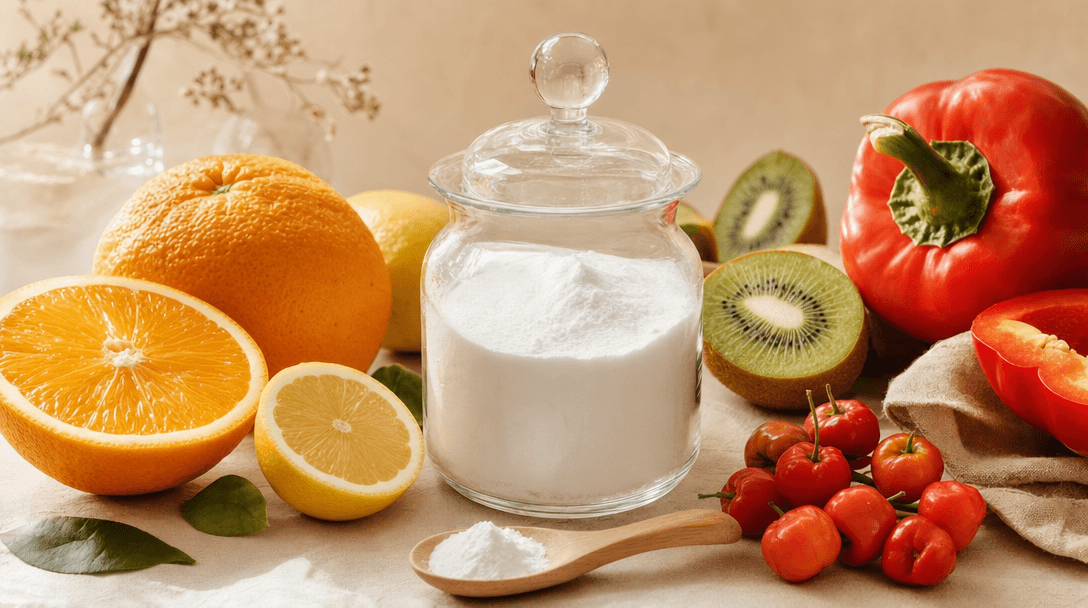
Almost every other mammal makes its own vitamin C in the liver. Humans, other primates, guinea pigs, and a handful of bats lost the final enzyme (L-gulonolactone oxidase) somewhere in our evolutionary past. We pay for it daily. The EFSA-approved daily intake for adults in the UK is 80 mg — a level easily reached with a kiwi, a red pepper, or a portion of broccoli — but very easy to miss on a busy week of takeaways.
2. It's a co-factor for collagen — the body's most abundant protein
Without vitamin C, the enzyme that hydroxylates proline in your collagen chain doesn't work. Collagen is the scaffold of your skin, blood vessels, gums, tendons, and bones. The reason scurvy looks the way it does — bleeding gums, slow wound healing, joint aches — is that the entire connective-tissue scaffold starts to fail. Mild deficiency doesn't produce scurvy, but the same biochemistry is in play, quietly. EFSA recognises that vitamin C contributes to normal collagen formation for skin, gums, bones, cartilage, teeth, and blood vessels (Reg. 432/2012).
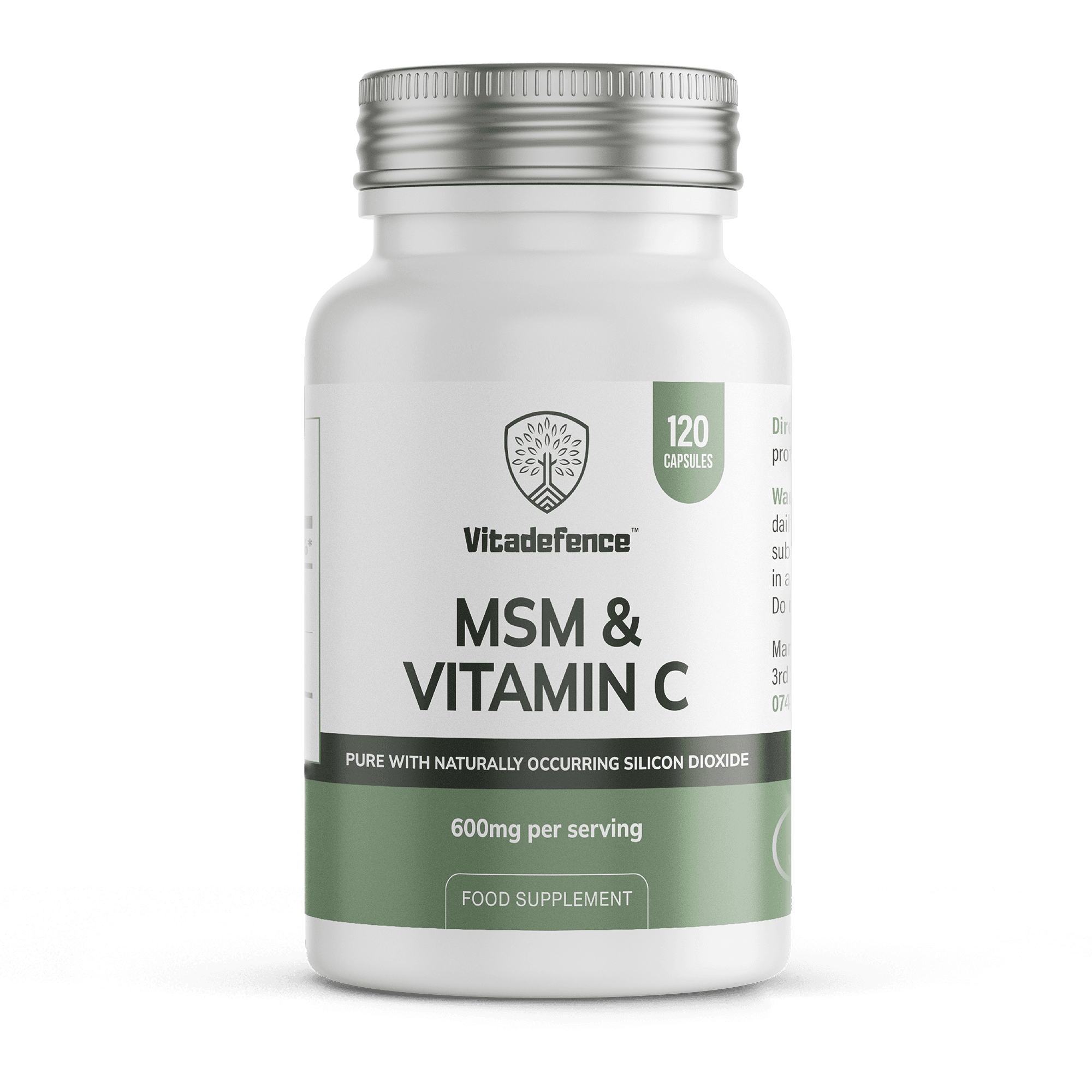
If you're focused on joints or skin, vitamin C is non-negotiable in the formula — which is why our MSM with Vitamin C pairs the two on purpose.
3. It dramatically boosts iron absorption from plant foods
Iron from plant sources (non-haem iron) is poorly absorbed on its own. Add vitamin C to the same meal and absorption can rise meaningfully — early studies (Hallberg et al., American Journal of Clinical Nutrition) showed two- to four-fold increases. This is why a squeeze of lemon on spinach or peppers in a lentil bowl is more than just flavour. For vegetarians and vegans this combination matters.
4. It recycles vitamin E
The two antioxidants work as a tag team. Vitamin E neutralises free radicals in cell membranes; that leaves vitamin E itself oxidised and inert. Vitamin C in the watery cytoplasm regenerates it back to active form. Take one without the other and the team is short-handed. Most quality multivitamins include both for exactly this reason.
5. White blood cells concentrate vitamin C heavily
Neutrophils, the immune cells that mop up bacteria, contain vitamin C at concentrations many times higher than blood plasma. They burn through it during infection. EFSA recognises that vitamin C contributes to the normal function of the immune system. The popular belief that mega-doses cure colds isn't supported by careful trials — but consistent intake during cold and flu season is supported.
6. The "buffered" or "ascorbate" forms aren't just marketing
Plain ascorbic acid is acidic and can upset some stomachs at higher doses. Mineral-bound forms (sodium ascorbate, calcium ascorbate, magnesium ascorbate) are gentler and absorbed equally well. Liposomal vitamin C — the vitamin wrapped in a lipid shell — has good preliminary absorption data, though the trial base is still small. For most people, food-form or buffered ascorbate is plenty.
7. Acerola berries are a vitamin C powerhouse
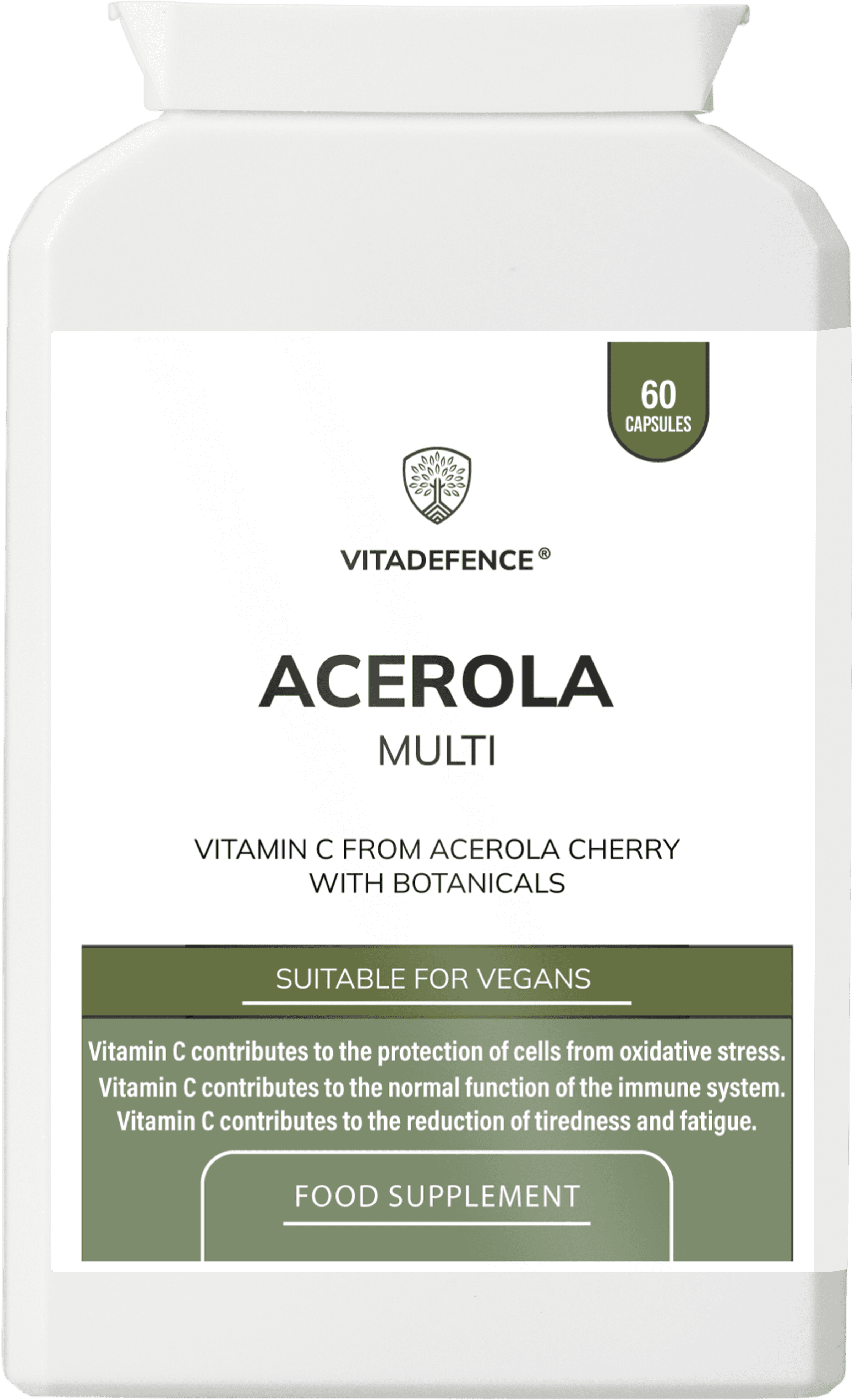
By weight, acerola (Malpighia glabra) contains roughly 20 to 30 times more vitamin C than oranges. It also brings naturally occurring bioflavonoids that help the vitamin work in the body. This is why concentrated acerola extract is one of the cleanest ways to top up. The Acerola Multi blends concentrated acerola berry with complementary botanicals for daily support.
How much do you actually need?
The UK adult reference intake is 80 mg per day. Smokers and people under high physical stress sit at the top end. Megadoses (1,000+ mg daily) are popular online but the body becomes saturated above ~400 mg a day; the rest is excreted. More is not necessarily better — it just means more expensive urine.
How to take it well
- With a meal that contains iron (especially plant iron) — boosts absorption.
- Split into two doses if you're taking 500+ mg, since plasma levels peak quickly and fall.
- Combine with vitamin E or a multivitamin to keep the antioxidant pair complete.
- Don't rely on ageing supplements — vitamin C oxidises in damp, hot, or sunlit conditions. Keep the bottle sealed and out of the bathroom cabinet.
The takeaway
Vitamin C is the quietest workhorse in your nutrition cupboard. It builds the scaffolding for your skin and joints, helps your body actually use the iron in your dinner, and keeps your antioxidant team in rotation. Get it from food first — peppers, citrus, broccoli, kiwi — and use a sensible top-up on busy weeks. The aim isn't to chase the highest dose; it's to be consistent.
Recommended for You
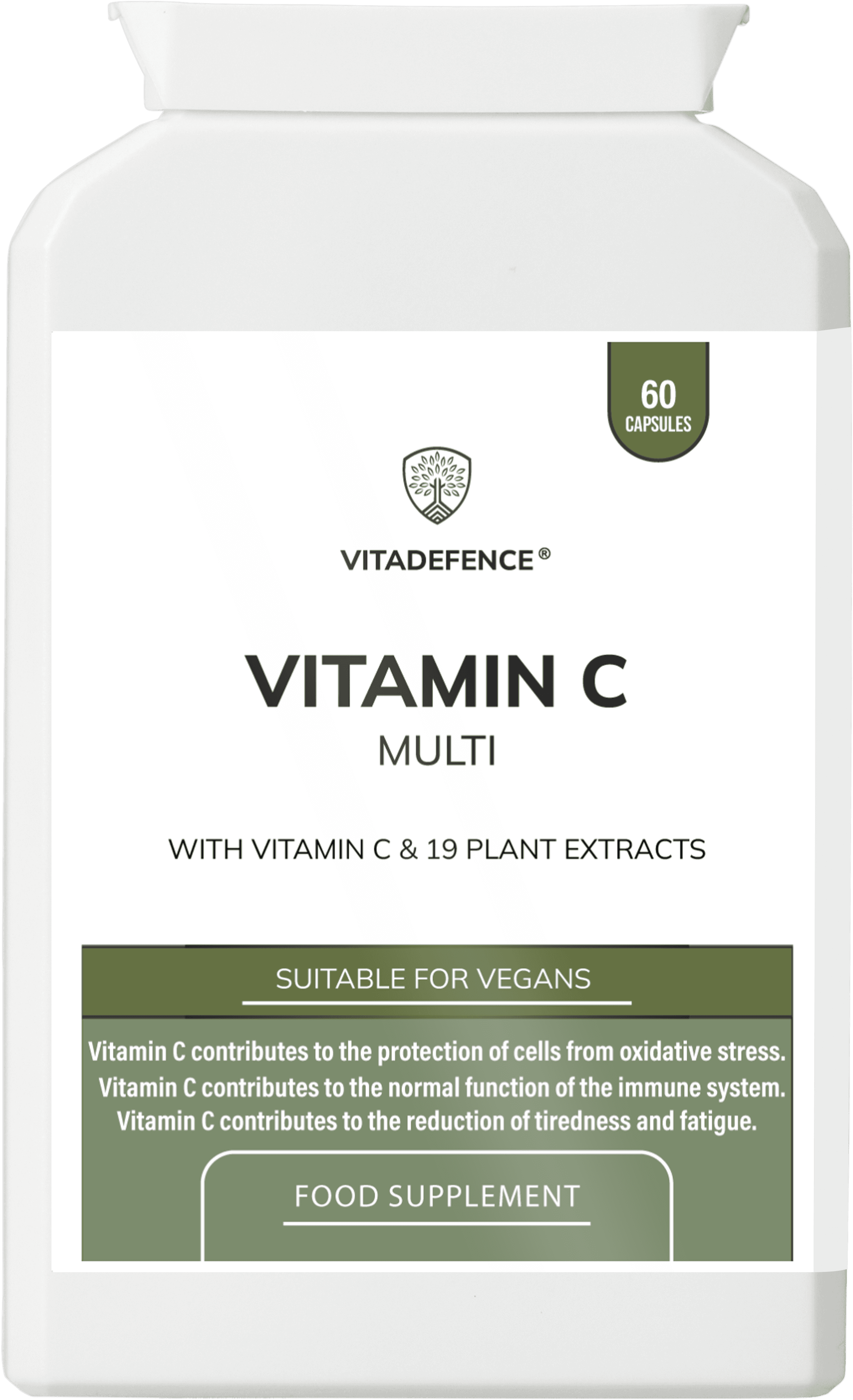
Vitamin C Multi — daily food-form C with 19 botanicals.This article is for informational purposes only and does not constitute medical advice. Vitadefence supplements are food supplements, not medicines. They should not be used as a substitute for a varied diet and a healthy lifestyle. Consult a healthcare professional if you are pregnant, breastfeeding, on medication, or have a medical condition.
Related products
More from the journal
Spirulina: The Original Superfood — Protein, B12, and Phycocyanin Antioxidant Power
9 min · Ingredients
Siberian Ginseng Benefits: Why This Adaptogen Is Different From Panax Ginseng
7 min · Ingredients