Acerola Cherry: The Vitamin C Powerhouse Most People Have Never Heard Of
By weight, acerola has 20 to 30 times the vitamin C of an orange — plus the bioflavonoids that help it work. Here's why it's the cleanest C top-up you can take.
By Vitadefence Team
You're trying to support your immune system, your skin, and your energy without rattling like a pill bottle every morning. You've heard "vitamin C" so many times it barely registers. Then you hear about acerola — a small Caribbean cherry that quietly outperforms every citrus fruit on the planet for vitamin C density. Here's why it deserves a place in your routine.
What is acerola?
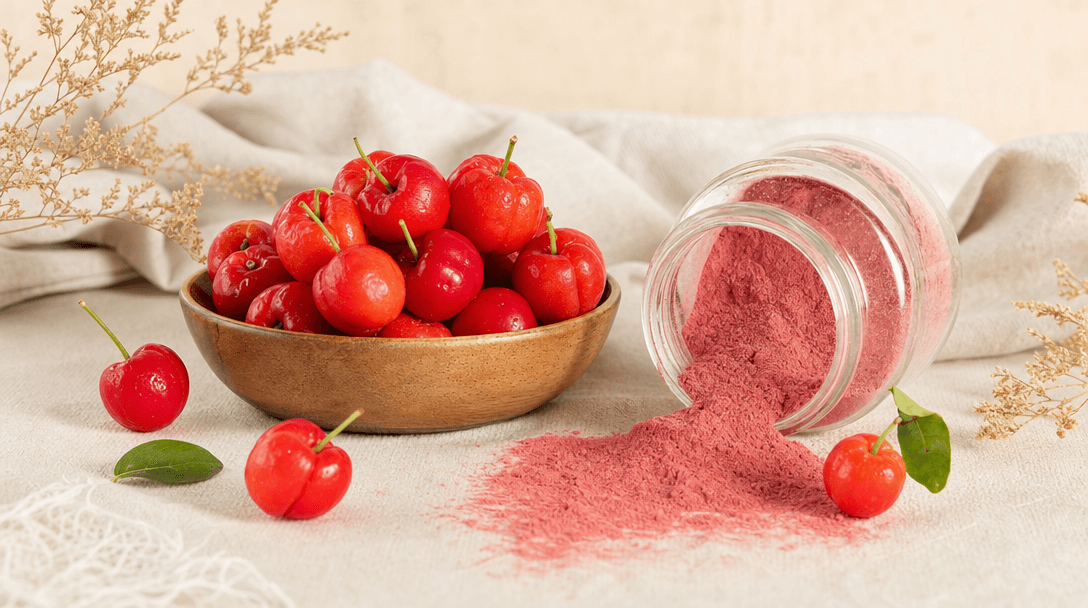
Acerola (Malpighia glabra or Malpighia emarginata) is a small red cherry-like fruit native to the Caribbean, southern Mexico, and Central and South America. It's also called Barbados cherry or West Indian cherry. The fruit looks similar to a European cherry but is slightly tarter and more delicate — which is why you rarely see it fresh in UK shops. It bruises easily and doesn't ship well, so most acerola reaches us as concentrated extract or powder.
The vitamin C story
By weight, fresh acerola contains roughly 1,500 to 4,500 mg of vitamin C per 100 g of fruit, depending on ripeness and variety. Oranges, by comparison, sit around 50 mg per 100 g. That's 20 to 30 times more vitamin C, or higher in unripe fruit. Acerola is one of the most concentrated natural sources of vitamin C known, second only to camu camu and a few exotic plums.
Why it's not "just synthetic vitamin C"
Synthetic ascorbic acid is identical to the vitamin C molecule found in food, and your body absorbs both. Where acerola differs is in the supporting cast. The whole-fruit extract delivers vitamin C alongside naturally occurring bioflavonoids (quercetin, hesperidin, anthocyanins), carotenoids, and trace minerals. These compounds aren't replacements for vitamin C — they're co-factors that historically appear together in food and may support the vitamin's biological activity.
Whether bioflavonoids meaningfully change vitamin C absorption is still debated in the literature. What's not debated: the food matrix is gentler on the stomach than pure ascorbic acid for many people, and you get a broader antioxidant profile in the same capsule.
What vitamin C does (briefly)
EFSA-approved health claims for vitamin C include contributions to:
- Normal collagen formation for skin, gums, bones, cartilage, teeth, and blood vessels
- Normal energy-yielding metabolism
- Normal function of the immune system
- Reduction of tiredness and fatigue
- Increased iron absorption
- Protection of cells from oxidative stress
(EU Regulation 432/2012)
Why pair it with bioflavonoids in the first place
Bioflavonoids in their own right are studied for capillary support, antioxidant activity, and skin health. Quercetin specifically (one of the flavonoids found in acerola) has accumulated a moderate evidence base for immune-modulating effects in seasonal challenges (Andres et al., 2018, review). Combining vitamin C with its natural co-passengers reflects how the nutrient appears in a balanced diet.
Who acerola suits
- People who get digestive upset from high-dose synthetic ascorbic acid.
- Anyone preferring a whole-food source of vitamin C in their daily stack.
- Active adults wanting both vitamin C and a small antioxidant boost.
- Vegetarians and vegans (acerola extract is plant-based and easy to source vegan).
How much do you need?
The UK reference intake for vitamin C is 80 mg per day. A standardised acerola extract typically delivers 60–250 mg of vitamin C per capsule, depending on concentration. One or two capsules daily covers most adults' needs comfortably. Smokers, people under heavy training load, and those recovering from illness sit at the higher end.
How to take it well
- With food. Vitamin C with iron-rich meals (especially plant iron) boosts absorption.
- Split doses if you take more than 250 mg — vitamin C plasma peaks quickly and falls.
- Daily, year-round rather than only during cold season. Consistent intake serves the body better than occasional megadoses.
- Store dry and dark. Vitamin C oxidises with heat and humidity. Keep the bottle out of the bathroom cabinet.
What to look for on the label
- Standardised extract — declares the % vitamin C content.
- Whole-fruit or whole-fruit equivalent rather than isolated compounds.
- No unnecessary fillers — magnesium stearate is fine in moderation; titanium dioxide and artificial colours aren't needed.
- UK or EU manufactured under GMP standards.
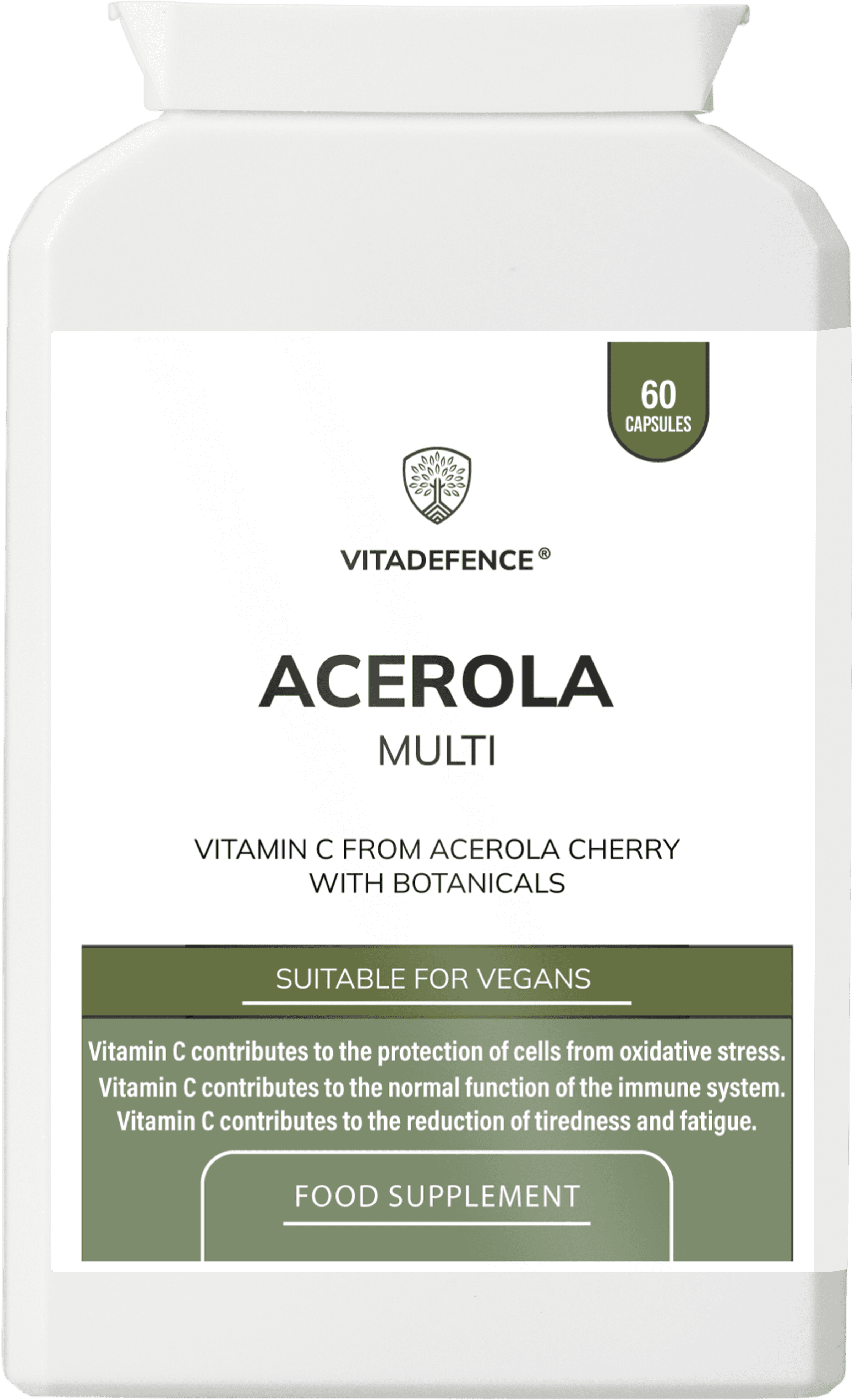
Our Acerola Multi uses standardised acerola extract paired with complementary botanicals for daily support.
What about a broader vitamin C formula?
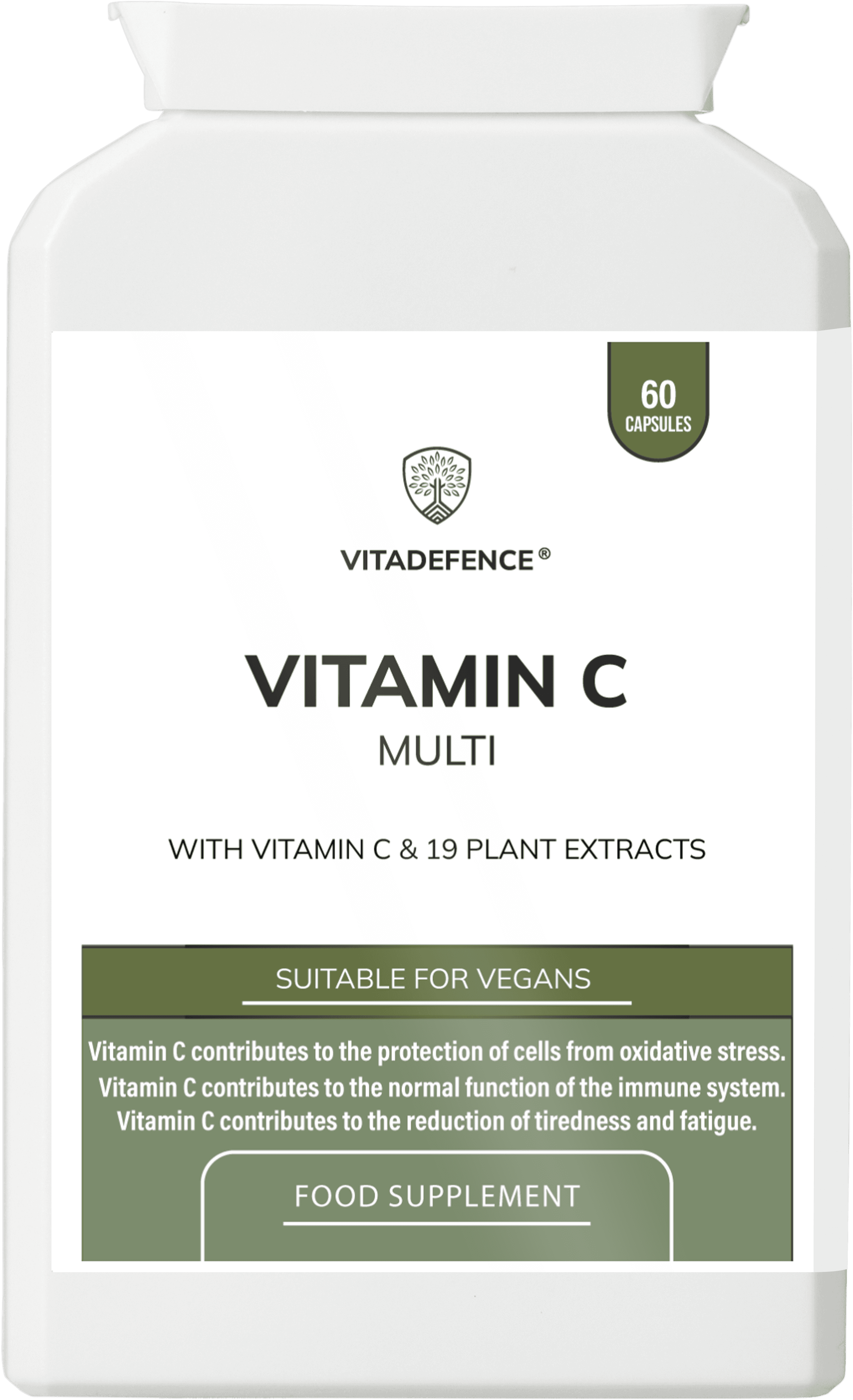
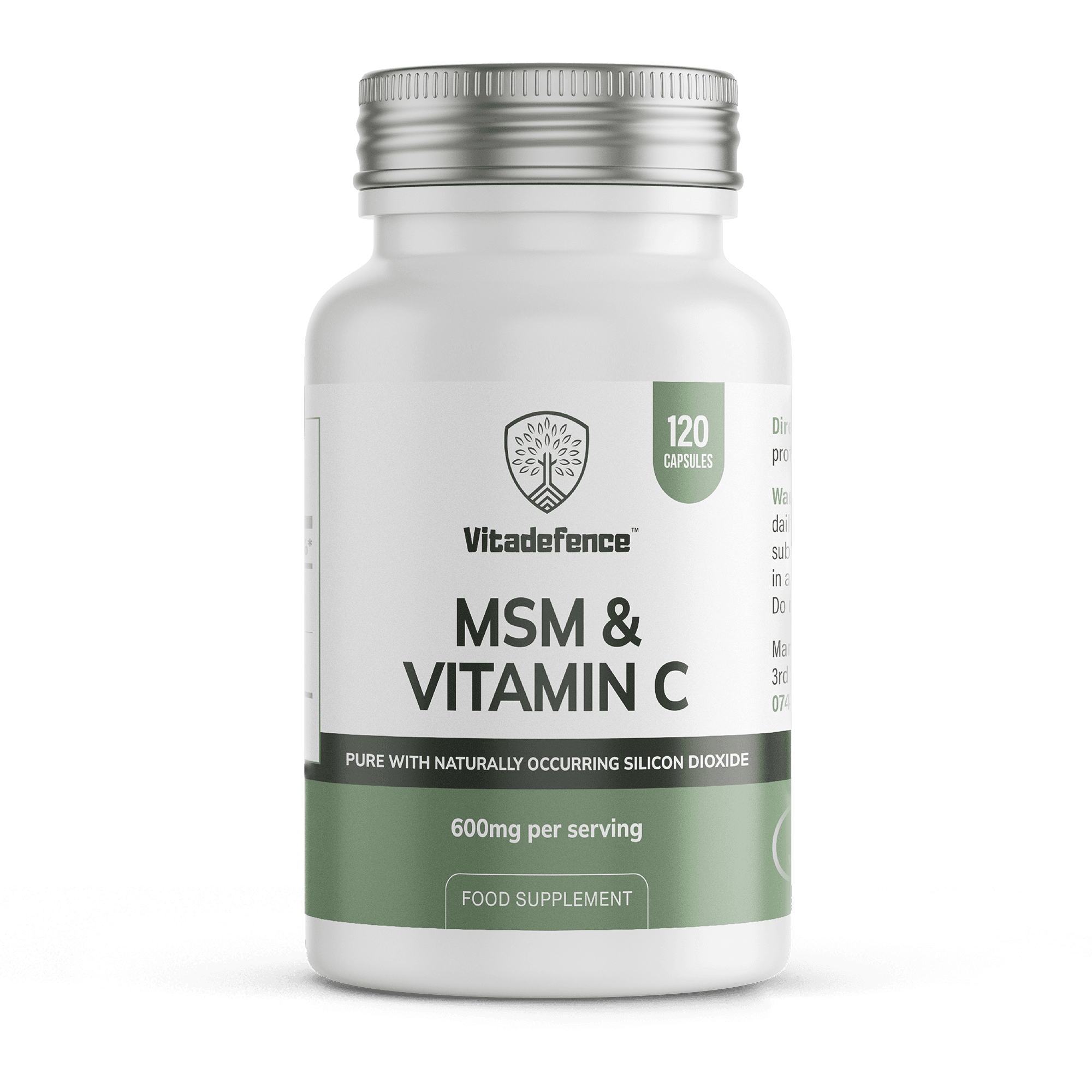
If you want vitamin C plus a wider botanical profile in one capsule, the Vitamin C Multi combines it with 19 added botanicals. If your priority is joints and skin, the MSM with Vitamin C pairs the two for connective-tissue support.
The takeaway
Acerola is a small fruit doing a big nutritional job. If you want vitamin C in a form closer to how the nutrient appears in food — alongside its natural bioflavonoid co-passengers — acerola extract is one of the cleanest, most concentrated options on the shelf. Take it daily, with food, and let it quietly support the basics.
Recommended for You
Acerola Multi — concentrated acerola berry with botanicals.This article is for informational purposes only and does not constitute medical advice. Vitadefence supplements are food supplements, not medicines. They should not be used as a substitute for a varied diet and a healthy lifestyle. Consult a healthcare professional if you are pregnant, breastfeeding, on medication, or have a medical condition.
Related products
More from the journal
Spirulina: The Original Superfood — Protein, B12, and Phycocyanin Antioxidant Power
9 min · Ingredients
Siberian Ginseng Benefits: Why This Adaptogen Is Different From Panax Ginseng
7 min · Ingredients