Bilberry and Lutein: Natural Eye Support for Screen-Heavy Lives
Modern eyes face hours of screen exposure daily. Bilberry anthocyanins and lutein are two compounds that nutrition researchers keep coming back to.
By Vitadefence Team

Modern life demands that many of us spend hours each day staring at screens. Whether for work, study, or leisure, this prolonged exposure to digital devices places consistent demands on the eyes. While the body has its own natural defences, nutritional support can play a meaningful role in maintaining eye comfort and function as we age. Among the most researched nutrients for eye health are bilberry, lutein, and zeaxanthin, alongside key mineral cofactors like zinc and selenium.
Understanding Blue Light and the Eye’s Natural Defences
Digital screens emit blue light, a high-energy wavelength that reaches deep into the eye. The body has evolved protective mechanisms, including pigments in the macula—the central part of the retina responsible for sharp vision. These pigments, primarily lutein and zeaxanthin, act as natural filters. They absorb blue light before it can reach sensitive photoreceptor cells. Research suggests that maintaining adequate levels of these carotenoids may support the eye’s resilience against everyday light exposure. It is important to note that no nutrient can entirely block blue light or reverse changes associated with ageing, but a diet rich in these compounds may contribute to long-term visual comfort.
Bilberry: A Rich Source of Anthocyanins
Bilberry, a close relative of the blueberry, has been used traditionally in Europe for various aspects of wellness. The fruit is particularly noted for its high concentration of anthocyanins, the pigments responsible for its deep purple colour. These compounds are associated with antioxidant activity, which may help protect cells from oxidative stress. In the context of eye health, some research indicates that bilberry extract may support the normal function of the microcirculation in the eye. This could be relevant for those who experience occasional eye fatigue or temporary visual discomfort after prolonged screen use. As with all botanicals, bilberry is best viewed as part of a broader nutritional strategy rather than a standalone remedy.
Lutein and Zeaxanthin: The Macular Pigments
Lutein and zeaxanthin are carotenoids that accumulate specifically in the macula. The body cannot produce them, so they must come from the diet or supplementation. These pigments form a dense, yellow shield that filters blue light and supports visual acuity. EU-authorised health claims state that lutein and zeaxanthin contribute to the maintenance of normal vision. Observational studies have linked higher dietary intakes of these carotenoids with better visual function in later life. For individuals with screen-heavy lifestyles, ensuring sufficient intake may be a sensible step to support the eyes’ natural defences against daily light exposure.
The Role of Zinc and Selenium as Cofactors
While lutein and bilberry often receive the most attention, mineral cofactors are equally important. Zinc is concentrated in the retina, where it plays a role in the metabolism of vitamin A, a nutrient essential for night vision. Zinc also contributes to the normal function of the immune system, which helps maintain overall eye health. Selenium, meanwhile, is a component of antioxidant enzymes that protect cells from oxidative damage. Together, zinc and selenium work synergistically with the carotenoids and anthocyanins to support the structural integrity of ocular tissues. A well-formulated supplement will often include these minerals in carefully measured amounts to complement the primary nutrients.
Integrating Eye Support into a Screen-Heavy Lifestyle
No single nutrient can compensate for poor screen habits, but a combination of bilberry, lutein, zeaxanthin, zinc, and selenium may help support the eyes during prolonged digital use. Alongside regular breaks, proper lighting, and the 20-20-20 rule—looking at something 20 feet away for 20 seconds every 20 minutes—nutritional support becomes a practical part of a broader eye-care routine. As with any supplement, it is wise to consult a healthcare professional, particularly if you are pregnant, taking anticoagulants, or managing a chronic condition. The goal is not to claim dramatic results, but to provide the body with the tools it needs to maintain normal visual function in the face of modern demands.
Recommended for You
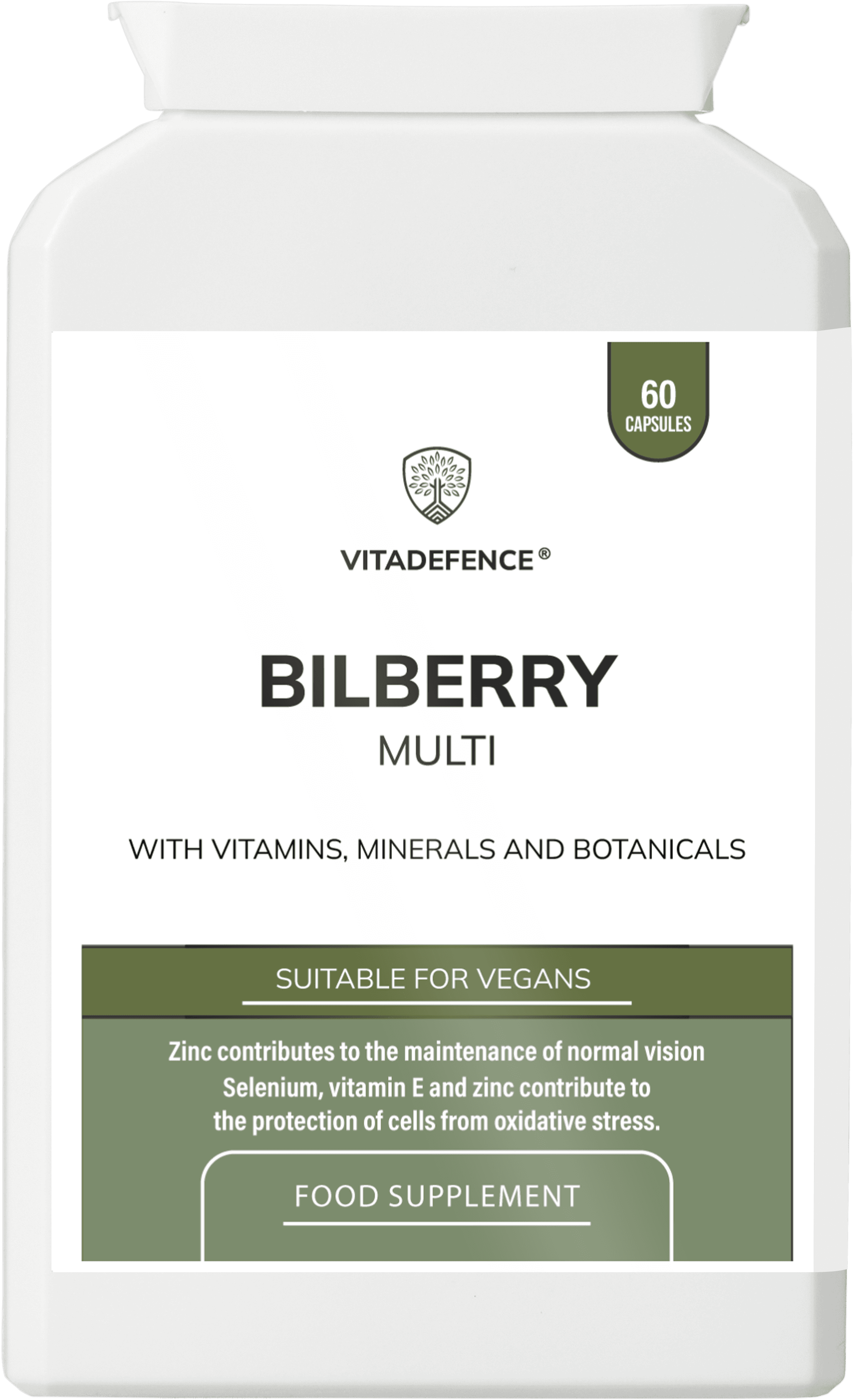
 Bilberry Multi — 60 Capsules">
Bilberry Multi — 60 Capsules
£14.49
Shop NowThis article is for informational purposes only and does not constitute medical advice. Vitadefence supplements are food supplements, not medicines. Consult a healthcare professional if you are pregnant, breastfeeding, on medication, or have a medical condition.
Related products
More from the journal
Spirulina: The Original Superfood — Protein, B12, and Phycocyanin Antioxidant Power
9 min · Ingredients
Siberian Ginseng Benefits: Why This Adaptogen Is Different From Panax Ginseng
7 min · Ingredients