How to Choose a Multivitamin: A Buyer's Guide That Actually Helps
If you've ever stood in front of 30 multivitamins and walked out empty-handed, this is for you. The nine checks that separate a good multi from a placebo with marketing.
By Vitadefence Team

You've been told by everyone — from your GP to your gym friend — that "you should probably take a multivitamin". Fine. You walk into the high street pharmacy, see 30 bottles, and walk out with whatever has the cheerful pensioner on the front. That decision was made by the marketing team, not by you. Here's how to actually pick one in five minutes.
Why the supermarket aisle is so confusing
Multivitamins range from £3 to £45 a bottle. The active-ingredient differences inside are real — but rarely advertised on the front. The label is where the truth lives, and once you know what to look for, the choice is fast.
The 9 checks (in priority order)
1. Active forms over cheap forms
This is the single biggest quality marker. Look for:
- Folate as methylfolate (5-MTHF or L-methylfolate) — not folic acid. A meaningful proportion of people carry MTHFR variants that reduce the conversion of folic acid to active folate.
- B12 as methylcobalamin or hydroxocobalamin — not cyanocobalamin. The active forms are usable immediately.
- Vitamin D as D3 (cholecalciferol) — not D2. D3 raises blood levels more effectively (Tripkovic et al., AJCN 2012).
- Vitamin K as K2 (MK-7) — for bone and cardiovascular support.
- Minerals as chelates or citrates — not oxides. Magnesium oxide, for instance, is poorly absorbed.
2. No mega-doses
A good multi sits at 100–200% of the EU NRV (Nutrient Reference Value) for most vitamins. Higher than that is wasted on water-soluble vitamins (you'll excrete it) and risky long-term for fat-soluble ones. The exception is vitamin D, where 25 mcg (1,000 IU) is sensible during UK winter months.
3. The full B-complex shows up
A multi that lists all eight B vitamins (B1, B2, B3, B5, B6, B7/biotin, B9/folate, B12) at meaningful percentages is doing the basics right. B vitamins are water-soluble, so the body needs a daily resupply.
4. The minerals you actually miss are present
UK survey data flags persistent shortfalls in magnesium, iron (especially women), iodine, and selenium. A formula that ignores these is a vitamin tablet, not a multi.
5. Transparent labelling — no proprietary blends
If the label says "Energy Complex 250 mg" without breaking down what's in it, walk away. You're paying for fairy dust. Every ingredient should be listed with its dose.
6. No unnecessary fillers
Some bulking agents are needed to make a tablet a tablet. But check for: titanium dioxide (banned as a food additive in the EU since 2022 but still in some non-EU stock), aspartame, artificial colours, and excessive magnesium stearate. Cleaner formulas use rice flour, microcrystalline cellulose, or HPMC capsule shells.
7. Vegan, vegetarian, halal, kosher — clearly stated
Capsule shells matter. HPMC (vegetable cellulose) capsules are vegan-friendly. Gelatine capsules are not. If you avoid gelatine for any reason, this should be on the front of the label, not buried.
8. Made in a GMP-certified UK facility
GMP (Good Manufacturing Practice) certification means the facility has documented procedures, batch testing, and traceability. UK-made supplements are produced under MHRA oversight and EU-aligned safety rules. Cheaper imported products may meet a different standard.
9. Demographic-appropriate
"One size fits all" multivitamins are a compromise. Women of reproductive age have different iron needs from post-menopausal women. Adults over 50 absorb B12 less efficiently. Athletes need more B vitamins and magnesium. A formula designed for your demographic will outperform a generic one.
The 60-second label scan
You don't need to read the back like a textbook. Run this checklist:
- D3, not D2 ✓
- Methylfolate, not folic acid ✓
- Methylcobalamin, not cyanocobalamin ✓
- Magnesium citrate or chelate, not oxide ✓
- Iron present (if relevant for you) ✓
- No proprietary blends ✓
- UK GMP-made ✓
If most of those tick, you're holding a real multivitamin. If most don't, put it back.
Bonus add-ons that earn their place
Premium multivitamins often include extras. The ones worth the upgrade:
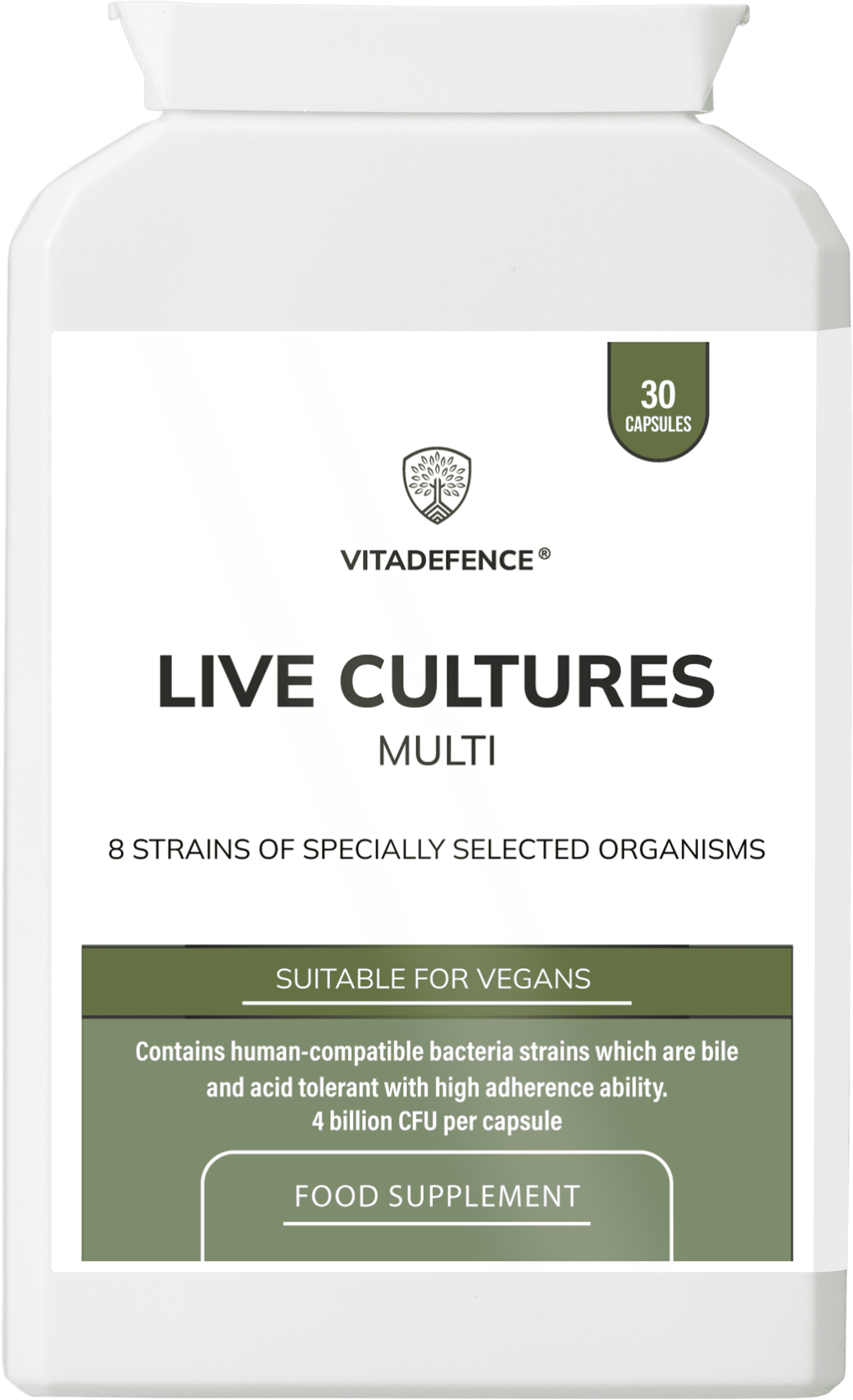
- Live cultures: support digestive comfort. Quality formulas like our Live Cultures Multi declare strain names and CFU counts.
- Botanical antioxidants: green tea, grape seed, turmeric — small additions that broaden the antioxidant profile.
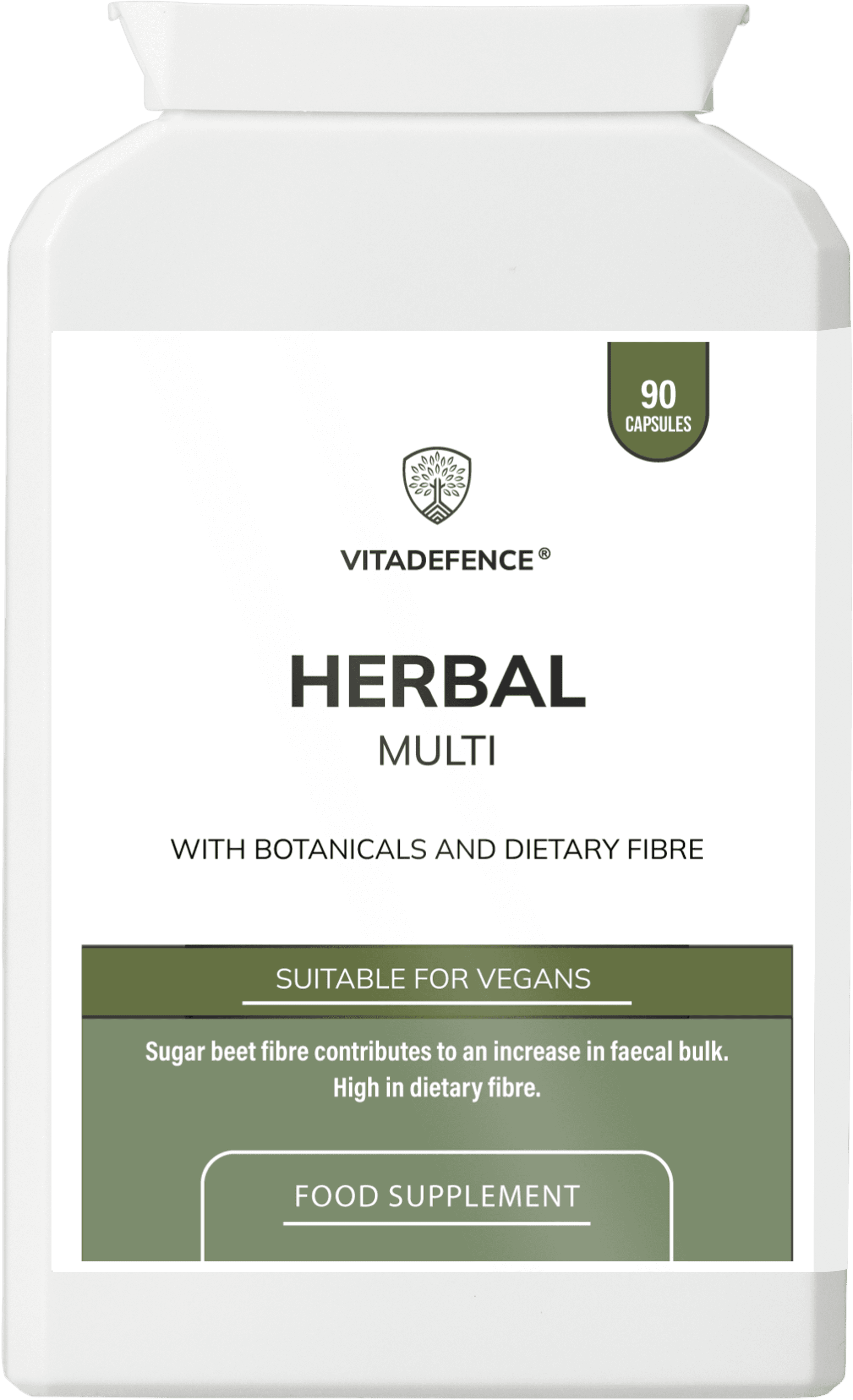
- Adaptogens or herbal blends: Eleuthero, ashwagandha, ginseng. The Herbal Multi packages these alongside the basics.
Our pick: a single capsule that does the basics well
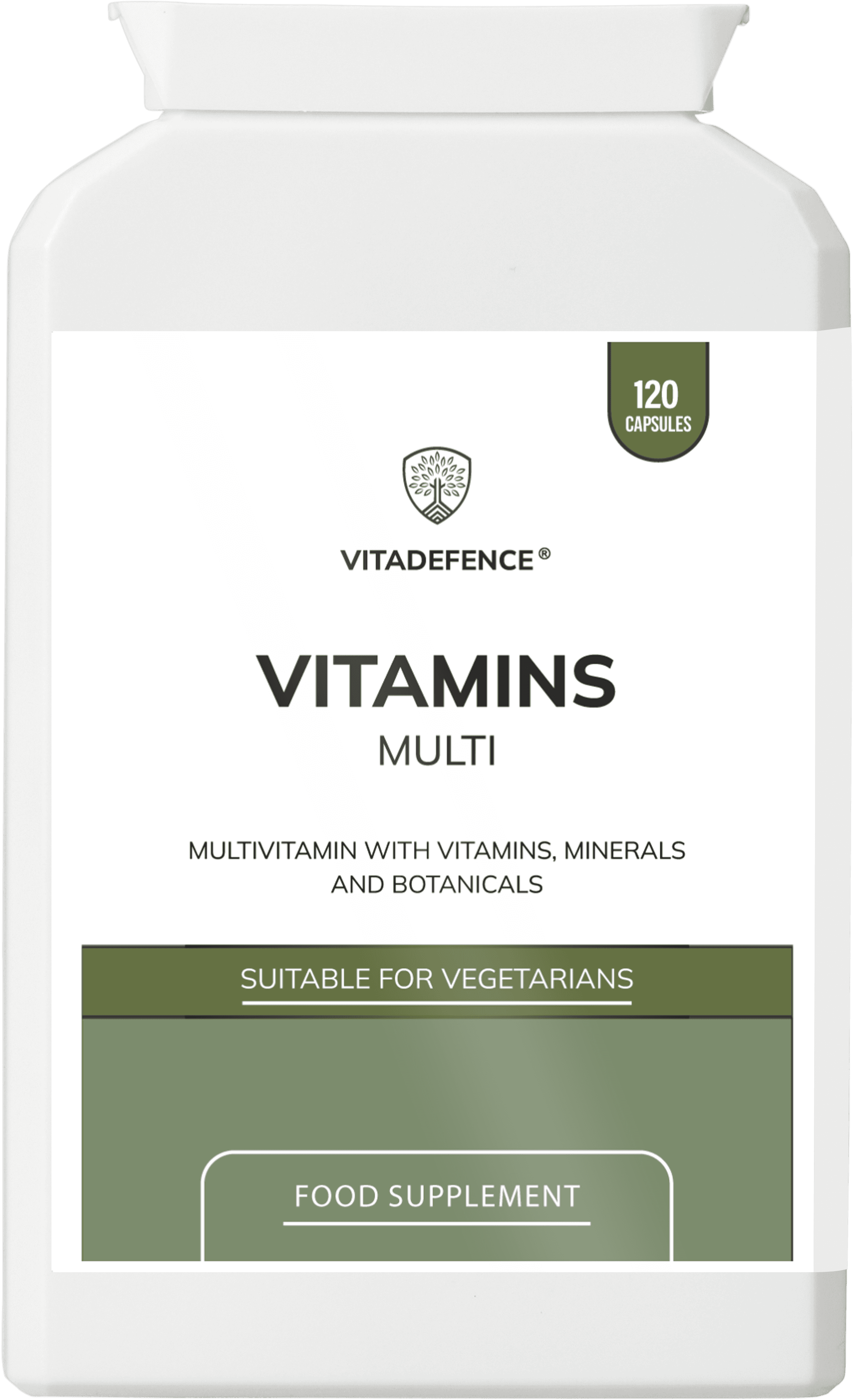
The Vitadefence Vitamins Multi is built around active forms (methylfolate, methylcobalamin, D3, K2-MK7), 23 essential nutrients at 100% NRV, added botanicals, live cultures, vegan HPMC capsules, and UK GMP manufacture. One capsule a day.
The takeaway
Picking a multivitamin should take five minutes, not five visits. Active forms over cheap forms, sensible doses, transparent labelling, GMP-made. Anything else is marketing.
Recommended for You
Vitamins Multi — 23 essentials in active forms, plus botanicals.This article is for informational purposes only and does not constitute medical advice. Vitadefence supplements are food supplements, not medicines. They should not be used as a substitute for a varied diet and a healthy lifestyle. Consult a healthcare professional if you are pregnant, breastfeeding, on medication, or have a medical condition.
Related products
More from the journal
Spirulina: The Original Superfood — Protein, B12, and Phycocyanin Antioxidant Power
9 min · Ingredients
Siberian Ginseng Benefits: Why This Adaptogen Is Different From Panax Ginseng
7 min · Ingredients