Lactobacillus vs Saccharomyces: Two Probiotic Categories Explained
Lactobacillus vs Saccharomyces: Two Probiotic Categories Explained. Evidence-led plain-English guide from Vitadefence UK.
By Vitadefence Team
Probiotics are not all the same. When you reach for a supplement to support digestive wellbeing, you are typically choosing between two distinct categories of live microorganisms: bacterial probiotics (like Lactobacillus) and yeast-based probiotics (like Saccharomyces boulardii). Understanding the differences between these two categories is essential for making an informed choice, as they work through entirely different mechanisms and suit different needs. This article compares Lactobacillus vs Saccharomyces, explaining the science, the practical applications, and who should consider each.
Background: The Two Worlds of Probiotics
The human gut hosts a complex ecosystem of bacteria, yeasts, and other microorganisms. Probiotic supplements aim to introduce beneficial live organisms to support this ecosystem. The vast majority of probiotics on the market are bacteria from the Lactobacillus and Bifidobacterium genera. However, a smaller but increasingly recognised category uses beneficial yeasts, primarily Saccharomyces boulardii and related strains.
Lactobacillus: The Bacterial Workhorse
Lactobacillus species are lactic acid bacteria naturally found in fermented foods like yoghurt, kefir, and sauerkraut. They are among the most researched probiotics, with a long history of safe use. These bacteria produce lactic acid, which helps maintain an acidic environment in the gut that is inhospitable to many harmful bacteria. According to the EU Register of Nutrition and Health Claims, Lactobacillus strains are associated with claims such as "live yoghurt cultures improve lactose digestion in individuals who have difficulty digesting lactose" (EFSA Journal, 2010). However, it is important to note that no specific strain-specific health claims for disease treatment are authorised under EU Regulation 1924/2006; any benefits are context-dependent and strain-specific.
A 2015 meta-analysis in Critical Reviews in Food Science and Nutrition (PubMed ID: 24915399) found that certain Lactobacillus strains, particularly L. rhamnosus GG and L. plantarum, showed promise in reducing the duration of antibiotic-associated diarrhoea and supporting general digestive comfort. Typical daily doses in clinical studies range from 1 billion to 10 billion CFU (colony-forming units).
Saccharomyces: The Yeast Alternative
Saccharomyces boulardii is a non-pathogenic yeast originally isolated from lychee and mangosteen fruit in Southeast Asia. Unlike bacterial probiotics, it is a fungus, not a bacterium. This distinction matters because yeasts are naturally resistant to antibiotics—they do not have bacterial cell walls that antibiotics target. This makes S. boulardii particularly useful during and after antibiotic courses, as it can survive the treatment while bacterial probiotics may be destroyed.
Research published in Alimentary Pharmacology & Therapeutics (PubMed ID: 15765388) demonstrated that S. boulardii can help reduce the risk of antibiotic-associated diarrhoea and Clostridium difficile infection recurrence. The yeast works by producing proteases that break down bacterial toxins, stimulating immune responses, and competing with pathogenic microorganisms for adhesion sites. Typical doses in clinical studies range from 250 mg to 500 mg per day (approximately 5–10 billion CFU).
The Science: How They Differ Mechanistically
Survival Through the Gut
Lactobacillus bacteria are sensitive to stomach acid, bile salts, and heat. Many strains require enteric coating or specific delivery systems to survive transit through the stomach. In contrast, Saccharomyces yeasts are more robust—they tolerate acidic environments, bile, and higher temperatures. This resilience means yeast probiotics often have a longer shelf life and do not require refrigeration, though stability depends on the specific formulation.
Interaction with the Gut Microbiome
Lactobacillus species colonise the gut temporarily, producing lactic acid and other metabolites that modulate the local environment. They can also interact directly with gut-associated lymphoid tissue, influencing immune responses. Saccharomyces does not permanently colonise the gut; it passes through, exerting its effects via transient interactions. This transient nature is actually an advantage in some contexts, as it reduces the risk of overgrowth or imbalance.
Antibiotic Resistance
This is the most practical difference. If you are taking antibiotics, Lactobacillus probiotics may be killed by the same antibiotics. While some strains are resistant to certain antibiotics, this is not universal. Saccharomyces boulardii, being a yeast, is naturally resistant to antibacterial antibiotics, making it the preferred choice during antibiotic therapy. A 2017 review in Nutrients (PubMed ID: 28509862) confirmed that S. boulardii remains viable during antibiotic treatment, whereas bacterial probiotics often show reduced efficacy.
Practical Guidance: When to Use Each
Lactobacillus is Best For:
- General digestive support – For people with mild bloating, irregularity, or post-meal discomfort, a multi-strain Lactobacillus probiotic can help rebalance gut flora.
- Lactose digestion – As authorised by the EU Register, live yoghurt cultures containing Lactobacillus can aid lactose digestion in those with lactose intolerance.
- Vaginal health – Certain Lactobacillus species (e.g., L. rhamnosus, L. reuteri) have been studied for maintaining urogenital flora balance.
- Everyday gut maintenance – For long-term use in healthy individuals, a well-formulated bacterial probiotic can support a diverse microbiome.
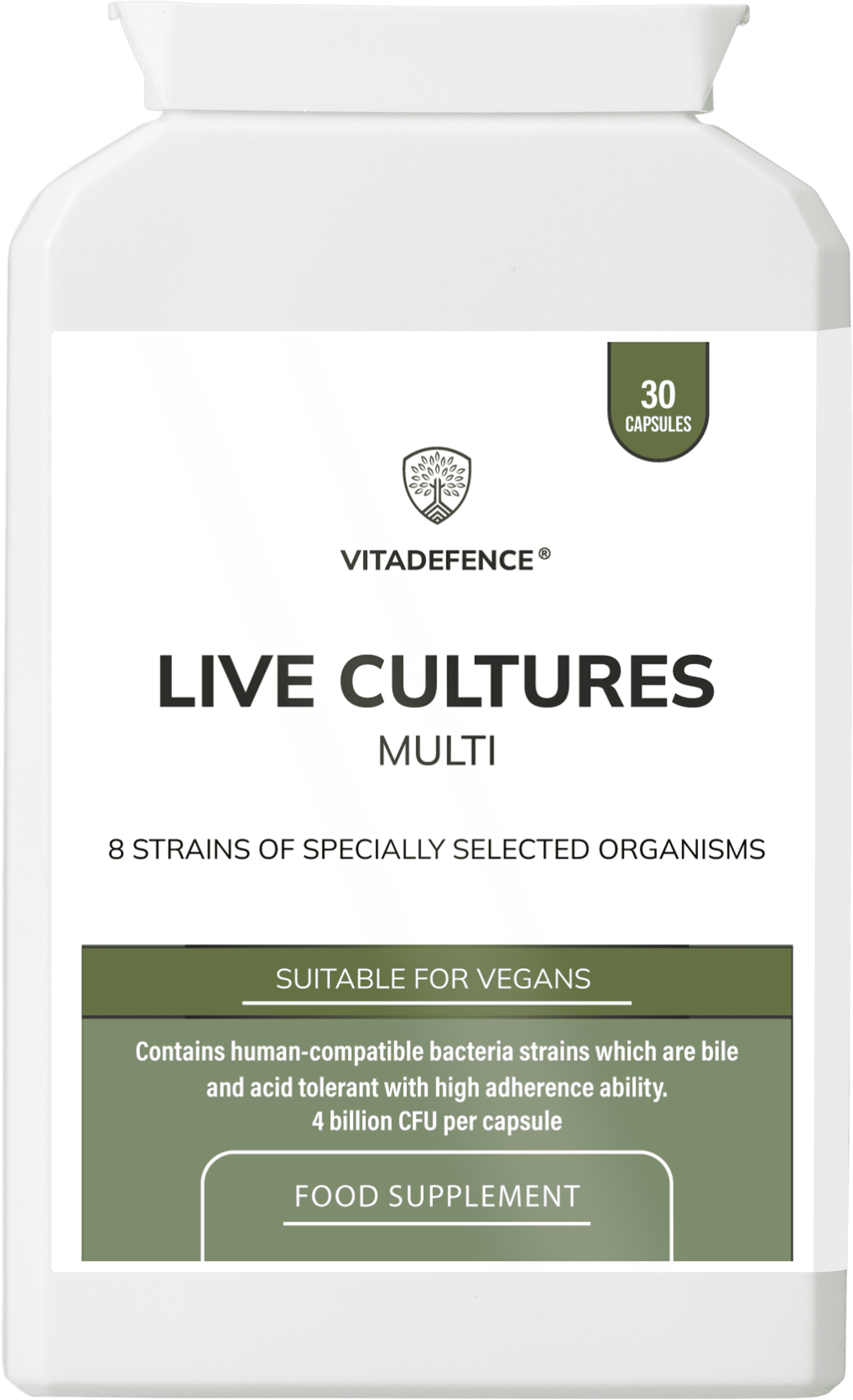
For a high-quality multi-strain bacterial option, consider Vitadefence Live Cultures Multi, which contains a blend of Lactobacillus and Bifidobacterium strains in HPMC capsules.
Saccharomyces is Best For:
- Antibiotic-associated diarrhoea – S. boulardii is the most evidence-backed probiotic for this specific indication.
- Travel-related digestive issues – Its resilience and broad-spectrum pathogen interference make it useful for travellers.
- Post-antibiotic recovery – After a course of antibiotics, Saccharomyces can help repopulate the gut without competing with bacterial probiotics that may have been affected.
- Those who do not tolerate bacterial probiotics – Some individuals experience bloating or gas from bacterial probiotics; yeast-based options are often better tolerated.
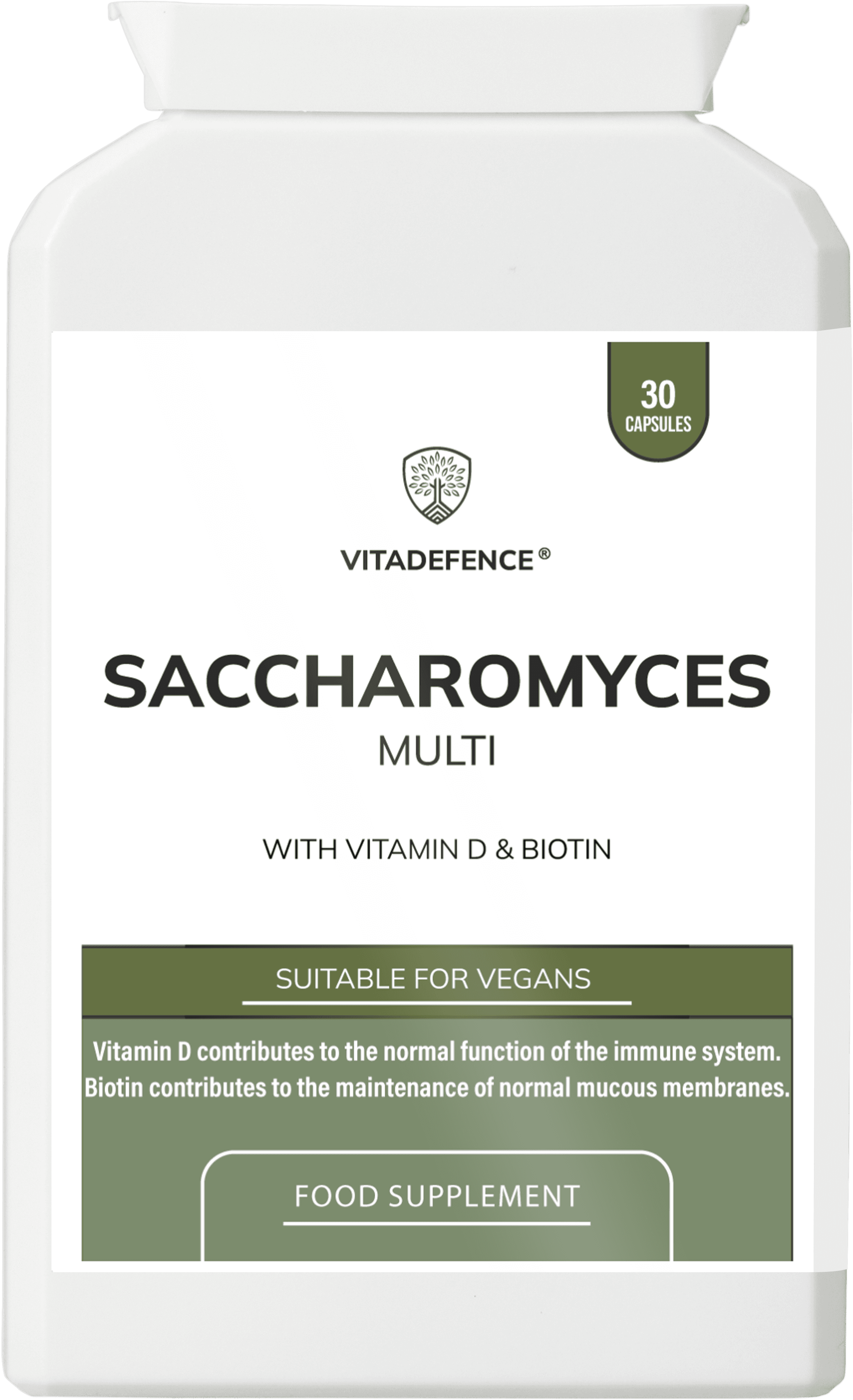
Explore our Saccharomyces Multi supplement, specifically formulated for use during and after antibiotic treatments.
Who It’s For: Matching the Probiotic to the Person
Healthy Adults Seeking General Wellness
For most healthy adults, a multi-strain bacterial probiotic like Lactobacillus is a sensible choice for everyday gut health. It supports digestion, nutrient absorption, and immune function (within the bounds of authorised claims). Our Wellness Bundles combine bacterial probiotics with complementary nutrients for a comprehensive approach.
Individuals on Antibiotics
If you are currently taking antibiotics or have recently completed a course, Saccharomyces boulardii is the more logical choice. It can be taken alongside antibiotics without being destroyed. Once the course finishes, you can transition to a bacterial probiotic to help restore diversity. Always consult a healthcare professional before starting any supplement during medical treatment.
Travellers and Those with Sensitive Guts
For travellers, Saccharomyces offers convenience—no refrigeration needed—and robust protection against pathogenic bacteria commonly encountered in food and water. For those who find bacterial probiotics cause initial bloating or gas, starting with a yeast-based option can be a gentler introduction.
Who Should Be Cautious
Immunocompromised Individuals
Both bacterial and yeast probiotics carry a theoretical risk of causing infections in severely immunocompromised individuals (e.g., those undergoing chemotherapy, organ transplant recipients, people with HIV/AIDS). Saccharomyces has been associated with fungemia (yeast in the bloodstream) in rare cases in critically ill patients. If you have a compromised immune system, consult your doctor before using any probiotic.
Those with Central Venous Catheters
Hospitalised patients with central lines should avoid Saccharomyces due to the risk of catheter-related infections. This is a rare but serious concern.
People with Yeast Allergies
Individuals with known allergies to yeast (e.g., baker’s yeast) should avoid Saccharomyces probiotics and stick to bacterial options.
Infants and Young Children
Probiotics for infants should only be used under paediatric guidance. While Lactobacillus strains like L. reuteri have been studied in infants, Saccharomyces is generally not recommended for children under two years without medical advice.
Frequently Asked Questions
Can I take Lactobacillus and Saccharomyces together?
Yes, it is generally safe to take both types together, as they occupy different niches and do not compete directly. In fact, some formulations combine bacterial and yeast probiotics for broad-spectrum support. However, if you are on antibiotics, taking them together may be less effective for the bacterial component, as the antibiotics may kill the Lactobacillus. For best results, take Saccharomyces during antibiotics and add bacterial probiotics after the course ends.
Which probiotic is better for bloating?
For bloating, Lactobacillus strains like L. plantarum and L. acidophilus have shown benefit in clinical studies. However, some people experience initial bloating when starting bacterial probiotics due to gas production during fermentation. Saccharomyces is less likely to cause this side effect and may be a better starting point for sensitive individuals. Read our full comparison on the blog for more details.
Do I need to refrigerate Saccharomyces?
No, Saccharomyces boulardii is naturally heat-stable and does not require refrigeration. This makes it ideal for travel. Bacterial probiotics, including Lactobacillus, often require refrigeration for maximum potency, though some modern formulations are freeze-dried and stable at room temperature. Always check the label. Vitadefence products are manufactured to be stable at room temperature.
How long should I take a probiotic?
For acute issues like antibiotic-associated diarrhoea, a course of 2–4 weeks is typical. For general digestive health, many people take probiotics long-term (months to years) as part of their wellness routine. There is no evidence that long-term use is harmful for healthy individuals. However, it is wise to cycle probiotics occasionally (e.g., take a one-week break every few months) to allow the gut to maintain its own balance.
Can probiotics cause side effects?
Yes, mild side effects can occur, especially when first starting. These include gas, bloating, and changes in bowel movements. These typically resolve within a few days. Saccharomyces is generally very well tolerated, with fewer side effects than bacterial probiotics. Serious side effects are extremely rare in healthy individuals.
Which probiotic is best for travellers’ diarrhoea?
Saccharomyces boulardii has the strongest evidence for preventing travellers’ diarrhoea. A 2017 meta-analysis in Travel Medicine and Infectious Disease (PubMed ID: 28315743) found that S. boulardii reduced the risk by approximately 21%. Lactobacillus strains may also help, but the evidence is less consistent. For travel, we recommend Saccharomyces Multi due to its stability and targeted action.
How Vitadefence Does It
At Vitadefence UK, we believe in transparency and quality. Our probiotic supplements are manufactured in GMP-certified facilities in the United Kingdom, ensuring strict quality control from raw material to finished product. We use HPMC (hydroxypropyl methylcellulose) capsules, which are plant-based, non-GMO, and suitable for vegetarians and vegans. Unlike many brands, we do not use proprietary blends—our labels clearly state the exact strains and CFU counts per capsule, so you know exactly what you are taking.
All our products are made in the UK under GMP certification (ISO 22000:2018 compliant). We offer free Royal Mail Tracked 48 delivery on all orders within the UK, with no minimum spend. For full details, see our shipping information. We are registered with the Information Commissioner’s Office (ICO ZC106169) and comply with all UK and EU supplement regulations.
Bottom Line
Choosing between Lactobacillus and Saccharomyces depends on your specific needs. If you are looking for everyday digestive support and are not on antibiotics, a multi-strain bacterial probiotic like our Live Cultures Multi is an excellent choice. If you are taking antibiotics, travelling, or have a sensitive gut, Saccharomyces Multi offers a robust, evidence-backed alternative. Both categories have a strong scientific foundation, and understanding their differences empowers you to make the right choice for your health.
Browse our full range of probiotics and read verified customer reviews to see what works for others. For a comprehensive gut health approach, explore our bundles that combine probiotics with complementary supplements.
This article is for educational purposes only and does not constitute medical advice. The information provided is based on published scientific literature and EU-authorised health claims as of 2025. Probiotic supplements are not intended to diagnose, treat, cure, or prevent any disease. Always consult a qualified healthcare professional before starting any new supplement, especially if you are pregnant, nursing, have a medical condition, or are taking medication. Individual results may vary.
Related products
More from the journal
Spirulina: The Original Superfood — Protein, B12, and Phycocyanin Antioxidant Power
9 min · Ingredients
Siberian Ginseng Benefits: Why This Adaptogen Is Different From Panax Ginseng
7 min · Ingredients