Omega-3 EPA vs DHA: Which Ratio Matters for Your Goal
EPA and DHA have distinct roles in the body. Discover which ratio supports your health goals based on peer-reviewed research.
By Vitadefence Team
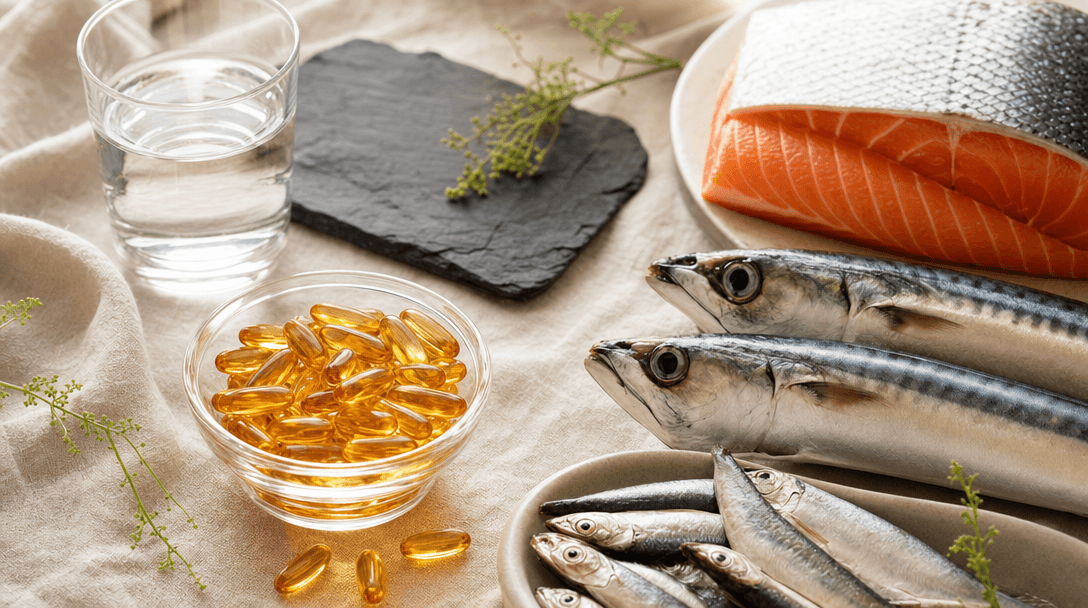
You've probably heard that omega-3s are essential for health, but not all omega-3s are created equal. The two most important types — EPA (eicosapentaenoic acid) and DHA (docosahexaenoic acid) — have distinct roles in the body. So which ratio actually matters for your goal? Let's look at what the science says.
Why EPA and DHA Are Different
Both EPA and DHA are long-chain omega-3 fatty acids found in fish and algae. But they behave differently once inside your body.
- EPA is primarily involved in producing signalling molecules called eicosanoids, which help regulate inflammation and immune function. It's also a precursor to resolvins, compounds that actively resolve inflammation.
- DHA is a major structural component of cell membranes, especially in the brain and retina. It supports neuronal function, synaptic plasticity, and visual development.
Because of these differences, the ideal ratio of EPA to DHA depends on what you're trying to achieve.
EPA-DHA Ratio for Inflammation and Joint Health
If your goal is to reduce systemic inflammation or support joint health, a higher proportion of EPA appears to be more effective. A 2020 meta-analysis of randomised controlled trials found that supplements with at least 2:1 EPA to DHA significantly reduced markers of inflammation like C-reactive protein (CRP) and interleukin-6 (IL-6) (PubMed).
Another study in patients with rheumatoid arthritis showed that those taking a high-EPA formula (EPA:DHA ratio > 2:1) experienced greater reductions in joint pain and stiffness compared to those taking a balanced ratio (PubMed).
The mechanism is clear: EPA outcompetes arachidonic acid (an omega-6) for enzymes that produce inflammatory eicosanoids, shifting the balance towards less inflammation.
EPA-DHA Ratio for Brain Health and Mood
For cognitive function and mood support, both fatty acids matter, but EPA may have a slight edge in certain conditions. A 2019 meta-analysis of 26 trials found that supplements containing at least 60% EPA (i.e., EPA:DHA ratio > 1.5:1) were more effective than those with lower EPA for reducing depressive symptoms (PubMed).
However, DHA is crucial for brain structure. The brain is about 60% fat, and DHA makes up a large portion of neuronal membranes. Low DHA levels are linked to faster cognitive decline in older adults (PubMed).
So for general brain health, a balanced ratio (around 1:1 to 2:1 EPA:DHA) may be optimal. For mood disorders, leaning towards higher EPA seems beneficial.
EPA-DHA Ratio for Heart Health
Cardiovascular benefits of omega-3s are well established, but the ideal ratio is less clear. The landmark REDUCE-IT trial used a high-purity EPA ethyl ester (not DHA) and found a 25% reduction in major cardiovascular events (PubMed). However, other studies using combined EPA+DHA have also shown benefits.
A 2021 review concluded that both EPA and DHA contribute to heart health through different mechanisms: EPA improves plaque stability and reduces inflammation, while DHA lowers triglycerides and blood pressure (PubMed). For most people, a ratio of 1:1 to 2:1 EPA:DHA appears sufficient for cardiovascular protection.
EPA-DHA Ratio for Pregnancy and Child Development
During pregnancy and breastfeeding, DHA takes centre stage. The developing brain and eyes require large amounts of DHA. The World Health Organization recommends pregnant women consume at least 200 mg DHA daily. EPA is also important, but DHA is the priority.
Most prenatal supplements provide a ratio of 1:1 or slightly higher DHA. Studies show that higher maternal DHA intake is associated with better cognitive and visual outcomes in children (PubMed).
How to Choose the Right Ratio for You
Here's a simple guide based on your primary goal:
- Inflammation or joint pain: Look for an EPA:DHA ratio of at least 2:1, ideally 3:1.
- Mood support: Aim for >60% EPA (ratio >1.5:1).
- General health and heart: A balanced 1:1 to 2:1 ratio works well.
- Pregnancy or brain development: Prioritise DHA; a ratio of 1:1 or higher DHA is fine.
Also consider the total dose. Most studies use 1–3 g of combined EPA+DHA per day. More is not always better; high doses can thin blood, so consult a healthcare professional if you're on medication.
Bottom line
EPA and DHA are not interchangeable. The right ratio depends on your health goal. For inflammation and mood, lean towards more EPA. For brain development and general health, a balanced ratio or higher DHA is appropriate. Check the label of your supplement to see the exact amounts of EPA and DHA — not just total omega-3 — and choose a ratio that aligns with your needs. As always, talk to your doctor before starting any new supplement regimen.
More from the journal
Spirulina: The Original Superfood — Protein, B12, and Phycocyanin Antioxidant Power
9 min · Ingredients
Siberian Ginseng Benefits: Why This Adaptogen Is Different From Panax Ginseng
7 min · Ingredients