
The Supplement Stack for Busy People Who Want Real Results
If your mornings are already a sprint, you don't need eight bottles. A sensible stack covers four bases: a multi, omega-3, an adaptogen, and magnesium.
By Vitadefence Team

You skipped breakfast again. Lunch happened at the desk. By 3pm you're pouring a coffee just to get through the call you booked for 4. Sound familiar? Most "supplement stacks" online assume you have an hour every morning to weigh powders. You don't. So this one is built for the way you actually live: small, consistent, and aimed at the four jobs that matter most.
Why bother with a stack at all?
If your diet were perfect, your sleep eight hours, and your stress dialled down — you probably wouldn't need much. But the National Diet and Nutrition Survey (Public Health England, rolling data) repeatedly shows that British adults fall short on magnesium, vitamin D, omega-3, and several B vitamins. Busy weeks make this worse: takeaways replace home-cooked meals, sleep gets cut, caffeine goes up. A simple stack is insurance against the gaps you already know are there.
The point isn't to take more pills. It's to take the right four.
The four jobs to cover
Think of your body's daily admin. Energy production, brain function, recovery, and stress resilience. Each has a nutritional foundation that's easy to undermine and easy to support.
Job 1 — A high-quality multivitamin (covers the gaps)
A daily multivitamin is the cheapest insurance policy in nutrition. It won't replace a vegetable, but it makes a busy week less risky. Look for active forms (methylfolate over folic acid, methylcobalamin over cyanocobalamin), vitamin D3 instead of D2, and chelated minerals. Skip the mega-doses and proprietary blends.
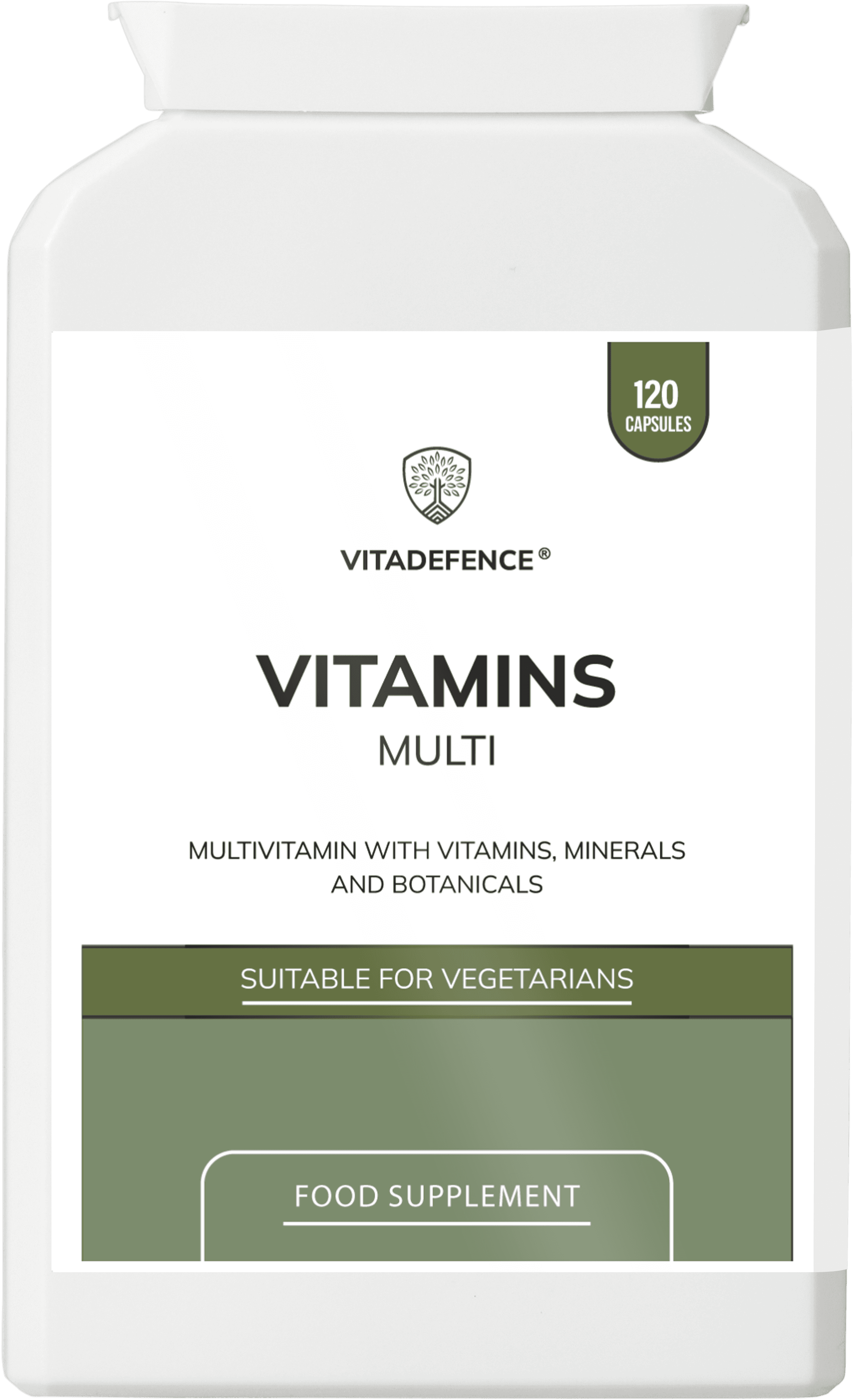
Our Vitamins Multi bundles 23 essentials with added botanicals and live cultures, designed as a single morning capsule.
Job 2 — Omega-3 (brain and heart)
The European Food Safety Authority recognises that EPA and DHA contribute to normal heart function (250 mg combined, daily). Most UK adults eat less than one portion of oily fish per week — well below the two portions recommended. An omega-3 capsule closes that gap without changing your weekly shop.
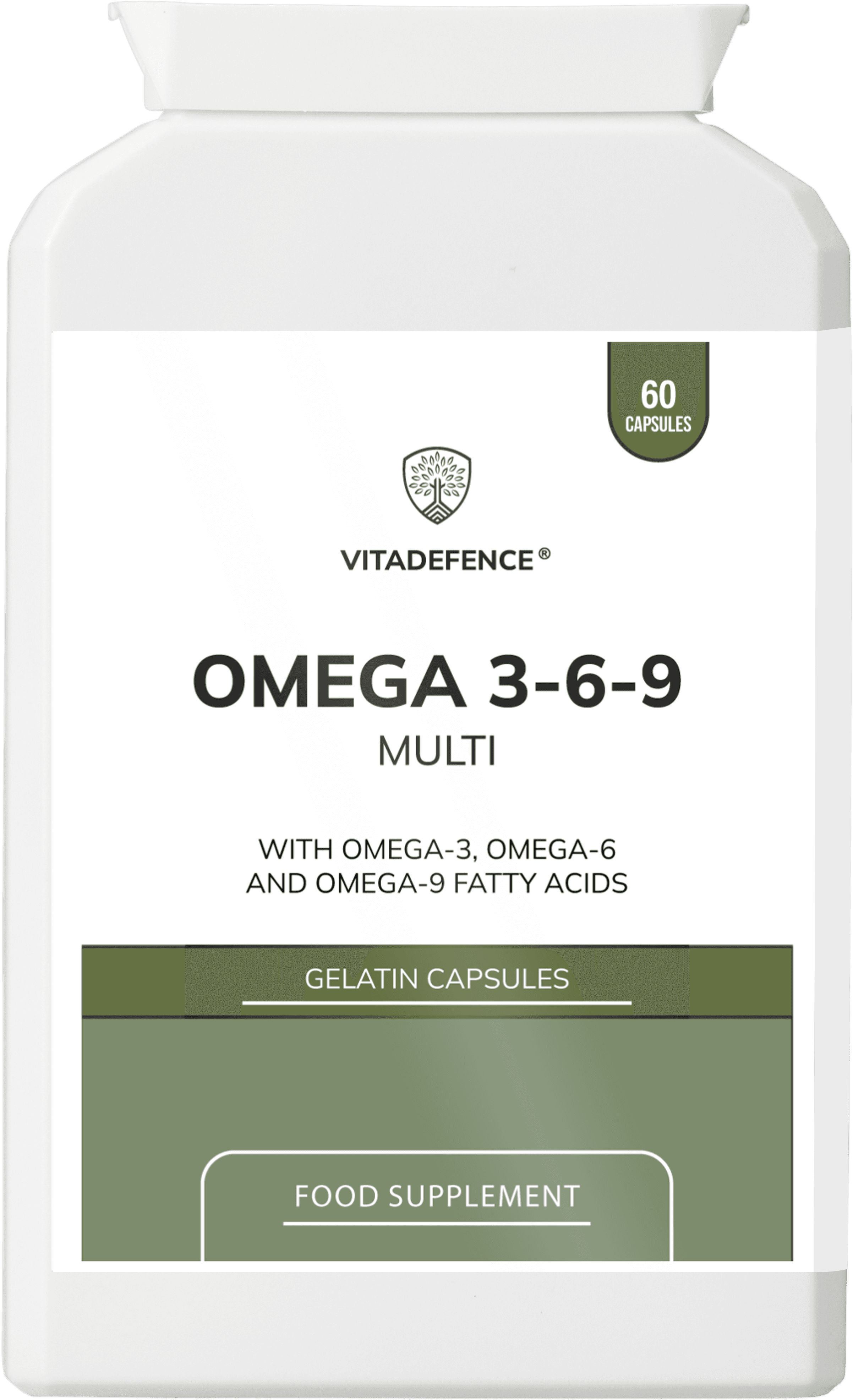
Look for triglyceride-form fish oil with a clear EPA/DHA breakdown, plus an antioxidant (vitamin E) to keep the oil stable. The Omega 3-6-9 Multi blends fish, flaxseed, and sunflower oils for a full essential-fatty-acid profile.
Job 3 — An adaptogen (for the stress that won't quit)
Adaptogens are herbs traditionally used to help the body cope with mental and physical stress. Siberian Ginseng (Eleutherococcus senticosus) has the longest record of use in this category — Russian sports medicine studied it through the mid-20th century and it remains in modern herbal pharmacopoeias. A small body of human trials (Hartz et al., 2004; Kuo et al., 2010) reports modest improvements in fatigue and perceived stamina, though larger studies are still needed.
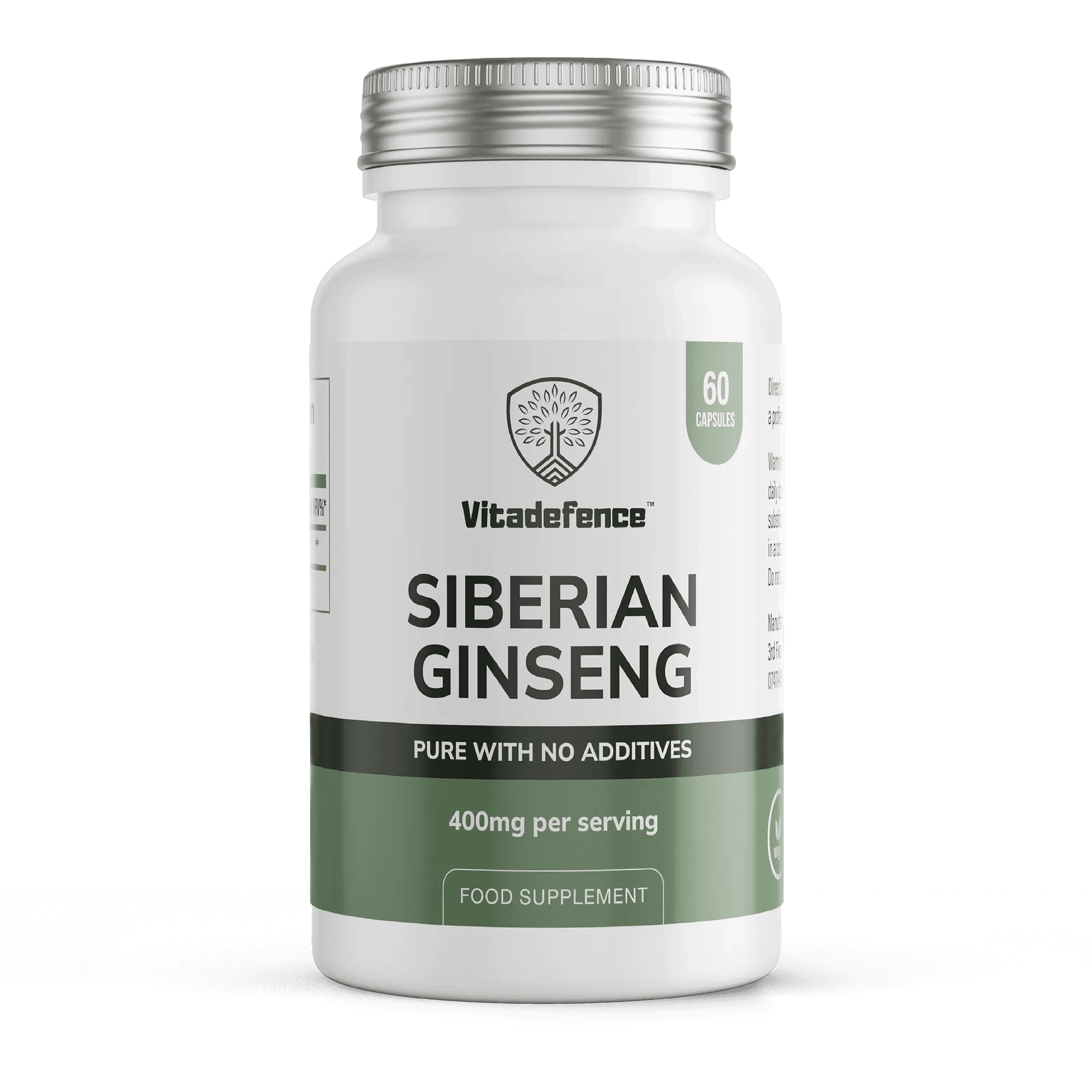
Our Siberian Ginseng capsules use a standardised root extract for daily morning use.
Job 4 — Magnesium (sleep and recovery)
Magnesium contributes to normal muscle function, normal nervous-system function, and a reduction in tiredness and fatigue (EFSA-approved health claims, Reg. 432/2012). It's one of the minerals where intake data consistently shows shortfalls — and one of the easiest to remedy with a single evening capsule. Magnesium glycinate or citrate are gentler on the stomach than oxide.
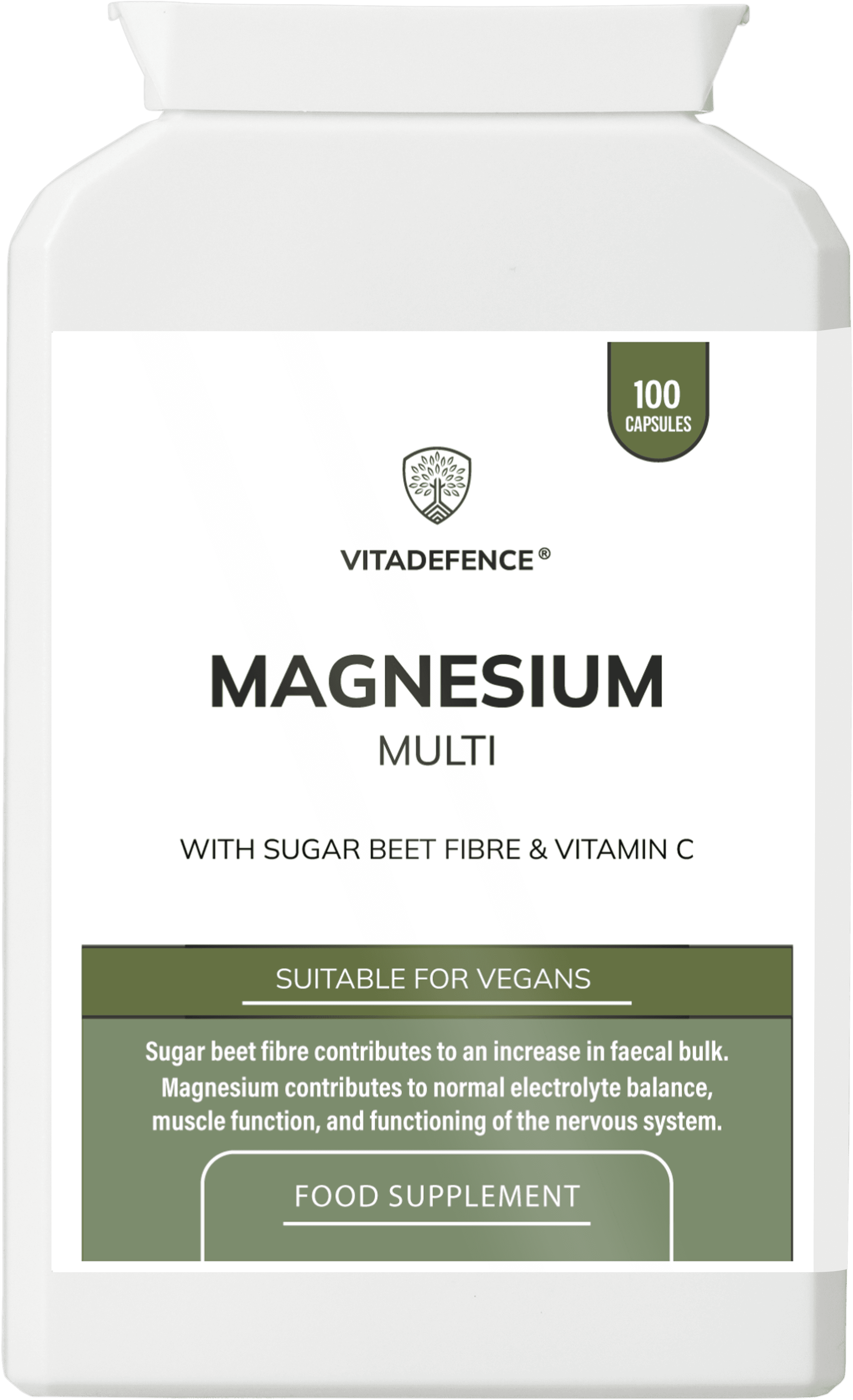
The Magnesium Multi pairs the mineral with vitamin C and beetroot for additional support.
The schedule, made simple
- Morning: Multivitamin + omega-3 + Siberian Ginseng with breakfast (food helps absorb the fat-soluble vitamins).
- Evening: Magnesium with dinner or 30 minutes before bed.
That's four capsules. Two in the morning tray, one in the evening. No powders, no blender, no Instagram morning-routine choreography.
What this stack does NOT do
It doesn't fix poor sleep, it doesn't replace exercise, and it doesn't compensate for a diet built entirely on takeaways. Supplements are foundations, not shortcuts. If you're consistently exhausted, low in iron, or dealing with anxiety that's affecting your day, please see a GP — bloodwork is cheap and a deficiency picture is far more useful than guessing.
How to know if it's working
Give it 4–8 weeks. Most nutrient-related changes are gradual. Track three things: how rested you feel on waking, your afternoon energy (the 3pm slump), and how quickly you bounce back from a hard workout or a late night. If those three improve, you're paying for something useful. If they don't, look at the basics first — sleep, sunlight, protein, water — and revisit your stack from there.
A note on quality
The cheapest supplements on the high street often use inactive forms (cyanocobalamin, magnesium oxide), large amounts of fillers, and tablets that pass through partly undigested. A small upgrade in form makes a meaningful difference in absorption. Always check the active-ingredient panel against the dosage on the front of the bottle — they don't always match.
The takeaway
You don't need 12 supplements. You need four that earn their place: a multi, an omega, an adaptogen, and magnesium. Take them consistently for two months and you'll have a baseline you can build on.
Recommended for You
Vitamins Multi — the single-capsule daily foundation.This article is for informational purposes only and does not constitute medical advice. Vitadefence supplements are food supplements, not medicines. They should not be used as a substitute for a varied diet and a healthy lifestyle. Consult a healthcare professional if you are pregnant, breastfeeding, on medication, or have a medical condition.
Related products
More from the journal

Spirulina: The Original Superfood — Protein, B12, and Phycocyanin Antioxidant Power
9 min · Ingredients
Siberian Ginseng Benefits: Why This Adaptogen Is Different From Panax Ginseng
7 min · Ingredients