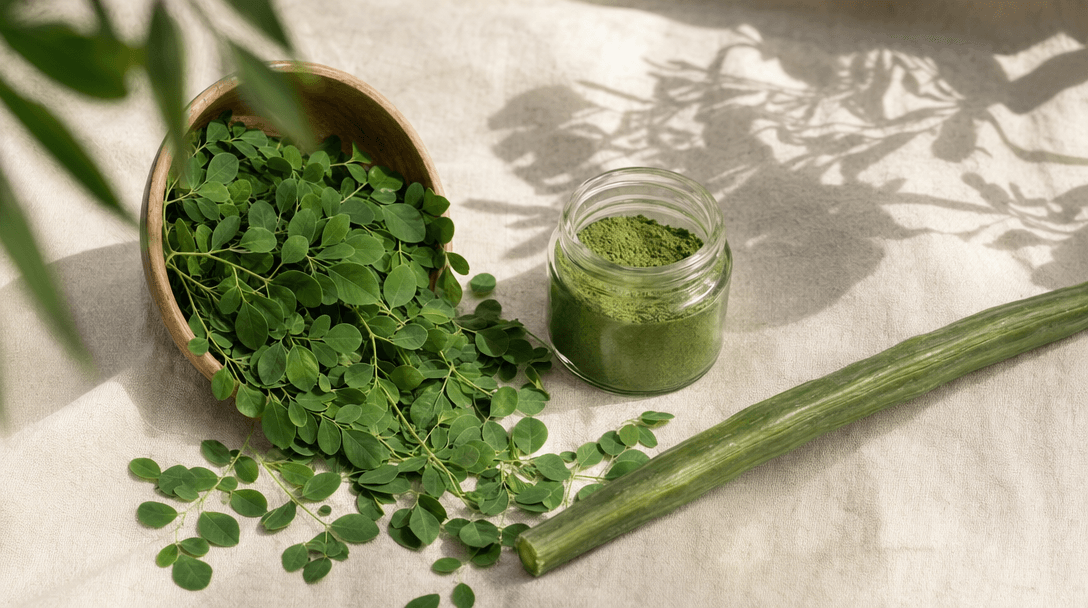
Adaptogen: Where the Word Came From (Lazarev, 1947)
'Adaptogen' is one of the most-marketed and least-defined words in supplement marketing today. Here is the original 1947 definition, where it came from, and what it actually requires of a herbal substance.
By Vitadefence Team

Walk through any supplement aisle in 2026 and 'adaptogen' is everywhere. Mushrooms, herbs, blends, drinks, lattes, gummies. The word has a clear origin and a precise original definition. Both come from Soviet pharmacology in the 1940s, and both have specific criteria that not every modern 'adaptogen' meets.
The 1947 origin
The word was coined by Nikolai Vasilievich Lazarev (Никола́й Васи́льевич Ла́зарев), a Soviet pharmacologist working at the Institute of Experimental Medicine in Leningrad. In 1947, in the context of the post-war Soviet pharmacology programme, Lazarev introduced the Russian term адаптоген (adaptogen) to describe a class of substances that increase the body's non-specific resistance to stressors of various kinds — physical, chemical, biological — without disturbing normal physiological function in a major way.
The Russian word draws on Hans Selye's concurrent work on the General Adaptation Syndrome (the 'stress response'), which Selye published in the 1930s and 1940s. Lazarev's adaptogen concept is essentially asking: what pharmacological agent increases the resilience of Selye's adaptation response?
Lazarev's original three criteria
Lazarev's working definition required an adaptogen to satisfy three criteria. These were elaborated and tightened later by Brekhman and Dardymov in the 1960s, but the original spirit is:
- Innocuous. The substance should cause minimal disturbance to normal physiology — i.e., low toxicity at therapeutic doses, no major metabolic disruption.
- Non-specific action. The substance should increase resistance to a wide variety of stressors — heat, cold, infection, exhaustion, chemical toxicity, radiation. Specificity to one stressor would make it a normal pharmacological agent, not an adaptogen.
- Normalising effect. The substance should tend to bring physiological parameters back towards normal regardless of the direction of deviation. If a parameter is too high, it is brought down; if too low, brought up.
The classical adaptogens
Three plants formed the core of Soviet adaptogen research in the 1950s-1970s:
- Eleutherococcus senticosus (Siberian ginseng) — the most heavily studied; over 1,000 published studies in Russian-language literature on humans and animals across a wide range of stress models.
- Rhodiola rosea (golden root) — particularly studied for cold-stress and altitude resistance.
- Schisandra chinensis (five-flavour berry) — studied for fatigue, vision, and recovery.
Panax ginseng was studied alongside these but is sometimes treated as a separate category given its longer documented history outside the adaptogen framework.
The Brekhman-Dardymov refinement (1969)
Israel Brekhman and Itskovityi Dardymov, both working under Lazarev's tradition, formalised the criteria in the 1969 paper 'New substances of plant origin which increase nonspecific resistance' in Annual Review of Pharmacology. Their definition added quantitative requirements and discriminated 'true adaptogens' from a broader category of 'tonics'. The Brekhman-Dardymov framework is the version most often cited in modern Western herbal medicine textbooks.
How the word travelled to the West
Soviet research on Eleutherococcus reached Western Europe and North America in the 1970s through translated proceedings and review articles. The word 'adaptogen' was translated literally and adopted into English-language herbal medicine. By the 1980s it was common in herbal-medicine textbooks. By the 2000s it was a marketing term. By the 2020s it had been applied to dozens of substances that have not been rigorously evaluated against the original criteria.
What 'adaptogen' is permitted to claim today
Importantly, 'adaptogen' is not a regulated category under EU food law or under the EMA HMPC framework. It is a pharmacological concept and a marketing term, not a legal claim. EU Regulation 1924/2006 does not list 'adaptogen' as an authorised health claim. So a supplement label can describe a plant traditionally classified as an adaptogen, but cannot use the word 'adaptogen' to imply specific health benefits not otherwise authorised.
For Eleutherococcus, the legally permitted claim wording comes from the EMA monograph EMA/HMPC/680618/2013: relief of symptoms of asthenia such as fatigue and weakness, traditional use only.
What modern 'adaptogen' marketing often misses
Three things to watch for when reading marketing copy:
- Single-stressor evidence presented as broad adaptogen evidence. A study showing benefit in one specific stress model (e.g., swimming endurance in mice) is not the same as the original 'non-specific resistance' criterion.
- Mushroom 'adaptogens'. Many mushroom species being marketed as adaptogens have not been rigorously assessed against Lazarev's criteria. Some have other interesting properties; that does not automatically make them adaptogens.
- Stacking. 'Adaptogen blend' formulas often contain sub-therapeutic doses of multiple substances. The original Soviet research used clinically meaningful single doses, typically of one or two plants.
Where Eleutherococcus sits today
Eleutherococcus is one of the few substances that has both:
- An extensive Soviet-era pharmacological literature consistent with the adaptogen framework, and
- A contemporary EU regulatory monograph (EMA/HMPC/680618/2013) recognising traditional use.
That dual standing — historical research base plus regulatory recognition — is rare. It is part of why we built our primary product range around it.
Related reading
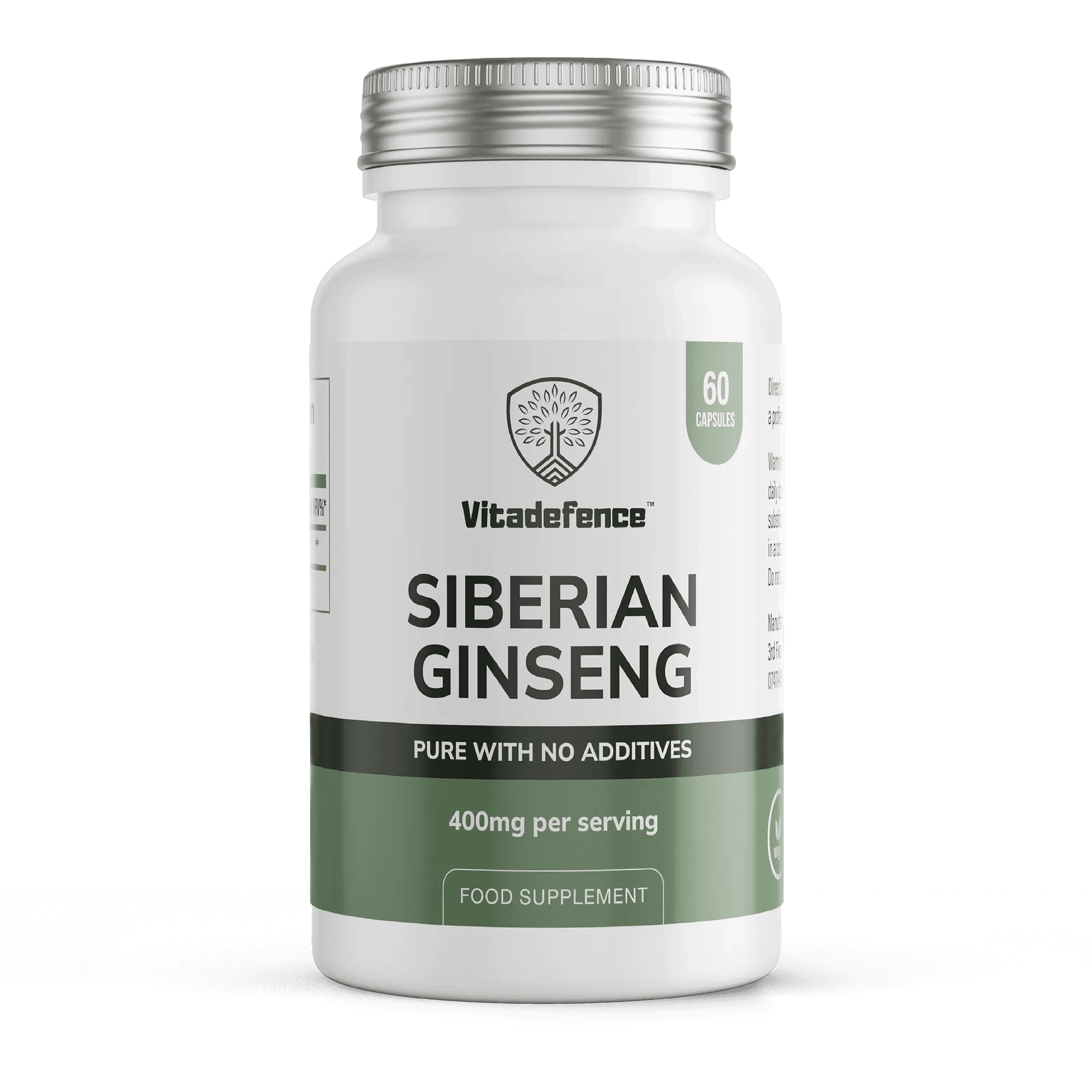
This regulatory information describes Eleutherococcus senticosus root in the context of traditional herbal medicinal products under EU Directive 2004/24/EC. Vitadefence Siberian Ginseng is sold as a food supplement under EU food law (not as a registered traditional herbal medicinal product). The EMA monograph is cited here as public regulatory context, not as a claim about our food supplement. This article is educational and historical. 'Adaptogen' is a pharmacological concept and not a regulated health claim under EU law. Vitadefence products are food supplements and are not intended to diagnose, treat, cure, or prevent any disease. Eleutherococcus traditional use is recognised under EMA/HMPC/680618/2013.
Related products
More from the journal
Spirulina: The Original Superfood — Protein, B12, and Phycocyanin Antioxidant Power
9 min · Ingredients
Siberian Ginseng Benefits: Why This Adaptogen Is Different From Panax Ginseng
7 min · Ingredients