Siberian Ginseng vs Korean Ginseng: The Botanical Mistaken Identity
The name 'Siberian ginseng' is a translation accident. The plant on the bottle is Eleutherococcus senticosus — not a Panax. Different family, different chemistry, different traditional use. Here is the unwound version.
By Vitadefence Team
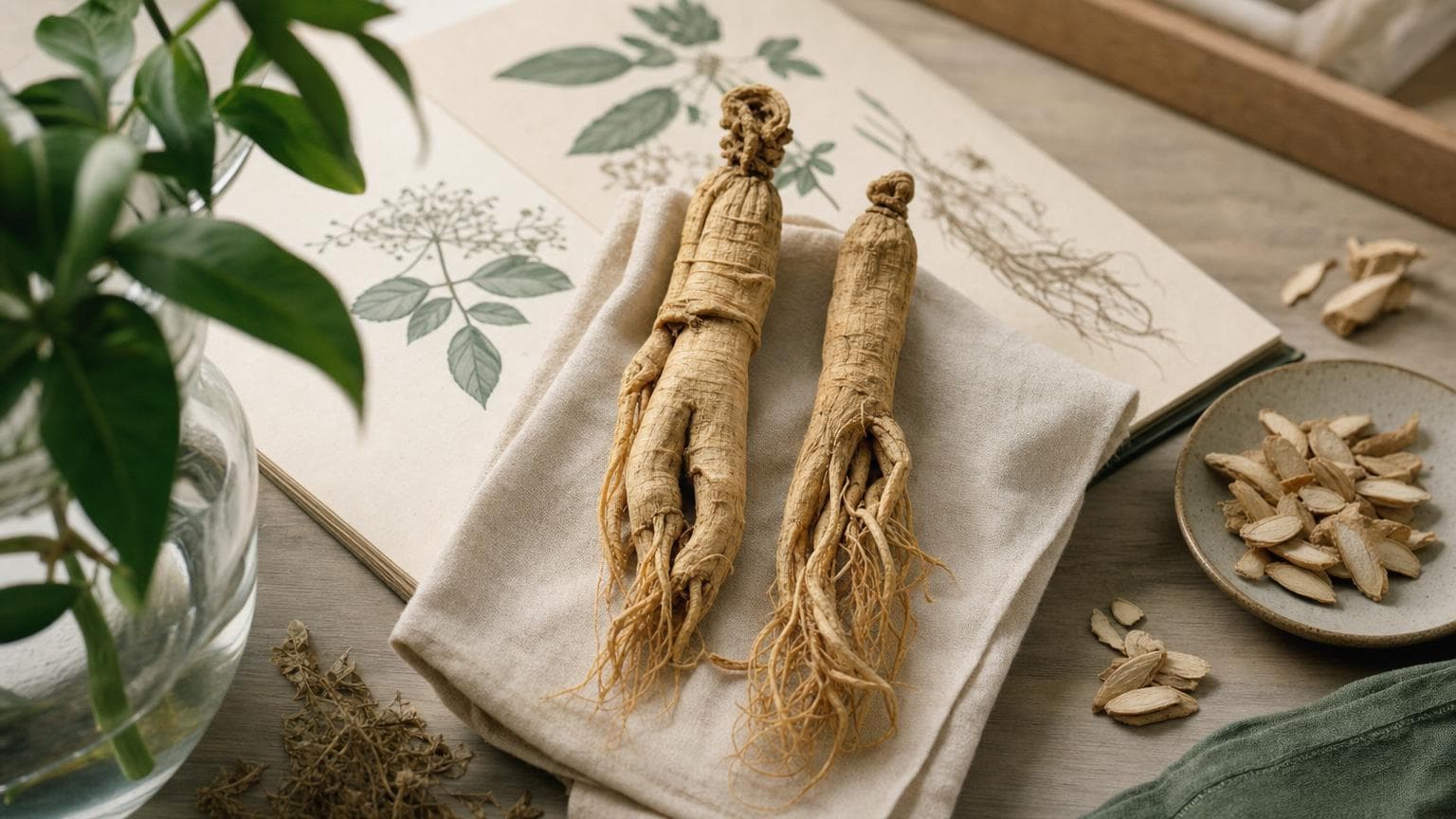
Walk into any health-food shop and you will find two products with 'ginseng' on the label that have almost nothing in common botanically. Korean (or true) ginseng is Panax ginseng, in the family Araliaceae, genus Panax. Siberian ginseng is Eleutherococcus senticosus, also in Araliaceae but in the genus Eleutherococcus. Different genus, different active compounds, different traditional use. The shared word 'ginseng' is a 1960s English-language translation choice — not a botanical fact.
Where the name confusion came from
In Russian-language Soviet pharmacology research from the 1950s and 1960s, the plant was called дальневосточный женьшень — 'Far Eastern ginseng' — because it grew in the same region as Korean ginseng and was studied for similar purposes (resistance to fatigue, support during physical effort). When the Soviet research papers were translated into English in the 1970s, 'женьшень' was rendered as 'ginseng' even though the underlying genus differs.
In Chinese traditional usage the plant has its own name: cì wǔ jiā (刺五加), literally 'thorny five-leaf'. That name has been used for at least 2,000 years and references the plant's appearance and leaf structure, not Panax.
Different chemistry, different actives
Panax ginseng is standardised on ginsenosides — a family of triterpenoid saponins (Rb1, Rb2, Rg1, Re, and others). Eleutherococcus senticosus does not contain ginsenosides at all. Its characteristic compounds are eleutherosides (B and E in particular), a chemically distinct group of phenolic glycosides. A Panax product standardised to "4% ginsenosides" and an Eleutherococcus product standardised to "0.8% eleutherosides B+E" are not interchangeable.
What the EMA monograph says
The European Medicines Agency Committee on Herbal Medicinal Products (HMPC) has assessed Eleutherococcus separately from Panax. The relevant assessment is the EU monograph EMA/HMPC/680618/2013, which recognises the traditional use of Eleutherococcus senticosus root for the relief of symptoms of asthenia such as fatigue and weakness. The wording is specific to traditional herbal use; it is not a clinical efficacy claim. Panax ginseng has its own separate EMA assessment with different wording.
How to read a label
If a label says simply 'ginseng', that is not enough information. Look for the Latin binomial:
- Eleutherococcus senticosus = Siberian ginseng (eleutherosides)
- Panax ginseng = Korean / true ginseng (ginsenosides)
- Panax quinquefolius = American ginseng (different ginsenoside profile)
- Eleutherococcus gracilistylus = a related but different Eleutherococcus species
Also check whether the product is standardised, and to what marker. 'Eleutherococcus extract 200 mg' tells you the plant; 'Eleutherococcus extract 200 mg standardised to 0.8% eleutherosides B+E' tells you the dose actually deliverable.
Why we use Eleutherococcus, not Panax
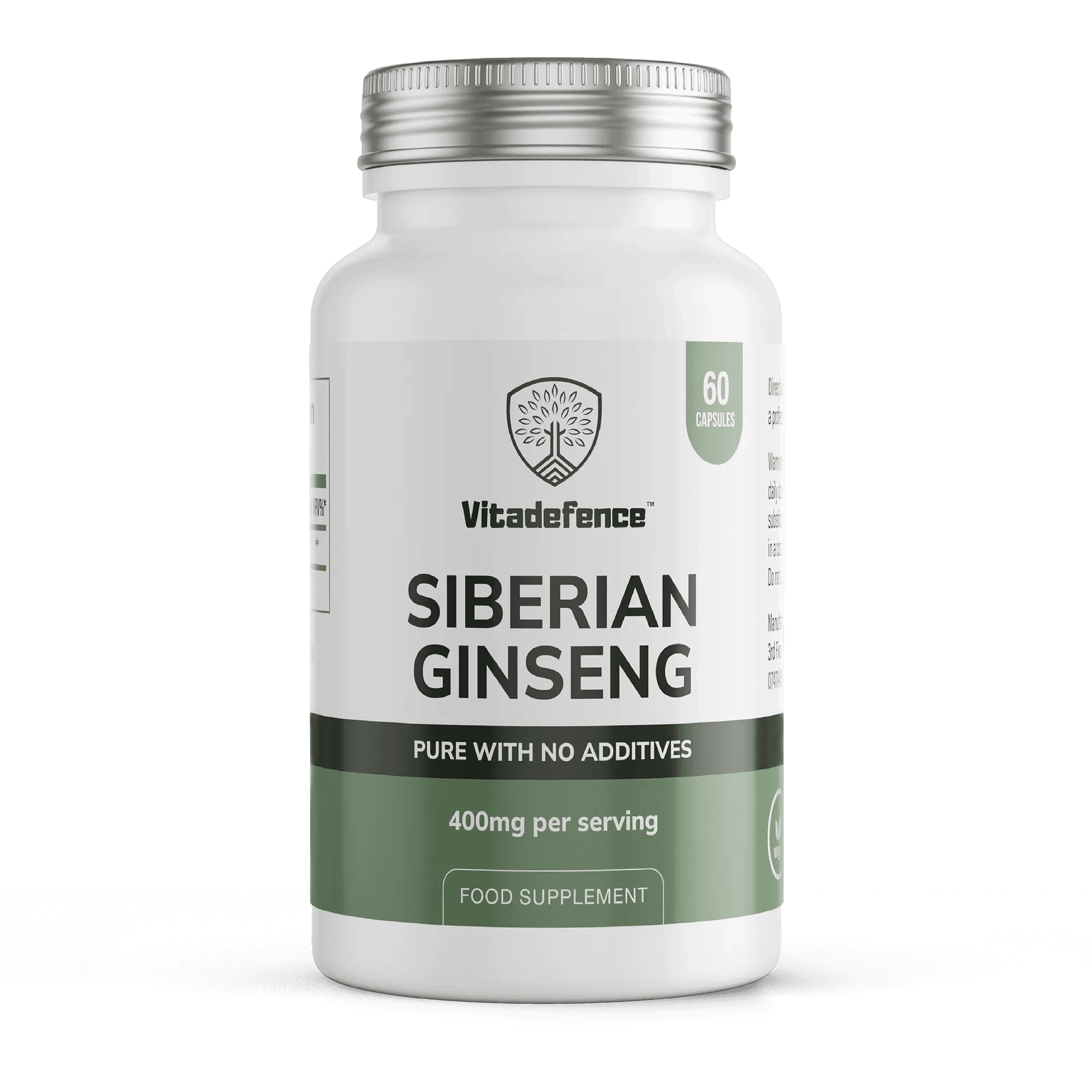
Vitadefence's Siberian Ginseng capsules use Eleutherococcus senticosus, standardised to eleutherosides B and E, encapsulated in plant-based HPMC capsules, manufactured under UK GMP. The reason is simple: the EMA has issued a traditional-use monograph for Eleutherococcus that maps cleanly to the symptoms our customers describe (fatigue, slow recovery during demanding periods), and the supply chain is traceable from the harvest region all the way to the encapsulation step.
Three myths the name has caused
Myth 1: 'Siberian ginseng is just a cheaper Korean ginseng.' — No. Different genus, different chemistry, different EMA monograph. The price difference reflects the different supply chains, not a downgrade.
Myth 2: 'They do the same thing.' — Both have traditional-use status with the EMA, but the monographs are written separately and the indications are not identical.
Myth 3: 'It's a Russian copy of a Korean herb.' — Eleutherococcus has its own 2,000-year history in Chinese traditional medicine as cì wǔ jiā. The Soviet Cold-War-era research is one chapter, not the whole story.
Recommended further reading
- What the EMA monograph EMA/HMPC/680618/2013 actually says
- Eleutheroside chemistry explained: B, E, and why standardisation matters
- Adaptogen: where the word came from (Lazarev, 1947)
Related products
This regulatory information describes Eleutherococcus senticosus root in the context of traditional herbal medicinal products under EU Directive 2004/24/EC. Vitadefence Siberian Ginseng is sold as a food supplement under EU food law (not as a registered traditional herbal medicinal product). The EMA monograph is cited here as public regulatory context, not as a claim about our food supplement. This article is educational, not medical advice. Eleutherococcus senticosus traditional use is recognised by the EMA HMPC monograph EMA/HMPC/680618/2013 for symptoms of asthenia. Vitadefence products are food supplements and are not intended to diagnose, treat, cure, or prevent any disease. Consult a qualified healthcare professional before starting any new supplement.
Related products
More from the journal
Spirulina: The Original Superfood — Protein, B12, and Phycocyanin Antioxidant Power
9 min · Ingredients
Siberian Ginseng Benefits: Why This Adaptogen Is Different From Panax Ginseng
7 min · Ingredients