
Creatine Monohydrate: The Complete Guide — Ingredients, Dosage, Pairings & FAQ
Contents
1 - Introduction
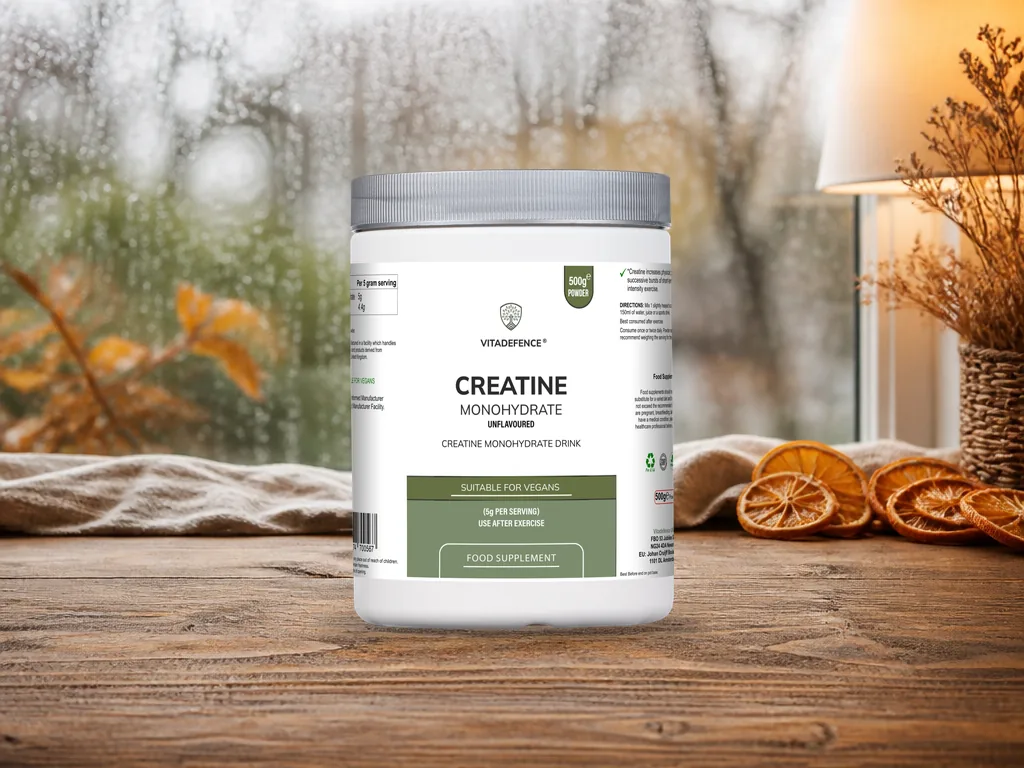
Creatine monohydrate is widely studied in sports nutrition. Vitadefence Creatine Monohydrate provides 5 g of pure, unflavoured powder per serving, suitable for anyone looking to support high-intensity training and muscle function. This guide covers the evidence, how to use it, and what to consider before adding it to your routine.
 Creatine MonohydratePure Unflavoured Creatine Powder · 500 g£25.99View in the shop →
2 - What is Creatine Monohydrate?
Creatine is a naturally occurring compound composed of three amino acids: arginine, glycine, and methionine. Around 95% of the body’s creatine is stored in skeletal muscle in the form of phosphocreatine, which helps regenerate adenosine triphosphate (ATP) – the primary energy currency of cells during short bursts of intense activity. Creatine increases physical performance in successive bursts of short-term, high intensity exercise.
The food safety regulator (EFSA) has authorised the health claim that “creatine increases physical performance in successive bursts of short-term, high intensity exercise” when taken at a dose of 3 g per day. This claim is supported by a substantial body of evidence, including systematic reviews and meta-analyses published in the Journal of the International Society of Sports Nutrition (Kreider et al., 2017).
3 - Vitadefence Creatine Monohydrate ingredients
Each pot contains 500 g of pure creatine monohydrate powder, providing 100 servings of 5 g each. The ingredients panel reads as follows:
- Ingredients: Creatine Monohydrate powder.
- Per serving (5 g): Creatine Monohydrate 5 g (of which Creatine 4.4 g).
- Manufacturing: Made by an Informed Manufacturer in an Informed Manufacturer Facility.
No fillers, flavours, sweeteners, or preservatives are added. The product is unflavoured, giving you full control over how you mix it.
4 - How the formula was designed
Vitadefence Creatine Monohydrate was formulated to deliver a clinically effective dose of pure creatine monohydrate without unnecessary additives. The 5 g serving size aligns with the standard loading and maintenance protocols used in the scientific literature. The product is made in the UK to GMP quality standards, by an Informed Manufacturer in an Informed Manufacturer Facility.
The decision to use creatine monohydrate over other forms (such as creatine hydrochloride or buffered creatine) is based on the weight of evidence. The powder format allows flexible dosing and avoids the excipients found in capsules, which can be less cost-effective at the 5 g dose.
5 - The science — what's well-supported
Creatine monohydrate has been extensively studied, and several health claims are authorised by the UK Nutrition and Health Claims Register (UK NHC Register). The key well-supported effects include:
- Increased physical performance in successive bursts of short-term, high-intensity exercise. This claim is authorised for a daily intake of 3 g of creatine. The effect is attributed to enhanced phosphocreatine resynthesis during high-intensity intervals.
- Daily creatine consumption can enhance the effect of resistance training on muscle strength in adults over the age of 55 (3 g a day).
- A 2021 meta-analysis in Nutrients (Forbes et al., 2021) reported moderate improvements in recovery markers with creatine supplementation.
It is important to note that creatine does not directly “burn fat” or “build muscle” in the absence of training. Its effects are most pronounced when combined with regular resistance or sprint-type exercise.
6 - How to take it
Mix 1 slightly heaped scoop (5 g) with 150 ml of water, juice, or a sports drink. The powder dissolves best in warm or room-temperature liquids. For optimal absorption, consume after exercise. You can take one serving per day for maintenance, or two servings per day (morning and post-workout) during the first 5–7 days to saturate muscle stores more quickly – a common protocol known as “loading.”
Because the powder may settle during transport, weighing the serving on a digital scale provides the most accurate dose. Avoid exceeding 10 g per day unless advised by a healthcare professional.
7 - Storage
Store the pot in a cool, dry place, out of direct sunlight and away from moisture. Keep the lid tightly sealed after each use. Do not use if the seal is damaged. The best-before date is printed on the base of the container. As with all powders, keep out of reach of children.
8 - Allergen and dietary information
Vitadefence Creatine Monohydrate is suitable for vegetarians and vegans. It is Halal approved. The product is free from common allergens such as gluten, dairy, soy, and nuts. However, it is manufactured in a facility that also processes other ingredients, so cross-contamination cannot be ruled out. Always check the label if you have specific allergies.
9 - Who should be cautious
Creatine is generally well-tolerated by healthy adults at recommended doses. However, certain groups should consult a healthcare professional before use:
- Individuals with kidney disease or impaired renal function. Creatine is metabolised to creatinine, which is filtered by the kidneys. Those with pre-existing kidney conditions should seek medical advice.
- Pregnant or breastfeeding women. There is insufficient evidence on safety in these populations.
- People taking medications that affect kidney function (e.g., NSAIDs, diuretics, or nephrotoxic drugs).
- Adolescents under 18 should only use creatine under the guidance of a healthcare provider and with a focus on sports nutrition rather than performance enhancement.
Common side effects are mild and include gastrointestinal discomfort, bloating, or slight water retention. These can often be minimised by staying hydrated and avoiding excessive doses.
10 - What pairs well with creatine monohydrate
Creatine works well alongside other supplements that support energy metabolism and exercise performance. Consider these complementary products from the Vitadefence range:
- Other products in the range: Amino Acid Multi, Electrolyte Multi. Read our African Mango guide for more details.
- See the Garcinia Cambogia Multi guide.
- Check the Green Coffee Multi guide.
Combining creatine with a balanced diet and consistent training programme will yield the best results.
11 - Frequently asked questions
Do I need to load creatine?
Loading is optional. Taking 20 g per day (split into 4 doses) for 5–7 days can saturate muscle stores faster, but a maintenance dose of 3–5 g per day will achieve the same effect over approximately 3–4 weeks. The choice depends on your training goals and personal preference.
Will creatine make me retain water?
Creatine draws water into muscle cells, which can cause a small increase in intracellular water weight. This is not the same as bloating or subcutaneous water retention. It may contribute to a fuller muscle appearance but does not typically cause visible puffiness.
Can I take creatine on non-training days?
Yes. Taking a maintenance dose on rest days helps maintain elevated muscle creatine levels. The effect is not exercise-dependent, though the performance benefits are only realised during training.
Is creatine safe for women?
Yes. Creatine supplementation is used by women and men; the authorised claim is the same. Some research suggests women may have lower baseline muscle creatine stores, making supplementation potentially more beneficial.
Does creatine cause hair loss?
No robust evidence supports a link between creatine and hair loss. A small 2009 study in rugby players reported an increase in dihydrotestosterone (DHT) levels, but subsequent larger studies have not confirmed this. The food safety regulator does not list hair loss as a known side effect.
Can I take creatine with coffee?
Yes. Caffeine does not appear to interfere with creatine absorption. In fact, some studies suggest caffeine may enhance the ergogenic effects of creatine during high-intensity exercise. However, if you experience stomach discomfort, take them at separate times.
12 - Why Vitadefence
Vitadefence is a UK-based brand committed to transparent, evidence-led supplementation. Our Creatine Monohydrate is made in the UK to GMP quality standards, by an Informed Manufacturer in an Informed Manufacturer Facility. We use only a single ingredient – pure creatine monohydrate – with no fillers or artificial additives. Our customer reviews, available on the reviews page, reflect the trust our community places in our products. Free UK delivery on every order.
13 - Bottom line
Creatine monohydrate is one of the few supplements with a robust evidence base supporting its use for high-intensity exercise performance. Vitadefence Creatine Monohydrate delivers a pure, unflavoured 5 g dose in a convenient powder format, with no unnecessary additives. Creatine increases physical performance in successive bursts of short-term, high intensity exercise (3 g a day; one 5 g scoop gives 4.4 g creatine). As with any supplement, it is not a substitute for a nutritious diet or a healthy lifestyle. Always consult a healthcare professional before starting a new supplement regimen, especially if you have underlying health conditions.
This article is for informational purposes only and does not constitute medical advice. The health claims mentioned are authorised under the UK Nutrition and Health Claims Register and are based on the scientific evidence available at the time of writing. Vitadefence products are not intended to diagnose, treat, cure, or prevent any disease. Always read the label and consult a healthcare professional before use, particularly if you are pregnant, breastfeeding, or have a medical condition. Individual results may vary.