
Digestive Enzyme Multi: The Complete Guide — Ingredients, Dosage, Pairings & FAQ
Contents
1 - Introduction
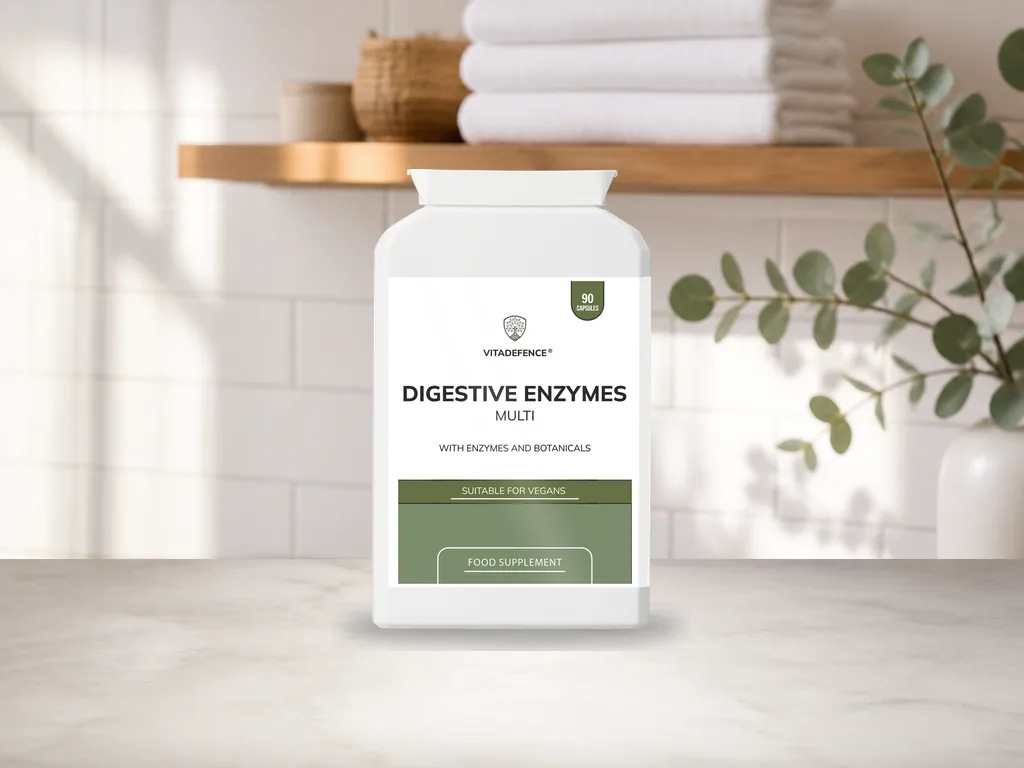
Digestion is a complex process that starts the moment you think about food, and it relies on a precise mix of enzymes, stomach acid, and gut-friendly plant compounds. The Vitadefence Digestive Enzyme Multi combines an enzyme blend with turmeric, ginger, apple cider vinegar and betaine hydrochloride. This post explores each ingredient, what the science says, and how to use this formula for best results.
 Digestive Enzyme MultiWith Turmeric, Apple Cider Vinegar & Enzyme Blend · 90 Capsules£15.49View in the shop →
2 - What is a digestive enzyme multi?
A digestive enzyme multi is a supplement that provides a range of enzymes (amylase, proteases, lipase, bromelain, papain) alongside other compounds that support the breakdown and absorption of food. The enzymes target different macronutrients: carbohydrates (amylase), proteins (proteases and bromelain/papain), and fats (lipase). Betaine hydrochloride is a source of betaine. The botanical extras — turmeric, ginger, fennel, peppermint, chamomile, and caraway — are traditionally used to soothe the digestive tract and support gut comfort.
3 - Digestive Enzyme Multi ingredients
Each capsule of Vitadefence Digestive Enzyme Multi provides the following active constituents (taken directly from the label):
- Turmeric Root (421 mg, providing 20 mg curcuminoids) — traditionally used for digestive comfort.
- Betaine Hydrochloride (145mg, providing 110.58mg betaine) — a source of hydrochloric acid to support stomach acidity and protein digestion.
- Alfalfa (50mg) — a herb traditionally used as a digestive tonic.
- Amylase (45mg, providing 2250SKB) — an enzyme that breaks down starches into simple sugars.
- Apple Cider Vinegar (30mg) — traditionally used to support digestion and maintain a healthy gut environment.
- Caraway Seed (20mg) — traditionally used to relieve bloating and support gut motility.
- Chamomile Flower (20mg) — traditionally used to soothe the digestive tract and reduce occasional discomfort.
- Fennel Seed (20mg) — traditionally used to reduce gas and support smooth digestion.
- Ginger Root (20mg) — traditionally used to support nausea relief and digestive comfort.
- Peppermint Leaf (20mg) — traditionally used to relieve bloating and support bile flow.
- Protease 4.5 (10.8mg, providing 540HUT) — an enzyme that breaks down proteins.
- Lipase (6.6mg, providing 330 Units) — an enzyme that breaks down dietary fats.
- Protease (4.78mg, providing 23.9HUT) — additional protein-digesting enzyme.
- Bromelain (3 mg, 6 GDU) — an enzyme from pineapple.
- Papain (0.15mg, providing 0.3USP Units) — a papaya-derived enzyme with similar protein-digesting properties.
- Protease 3 (0.03mg, providing 48HUT) — a further protease for comprehensive protein breakdown.
Other ingredients: HPMC (capsule shell), stoneground brown rice flour.
4 - How the formula was designed
The Digestive Enzyme Multi was built around the principle of full-spectrum digestive support. Many single-enzyme products target only one macronutrient, but this formula includes amylase (for carbs), three proteases plus bromelain and papain (for proteins), and lipase (for fats). This ensures coverage regardless of what you eat. The botanical blend (turmeric, ginger, fennel, peppermint, chamomile, caraway) was chosen for its traditional use in easing bloating, gas, and occasional indigestion. Apple cider vinegar provides additional acidity and is traditionally used to support gut health.
5 - The science — what's well-supported
Let's look at what the evidence says about the key components.
Digestive enzymes
Amylase, proteases, and lipase are naturally produced by the pancreas and salivary glands.
Betaine HCl
Betaine hydrochloride provides hydrochloric acid, which is necessary for activating pepsin and maintaining the acidic environment of the stomach.
Turmeric (curcuminoids)
Curcumin, the active compound in turmeric, has been studied for its ability to support healthy inflammatory balance in the gut. The 20mg of curcuminoids per capsule in this formula is a lower dose, but it's combined with other botanicals that may have additive effects.
Ginger
Ginger is one of the most well-researched botanicals for digestive health. Ginger is traditionally used for digestive comfort.
Apple cider vinegar
Apple cider vinegar has a long traditional use for digestion, but clinical evidence is limited. Its acidity may help support stomach acid levels, though more research is needed.
Fennel, peppermint, chamomile, caraway
These herbs are traditionally used in European phytotherapy for digestive complaints. Fennel, peppermint, chamomile and caraway are traditionally used for digestive comfort. The leaf powders in this formula provide a gentler effect than concentrated oils.
6 - How to take it
Take 1 or 2 capsules with each main meal, or as advised by a health professional. Take 1 or 2 capsules with each main meal, as on the label. Capsules should be swallowed whole with water. Do not open the capsules, as the enzymes and betaine HCl need to reach the stomach intact.
7 - Storage
Store in a cool, dry place, out of reach of children. Do not use if the seal is damaged. Best before date is printed on the base of the pot. Avoid exposure to heat and moisture, which can degrade the enzymes.
8 - Allergen and dietary information
This product is suitable for vegetarians and vegans. It is Halal approved. The capsule shell is made from HPMC (a plant-based cellulose). The enzymes are derived from vegetable sources (e.g., bromelain from pineapple, papain from papaya). The product is free from common allergens such as gluten, dairy, soy, and nuts, but always check the label if you have specific allergies.
9 - Who should be cautious
Do not take if you have peptic ulcers, as the betaine HCl can aggravate the condition. People with gastritis, GERD, or a history of stomach surgery should consult a healthcare professional before use. If you are taking medications that reduce stomach acid (proton pump inhibitors, H2 blockers), betaine HCl may counteract their effect — speak to your doctor. Pregnant or breastfeeding women should seek medical advice, as some herbs (e.g., fennel, caraway) are traditionally avoided in high doses during pregnancy. Those with known allergies to any of the botanical ingredients (e.g., chamomile, fennel, peppermint) should avoid this product.
10 - What pairs well with Digestive Enzyme Multi
For a comprehensive digestive support routine, consider combining this formula with other Vitadefence products:
- Apple Cider Multi — provides additional apple cider vinegar and botanicals like ginger and cayenne for a different digestive angle.
- Turmeric Max — 150 mg curcumin per capsule.
- Turmeric Multi — turmeric with glucosamine, MSM, ginger and other botanicals.
For more detailed guides, read our companion posts: Apple Cider Multi Guide, Turmeric Max Guide, and Turmeric Multi Guide.
11 - Frequently asked questions
Can I take Digestive Enzyme Multi on an empty stomach?
It's best taken with food, as the enzymes need to mix with the meal to work effectively. Taking it on an empty stomach may cause stomach discomfort due to the betaine HCl.
How long does it take to work?
Can I take it with other supplements?
Yes, but avoid taking it with antacids or acid-reducing medications, as the betaine HCl will be neutralised. If you take other supplements, space them at least 30 minutes apart to avoid any interaction with the enzymes.
Is it safe for long-term use?
Yes, the ingredients are generally recognised as safe for long-term use. However, if you have a medical condition or are on medication, consult a healthcare professional before prolonged use.
Does it contain any artificial additives?
No. The formula uses HPMC capsules and stoneground brown rice flour as a filler. There are no artificial colours, flavours, or preservatives.
What if I miss a dose?
Simply take it with your next meal. Do not double up to make up for a missed dose.
12 - Why Vitadefence
Vitadefence is a UK-based brand that manufactures all its supplements to GMP quality standards. We are registered with the Information Commissioner's Office (ICO ZC106169) and comply with UK and UK food supplement regulations. Our ingredients are sourced from reputable suppliers, and we use plant-based capsules to suit vegan and vegetarian lifestyles. We believe in transparency — all our labels list exact amounts of active compounds, not just herbal extracts. You can read more about our quality standards on our reviews page and check our shipping policy for delivery details.
13 - Bottom line
The Vitadefence Digestive Enzyme Multi is a well-rounded digestive support formula that combines a full spectrum of enzymes with betaine HCl and traditional botanicals. It's designed to help break down carbohydrates, proteins, and fats, while the herbal blend supports gut comfort. Digestive Enzyme Multi: an enzyme blend with betaine hydrochloride and traditional digestive herbs, 1 or 2 capsules with each main meal. As always, consult a healthcare professional if you have underlying health conditions or are taking medication.
This article is for educational purposes only and does not constitute medical advice. The information provided is based on the UK Nutrition and Health Claims Register and published scientific literature. Vitadefence products are food supplements and are not intended to diagnose, treat, cure, or prevent any disease. Always read the label and consult a healthcare professional before starting any new supplement, especially if you have a medical condition or are taking medication.