
Turmeric Multi: The Complete Guide — Ingredients, Dosage, Pairings & FAQ
Contents
1 - Introduction
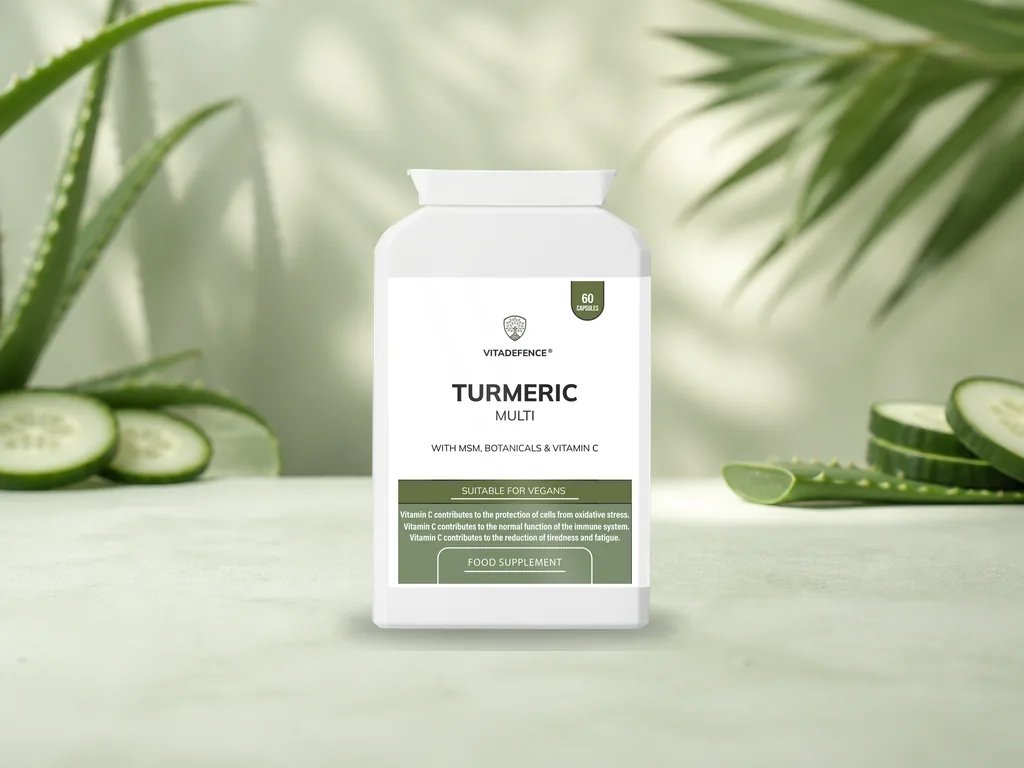
Turmeric Multi is a comprehensive, multi-ingredient formula that combines turmeric root extract with glucosamine, MSM, bamboo silica, and a range of botanical extracts. Vitamin C contributes to normal collagen formation for the normal function of cartilage. It’s a practical choice if you prefer a single capsule that delivers multiple active ingredients rather than taking several separate supplements.
 Turmeric MultiWith Vitamin B6, Zinc & Botanicals · 90 Capsules£16.49View in the shop →
2 - What is Turmeric?
Turmeric (Curcuma longa) is a flowering plant in the ginger family, native to Southeast Asia. Its rhizomes contain curcuminoids — primarily curcumin, demethoxycurcumin, and bisdemethoxycurcumin — which give turmeric its characteristic yellow colour. In the UK, turmeric is widely used as a spice and in supplements, often standardised to a specific curcuminoid content.
3 - Turmeric Multi ingredients
Each capsule of Turmeric Multi provides the following (based on the manufacturer’s label):
- Vitamin C – 12 mg (15% NRV)
- Turmeric extract (providing 50 mg curcuminoids) – 2631 mg equivalent
- Glucosamine Hydrochloride (vegan) – 300 mg
- Bamboo extract (providing 22.5 mg silica) – 300 mg
- Methylsulphonyl Methane (MSM) – 200 mg
- Korean Panax Ginseng – 100 mg
- Nettle Leaf – 100 mg
- Rosehip – 100 mg
- Horsetail – 50 mg
- Ginger Root – 40 mg
- Montmorency Cherry – 20 mg
- Apple Cider Vinegar – 5 mg
- Bromelain (6 GDU) – 5 mg
- Kelp – 5 mg
- Papain – 5 mg
Other ingredients: Glucosamine Hydrochloride (HCl) Powder (Vegan), Methylsulphonyl Methane (MSM) Powder, Capsule Shell: Hydroxypropyl Methylcellulose (HPMC), Brown Rice Flour (Oryza Sativa), Turmeric Root Extract (Curcuma Longa), Bamboo Extract (Bambusa Vulgaris), Nettle Leaf Extract (Urtica dioica), Montmorency Cherry Powder (Prunus cerasus Montmorency), Vitamin C (as Ascorbic Acid), Korean Panax Ginseng Extract, Apple Cider Vinegar Powder (Malus Sylvestris), Bromelain, Horsetail Extract (Equisetum arvense), Papain (Carica papaya), Rosehip Extract (Rosa Canina), Ginger Root Extract (Zingiber Officinale), Kelp Extract (Ascophyllum nodosum).
4 - How the formula was designed
The formula combines turmeric with glucosamine, MSM, bamboo silica, vitamin C and botanicals. Bromelain and papain (proteolytic enzymes) and apple cider vinegar are included in smaller amounts. Vitamin C is added because it contributes to normal collagen formation for the normal function of bones and cartilage (authorised health claim under the UK Nutrition and Health Claims Register).
5 - The science — what’s well-supported
Several ingredients in Turmeric Multi have evidence behind them, though the blend as a whole has not been studied in clinical trials. Here’s what the research says about the key components:
Vitamin C and collagen
The authorised UK health claim for vitamin C states: “Vitamin C contributes to normal collagen formation for the normal function of bones and cartilage.” This is based on well-established biochemistry — vitamin C is a cofactor for prolyl hydroxylase and lysyl hydroxylase, enzymes required for collagen synthesis. The 12 mg per capsule (15% NRV) is a modest amount but contributes to overall intake.
At the recommended dose of 2–3 capsules per day, you would get 100–150 mg of curcuminoids — lower than the doses used in most clinical trials. Bioavailability is also a factor; curcumin is poorly absorbed on its own, and this formula does not contain piperine or a bioavailability enhancer.
Glucosamine hydrochloride (used here) has shown less consistent results than glucosamine sulfate in some research.
Bamboo silica
Silica is a trace element involved in collagen cross-linking and bone mineralisation. The 22.5 mg silica per capsule is within a reasonable range.
Other botanicals
Nettle leaf, rosehip, ginger, and Montmorency cherry have traditional uses for joint health and antioxidant support. Korean Panax ginseng is traditionally used for vitality and stress support, not specifically for joints.
6 - How to take it
Take 1 capsule, 2 to 3 times per day, preferably with food. The manufacturer recommends starting with 2 capsules daily and increasing to 3 if needed. Swallow whole with water. Do not exceed 3 capsules per day.
7 - Storage
Store in a cool, dry place, out of reach of children. Do not use if the seal is damaged. Best before date is printed on the base of the pot. Keep away from direct sunlight and moisture.
8 - Allergen and dietary information
Turmeric Multi is suitable for vegetarians and vegans. The capsule shell is made from hydroxypropyl methylcellulose (HPMC), a plant-based alternative to gelatin. The product is halal approved. Suitable for vegetarians and vegans. Halal approved. The glucosamine is vegan. The glucosamine used is vegan (not derived from shellfish).
9 - Who should be cautious
If you are pregnant, breastfeeding, or have a medical condition (especially liver or kidney issues, diabetes, or bleeding disorders), consult a healthcare professional before use. Turmeric can have mild blood-thinning effects, so if you take anticoagulant medications (e.g., warfarin), speak to your doctor. The formula contains kelp, which provides iodine — if you have thyroid issues or are sensitive to iodine, check with your GP. Ginseng may interact with blood pressure and diabetes medications. Do not take if you have a known allergy to any of the ingredients. Keep out of reach of children.
10 - What pairs well with Turmeric Multi
For a more comprehensive approach to joint and digestive health, consider these complementary products:
- Apple Cider Multi – with chromium, turmeric and botanicals. Read our guide.
- Digestive Enzyme Multi – with turmeric, apple cider vinegar and an enzyme blend. Read our guide.
- Turmeric Max – a higher-dose curcumin formula with piperine for enhanced bioavailability. Read our guide.
11 - Frequently asked questions
1. How much curcumin is in each capsule?
Each capsule provides 50 mg of curcuminoids from 2631 mg of turmeric extract (equivalent weight). At the recommended dose of 2–3 capsules per day, you get 100–150 mg of curcuminoids. This is lower than the typical 500–1000 mg used in clinical studies, so it may be more suitable for general maintenance than for acute needs.
2. Can I take Turmeric Multi with other supplements?
Yes, but be mindful of total intake of individual ingredients. For example, if you take a separate vitamin C supplement, check your overall intake. The turmeric and ginger content is modest, but if you are taking other turmeric or ginger supplements, consider the combined dose. Always consult a healthcare professional if unsure.
3. Is the glucosamine in this product vegan?
Yes. The glucosamine hydrochloride used is vegan, not derived from shellfish. The product is suitable for vegetarians and vegans.
4. How long does one pot last?
Each pot contains 60 capsules. At 3 capsules per day, it lasts 30 days. The product is available for purchase here.
5. Can I take it if I have high blood pressure?
Turmeric and ginger are generally safe, but Korean Panax ginseng may affect blood pressure. If you have hypertension or take blood pressure medication, consult your doctor before use. The kelp content provides iodine, which may also affect thyroid function in some individuals.
6. Does it contain piperine for absorption?
No, this formula does not contain black pepper extract (piperine) or any other bioavailability enhancer. Curcumin is naturally poorly absorbed, so the effective dose of curcuminoids reaching your system may be lower than the stated 50 mg per capsule. If you are looking for enhanced absorption, consider Turmeric Max, which includes piperine.
12 - Why Vitadefence
Made in the UK to GMP quality standards. We use plant-based capsules (HPMC) suitable for vegans and avoid unnecessary fillers. Our formulations are developed with reference to published research and traditional use, and we are transparent about what each ingredient does — and doesn’t — do. We are registered with the Information Commissioner’s Office (ICO ZC106169) and comply with UK regulations. You can read customer feedback on our reviews page and check our shipping policy here.
13 - Bottom line
Turmeric Multi is a thoughtfully blended supplement that brings together turmeric, glucosamine, MSM, bamboo silica, and a range of herbs traditionally used for joint and connective tissue support. Vitamin C contributes to normal collagen formation for the normal function of bones and cartilage. However, the doses of individual ingredients are lower than those used in most clinical trials, so it is best viewed as a general maintenance formula rather than a high-dose therapeutic product. If you need higher doses of curcumin or glucosamine, you may wish to use separate supplements or consider Turmeric Max. As with any supplement, results vary, and it works best alongside a balanced diet and active lifestyle.
This article is for educational purposes only and does not constitute medical advice. The health claims mentioned are authorised under the UK Nutrition and Health Claims Register and apply to vitamins and minerals only. Botanical ingredients are described in terms of traditional use; no disease-treatment claims are made. Always consult a healthcare professional before starting a new supplement, especially if you are pregnant, breastfeeding, or have a medical condition. Individual results may vary. For full terms, see our website.