
L-Glutamine: How to Use It in a Daily Performance Stack
Contents
1 - Introduction
L-Glutamine is a single amino acid powder, 100 g per pot. Our pure, single-ingredient L-Glutamine powder provides a versatile, practitioner-friendly dose range that fits easily into your daily routine.
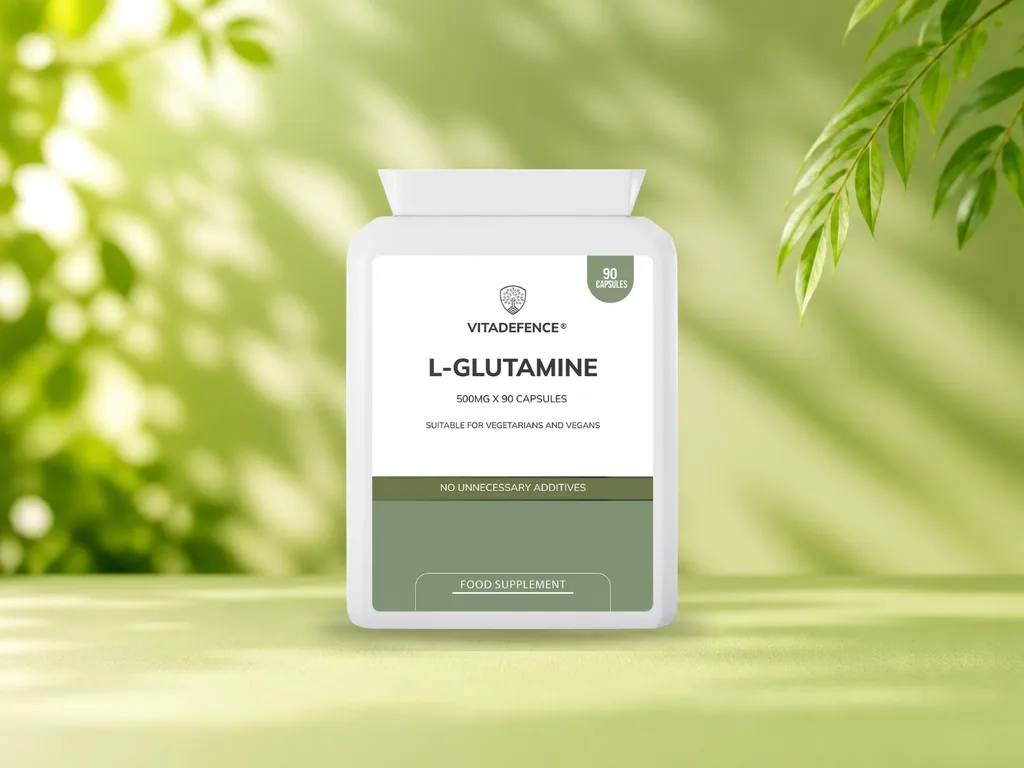
 L-GlutaminePure Amino Acid 500mg · 90 Capsules£11.49View in the shop →
2 - What is L-Glutamine?
L-Glutamine is a conditionally essential amino acid, meaning the body can usually produce enough on its own, but during periods of physical stress—such as intense training, illness, or injury—demand may outstrip supply. It is the most abundant free amino acid in human blood and muscle tissue, playing a central role in nitrogen transport, protein synthesis, and acid-base balance.
Beyond its structural role in muscle, L-Glutamine is a primary fuel source for enterocytes (intestinal cells) and immune cells, including lymphocytes and macrophages.
3 - Vitadefence L-Glutamine ingredients
Our formula is straightforward and transparent:
- L-Glutamine powder — 100g per pot
As stated on the label, the total number of servings will vary between 7 and 20, depending on whether you take 5g (1 teaspoon) or 15g (3 teaspoons) per day. There are no fillers, binders, or flow agents—just pure L-Glutamine.
4 - How the formula was designed
L-Glutamine is one of those supplements where purity matters more than complex blends. By offering a single-ingredient powder, we give you full control over your dose. The label dose is 5 g (1 teaspoon) to 15 g (3 teaspoons) a day.
We chose a powder format rather than capsules because the effective dose for L-Glutamine is relatively high (grams, not milligrams). A powder allows you to adjust your serving easily and mix it into water, juice, or a post-workout shake without swallowing multiple capsules.
5 - The science — what's well-supported
L-glutamine has no authorised health claim.
Muscle recovery and protein synthesis
L-Glutamine is a key building block for muscle protein. During intense exercise, glutamine levels in blood and muscle can drop by 20–30%, and supplementation may help replenish these stores.
However, the UK Nutrition and Health Claims Register does not currently authorise a specific health claim for L-Glutamine and muscle recovery. We present this as emerging evidence, not a proven cure.
Gut barrier integrity
L-Glutamine is the primary fuel for enterocytes. This is why it is often used in clinical nutrition protocols.
Again, no UK authorised claim exists for “gut health” or “leaky gut,” so we present this as a well-documented physiological role, not a medical treatment.
Immune cell support
Lymphocytes and macrophages rely on glutamine for proliferation and function. The effect is modest but consistent in high-demand populations.
6 - How to take it
As stated on the bottle: Take 5g (1 teaspoon) to 15g (3 teaspoons) per day or as required or advised by a practitioner.
Start at the lower end (5g) for the first week, then increase gradually if needed. Mix the powder into 200–300ml of cold or lukewarm water, juice, or a smoothie. It has a neutral taste with a slightly sweet, savoury undertone.
Mix into 200–300 ml of water or juice.
7 - Storage
Store in a cool, dry place, out of reach of children. Do not use if the seal is damaged. Best before date printed on the base.
Because L-Glutamine is hygroscopic (it can absorb moisture from the air), keep the lid tightly closed after each use. Avoid storing it in a bathroom or near a steamy kettle.
8 - Allergen and dietary information
- Suitable for vegetarians and vegans
- Kosher approved
- Halal approved
- No gluten, soy, dairy, or nuts
- No artificial colours, flavours, or preservatives
9 - Who should be cautious
L-Glutamine is generally well tolerated, but the following groups should consult a healthcare professional before use:
- Individuals with liver or kidney disease (glutamine metabolism affects ammonia levels)
- People with epilepsy or those taking anticonvulsant medication (high doses may theoretically lower the seizure threshold)
- Pregnant or breastfeeding women (insufficient safety data at higher doses)
- Anyone with a rare metabolic disorder such as urea cycle disorders
If you experience any digestive discomfort, bloating, or changes in bowel habits, reduce the dose or discontinue use.
10 - What pairs well with L-Glutamine
L-Glutamine works synergistically with other amino acids and protein sources. Here are three complementary products from our range:
- Amino Acid Multi — 5.6 g BCAAs per serving. Pairing L-Glutamine with a full-spectrum amino acid blend supports more comprehensive muscle protein synthesis. Read our Amino Acid Multi guide for more details.
- Creatine Multi — Creatine and glutamine are often used together by athletes. Creatine Multi — a recovery shake containing creatine and glutamine. Check out the Creatine Multi guide for timing tips.
- Hemp Protein Multi — A plant-based protein powder that provides a slow-release amino acid profile. Adding L-Glutamine to your hemp protein shake can help top up glutamine levels post-workout. See our Hemp Protein Multi guide for recipe ideas.
11 - Frequently asked questions
Can I take L-Glutamine on an empty stomach?
Yes, it is fine on an empty stomach. Some people prefer it between meals for gut support. If you have a sensitive stomach, taking it with food may reduce any mild digestive discomfort.
How long does one pot last?
That depends on your dose. At 5g per day, a 100g pot lasts 20 days. At 15g per day, it lasts about 7 days. We recommend buying in bulk if you plan to take higher doses consistently.
Is L-Glutamine the same as glutamic acid?
No. L-Glutamine and glutamic acid (glutamate) are different amino acids with distinct roles. Glutamine has a side chain that can donate ammonia, making it important for nitrogen transport. Glutamate is a neurotransmitter and a precursor to GABA. They are not interchangeable.
Can I take L-Glutamine with other supplements?
Yes, it is generally safe to combine with other amino acids, protein powders, creatine, or vitamins. If you are taking multiple supplements, start with one at a time to gauge your tolerance.
Does L-Glutamine help with weight loss?
There is no strong evidence that L-Glutamine directly promotes fat loss. It may support muscle retention during a calorie deficit, which can indirectly help maintain metabolic rate, but it is not a weight loss supplement.
Is L-Glutamine safe for long-term use?
Clinical studies have used doses of 5–30g per day for several months without serious adverse effects. However, long-term use at very high doses (above 30g/day) should be supervised by a healthcare professional.
12 - Why Vitadefence
- Registered with the ICO (ZC106169) for data protection
- Kosher and Halal certified
- Suitable for vegans and vegetarians
- Free from unnecessary additives
We believe in honest, evidence-led communication. That means no miracle claims—just pure ingredients backed by science. Read what our customers say on our reviews page.
13 - Bottom line
This article is for educational purposes only and does not constitute medical advice. The health claims mentioned refer to authorised UK nutrition and health claims for vitamins and minerals only, unless otherwise stated. L-Glutamine is classified as a food supplement and is not intended to diagnose, treat, cure, or prevent any disease. Always consult a healthcare professional before starting a new supplement, especially if you have a medical condition or are taking medication. For full terms, see our shipping and returns policy.