
Live Cultures Multi: A Practical Guide to Daily Gut Support
Contents
1 - Introduction
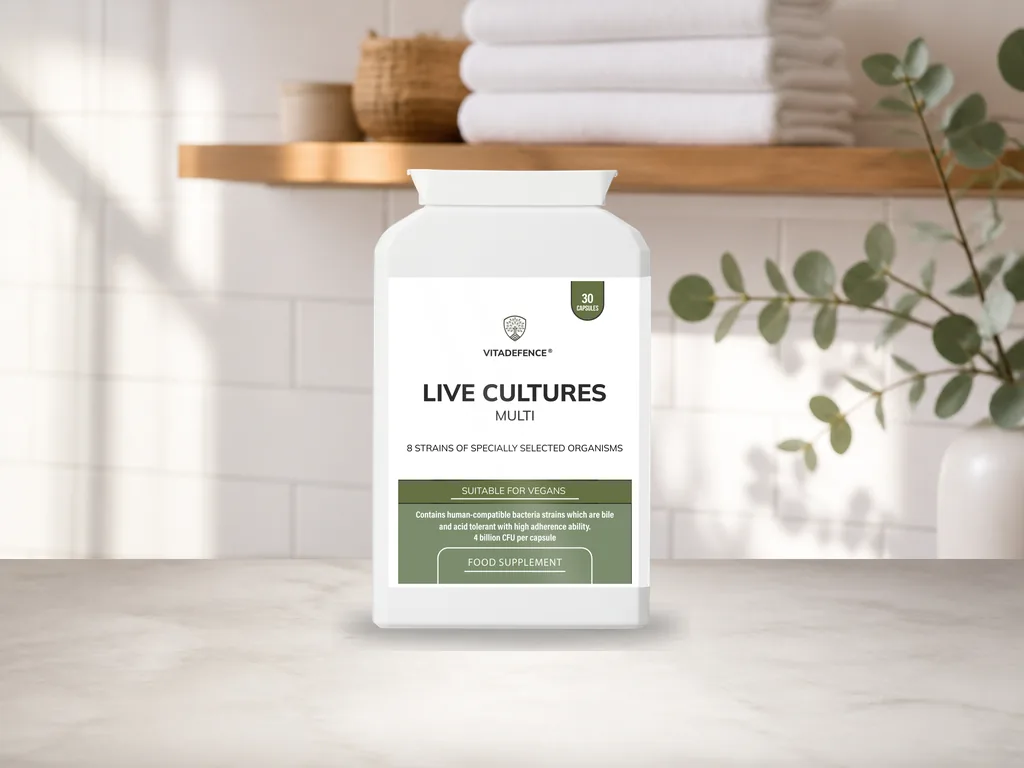
Your digestive system is home to trillions of microorganisms, collectively known as the gut microbiota, which play a vital role in nutrient absorption, immune regulation, and overall wellbeing. Live Cultures Multi: eight strains, 4 billion live cultures per capsule. This guide explains the science behind the formula, how to use it effectively, and what the current evidence actually says.
 Live Cultures Multi8 Strains, 4 Billion CFU · 30 Capsules£14.49View in the shop →
2 - What are live cultures?
Live cultures, often called probiotics, are live microorganisms that, when consumed in adequate amounts, can confer a health benefit to the host. The most common types belong to the Lactobacillus and Bifidobacterium genera, both of which are naturally present in a healthy human gut. A multi-strain formula like Live Cultures Multi provides a broader range of bacterial species, each with distinct metabolic activities and potential benefits. No health claim is authorised for live cultures in a supplement.
3 - Live Cultures Multi ingredients
Each capsule of Live Cultures Multi delivers a proprietary blend of eight bacterial strains, providing a total of 4 billion viable organisms per capsule. The full ingredient list, as printed on the bottle, is as follows:
- Lactobacillus rhamnosus
- Lactobacillus casei
- Lactobacillus acidophilus
- Bifidobacterium infantis
- Streptococcus thermophilus
- Bifidobacterium breve
- Bifidobacterium longum
- Lactobacillus bulgaricus
Other ingredients: Capsule Shell: Hydroxypropyl Methylcellulose (HPMC); Brown Rice Flour (Oryza Sativa); Bio-Live Bacteria Blend. Each pot contains 30 capsules.
4 - How the formula was designed
The Live Cultures Multi formula was designed to include a diversity of bacterial species that are commonly studied in clinical research for digestive health. The blend includes both Lactobacillus and Bifidobacterium species, which are among the most well-characterised probiotic genera. Streptococcus thermophilus is included for its role in lactic acid fermentation, while the addition of Bifidobacterium infantis and Bifidobacterium longum reflects their presence in the infant and adult gut, respectively. The dose of 4 billion CFU per capsule is within the range commonly used in human trials (typically 1 to 10 billion CFU daily), and the capsule shell is made from HPMC, a plant-based alternative to gelatin, ensuring suitability for vegetarians and vegans.
5 - The science — what’s well-supported
Probiotic research is strain-specific, and effects seen with one strain cannot automatically be assumed for another. However, the following points are supported by the available evidence:
- Support during antibiotic use: A Cochrane review of 23 studies found a moderate benefit (Goldenberg et al., Cochrane Database of Systematic Reviews, 2015;12:CD004827).
- Gut barrier function: Lactobacillus acidophilus and Bifidobacterium longum have been shown in vitro to enhance tight junction integrity, which may support the gut barrier.
It is important to note that the regulator has not authorised a health claim for “general digestive health” for any probiotic. The claims that are permitted are strain-specific and limited to conditions like lactose digestion. Live Cultures Multi is a food supplement.
6 - How to take it
The recommended dosage is 1 capsule, 1 to 3 times per day, before meals or as advised. Take 1 capsule, 1 to 3 times a day before meals, as on the label. Each pot contains 30 capsules, so a daily dose of 1 capsule provides a one-month supply.
7 - Storage
Store in a cool, dry place, out of reach of children. Do not use if the seal is damaged. The best-before date is printed on the base of the pot. Notably, this product does not require refrigeration, making it convenient for travel or daily use. A small, food-grade approved sachet is included inside the pot to absorb moisture after opening; this sachet is not to be eaten.
8 - Allergen and dietary information
Live Cultures Multi is suitable for vegetarians and vegans. It is Kosher and Halal approved. The capsule shell is made from HPMC (hydroxypropyl methylcellulose), which is plant-derived. The formula does not contain common allergens such as gluten, dairy, soy, or nuts, but always check the label for any specific allergen warnings.
9 - Who should be cautious
Probiotics are generally considered safe for healthy individuals, but certain groups should exercise caution. People who are immunocompromised (e.g., those undergoing chemotherapy, organ transplant recipients, or individuals with HIV/AIDS) should consult a healthcare professional before using live cultures, as there is a theoretical risk of infection. Similarly, individuals with short bowel syndrome or central venous catheters should seek medical advice. If you experience persistent gastrointestinal symptoms such as severe bloating, diarrhoea, or abdominal pain, discontinue use and consult a doctor.
10 - What pairs well with Live Cultures Multi
For a comprehensive approach to digestive health, Live Cultures Multi can be combined with other supplements that support gut function and nutrient absorption:
- Botanical Fibre Multi and Saccharomyces Multi are other products in the range. Read more in our Botanical Fibre Multi guide.
- See our Saccharomyces Multi guide.
- Vitamins Multi – a comprehensive multivitamin that includes B vitamins for energy metabolism and vitamin D for immune function. Learn more in our Vitamins Multi guide.
11 - Frequently asked questions
1. Do I need to refrigerate this probiotic?
No. Live Cultures Multi does not require refrigeration. Store it in a cool, dry place away from direct sunlight. The included moisture-absorbing sachet helps maintain stability after opening.
2. How many billion CFU is this product?
Each capsule contains 4 billion viable organisms. The recommended daily intake of 1–3 capsules provides 4–12 billion CFU per day, which is within the range used in clinical studies.
3. Can I take this probiotic with antibiotics?
Yes, but it is generally recommended to take probiotics at least 2–3 hours apart from antibiotics to reduce the risk of the antibiotic killing the live bacteria. Always consult your doctor before combining any supplement with prescription medication.
4. Is this product suitable for children?
Live Cultures Multi is not specifically formulated for children. If you are considering a probiotic for a child, consult a paediatrician for age-appropriate dosing and strain selection.
5. How long does one pot last?
At the standard maintenance dose of 1 capsule per day, one pot of 30 capsules lasts one month. If you are using the initial loading dose (3–4 capsules per day), it will last approximately 7–10 days.
6. Can I open the capsule and mix it with food or drink?
Yes, the capsule contents can be emptied into cool or lukewarm food or drink (avoid hot liquids above 45°C, as heat may kill the bacteria). Mixing with a prebiotic-rich food like oatmeal or a smoothie may enhance survival.
12 - Why Vitadefence
Vitadefence supplements are made in the United Kingdom to GMP quality standards, ensuring high standards of quality control and manufacturing. Our live cultures are plant-based, suitable for vegans, and free from unnecessary additives. We believe in transparency — the ingredient panel on the bottle matches exactly what is listed here. We do not make exaggerated claims, and we encourage you to read the science for yourself. Free UK delivery on every order.
13 - Bottom line
Live Cultures Multi offers a multi-strain, plant-based probiotic with 4 billion CFU per capsule, designed to support digestive balance as part of a healthy lifestyle. Live Cultures Multi: eight strains, 4 billion CFU per capsule, in a vegan HPMC capsule. For a more comprehensive approach, consider pairing it with a prebiotic fibre or a multivitamin. As with any supplement, consult a healthcare professional if you have underlying health conditions or are taking medication.
This article is for educational purposes only and does not constitute medical advice. The product described is a food supplement and is not intended to diagnose, treat, cure, or prevent any disease. Always read the label and consult a healthcare professional before starting any new supplement regimen. Health claims referenced are authorised under the UK Nutrition and Health Claims Register where applicable; other statements are based on traditional use or emerging scientific evidence.